Crank book covers

kolosimo2.jpg

Cover art by Tony Roberts, 1974. A book I received as a present for Christmas, 1974. Also the first place I encountered the words “Popol Vuh”, before discovering the music of Florian Fricke and co. a few years later.

Yes, “crank” is a pejorative word but it’s used with some degree of affection, as in “harmless crank”. It’s also a convenient umbrella term for the books referred to in the weekend post which embrace diverse subjects, from lost continents and “Earth energy” to ancient astronauts and flying saucers.

The prime crank decade was the 1970s, a period when publishers were falling over themselves to cash-in on the massive popularity of Erich von Däniken’s dubious investigations, while also catering to the by-products of the hippy era and the occult revival. Books by Charles Fort, Immanuel Velikovsky and James Churchward (the Mu series) all received reprints, with some appearing in paperback for the first time. The British editions of these books were published by imprints like Corgi, Panther and Sphere who were also publishing large quantities of science fiction, a situation that led to many crank titles being packaged as though they were fiction or fantasy. Sphere was in the vanguard, presenting a wide range of books with the same cover designs, cover artists and Novel Gothic typeface as their SF titles. A cynical move, no doubt, but it also makes the crank books seem more like fiction than their authors might have intended.

This post presents a selection of crank titles with cover art by SF artists but there are many more examples out there. (Watch the skies!) I’ve limited the selection to British publishers but the same syndrome was evident in American publishing, as documented at Absolute Elsewhere. And I’ve included a couple of books by sceptics John Sladek and Dr. Christopher Evans. These were intended to dismantle the claims of L. Ron Hubbard, Erich von Däniken and co. but were still packaged in paperback to resemble the books they were attacking. The major demolition of Von Däniken is Ronald Story’s The Space Gods Revealed but covers for that one have always been relatively restrained.

Missing from this list are three paintings by SF artist Peter Jones for books by Dr. Celia Green. The art may be seen in Jones’s Solar Wind collection but I couldn’t find any of the printed covers, which suggests they had a limited run if they were printed at all. These are odd for being typical fantasy imagery attached to serious studies of lucid dreaming and out-of-body experiences. Dr. Green is a philosopher and science researcher (she coined the term “out-of-body experience”) so she doesn’t belong on a crank list in any case. Also absent is the most popular British cover illustrator of the decade, Chris Foss, who would have been too busy working through his fiction commissions and creating designs for feature films.

kolosimo1.jpg

Cover art by Tony Roberts (?), 1974.

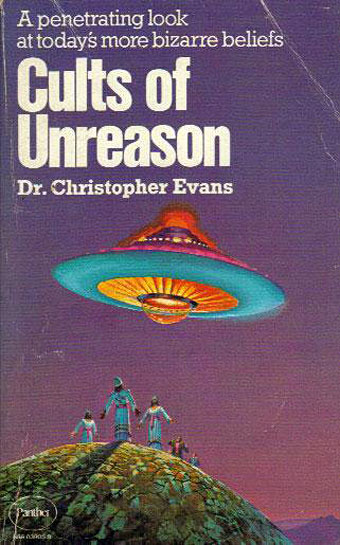
evans.jpg

Cover art by Bruce Pennington, 1974.

Evans was a computer scientist, an occasional contributor to New Worlds magazine, and also the model for the deranged Vaughan in JG Ballard’s Crash. Cults of Unreason investigates crank sects such as the flying-saucer worshippers of the Aetherius Society (hence the cover art), and the Scientologists who caused a stir in Britain in the 1960s when L. Ron Hubbard set up an outpost at East Grinstead.

fort2.jpg

Cover art by Colin Hay, 1974.

fort1.jpg

Cover art by Angus McKie, 1979.

Continue reading “Crank book covers”

Weekend links 587

jetpac.jpg

Jetpac (1983) by Ultimate Play The Game. Lunar Jetman was the superior sequel but Jetpac had the better loading screen.

• RIP Clive Sinclair. Products made by Sinclair Research Ltd. were among the first electronic gadgets I owned: the Sinclair Scientific calculator which compelled you to learn Reverse Polish notation before you could use it; the ZX Spectrum computer, of course; and the pocket TV that came bundled with the computer, a machine with such feeble reception that it only ever worked outdoors. I’ve still got my Spectrum computer, and it still worked the last time I plugged it in although it’s hardly worth keeping when emulators proliferate. Spectacol for Android is a good example of the latter. Related: World of Spectrum; the early stages of the Spectrum design process by Sinclair designer Rick Dickinson; XL-1 by Pete Shelley, electro-pop with Spectrum-generated lyrics and graphics.

• Mixes of the week: A Lee “Scratch” Perry tribute mix by Dennis Bovell, and Blood Tide Station 1: Breakaway plus Blood Tide Station 2: Force of Life by The Ephemeral Man.

• “It’s not an easy time to be daring,” says Dennis Cooper, talking to Barry Pierce about his new novel, I Wished.

• London under London: Adam Zamecnik interviews Tom Chivers about searching for London’s lost rivers.

• New music: Ode To The Blue by Grouper, and A Shadow No Light Could Make by Nathan Moody.

• At Public Domain Review: 700 years of Dante’s Divine Comedy in art.

• At Wormwoodiana: The Mushroom Man—A Note on EC Large.

DJ Food trips out with a collection of psychedelic drug posters.

Nodnol (1969) by The Spectrum | Spectrum (1969) by The Tony Williams Lifetime | Spectrum (1973) by Billy Cobham

London churches of the XVIIth and XVIIIth centuries

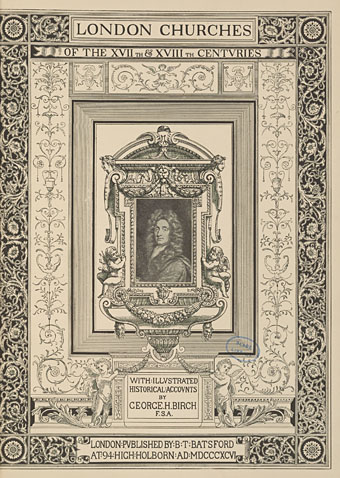
birch01.jpg

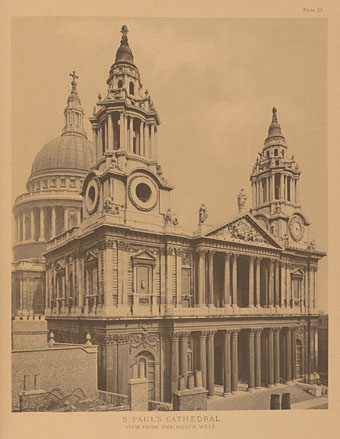
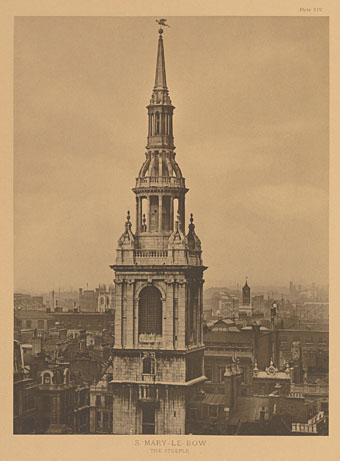
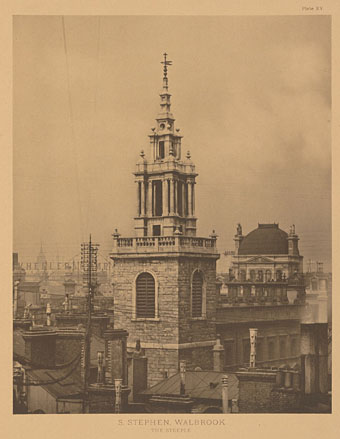
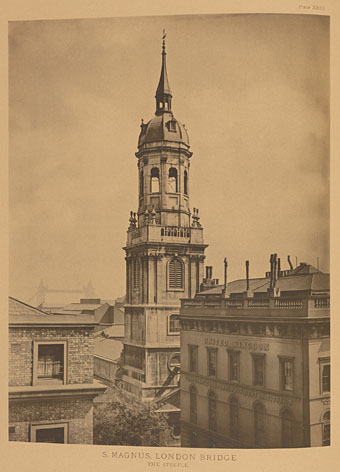
This is another of those books that I’ve been led to by the requirements of the current workload, in this case the need to find pictures of a particular London church. George H. Birch’s book was published in 1896, and while it’s possible to find contemporary photographs of these buildings, I like the exterior views for showing the churches in a different time to our own.

birch02.jpg

The photographs were by Charles Latham who avoids the usual street-level portraits in favour of views of each steeple from the highest floors of surrounding offices and warehouses. The buildings of London in the 1890s didn’t reach very far, St Paul’s Cathedral still dominated the City skyline, but Latham’s pictures have the additional attraction of showing us that skyline as it was over a century ago, before it was radically reconfigured by the bombs of the Luftwaffe and several generations of planners and architects. George H. Birch was the curator at the time of one of my favourite places in London, the Sir John Soane Museum. Browse or download the rest of his book here.

birch03.jpg

birch04.jpg

birch05.jpg

Continue reading “London churches of the XVIIth and XVIIIth centuries”

Weekend links 580

kausch.jpg

The Collective Lie We All Live By, a cut-paper collage by Allan Kausch from Maintenant 15, A Journal of Contemporary Dada Writing and Art.

• “It’s unusual that an album manages to be at once so much of its moment, yet so much outside it. Time was unmistakably a response to the electronic and synth waves that rose in the wake of punk. It was also a concept album about time travel, which couldn’t have been more pre-punk had it been focus-grouped that way.” David Bennun on Time (1981), ELO’s masterwork of science-fiction pop. The first song on the album, Twilight, is a thundering piece of synth bombast that prefigures Trevor Horn’s equally bombastic productions, and was used to memorable effect in the copyright-infringing animation made in 1983 for the opening of Daicon IV.

• New music: Disciples Of The Scorpion by The Rowan Amber Mill, and Shade by Grouper.

• “Psychedelic spirituality: Inside a growing Bay Area religious movement“.

• “It’s time to farewell this project,” says Ballardian.

• At Wormwoodiana: the seven greek vowels.

• A playlist for The Wire by Douglas Benford.

Norman Blake‘s favourite albums.

Astronomia Playing Cards.

• RIP Dusty Hill.

Time (1973) by David Bowie | Time (1976) by La Düsseldorf | Time (1992) by Lull

Weekend links 570

griffin.jpg

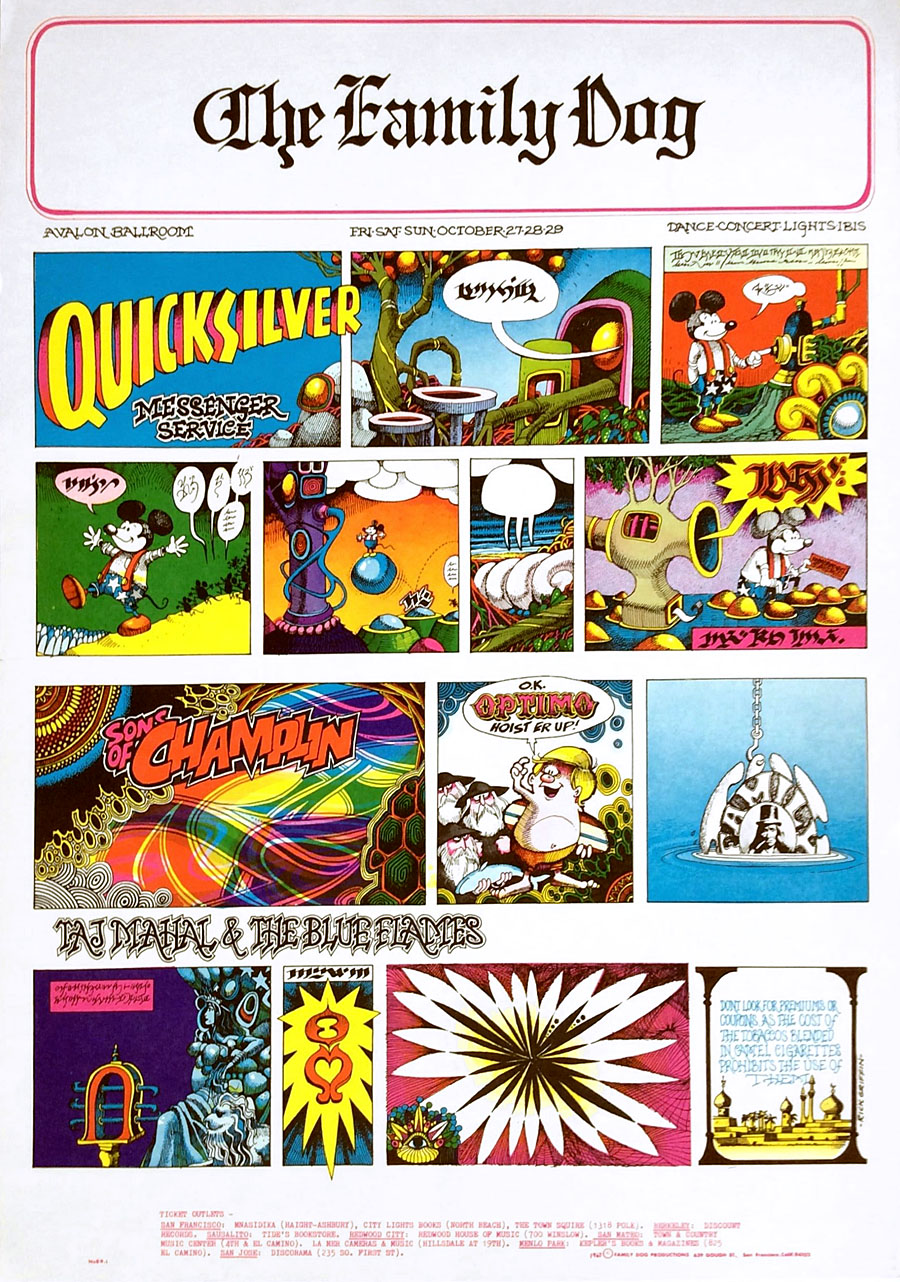
Rick Griffin’s comic-style poster for The Quicksilver Messenger Service at the Avalon Ballroom, October 1967.

• “Like ‘perversion,’ the word ‘script’ has a special meaning for Escoffier, who devotes most of the book’s attention to films featuring sex between men, and treats pornography as a vast screen on which all of our fantasies are projected.” Steve Susoyev reviews Sex, Society, and the Making of Pornography by Jeffrey Escoffier.

• “The themes reflect Griffin’s core obsessions: sex, death, Christ, flesh, liquids, goofy japes, and lysergic gnosis. Man from Utopia is an opus, one that Griffin felt strongly enough about to eschew the usual pulp, printing the cover on good full-color card stock.” Erik Davis on Rick Griffin and a comic book like no other.

Strange Things Among Us, a summer exhibition at The College of Psychic Studies, London, will include among its exhibits a room of art by Austin Osman Spare.

She delighted in the fact that after The Sadeian Woman, she ended up on the mailing lists of both pro- and antiporn groups, though no one (alas) ever sent her any actual porn. She aligns more naturally in retrospect with Madonna—potent, fiercely individualistic, disruptive, and self-invented. Carter’s evolved philosophical position on gender was a variation on Stoicism. Gender roles were “behavioural modes,” a construct (“Baby is hermaphrodite!”), and there was weakness in allowing oneself to be beholden to (let alone enslaved by) a construct. Above all, women should have total sexual agency and also their own money. “I became a feminist,” she wrote in a postcard to Susannah Clapp, “when I realised I could have been having all this instead of being married.”

Minna Zallman Proctor on the life and work of raucous fabulist Angela Carter

• New music: Chapter 4 by the Moritz Von Oswald Trio with Heinrich Köbberling & Laurel Halo, and Synth Vehicles For Guitar by Michael C. Sharp.

• DJ Food searched the back issues of International Times to find a handful of adverts for London’s legendary UFO Club.

• At Wormwoodiana: Mark Valentine explores Hy Brasil, a novel by Margaret Elphinstone.

• Remembering Tom of Finland through stories of those who knew him.

• What I’m Aiming For: Peggy Seeger’s favourite music.

• At Dennis Cooper’s: The Light Show (1965–1971).

• Mix of the week: Haze by The Ephemeral Man.

• A Strange Light From The East (1967) by Tuesday’s Children | Strange Things Are Happening (1968) by Rings & Things | Strange Walking Man (1969) by Mandrake Paddle Steamer