Weekend links 732

toshikata.jpg

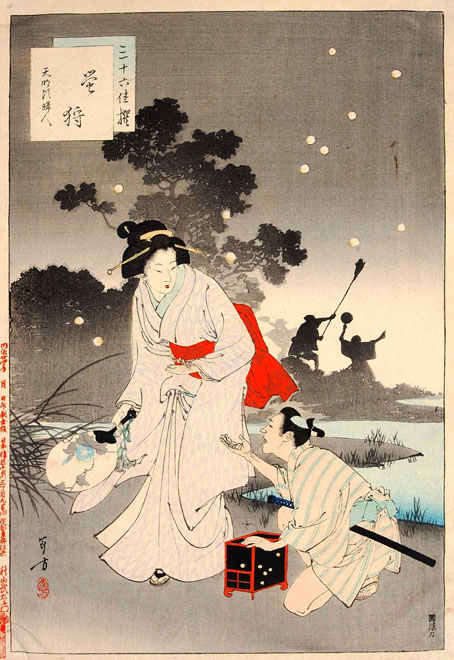
Chasing Fireflies, A Lady of the Tenmei Era, from the series Thirty-six Elegant Selections (1894) by Mizuno Toshikata.

• While working on the Herald of Ruin cover late last year I was wondering when we might get to see the BFI or Eureka releasing Louis Feuillade’s silent serials on Region B blu-ray discs. Six months later, Eureka have announced this very thing: Louis Feuillade: The Complete Crime Serials (1913–1918), a box comprising the Gaumont restorations of Fantômas, Les Vampires, Judex and Tih Minh. I’ll probably have more to say about this in September.

• At A Year In The Country: Wyrd Explorations: A Decade Of Wandering Through Spectral Fields, a book which collects revised and extended pieces from the first ten years of A Year In The Country posts.

• At The Paris Review: Eliza Barry Callahan visits and revisits Joseph Cornell’s house at 37-08 Utopia Parkway, NYC.

• New music: Jinxed By Being by Shackleton & Six Organs of Admittance.

• Browse artworks by Pablo Picasso at the Picasso Museum, Paris.

• At Unquiet Things: Victor Kalin’s Paradoxical Paperback Art.

Strange Transmissions: The World Of Experimental Radio.

• At Dennis Cooper’s it’s Satoshi Kon‘s Day.

Aaron Turner’s favourite music.

• DJ Food’s haul of Acid Badges.

Acid Head (1966) by The Velvet Illusions | Acid Heart Mother (2000) by Acid Mothers Temple & The Melting Paraiso U.F.O. | Acid Death Picnic (2013) by Cavern Of Anti-Matter
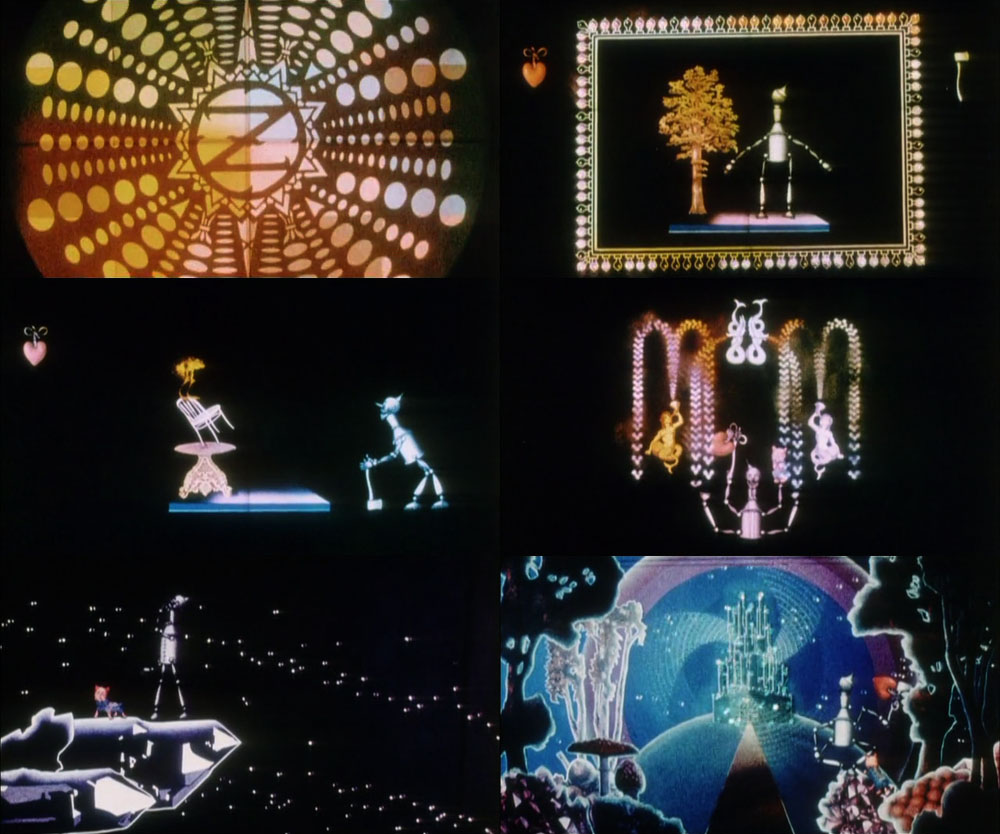
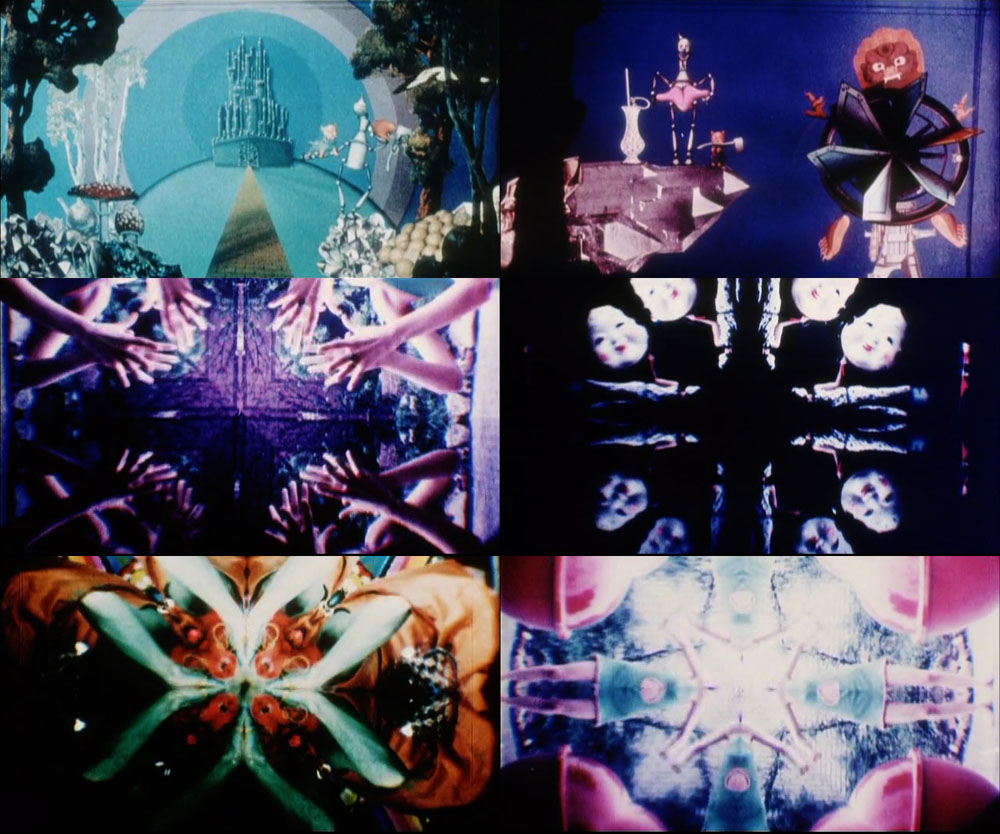
Oz: The Tin Woodsman’s Dream, a film by Harry Smith

smith1.jpg

Ubuweb slipped into archival stasis earlier this year, which means that everything uploaded there will remain as it is but we won’t be seeing anything new. I don’t know when this Harry Smith short was posted there but it’s one I haven’t seen before. (There’s also a copy at Rarefilmm where I evidently missed it.) Oz, The Tin Woodsman’s Dream was made in 1967, and is one of the fragments of a much longer film that would have adapted L. Frank Baum’s The Wonderful Wizard of Oz using a similar cutout animation technique to that deployed by Smith for Heaven and Earth Magic. The adaptation remained unfinished after Smith’s backer died but the extant pieces (including another self-contained short, The Magic Mushroom People of Oz) show him working in widescreen 35mm for the first time.

smith2.jpg

All of Smith’s films were given opus-style numbers: Heaven and Earth Magic is no. 12, The Magic Mushroom People of Oz is no. 13, and The Tin Woodsman’s Dream is no. 16. As with the films of Len Lye and other animation pioneers, Smith’s early shorts are often given a “psychedelic” label even when they predate the popular use of the term. The Tin Woodsman’s Dream is one of those where the psychedelic quotient becomes overt, comprising a few minutes of animated play with the title character and a small dog, followed by many minutes of kaleidoscoped film footage that’s more redolent of its period than Smith’s other films. I’m happy to watch the kaleidoscopics but this is the kind of thing that any number of film-makers might easily do. The Woodsman, the dog and the other characters are inhabitants of Smith’s inner landscape, as are the fly agaric mushrooms that appear here and in his other films. It’s a shame we didn’t get to see more of them. There’s no soundtrack for this film so you can either watch the gesticulations in a Stan Brakhage silence or find 15 minutes of music to match the visuals.

Previously on { feuilleton }
Number 10: Mirror Animations, a film by Harry Smith
Number 11: Mirror Animations, a film by Harry Smith
Meeting Harry Smith by Drew Christie
Heaven and Earth Magic by Harry Smith
Harry Smith revisited
The art of Harry Smith, 1923–1991

Weekend links 730

beardsley.jpg

Cover Design for ‘The Yellow Book’ Vol.I (1894) by Aubrey Beardsley.

• “[Dorian Gray’s] version of Decadence filled the popular imagination when Decadence became an ostentatiously stylish zeitgeist—stylish being the operative word. For Decadent style encapsulated the attitude of being hellbent on thrilling experiences.” The danger of Decadence is also its value. We need more of it, says Kate Hext.

• At Swan River Press: Of Wraiths, Spooks and Spectres. Robert Lloyd Parry, in an interview with John Kenny, talks about the researches that led to the compiling of his latest ghost-story collection, Friends and Spectres.

• The latest pictorial accumulation from DJ Food is a collection of late-60s concert posters by Jim Michaelson, an artist whose designs look like Mad magazine going fully psychedelic.

• Old music: Future Travel by David Rosenboom; new music: Taking Shasta Mountain (By Strategy) by John Von Seggern & Dean DeBenedictis.

• At Public Domain Review: Hunter Dukes on Rückenfiguren, views of the human back as a subject in the history of art.

• In a week when Adobe has been in the news for pissing off its users, a list of alternatives for Adobe software.

• At Spoon & Tamago: Hokusai-inspired erasers reveal Mt. Fuji the more they get used.

• At Unquiet Things: A celebration of Annie Stegg Gerard’s enchanting worlds.

• Mix of the week: DreamScenes – June 2024 by Ambientblog.

• At The Quietus: The Strange World of…Diamanda Galás.

Wraith (2002) by Redshift | El Wraith (2002) by Amon Tobin | Wraith (2015) by John Carpenter

Four short films by Vince Collins

collins0.jpg

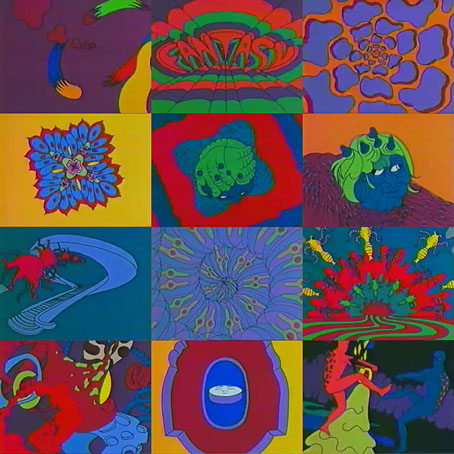
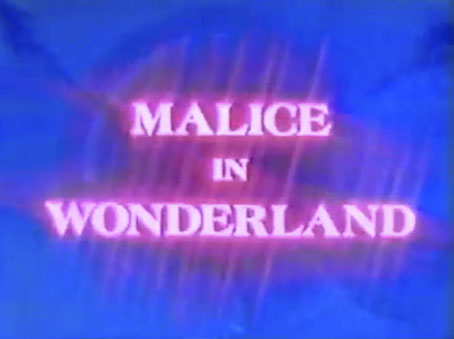
The expressions “psychedelic” and “surreal” are often so casually applied that they lose any useful definition, but in the case of these early films by American animator Vince Collins “psychedelic surrealism” is an accurate description. All have somehow managed to evade my weirdness radar until now, despite being superior examples of the endlessly mutating dream-landscape which animation can do so well. The last of them, Malice in Wonderland, is a breathless run through Lewis Carroll scenarios which Collins made in collaboration with his wife, Miwako Collins. That punning title has been overused in the music world but the pair ought to be given sole ownership of it, their bad-trip film is the most grotesquely nightmarish reworking of Alice themes that I’ve seen.

Vince Collins’ YouTube channel contains many more recent works done with computer animation. The hand-drawn films are more to my taste but it’s good to see him still being active and creative.

collins1.jpg

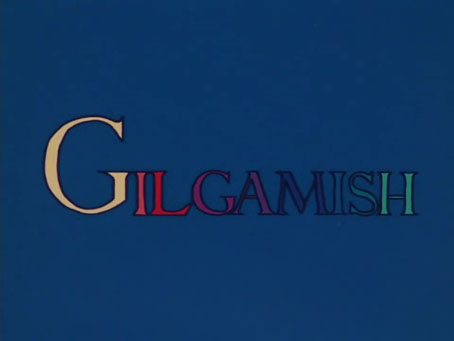
Gilgamish (1973).

collins2.jpg

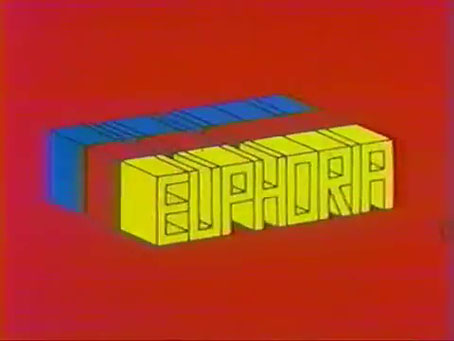
Euphoria (1974).

collins3.jpg

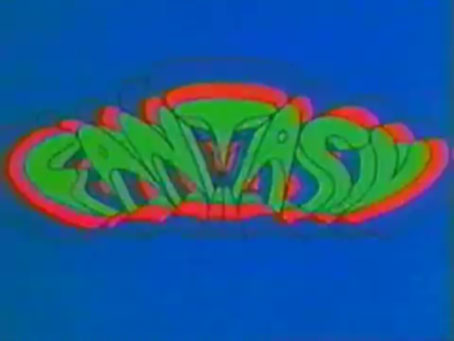
Fantasy (1976).

collins4.jpg

Malice in Wonderland (1982). (Or avoid YouTube’s adults-only policy by going here.)

Previously on { feuilleton }
The groovy video look

Weekend links 721

reigl.jpg

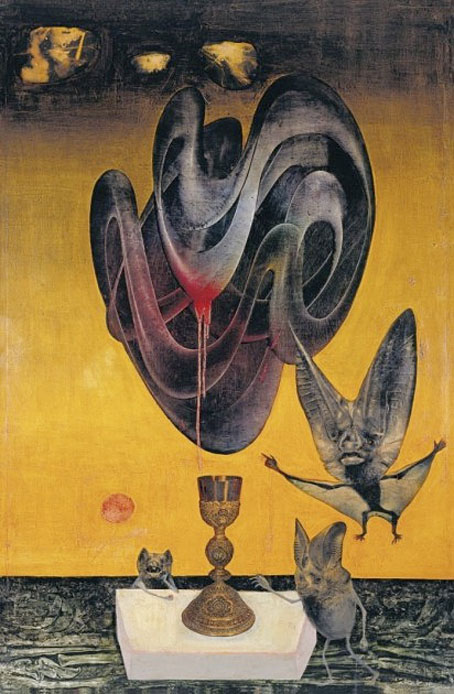
Incomparable Pleasure (1952–3) by Judit Reigl.

• Steven Heller’s Font of the Month is Atol. Heller’s other haunt, The Daily Heller, looked this week at the incredible calligraphy and illuminated graphics of Arthur Szyk.

Okashi, an exhibition of Japanese art and photography at the Michael Hoppen Gallery in London. Hoppen talks about the exhibition here.

• At Unquiet Things: A Vibrant Rascality of Shenanigans: The Fantasticalicizm of Anna Mond.

• At Public Domain Review: Signs and Wonders: Celestial Phenomena in 16th-Century Germany.

• New music: Alchemia by Scanner, and Disconnect by KRM And KMRU.

• Mix of the week: Artificial Owl Recordings Mix by Niko Dalagelis.

• At Bandcamp: Jóhann Jóhannsson’s Luminous Sounds.

• DJ Food found some Victor Moscoso poster originals.

• At Dennis Cooper’s: Luis Buñuel Day.

Meow.camera

Alchemistry (1991) by Jon Hassell | Surrealchemist (1992) by Stereolab | Alchemagenta (1996) by Zoviet France