Weekend links 612

remps.jpg

Cabinet of Curiosities (c. 1690s) by Domenico Remps.

• “…the human voice is an astonishing landscape”. Jeremy Allen on Desert Equations: Azax Attra (1986) by Sussan Deyhim & Richard Horowitz, an album which is being reissued by Crammed Discs with bonus tracks and an inexplicably rearranged track list. Good as it is, their follow-up release from 1996, Majoun, is even better, and might be better known if it hadn’t been so thoroughly abandoned by Sony Classical.

• “On view through May 29, By Her Hand: Artemisia Gentileschi and Women Artists in Italy, 1500–1800 showcases masterpieces done by 17 Italian women to make the case for a broader view of women’s participation in the Italian Renaissance.” Nora McGreevy reports.

• “We had a far more profound effect on society than we really understood, and some of us paid for that”: Jane Lapiner and David Simpson of the San Francisco Diggers talking to Jay Babcock in another installment of Jay’s verbal history of the hippie anarchists.

• “Close your eyes and you could almost imagine it’s the muffled screams of a ghost trapped in a bottle.” Daryl Worthington on 25 years of The Ballasted Orchestra by Stars Of The Lid.

• More Dangerous Visions and New Worlds: Mike Stax talks with Michael Moorcock about music, science fiction, politics, and their intersections in the 1960s.

• “Cormac McCarthy to publish two new novels.” Oboy oboy.

• At Dennis Cooper’s: Larry Gottheim Day.

Metal Machine Music For Airports

Marginalia Search

Music For Meditation I (1973) by Eberhard Schoener | Music For Evenings (1980) by Young Marble Giants | Music for Twin Peaks Episode #30 (Part I) (1996) by Stars Of The Lid
Weekend links 605

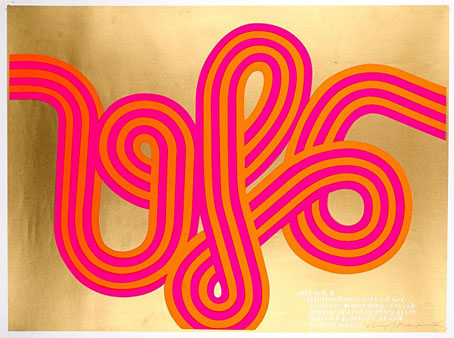
ufo.jpg

UFO Mk2 (1967), a poster for the UFO club by Hapshash and the Coloured Coat (Michael English & Nigel Waymouth).

• Link of the week without a doubt is Yuka Fujii’s raw video footage of the sessions for David Sylvian’s solo debut, Brilliant Trees, which includes appearances by Jon Hassell, Holger Czukay and Ryuichi Sakamoto. Czukay’s contribution to this and other albums in the 1980s included the use of a second-hand IBM Dictaphone, a machine which was often credited on album sleeves but seldom discussed in interviews beyond Czukay’s claims that it was a superior sound-sampling tool. You can see the mysterious “instrument” in this film and discover (at last!) more about the machine here. Big thanks to Colin for the tip!

• “Part of what makes watching it so compelling now is Berger’s fascinated immersion in the culture of images itself.” Olivia Laing on 50 years of Ways of Seeing by John Berger.

• At The Wire: David Toop on what happens when the performance of music is extended over long durations, from all night concerts to sacred rituals that last for weeks.

• At Bandcamp: Tony Rettman profiles Audion magazine and its editors, indefatigable Krautrock experts Alan & Steve Freeman.

• New music: W by Boris, a remix of Laurie Anderson’s Big Science by Arca, and a cover of King Crimson’s Red by Hedvig Mollestad.

• The latest exploration of psychedelic graphics by DJ Food is a collection of posters for London’s UFO Club.

• Wolf Moon: Nina MacLaughlin has some questions for our ancient satellite.

• At Dennis Cooper’s: Frank’s Box: The Real Telephone to the Dead.

• Mix of the week: XLR8R Podcast 731 by Anthea.

• At Strange Flowers: 22 books for 2022.

UFO (1970) by Guru Guru | UFO Over Paris (1978) by Steve Hillage | El UFO Cayó (2005) by Ry Cooder

Weekend links 597

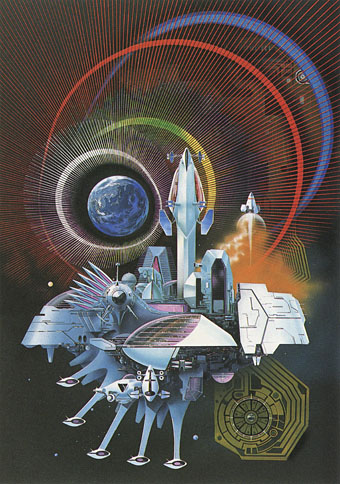
okazaki.jpg

Untitled art by Toshio Okazaki from JCA Annual 5, 1984.

• “Yeah, when I first started writing it, nobody knew what to call it at all. I mean, the publishers didn’t know what to call it. They thought that Tolkien was (writing about) a post-apocalyptic nuclear world. That’s the only way they could perceive an alternate world, in other words. And it was the same with Mervyn Peake… they’re all interpreted that way. The idea of putting ‘fantasy’ on a book meant usually meant that it was a children’s book. And if you put fantasy as the genre, they usually put ‘SF’ larger than ‘fantasy’ to show that it was what it was.” Michael Moorcock (again) talking to Derek Garcia about fiction, games, and (of course) Elric.

• “Non-payment, low payment, late payment and promises of jam tomorrow, or at some unspecified future date, bedevil the freelance life as they did five centuries ago.” Indeed. Boyd Tonkin on Albrecht Dürer, patron saint of stroppy freelancers.

• “All at once, Non-Stop Erotic Cabaret is tender, outrageous and daft.” Patrick Clarke compiles an oral history of Soft Cell’s debut album.

Yeah, it was kind of a media hype. In January [1967], the media said, [breathless] ‘Oh my god, San Francisco is the place to be. Come to San Francisco, wear flowers in your hair.’ So we had a meeting of the people in the Haight-Ashbury about how we were going to deal with so many people coming. The Diggers decided to kind of make it a university of the streets, an alternative anarchist culture.

We knew that all these people were coming to San Francisco, and we knew they weren’t going to stay. And we thought, well, the best thing we could do would be to kind of educate them about the kinds of things that are possible in society, and then let them go back to where they’re from, and they would carry these ideas. And that is what happened. We were quite successful in that.

Judy Goldhaft of the San Francisco Diggers talking to Jay Babcock for another installment of Jay’s verbal history of the hippie anarchists

• “What ‘impossible’ meant to Richard Feynman; what I learned when I challenged the legendary physicist,” by Paul J. Steinhardt.

• At Strange Flowers: part one of James Conway’s essential end-of-year shopping list, Secret Satan.

• Mixes of the week: Part II and Part III of the three-part At The Outer Marker series by David Colohan.

• At Dennis Cooper’s: Olivia Duval presents…Suave: A History of Les Disques du Crépuscule.

Mystery and Truth of the Cthulhu Myth, a Japanese guide to the Cthulhu Mythos.

• Intimacy, Loss and Hope: Inside Florian Hetz’s beautiful 2020 photo diary.

• New music: The Tower (The City) by Vanessa Rossetto/Lionel Marchetti.

Nite Jewel’s favourite albums.

• RIP Stephen Sondheim.

Nothing Is Impossible (1974) by The Interns | Mission Impossible Theme (1981) by Ippu-Do | Impossible Guitar (1982) by Phil Manzanera

Weekend links 592

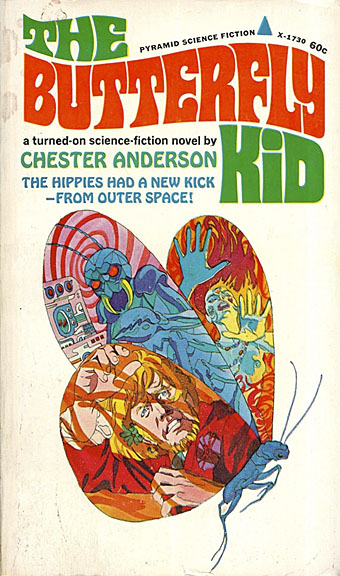
anderson.jpg

Cover art by Gray Morrow; design by Henry Berkowitz, 1967.

• “Dial-a-Poem received more than a million calls before it lost funding and ended in 1971. There were complaints of indecency, claims that the poems incited violence. The FBI investigated…” Ralf Webb on John Giorno’s Dial-a-Poem project which is still active at the US and UK numbers on this page.

• Mixes of the week: Halloween approaches so for those who require themed mixes you can take your pick from these selections by Kaptain Carbon; at The Wire there’s a Halloween-free mix by Kuunatic.

• New music: New Moon by Laetitia Sadier, and The Reinterpretation Of Dreams (Remixed) by Tomoroh Hidari; not-so-new music: Velocity Of Sleep by Kali Malone.

The activist’s whole identity is tied up in him being denied, as opposed to him manifesting. Nobody can give you your freedom. You ARE free. It is your natural state, okay? You can give it all away if you want, but: no. I can’t GIVE you your rights. I can’t give you your freedom. And to go and beg the Man for your rights and BEG the Man for your freedom? LIVE your freedom.

One of Berg’s phrases was “life actor.” “Theatre of the streets.” All of this as theatre. As opposed to in a different arena you would call politics or activism or so on. But using theatre as a way to open doors that might not be opened if someone was approaching it in other ways. Out of that comes this whole sense of “create the reality you want to live in.” Which is a powerful, profound concept. People are trapped in the paradigm: you can’t even think there is an outside of the box. Just that notion of thinking, and living outside that paradigm, was real powerful stuff.

Claude Hayward of the San Francisco Diggers talking to Jay Babcock for the eighth installment of Jay’s verbal history of the hippie anarchists

Joanna Moorhead on the creation of the Mae West lips sofa, a collaboration between Salvador Dalí and Edward James.

• The latest book from Rixdorf Editions is Papa Hamlet by Arno Holz and Johannes Schlaf.

• At Sweet Jane’s Pop Boutique: Op and Pop | Art Forms in Furnishing (1966).

Denis Bovell’s favourite music.

• At Dennis Cooper’s: Coffins.

Love At Psychedelic Velocity (1966) by The Human Expression | Hamlet (Pow, Pow, Pow) (1982) by The Birthday Party | The Art Of Coffins (2002) by Bohren & Der Club Of Gore

Weekend links 589

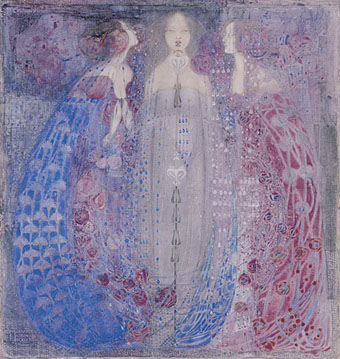
mackintosh.jpg

The Three Perfumes (1912) by Margaret Macdonald Mackintosh.

• “…we have empowered this monopoly to strike fear into the hearts of authors. And that may be unprecedented in history. Through our own complicity as consumers, their market share only grows.” Dave Eggers talking to Rachel Krantz about the dominance of Amazon, and his new novel, The Every.

• “People will readily flock to yoga and Pilates classes, but how many show up for soundscape therapy or take a sound-walk?” Bernie Krause on the healing powers of quietude, the Ba’Aka tribe, and Japanese forest bathing.

• “Difficulty is my drug of choice, I guess.” Dennis Cooper (again) talking to Troy James Weaver about his new novel, I Wished.

• At Wormwoodiana: Mark Valentine reviews Shadows of London by Jonathan Wood.

• Robert Fripp’s drive to 1981: Joe Banks on Discipline and the return of King Crimson.

• End times and rapture: Ken Hollings remembers Richard H. Kirk.

• Daniel Spicer on The Strange (Parallel) World of Miles Davis.

• Mix of the week: XLR8R Podcast 715 by Uffe.

• Steven Heller’s font of the month is Oposta.

Perfumed Metal (1981) by Chrome | Ode To Perfume (1982) by Holger Czukay | Perfume (2006) by Sparks