Weekend links 227

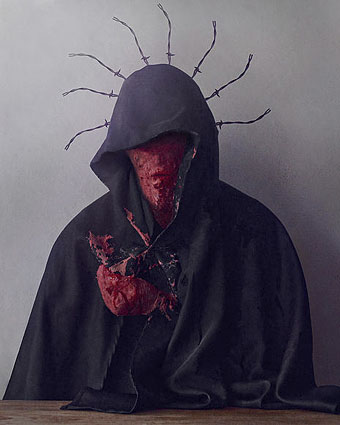
grim.jpg

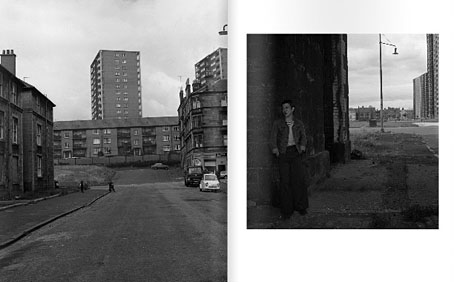
A Follower by Jason Grim.

Haunted Futures, a multi-genre anthology from Ghostwoods Books, will feature stories by Warren Ellis, John Reppion, Liesel Schwarz, Chuck Wendig, Richard Kadrey, Stephen Blackmoore and others. It will also feature some of my illustrations but only if this this Kickstarter fund is successful.

• “…at issue here is restriction versus potential: protect a specific set of choices versus open the field to the exploration of everything.” Sam Potts offers a refutation of Robert Bringhurst’s design textbook The Elements of Typographic Style.

• “I discovered that if one looks a little closer at this beautiful world, there are always red ants underneath.” Morgan Meis quoting David Lynch in a review of David Lynch: The Unified Field, a new exhibition of Lynch’s paintings.

But among these novels only Moravagine, first discovered for English-speaking readers by Henry Miller and a direct ancestor of Céline’s Voyage au bout de la nuit, has survived as an underground classic. A monstrous admixture of Lautréamont’s Maldoror, Feuillade’s Fantômas, Nietzsche’s Superman, Jack the Ripper and (according to the Cendrars scholar Jay Bochner) the deranged Jung and Freud disciple Otto Gross, Moravagine remains Cendrars’s most nihilistic and darkly comic other.

Richard Sieburth on Blaise Cendrars and his “Dada update of Dostoevsky”, coincidentally the subject of a post here earlier in the week.

• “…the duchess became enthralled with the idea of creating a garden of plants that could kill instead of heal.” Natasha Geiling on Jane Percy’s Poison Garden.

• Mix of the week: Kosmik Elektronik [part 3] by The Kosmische Club. More Kosmische musik: Agitation Free on French television in 1973.

• At Dangerous Minds: Secret Weapons (1972), 22 minutes of made-for-TV dystopian science fiction directed by David Cronenberg.

Project Praeterlimina, “a journal of daemonology, magic, and the human condition”.

The NOS Project: download Shed’s score for Murnau’s Nosferatu.

• At Lambda Literary: Toy, a poem by Evan J. Peterson.

Drew Daniel doesn’t want to play the listicle game.

Surrealism and Magic

Stuff in old books

Haunted Island (1973) by Agitation Free | Haunted Heights (1977) by Peter Baumann | Haunted Dancehall (1994) by The Sabres of Paradise

Moravagine book covers

moravagine01.jpg

First publication, Grasset, 1926.

I should have liked to open all cages, all zoos, all prisons, all lunatic asylums, see the great wild ones liberated and study the development of an unheard-of kind of human life…

Recent reading was Moravagine (1926) by Blaise Cendrars, a novel that resists easy summary. It’s a Modernist work to some extent although the prose (a good translation from the French by Alan Brown) is never unorthodox in style; it’s also scabrous, amoral, misogynist and deeply misanthropic. The narrative is a picaresque affair narrated by a young doctor who frees the mysterious Moravagine from an asylum where he’s been imprisoned for many years. “Moravagine” is an adopted name whose origin and meaning is never addressed, although a French reader would find a rather unavoidable pun on “death by vagina”. Moravagine himself is an otherwise unnamed member of the Hungarian royal family, a dwarfish intellectual psychopath with a bad leg who goes on the run with the doctor, first to pre-revolutionary Russia, then to the United States and South America.

Reviewers have compared the book to Beckett, Céline and Burroughs although it’s much lighter reading than the first two, and the prose is more coherent than Burroughs in cut-up mode. Since we’ve been hearing a lot about the First World War this year it’s tempting to read the book as a kind of Dadaist reaction to Cendrars’ own experiences in the war, even though the entirety of the conflict is dispensed with in two pages. Cendrars appears as a character in the later chapters; he lost an arm in the war so he has his narrator lose a leg while Moravagine loses his reason altogether. At the end of the book he’s found imprisoned in another asylum where he believes he’s an inhabitant of the planet Mars, and where he spends his last months writing a huge, apocalyptic account of how the world will be in the year 2013.

All this, of course, presents a challenge for a cover designer. I have two Penguin editions, both with very different covers, neither of them unsuitable. Curiosity impelled me to see how the book has been treated since 1926. There aren’t many editions but their difference shows the difficulty of trying to encapsulate the contents of this strange novel in a graphic form. The selection here has avoided text-only treatments in favours of those using some form of illustration.

moravagine05.jpg

Le Livre de Poche, 1957.

In an early chapter Moravagine describes fleeing the imperial household by strapping himself to a horse. Without knowing this narrative detail the painting here seems bizarrely arbitrary.

moravagine02.jpg

Editora Ulisseia, Portugal, 1966.

The horses again, with Moravagine strapped underneath one of them. I’d guess the illustrators of these two books didn’t read very far.

moravagine03.jpg

First UK edition, Peter Owen, 1968.

Peter Owen commissioned the first English translation which is still in use today.

Continue reading “Moravagine book covers”

Weekend links 224

zona.jpg

Zona: concept art by Alex Andreyev for a planned TV series based on Roadside Picnic by Arkady & Boris Strugatsky.

The Black Sessions are a long-running series of concerts by international artists recorded for radio station France Inter. UK group Broadcast were recorded by the station in May, 2000. While copies of the shows can be often be hard to find, files of the Broadcast concert may be downloaded here. A fantastic performance, especially the white-hot psychedelic freakout at the end.

• Further investigations from the radio age: Invention for Radio No. 1: The Dreams (43 mins, 1964): “an attempt to re-create in five movements some sensations of dreaming—running away, falling, landscape, underwater and colour”. Voices recorded by Barry Bermange with Radiophonic manipulation by Delia Derbyshire.

• “…in his first description of Cthulhu he gives you a list of four things that Cthulhu isn’t quite like.” Nick Talbot talks to Alan Moore about HP Lovecraft. Related: one of my depictions of Azathoth appears in this list of “gods who have forsaken you”.

• Tracking the locations of JG Ballard’s Super-Cannes: an investigation by Rick Poynor. Related: houseboats, architecture and eco-disaster; Justin Sullivan photographs California’s extreme drought.

• “As her writing career existed outside the realm of respectable ‘high-lit’ fiction, she cast herself as an outsider icon.” Chris Kraus on I’m Very Into You, a collection of Kathy Acker’s emails.

• Cover design inspiring fiction: Susan Coll on how a photo of a Bauhaus chair on the cover of her new novel, The Stager, made her alter her text at the last minute.

• “People were either taken by it or felt it was the Antichrist.” MetaFilter on Clair Noto’s unmade science-fiction film, The Tourist.

The Norwood Variations is a new album by Drew Mulholland (Mount Vernon Arts Lab et al).

• Thought Maybe has a collection of the television essays made by Adam Curtis.

• From 1974: How To Make Magic, a children’s handbook of the occult.

• Mix of the week: Secret Thirteen Mix 126 by Mira Calix.

One Minute Blasts Rising To Three And Then Diminishing (2000) by Mount Vernon Arts Lab | Dashwood’s Reverie (2001) by Mount Vernon Arts Lab | Warner’s Reverie (2002) by Mount Vernon Astral Temple

Weekend links 223

paez.jpg

Step Up (2014) by Angelica Paez.

• Lots of attention this week for Kevin Martin whose latest album as The Bug, Angels And Devils, is out now on Ninja Tune. The previous Bug release, London Zoo (2008), was a fierce collection that stood apart from the Grime pack not only for its guest vocalists but also for being informed by Martin’s broad range of influences: industrial and extreme electronics, heavyweight dub, metal and avant-garde jazz. Martin was interviewed by The Quietus and FACT who also asked other musicians to choose their favourite Martin recordings. Elsewhere, The Wire has Swarm, a track not included on the album.

Related: Martin’s four superb compilation albums for Virgin Records have been deleted for years but are worth seeking out: Ambient 4: Isolationism, Macro Dub Infection Volume One & Volume Two, and Jazz Satellites Volume 1: Electrification (Virgin cancelled volume 2). From the NME, 1995: Kevin Martin’s Ten Commandments For All Time.

• “…it never becomes quite clear why two grown men would want to write to each other in the guise of a horse and a cat.” Henry Giardina reviews The Animals: Love Letters Between Christopher Isherwood and Don Bachardy, edited by Katherine Bucknell.

Shufflepoems: A Deck of Poetry by Lydia Swartz. “100 cards, four suits, one stanza per card. Shuffle for a new adventure every time.” The project needs a last-minute push to gain Kickstarter funding so if this sounds interesting go, go, go!

The Haxan Cloak’s favourite heavy metal albums. Metallica’s Master Of Puppets still gets my vote. More from The Quietus: David Stubbs on the Werner Herzog soundtracks of Popol Vuh.

• At Strange Flowers: Waking the witch, a remembrance of occult artist Rosaleen Norton and other characters from Sydney’s Kings Cross area, with news of a planned Norton documentary.

• A nine-note motif has for decades signalled “Asian” in popular music. Kat Chow looks at the history of a musical stereotype.

Joseph Conrad’s Heart of Darkness is the subject for entrants in the Folio Society’s latest illustration competition.

• Irradiating the Object: Rhys Williams talks to writer M. John Harrison.

Does the Sea Serpent Really Look Like an Art Nouveau Oar-fish?

Schrödinger’s cat caught on quantum film.

70s sci-fi art: a Tumblr.

Demodex Invasion (1995) by Techno Animal | Piranha feat. Toastie Taylor (2001) by Techno Animal | Poison Dart feat. Warrior Queen (2008) by The Bug

Weekend links 222

wicker.jpg

A self-portrait by Nadia Wicker from her Projectie series.

• “And boy, did that Rain Parade sleeve look cool with its picture of the insouciant band sitting in front of large hot-house (or glass palace), the sky behind them tinted a sickly shade of apocalypse pink…” Joe Banks on the Rain Parade’s finest moment, Explosions In The Glass Palace.

• “…there are pleasures to be had from books beyond being lightly entertained. There is the pleasure of being challenged; the pleasure of feeling one’s range and capacities expanding…” Rebecca Mead on the pleasure of reading to impress yourself.

• “If Gengoroh Tagame performed the acts he drew in his comics he’d probably be dead or in jail,” says Zac Bayly, interviewing Tagame for BUTT.

Crime does not fascinate James Joyce as it fascinates the rest of us—the suggestion of crime dismays him. He tells me that one of his handicaps in writing Work in Progress is that he has no interest in crime of any kind, and he feels that this book which deals with the night-life of humanity should have reference to that which is associated with the night-life of cities—crime. But he cannot get criminal action into the work. With his dislike of violence goes another dislike—the dislike of any sentimental relation. Violence in the physical life, sentimentality in the emotional life, are to him equally distressing. The sentimental part of Swift’s life repels him as much as the violence of some of his writing.

Padraic Colum attended Joyce’s 47th birthday party.

• I’m currently reading The Wanderer, “a weird document” by Timothy J. Jarvis, which is officially published this week.

The Changes, another remarkable children’s TV series from the 1970s, is out on DVD next week.

Sir Richard Bishop has made all 14 of his solo albums available as free downloads.

• “How long do CDs last? It depends, but definitely not forever,” says Laura Sydell.

• “Readers absorb less on e-readers than on paper, study finds

• Book designer Craig Mod wants to talk about margins.

• Mix of the week: a mix for The Quietus by Helm.

Ozu’s passageways

• The Rain Parade: No Easy Way Down (BBC TV, 1984) | No Easy Way Down (studio, 1984) | No Easy Way Down (Tokyo, 1984)