Wilfried Sätty: Artist of the occult

satty1.jpg

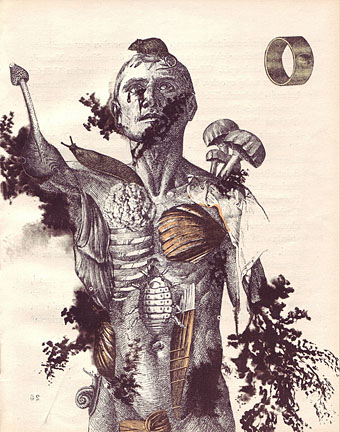
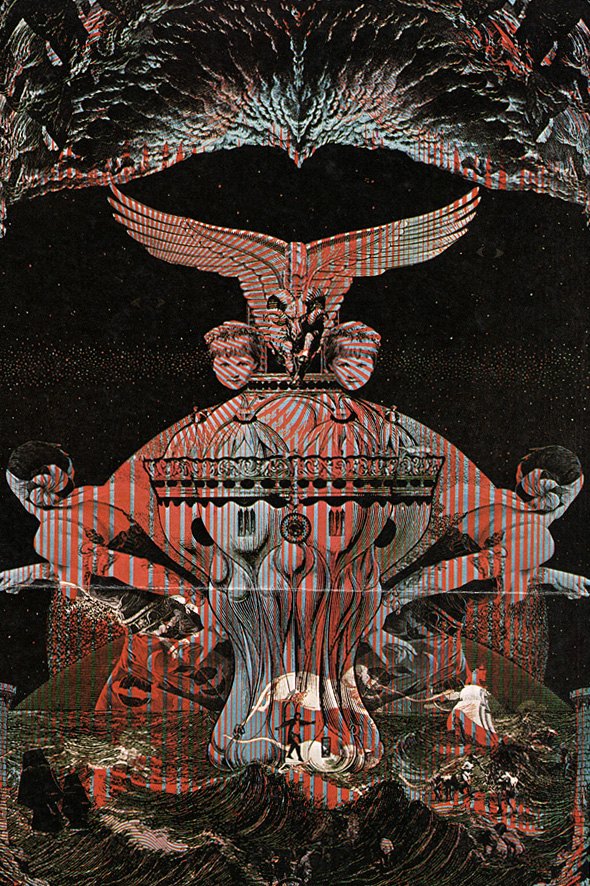
After last week’s post about Wilfried Sätty‘s illustrated Poe, I thought I’d follow it up with this 1970 interview from Man, Myth & Magic, a part-work publication which built weekly into a seven-volume “illustrated encyclopedia of the occult”. In the back of each issue there was a two-page feature, Frontiers of Belief, usually featuring more topical material, and issue 36 had Sätty as its subject. The interview captures him just after he’d been building his reputation as one of San Francisco’s psychedelic poster artists and just before the book collections of his collage work started to appear. The description of his working methods inevitably plays up the occult associations but helps to give a little insight into the artist. The first two pictures here are from the published article to which I added a couple of the album covers he produced in the 1970s. There’s also a poster for an exhibition with friend and fellow artist David Singer whose lettering adorned many of Sätty’s posters.

A note about Sätty’s name: he was known as Wilfried Podriech when he came to America but changed his name to Sätty thereafter. This surname is often reproduced without an umlaut over the “a” which I regard as an error. When Jay Babcock, Richard Pleuger and I visited David Singer to discuss Sätty’s work (and see some of Singer’s own) we were informed that Sätty’s adopted name was intended to be reminiscent of the Egyptian Pharaohonic name Seti. The umlaut over the “a” gives the pronunciation setty; without it would be satty.

*   *   *

ARTIST OF THE OCCULT by Robert W. Neubert

Alchemy can be a state of being according to Sätty, a German-born artist who now lives in San Francisco; and he believes that this concept can be extended to art. In his attempts to plumb the depths of the subconscious he makes use of his collection of occult works, including a 17th century alchemical text and a book of healing and magic published in 1648.

Blue and orange flames flicker from an ancient urn and throw dancing shadows about a dimly-lit subterranean chamber in San Francisco, California. Old, dark-hued tapestries hang from the walls and low ceiling, and occult art objects are crammed into every corner. Baroque harpsichord music filters through the incense-scented air.

Descending a wooden ladder into the nearly black chamber is a tall, lanky man with flowing brown hair, a dark blue Western-styled shirt, and grey flared slacks. He carries under his arm a mystical-looking montage he has recently created and run off on a lithograph press.

The montage is in poster form, and it is a haunting collection of Renaissance and medieval themes, incredible in its intensity, colour and creativity.
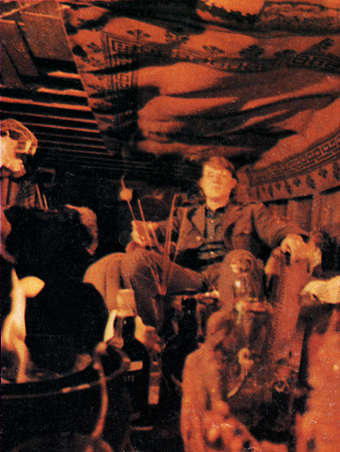
satty_photo.jpg

Sätty photographed for Man, Myth & Magic (1970).

The artist is Sätty, a German-born montage-maker with a dream—a dream of plumbing the depths of the subconscious by utilizing alchemy and mysticism in his work.

Alchemy is essential to his creativity, he says. But the 31-year-old artist’s definition of alchemy has a broader meaning than the classic textbook definition of transmuting base metals into gold. He is one of the first non-commercial poster makers, and his work far transcends the psychedelic art used to advertise San Francisco rock and roll dances.

“Alchemy can be a state of being,” he says. “There is such a thing as visual or intellectual or artistic alchemy. The undeveloped mind may be considered akin to lead, the fully-realized mind as gold. And the same is true of art. Much of contemporary art is lead.”
Continue reading “Wilfried Sätty: Artist of the occult”

A playlist for Halloween: Drones and atmospheres

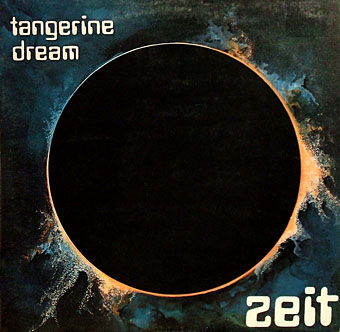
zeit.jpg

Cover painting by Edgar Froese.

I have seen the dark universe yawning
Where the black planets roll without aim,
Where they roll in their horror unheeded,
Without knowledge or lustre or name.

HP Lovecraft, The Haunter of the Dark, 1935.

It’s become traditional to do this each Halloween so here we go again with another music list, ten releases to soundtrack your way into another world. Should you be curious, a number of these works are probably difficult to find but a couple of the Discogs links have YouTube clips on the pages. Some of the selections were featured on an earlier list but this time they’re grouped with similar recordings.

Zeit (1972) by Tangerine Dream
All you need is Zeit. I was tempted to write an entire post extolling the virtues of my favourite Tangerine Dream album, to note how I’ve been listening to it for thirty years and will never tire of it, to mention how much I love Edgar Froese’s Black Sun cover painting (which ties it to another pet obsession of mine), how much I relish its pretentious subtitle “A largo in four movements” and the cello drones which open Birth Of Liquid Plejades then grade to Moog doodles by Popol Vuh’s Florian Fricke; the endless rumbling, howling minimalism of the whole enterprise… This was an enormously audacious album for its time which predicts many of the subsequent recordings on this list. One of the Kosmische masterworks, and so far out there that every move made by the group thereafter could only be a retreat.

Nature Unveiled (1984) by Current 93
Much as I respect David Tibet for his championing of esoteric culture I’ve never much liked the music he produces. The first Current 93 album was an interesting collage work, however, created by a kind of supergroup from the Industrial music scene of the time which included members of Coil, Nurse With Wound and 23 Skidoo. The second side provides an ideal Halloween piece with The Mystical Body of Christ in Chorazaim, a blending of Gregorian loops and guitar feedback over which Annie Anxiety rants in Spanish about…penises? I still don’t know. The whole thing sounds like something you’d expect to be playing over the landscapes in Wayne Barlowe’s Inferno.

Soliloquy For Lilith (1988) by Nurse With Wound
As for Nurse With Wound, this collection of eight electronic (?) drones achieves the typical NWW state of being simultaneously fascinating and irritating in equal measure.

Nunatak Gongamur (1990) by Thomas Köner
The master of what he calls “grey noise” made his first album by “miking-up gongs, then rubbing, scraping and electronically treating the sounds to the point where their origin is unrecognisable.” (More.) The result very effectively conjures the icy wastes alluded to by its title, and would make a perfect soundtrack for reading Lovecraft’s At the Mountains of Madness or The Terror by Dan Simmons.

angels.jpg

How To Destroy Angels. Cover painting by Derek Jarman.

How To Destroy Angels (Remixes and Re-Recordings) (1992) by Coil
Coil created a similar effect to Köner by treating the sounds of their first 12″ release from 1984 to electronic processing, stretching metallic noises into reverberant shudders. One of the remixes is by Steven Stapleton of Nurse With Wound, while track title Dismal Orb will always make me think of the cover of Zeit.

The Monstrous Soul (1992) by Lustmord
Almost everything released by Lustmord could be labelled “drones and atmospheres” and choosing one doom-laden work over another is a difficult matter. I opted for this one on account of its occult track titles and the well-chosen dialogue samples from The Night of the Demon.

Treetop Drive (1994) by Deathprod
One from the 2006 list. I couldn’t say it any better than I did four years ago: Helge Sten is a Norwegian electronic experimentalist whose solo work is released under the Deathprod name. “Electronic” these days often means using laptops and the latest keyboard and sampling equipment. Deathprod music is created on old equipment which renders its provenance opaque leaving the listener to concentrate on the sounds rather than be troubled by how they might have been created. The noises on the deceptively-titled Treetop Drive are a disturbing series of slow loops with squalling chords, anguished shrieks and some massive foghorn rumble that seems to emanate from the depths of Davy Jones’ Locker. Play it in the dark and feel the world ending.

Night Passage (1998) by Alan Lamb
Not music at all but treated sounds made from recordings of a length of telegraph wire vibrated by the wind somewhere in Western Australia. Night Passage Demixed was a collection of remixes by artists including Thomas Köner and Lustmord’s Brian Williams.

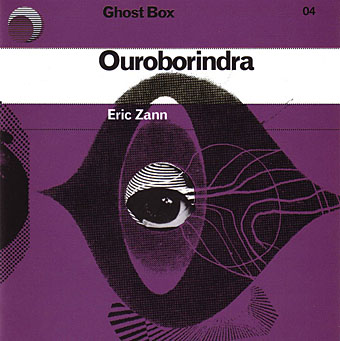
ouroborindra.jpg

Design by Julian House.

Ouroborindra (2006) by Eric Zann
Another from the 2006 list and the most deliberately horror-oriented work on the Ghost Box label. An artist name borrowed from HP Lovecraft and track titles from Arthur Machen.

The Air Is On Fire (2007) by David Lynch
David Lynch’s friend and genius of a sound designer Alan Splet created the template for many of the works listed here with his groundbreaking soundtrack for Eraserhead in 1976. Following his death in 1994 Lynch’s films have never had quite the same feel of visceral menace despite their considerable qualities in other areas. This CD was created by Lynch himself for an exhibition of his paintings and other artwork, and if it doesn’t possess the uncanny otherness of Splet’s rumblings it still makes for some very disturbing listening. Far better than recent Lynchian musical excursions like the Blue Bob album, and well worth seeking out.

Previously on { feuilleton }
A playlist for Halloween: Voodoo!
Dead on the Dancefloor
Another playlist for Halloween
White Noise: Electric Storms, Radiophonics and the Delian Mode
The Séance at Hobs Lane
Thomas Köner
A playlist for Halloween
Ghost Box

Weekend links 35

cr.jpg

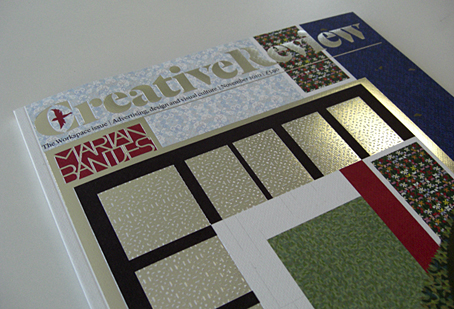
Marian Bantjes designs the cover of the latest Creative Review and there’s a feature about her work inside.

• “…the question: ‘was Shakespeare gay?’ strikes me as so daft as to be barely worth answering. Of course he was. Arguably he was bisexual, of sorts, but his heart was never on his straight side.” Don Paterson throws the cat among the pigeons in an examination of the Shakespeare’s sonnets. Related (sort of): Shakespeare and Company: The bookshop that thinks it’s a hotel. Also related: Jeanette Winterson revisits Shakespeare and Company.

100 orbs of light float in the Schuylkill River. Also in Philadelphia: Animators Amok in a Curiosity Cabinet: the Brothers Quay are making a film in the Mütter Museum. Can’t wait to see it.

• More Alan Moore: Fossil Angels, a lengthy essay about magic and the occult, was written in 2002 but hasn’t been given a public airing until now.

Alberto Manguel is always worth reading:

As Borges was well aware even then, the history of literature is the history of this paradox. On the one hand, the deeply rooted intuition writers have that the world exists, in Mallarmé’s much-abused phrase, to result in a beautiful book (or, as Borges would have it, even a mediocre book), and, on the other hand, to know that the muse governing the enterprise is, as Mallarmé called her, the Muse of Impotence (or, to use a freer translation, the Muse of Impossibility). Mallarmé added later that all who have ever written anything, even those we call geniuses, have attempted this ultimate Book, the Book with a capital B. And all have failed.

• Here Comes Everybody: Wake In Progress is a self-described “foolhardy attempt to illustrate Finnegans Wake”. Easier to illustrate than make a film of the book, I’d have thought, and Mary Ellen Bute already attempted the latter.

hoffmeister.jpg

Psychic Explosion: Adolf Hoffmeister’s illustrations for a 1967 edition of Lautréamont’s Poesies at A Journey Round My Skull.

Craig Colorusso’s Sun Boxes can be seen at Turner Falls, Massachusetts, during November.

Clive Hicks-Jenkins has a book and retrospective exhibition of his art due next year.

• A sneak peek into The Steampunk Bible to which I’m a contributor. And also here.

• “Human or other; depends who comes”: the Ballardian films of Paul Williams.

Transmission (1979) by Joy Division; Transmission (1995) by Low; Monkey (2010) by Robert Plant.

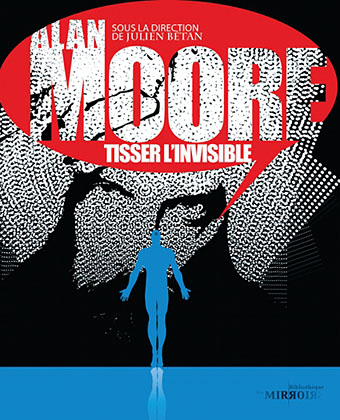
Alan Moore: Tisser l’invisible

moore.jpg

Arriving in the post this week was Alan Moore: Tisser l’invisible from French imprint Les Moutons Électriques. The book is a substantial collection of appreciative texts and analyses of work by the Northampton Ipsissimus edited by Julien Bétan, and, as the title would imply, is in French throughout. A couple of the pieces are reprints which I presume are receiving their first translation here. Michael Moorcock’s Homage to Cornucopia first appeared in Alan Moore: Portrait of an Extraordinary Gentleman and is also reprinted in Moorcock’s Into the Media Web which I designed and Savoy Books published earlier this year.

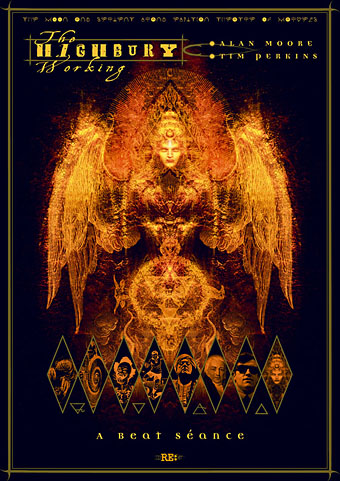
highpost.jpg

Best thing for me about the French collection is seeing some of my Moore-related work printed in colour as a mini gallery at the front of the book. There are two of the poster designs for the Moon & Serpent CDs, The Highbury Working (above) and Angel Passage, and also my 1999 portrait of Promethea and the Kabbalistic Underground map which I created as a design of my own and Alan subsequently incorporated into the Promethea comic series.

And speaking of Mister Moore, issue 6 of Dodgem Logic is now on sale sporting a cover which can either be interpreted as a gloomy Halloween design or a faithful depiction of the nation’s slough of despond; you decide.

Previously on { feuilleton }
Into the Media Web by Michael Moorcock
Watchmen
Alan Moore interview, 1988

The art of Hector de Gregorio

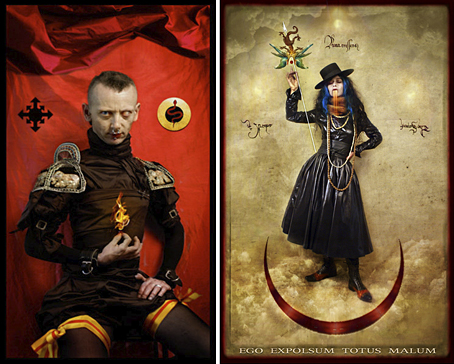
gregorio.jpg

left: Magus/Lee Adams (or Magician in the Tarot) (2009); right: I Expel All Evil (2010).

Tarot imagery—or work inspired by it—continues to infiltrate the contemporary art world. The gallery sites featuring Hector de Gregorio’s pictures have a couple of other portraits based on the Major Arcana but there’s no clue as to whether he’s depicted the full series. Given the quality of these creations I think he ought to give it a go. Via Bajo el Signo de Libra.

Previously on { feuilleton }
The Major Arcana by Jak Flash
The Sapphire Museum of Magic and Occultism
Strange Attractor Salon
The art of Pamela Colman Smith, 1878–1951
Layered Orders: Crowley’s Thoth Deck and the Tarot
In the Shadow of the Sun by Derek Jarman
The Major Arcana