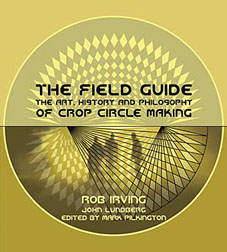
 The Field Guide: the Art, History & Philosophy of Crop Circle Making
by Rob Irving & John Lundberg.
Edited by Mark Pilkington
Three decades ago, two men in their fifties began flattening circles into the fields of Hampshire and Wiltshire. Little did they know that their Friday night antics would seed an international phenomenon that continues to change people?s lives to this day.
Now, in the first book of its kind—part history and part how-to guide—the secrets of the crop circle world are revealed, by the people behind the modern era?s most astounding artform. Whether you think crop circles represent a genuine mystery, a new kind of art, or an elaborate practical joke, The Field Guide is sure to leave a lasting impression.
The English landscape would never be the same again!
• How two men in their fifties “conned the world” and spawned an international phenomenon.
• Three generations of crop circle makers tell the stories behind the amazing crop formations, in the first book of its kind.
• Secrets of the artists revealed in a complete “how-to” guide!
• Inside the world of the “croppies”, the people who study the crop circles.
• Bizarre beliefs examined, bogus science exposed!
• In-depth interviews with Doug Bower, the man who started it all, and The Circlemakers, the team behind some of the most spectacular formations on record.
• From the team behind www.circlemakers.org and the editor and publisher of Strange Attractor Journal.
£8.99, Pb, 288pp, heavily illustrated. ISBN 0954805429
File under Art / Culture / Paranormal Phenomena
Available late August 2006 from all good bookshops
or from www.strangeattractor.co.uk and www.circlemakers.org
Strange Attractor Press
BM SAP
LONDON WC1N 3XX
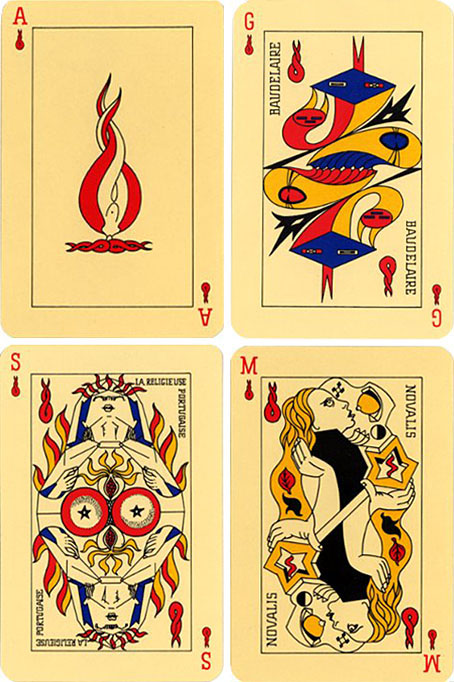
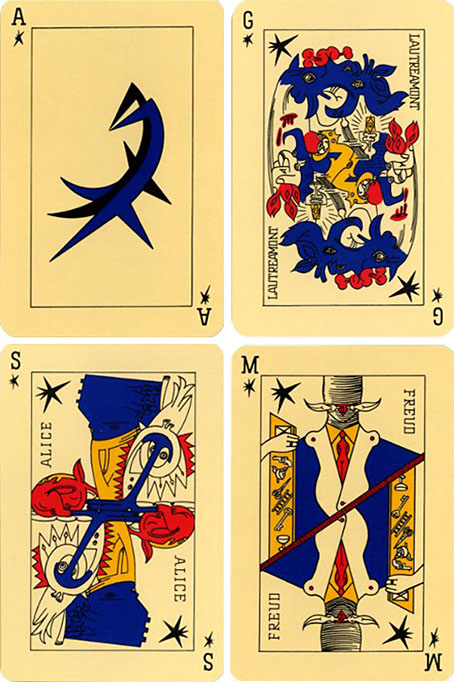
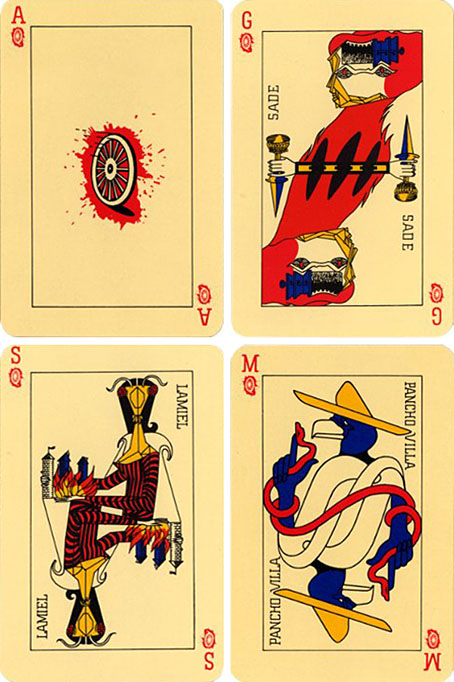
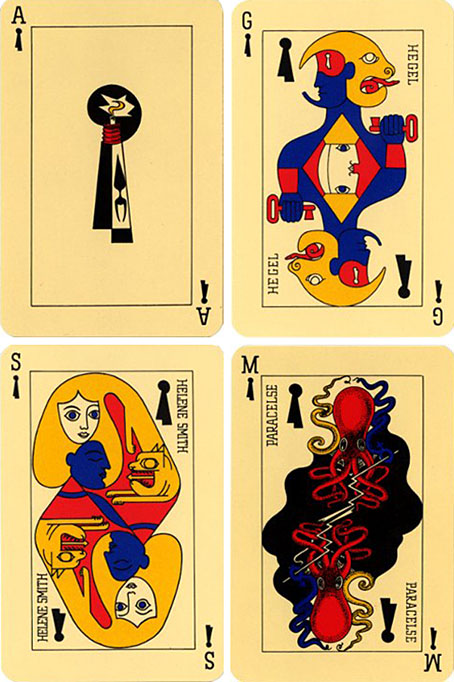
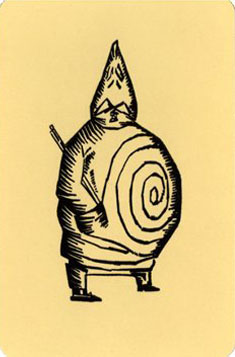 Reworking the illustrations of the standard fifty-two card playing deck has become quite a common thing in recent years with numerous themed decks being produced in costly limited editions. The same goes for decks of Tarot cards which have now been mapped across a number of different magical systems and produced in sets that often add little to the philosophy of the Tarot but merely vary the artwork. This wasn’t always the case, and certainly not in the 1940s when André Breton and a group of fellow Surrealists produced designs for a fascinating deck of cards that hybridises the Tarot and the more mundane pack of playing cards in an attempt to create something new.