Weekend links 331

jacobsen.jpg

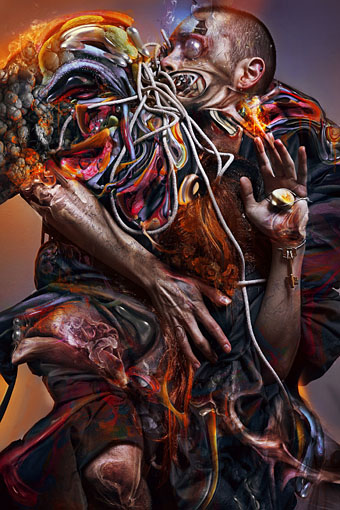
Ekeko (2016) by Jon Jacobsen.

Outer Space (1999), a short film by Peter Tscherkassky using reprocessed footage taken from The Entity (1982).

Pye Corner Audio playing live for 77 minutes at New Forms Festival, Vancouver 2016.

Salvador Dalí‘s rare Surrealist cookbook republished for the first time in over 40 years.

Keeping On Keeping On by Alan Bennett; extracts from the writer’s most recent diaries.

The Hagströmer Medico-Historical Library is a new source for free antique images.

• The shopfronts of independent Paris photographed by Sebastian Erras.

The Edge of the Ceiling (1980) is a short film about writer Alan Garner.

• Mix of the week: Secret Thirteen Mix 198 by Bestial Mouths.

Brenda S G Walter on eviscerating the body of Black Metal.

• “When did new age music become cool?” asks Geeta Dayal.

Barok Main, a new piece from Mica Levi & Oliver Coates.

• American gay magazine XY has been relaunched.

• Confessions of a vinyl junkie by David Bowie.

Touch Radio archive at the British Library.

Harvard’s collection of glass flowers.

Michelle Stuart‘s Magical Land Art.

Dali’s Car (1969) by Captain Beefheart & His Magic Band | Save Me From Dali (1980) by Snakefinger | Salvador Dali’s Garden Party (1989) by Television Personalities

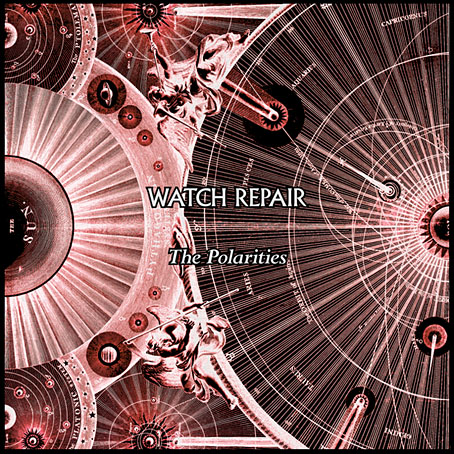
The Polarities by Watch Repair

polarities.jpg

The book and music design areas of my website are still overdue for a proper update but I’ve added this recent design for my friends in Watch Repair. This is another excellent series of compositions that resist easy categorisation or description, a quality that has reviewers on sales websites reaching for the clichés. A writer like Timothy J. Jarvis, however, delivers a more perceptive appraisal:

The Polarities is an engrossing mix of acoustic composition (predominantly picked strings and chimes, though the instrumentation is incredibly dense), musique concrète, and some found sound and serial elements. Plucks, decaying chimes, creaks, harsh bursts of static, slides rubbed on wound strings, spectral radio broadcasts, rumbling bass, unnerving electronic textures, beautiful guitar picking, all intermittently smothered in drones, by turns ominous and shimmering.

Much of contemporary acoustic composition is a little trite, emptily sentimental, romantic, and twee. The Polarities entirely avoids the pitfall of mawkishness, but it is much more, and much more affecting, than an exercise in composition. Watch Repair are interested in texture and tone and embrace dissonance as a counterpoint to melody. They make difficult music that requires and rewards attentive listening. But also music that is mesmerizing and genuinely moving, often eerie and haunting. (more)

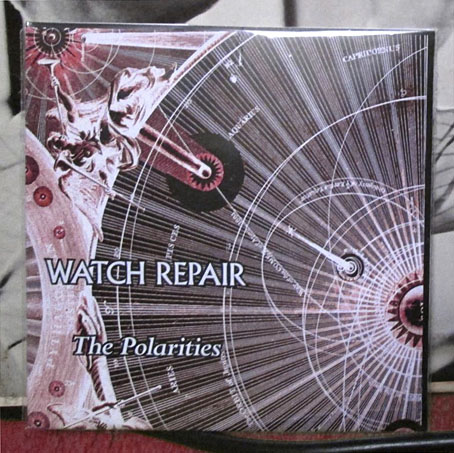
My task on this release, as with last year’s The Tidal Path, was mainly to make the CD insert look presentable, the group having already chosen the fine cosmological engraving. The CD comes packaged in a plastic wallet with a bonus 3-inch disc of related music, and there’s an extended mix of one piece at Soundcloud. I think this is their best release to date. Watch Repair are now embedded in the Bandcamp world (as are related artists, Warper’s Moss) so you can judge for yourself.

photo.jpg

Previously on { feuilleton }
Seven Harps by Warper’s Moss
The Tidal Path by Watch Repair
Watch Repair

Weekend links 330

battle.jpg

Summer Passing (2013) by Laura Battle.

• The Marquis de Sade’s enduringly contentious The 120 Days of Sodom has been republished by Penguin Books in a new translation by Will McMorran and Thomas Wynn. “[De Sade] described his novel as ‘the most impure tale ever written since the world began’ and, for all the hyperbole, his description still holds true even now,” says Will McMorran, exploring the history and reputation of the book.

• From the Cutting Room Floor: Rick Klaw talks to Bruce Sterling about the current state of US (and world) politics. Sterling’s Futurist novel Pirate Utopia (which I’ve designed and illustrated) will be published by Tachyon next month.

• New from Strange Attractor: In Fairyland: The World of Tessa Farmer, edited by Catriona McAra, and Of Shadows: One Hundred Objects from The Museum of Witchcraft and Magic by Sarah Hannant and Simon Costin.

• Mix of the week: Programme No. 16 in the long-running Radio Belbury series is a guest presentation by The Pattern Forms (Jon Brooks, Edward Macfarlane and Edward Gibson).

The Book of Three Gates by Simon Berman, “An Esoterica of HP Lovecraft’s Cthulhu Mythos”, is seeking funding.

• Occultist Phil Hine discusses Richard Payne Knight and phalluses at the Conway Hall, London, later this month.

• “My goal is to make music that is transcendent and isn’t specific of a certain time,” says Earth’s Dylan Carlson.

• Kiss the sky: psychedelic posters of the 60s and 70s from the collection of the late Felix Dennis.

Radionics Radio: An Album Of Musical Radionic Thought-Frequencies.

Madeleine LeDespencer on the occult bookshops of London.

Unknown Pleasures waveform gif generator

Sade Masoch (1968) by Bobby Callender | Confessional (Give Me Sodomy Or Give Me Death) (1991) by Diamanda Galás | The Sodom And Gomorrah Show (2006) by Pet Shop Boys

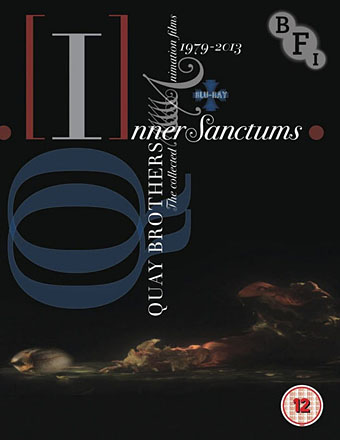
Inner Sanctums—Quay Brothers: The Collected Animated Films 1979–2013

quays.jpg

In previous posts about the Quay Brothers’ films I’ve expressed a hope that we might see a new collection from the BFI that gathers together more of their recent works. That’s what we have now in a 2-disc Blu-ray set that will be released in the UK on 10th October.
quay.jpg

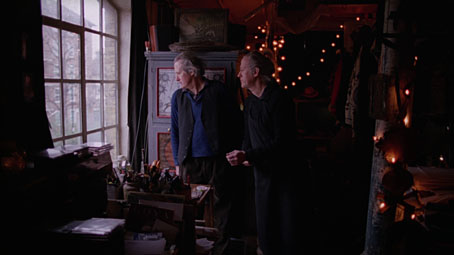
Quay (2015) directed by Christopher Nolan.

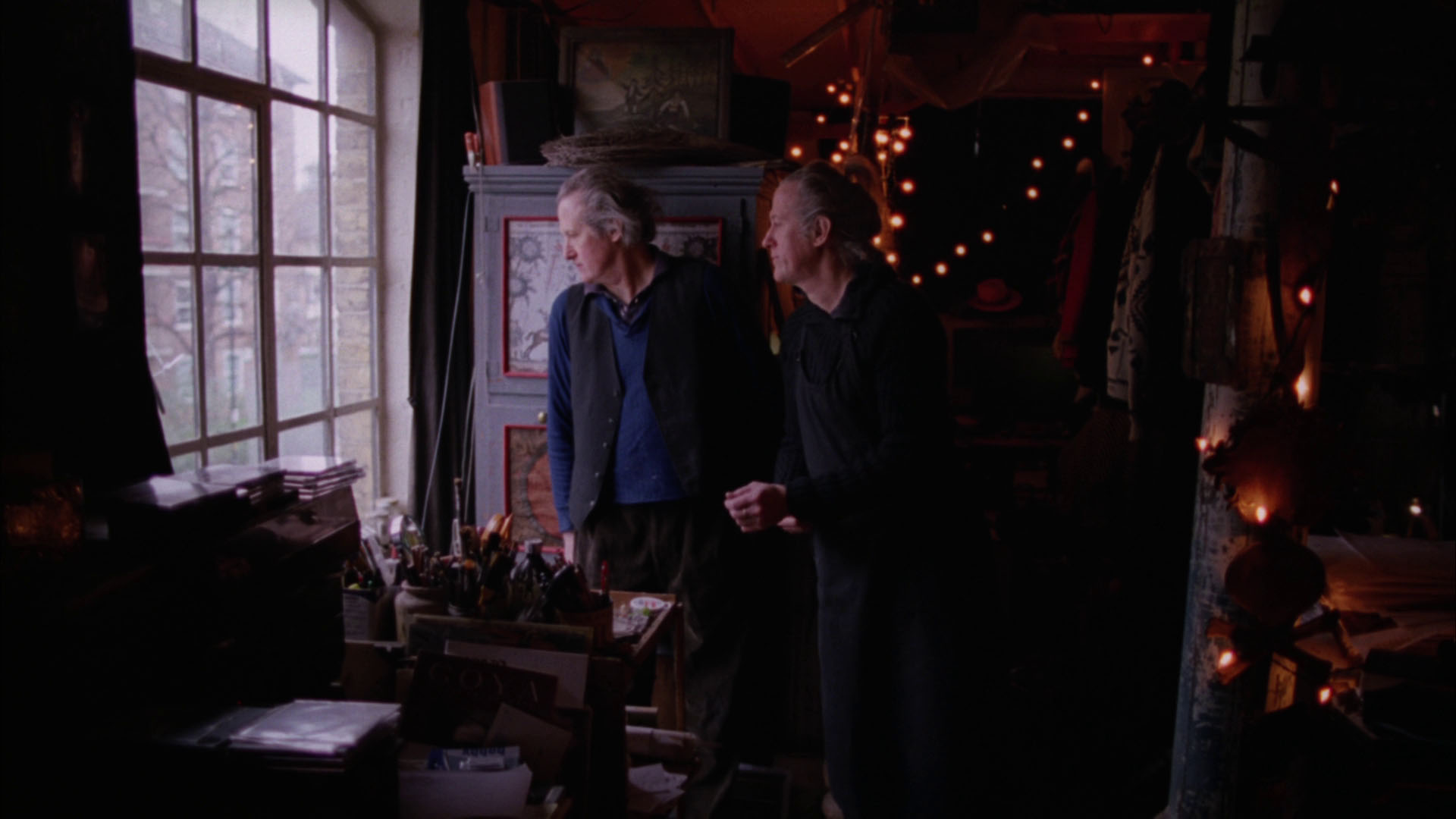
The new collection repeats the contents of the earlier BFI DVD set, The Short Films 1979–2003, while adding some of their recent commissions including Maska (2010), Through the Weeping Glass (2011), and Unmistaken Hands: Ex Voto F.H. (2013). Among the extras there’s a short portrait of the brothers, Quay (2015), directed by Christopher Nolan. This shows the Quays at work in their Southwark studio where they discuss the technical details of animation and puppet-making a little more than I’ve seen in other interviews. Nolan’s film is both beguiling and frustrating, the latter for being so inexplicably short. When I first saw Quay announced I thought it might be a feature-length documentary rather than a fleeting glimpse; the Quays have been interviewed regularly over the past few years so they’re not exactly unforthcoming. I’m hoping now that Nolan’s public enthusiasm for the brothers might at least help them to make another feature, a decade having elapsed since The Piano Tuner of Earthquakes (2005).
street1.jpg

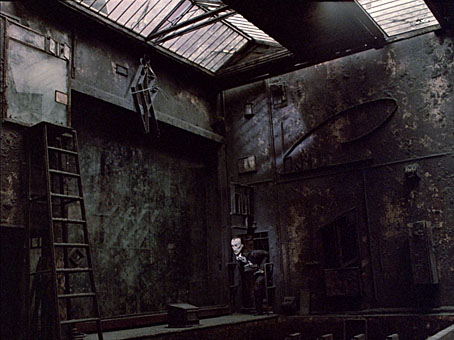
Street of Crocodiles (1986).

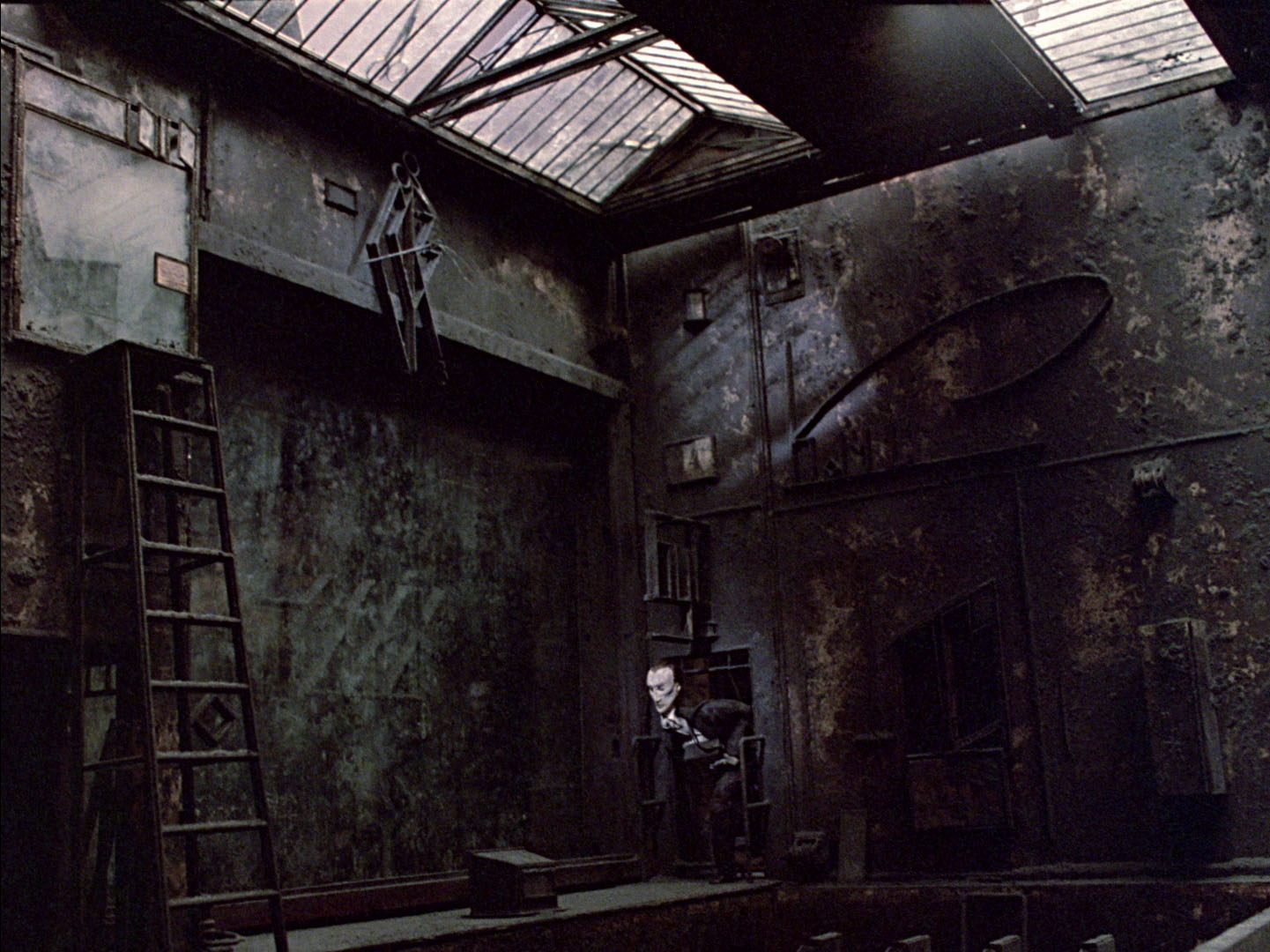
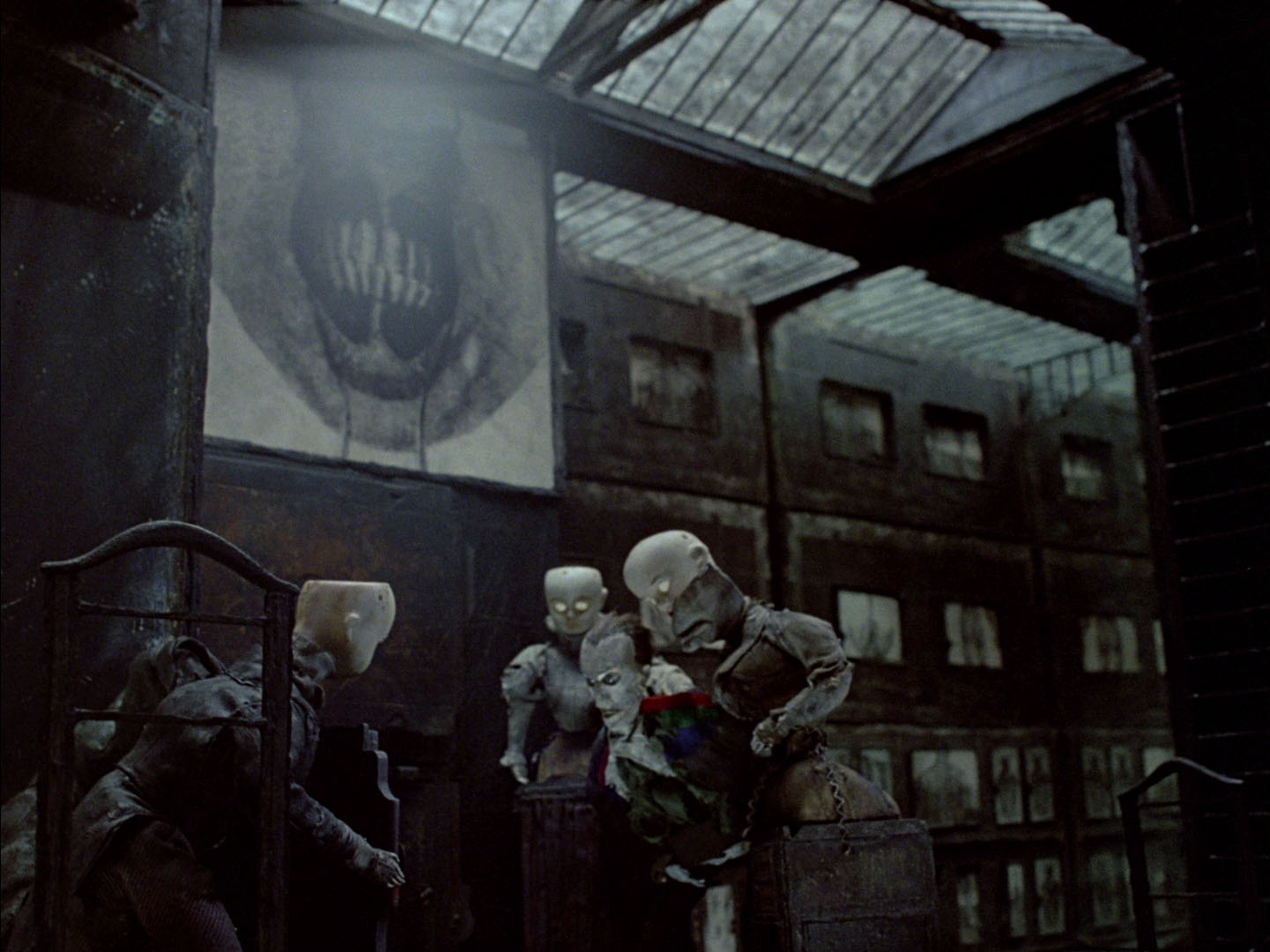
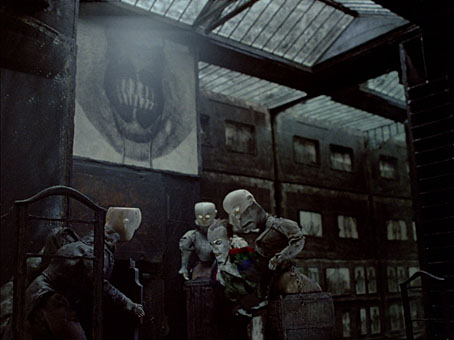
As to the films, seeing them in high-definition is certainly a plus although the earliest ones were all made in 16mm so they don’t gain a great deal. Street of Crocodiles, however, looks superb, and I found myself noticing details that I’d earlier missed despite numerous viewings. I’m disappointed that two early shorts, Igor: The Paris Years (1982) and Leoš Janáček: Intimate Excursions (1983), remain unreleased due to apparent problems with music copyrights. (See this post for YouTube links.) Also uncollected are their other music videos apart from the two produced for His Name Is Alive, together with a handful of other short pieces. (See this post for further links.)
street2.jpg

Street of Crocodiles (1986).

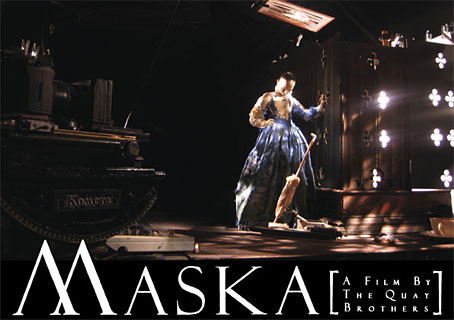
Of the longer films on the second disc, Maska has become a favourite, with its combination of a baroque science-fiction scenario (from Stanisław Lem) and a score by Penderecki. Through the Weeping Glass, a 30-minute documentary about the medical oddities housed in the Mütter Museum in the Quays’ home city of Philadelphia, is a kind of companion piece to The Phantom Museum (2003), a similar study of the Wellcome Collection in London. This is the first film the Europhile Quays have made in the US, and comes with a short documentary showing them at work on the film, and an interview about the production. I’m still getting used to their shift to digital video—I miss the grain and texture of their films—but since I’ve been working digitally myself for many years now I can’t complain if others choose to do the same.
maska1.jpg

The preview discs of the new collection came without the booklet which will be present in the package. This will include an updated Quays Dictionary by Michael Brooke (as featured in the previous BFI collection), and the 2012 “interview” by the deceased calligrapher Heinrich Holzmüller, On Deciphering the Pharmacist’s Prescription for Lip-Reading Puppets. The latter appeared in the catalogue for the Quays’ MoMA exhibition where it was printed at an eye-straining point size. I’m hoping the BFI version will be an improvement.

The Films
Nocturna Artificialia (1979)
The Cabinet of Jan Švankmajer (1984)
This Unnameable Little Broom (1985)
Street of Crocodiles (1986)
Rehearsals for Extinct Anatomies (1988)
Stille Nacht I: Dramolet (1988)
Ex-Voto (1989)
The Comb (1990)
Anamorphosis (1991)
The Calligrapher (Parts I, II, III) (1991)
Stille Nacht II: Are We Still Married? (1992)
Stille Nacht III: Tales from Vienna Woods (1993)
Stille Nacht IV: Can’t Go Wrong Without You (1994)
In Absentia (2000)
The Phantom Museum (2003)
Songs for Dead Children (2003)
Eurydice, She So Beloved (2007)
Alice in Not so Wonderland (2007)
Kinoteka Ident (2008)
Inventorium of Traces (2009)
Wonderwood for Comme des Garçons (2010)
Maska (2010)
Through the Weeping Glass (2011)
Unmistaken Hands: Ex Voto F.H. (2013)

Special features
Introduction by the Quay Brothers (2006, 20 mins)
Quay (2015, 8 mins): a film by Christopher Nolan
Quay Brothers audio commentaries for This Unnameable Little Broom, Street of Crocodiles, Stille Nacht I-III and In Absentia
The Falls [excerpt] (1980, 5 mins)
BFI Distribution ident (1991, 30 secs)
The Summit (1995, 12 mins)
No Bones About It: Quay Brothers (2010, 12 mins)
Behind the Scenes with the Quay Brothers (2013, 31 mins)
Unmistaken Hands: Ex Voto F.H. trailer (2 mins)

Elsewhere on { feuilleton }
The Quay Brothers archive

Weekend links 329

vyletal.jpg

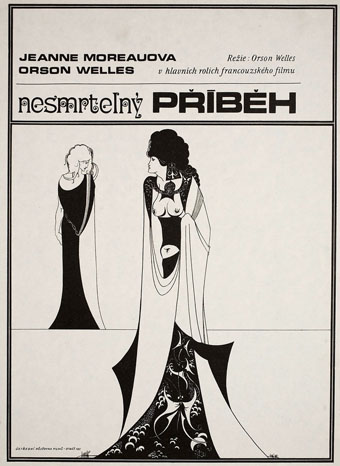
Josef Vyletal borrows figures from Aubrey Beardsley’s Salomé for a Czech poster promoting The Immortal Story (1969) by Orson Welles. Vyletal’s own paintings were often strange and surreal.

Pale Fire is Nabokov’s “great gay comic novel,” says Edmund White. A surprising but not inappropriate reappraisal. White has noted in the past that Nabokov “hated homosexuality” despite having a gay brother and uncle. The portrayal of Charles Kinbote in Pale Fire isn’t unsympathetic if you overlook his being delusional, and possibly insane…

• At Folk Horror Revival: details of the charity donations raised by sales of the Folk Horror Revival books, the first of which featured my David Rudkin essay. A one-day Folk Horror Revival event takes place later this month at the British Museum, London.

• Mixes of the week: The Bug presents Killing Sound Chapter 2: Inner Space, a 2-hour blend of “sci-fi scores, expansive atmospheres and synthesized psychedelia”; Decoded Sundays presents Scanner; Secret Thirteen Mix 197 is by LXV.

Stars Of The Lid unveil a James Plotkin remix of their Music For Twin Peaks Episode #30 Pt. 1. Related: the hype for the new Twin Peaks series gets into gear with a teaser.

• Robert Aickman’s only novel, The Late Breakfasters (1964), is being given its first US publication by Valancourt Books.

• “Don’t dream it, bet it.” Evan J. Peterson on 40 years of The Rocky Horror Picture Show.

• Anna von Hausswolff’s sister, Maria, directs a video for Come Wander With Me / Deliverance.

• RIP Michael O’Pray, film writer and curator of many festivals of experimental cinema.

• Oli Warwick talks to electronic musicians about the influence of the late Don Buchla.

Breakfast In Bed (1969) by Dusty Springfield | Alan’s Psychedelic Breakfast (1970) by Pink Floyd | Another Breakfast With You (2001) by Ladytron