In A Silent Way

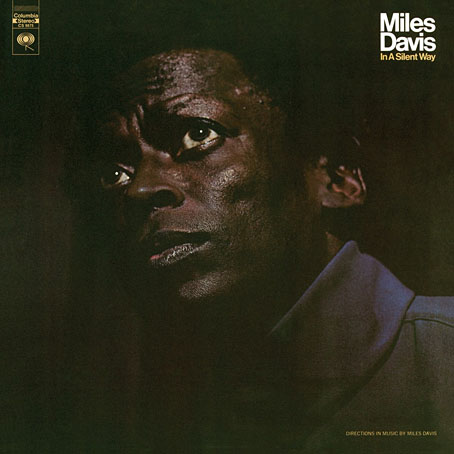
In A Silent Way (1969) by Miles Davis

miles.jpg

• In A Silent Way (YT)

In a Silent Way was assembled from various takes from a three-hour session on February 18, 1969, at CBS 30th Street Studio’s Studio B in Manhattan. “Shhh / Peaceful” was composed solely by Davis, while the opening and closing section to “In a Silent Way / It’s About That Time” is based on [Joe] Zawinul’s “In a Silent Way”, which he would record in its original form in 1970 for his third solo album, Zawinul (1971). After Zawinul presented the tune to the group, it was rehearsed as it was originally written, but Davis wished for it to sound more rock-oriented and stripped the various chord changes to leave a more basic melody built around a pedal point. [John] McLaughlin had some difficulty playing in the manner Davis wished of him, but found his way after the trumpeter suggested he play the guitar as if he were a novice. Davis believed that Zawinul was never happy with his adaptation of “In a Silent Way”, but felt that the album would have been less successful had its original arrangement been kept. Zawinul had expressed some dislike of Davis’ arrangement, in particular of two chords that he believed that Davis was wrong to remove. Zawinul claimed that he was responsible for the melodic bass line and descending melody of “It’s About That Time” but was not credited; he blamed [Teo] Macero for this, as he “always put things together so that it came out as if Miles had written it.” (more)


Zawinul (1971) by Joe Zawinul

• In A Silent Way (YT)


Celebration (1972) by El Chicano

• In A Silent Way (YT)


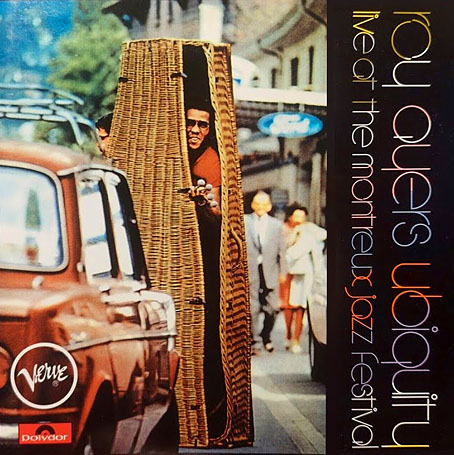
Live At The Montreux Jazz Festival (1972) by Roy Ayers Ubiquity

ayers.jpg

• In A Silent Way (Should really be titled It’s About That Time since Ayers is playing the second part of the Davis piece) (YT)


Filmore – The Last Days (1972) by Various Artists

• In A Silent Way by Santana (YT)


Double Exposure (1975) by Nat Adderley

• In A Silent Way (YT)


Concerto Retitled (1976) by Joe Zawinul

• In A Silent Way (YT)


Babel (1978) by Max

• D’Una Manera Silenciosa (YT)


Continue reading “In A Silent Way”

Weekend links 818

paunzen.jpg

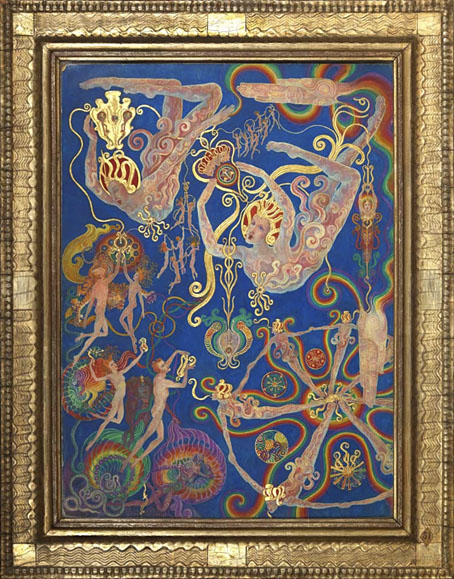
The Bookworm (no date) by Arthur Paunzen.

• New Cabaret Voltaire: Nag Nag Nag (Live 2025 Single Edit). Good to hear they’ve reinstated the Patrick Moore dialogue sample, something that’s on the studio version but usually missing from live recordings. The single is a trailer for a forthcoming album based on the group’s recent anniversary tour.

• The Mysterious Castle in the Carpathians (1981), a wacky Czech comedy, one of many directed by Oldřich Lipský. With a story by Jules Verne, music by Luboš Fišer, and steampunk props by Jan Švankmajer.

• More new music: Butch’s Guns by Sunn O))); Sidings by Craven Faults; Frequencies In The Fog by Rod Modell.

What strikes me most is the difference between people who’ve learned to construct what I call “containers for attention”—bounded spaces and practices where different modes of engagement become possible—and those who haven’t. The distinction isn’t about intelligence or discipline. It’s about environmental architecture. Some people have learned to watch documentaries with a notebook, listen to podcasts during walks when their minds can wander productively, read physical books in deliberately quiet spaces with phones left behind. They’re not rejecting technology. They’re choreographing it.

What we think is a decline in literacy is a design problem, says librarian Carlo Iacono

• At Colossal: “Striking photos by Peter Li capture the soaring majesty of sacred spaces.”

• At Public Domain Review: The Eight Horses of King Mu, Son of Heaven (ca. 1300).

• At the BFI: Brogan Morris selects 10 great political thrillers.

• At Dennis Cooper’s: Roland Topor’s Brain.

• RIP Robert Duvall and Tom Noonan.

• The Book Lovers (1997) by Broadcast | Tiny Golden Books (2000) by Coil | Library Of Solomon Book 2 (2011) by Demdike Stare

Weekend links 817

paolozzi.jpg

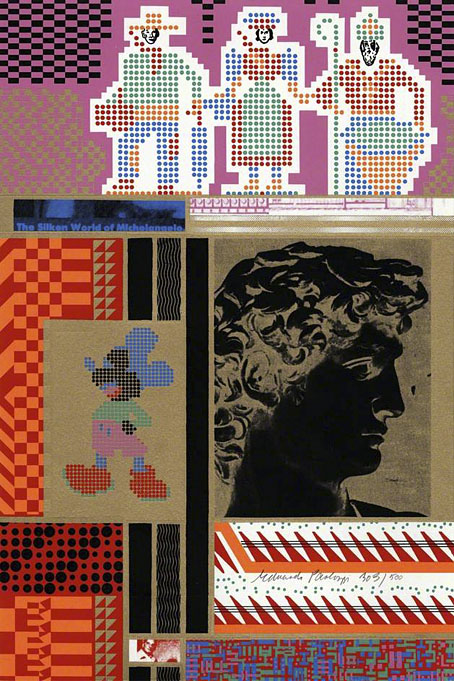
The Silken World of Michelangelo (1967) by Eduardo Paolozzi.

• “By the late 19th century, representing time as a line was not just widespread—it was natural. Like today, it would have been hard to imagine how else we could represent time. And this affected how people understood the world.” Emily Thomas on the evolution of our thinking about the nature of time.

• At Green Arrow Radio: Bill Laswell and the Cosmic Trip, in which the indefatigable performer/producer talks about his career and Cosmic Trip, a new album by saxophonist Sam Morrison.

• At Public Domain Review: Snail Homes, Bog Bodies, and Mechanical Flies: Robert Testard’s Illustrations for Les secretz de l’histoire naturelle (ca. 1485).

• Among the new titles at Standard Ebooks, the home of free, high-quality, public-domain texts: Continental Op Stories by Dashiell Hammett.

• The winter catalogue of lots for the After Dark: Gay Art and Culture online auction. Homoerotic art, photos, historic porn, etc.

• New music: The Third Mind. A Sonic Tribute to the Dreamachine by Various Artists.

• Mix of the week: DreamScenes – February 2026 at Ambientblog.

• A Conversation with Tarotplane by AJ Kaufmann.

• RIP Bud Cort.

• Timewhys (1971) by Tonto’s Expanding Head Band | Time Be Time (1990) by Ginger Baker | Time Scale (2009) by Belbury Poly

Weekend links 816

rossignol.jpg

The Creative Power of the Spirit, No. 31 of A Goodly Company series, 1920–1933 by Ethel le Rossignol.

• “One moment it was a little blip. The next, our friends are dying”: the gay porn soundtrack composers lost to the Aids crisis. More gay porn: Pink Narcissus, James Bidgood’s micro-budget homoerotic fantasy, will receive a UK blu-ray release later this year.

• Old music: Thirst by Clock DVA gets a very welcome reissue later this year, having been unavailable in any form since 1992. I’m not so happy about the changes to Neville Brody’s original cover design but the album itself is a major post-punk statement.

• “Graphic design was thought to be a man’s discipline,” she says. “So I think it was quite a surprise for people to find me there.” A profile of Margaret Calvert, designer of (among other things) Britain’s road signs.

• At Colossal: A major survey in Paris chronicles Leonora Carrington’s esoteric Surrealism.

• At Public Domain Review: Sara Weiss’ Journeys to the Planet Mars (1903).

• At the BFI: The mystery music video for The Beatles’ Penny Lane.

• Winners and entrants for Close-up Photographer of the Year 7.

• “Cats to blame for octopus deity enshrinement delay.”

• Steven Heller’s font of the month is Cattivo.

• At Dennis Cooper’s it’s Jack Arnold’s Day.

• Pink Noir (1996) by David Toop | Pink Dust (2013) by Sqürl | The Pink Room 2 (2024) by Seigen Ono

Zeuhl Ẁortz!

magma-single.jpg

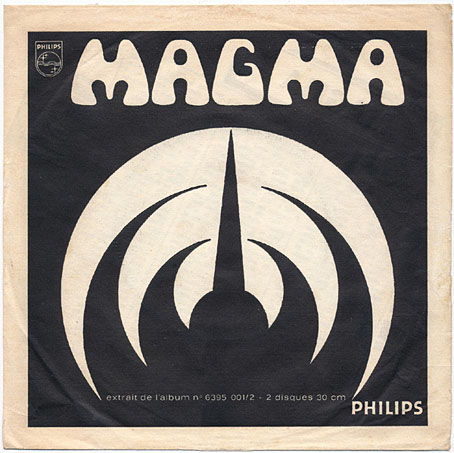
Kobaïa / Müh (1970), a single by Magma.

1: Zeuhl definitions

Zeuhl is an adjective in Kobaïan, the language written by Christian Vander, drummer and founder of the French band Magma.

Pronunciation: zEU(h)l, while the EU are like a French E with a slight U, and the (h) is a semi-silent letter which is an integrated part of the EU, totalling in a “syllable and a half”. (Prog Archives)

Zeuhl (pronounced [zœl]; lit. ’celestial’) is a music genre that is a hybrid of jazz fusion, symphonic rock and neoclassical music, established in 1969 by the French band Magma. The term comes from Kobaïan, the fictional language created by Magma’s Christian Vander and Klaus Blasquiz for Magma, in which Zeuhl Ẁortz means approximately ‘celestial force’.
[…]
Zeuhl is determined by several characteristic elements. Especially important are dominant rhythm fractions, usually in the form of a pumping bass guitar and sometimes sluggish or flexibly playing drum kits. Slow repetitive structures that serve to build a hypnotic atmosphere are just as prominent as solo passages of high technical finesse. Vocals are often widely present and can consist of polyphonic choral movements, such as Carl Orff’s Carmina Burana, or soloistically performed passages with shrill intonation. Zeuhl bands also often have solo guitarists or pianists that usually have a more than accompanying function, especially to emphasize the repetitive patterns. (Wikipedia)


2: The Birth of the Zeuhl

“1967,” he says. “The year John Coltrane died. It seemed to me that afterwards, it was as though music had to try to start all over again. Someone had to pick up the pieces, go on searching in the way that he had. Nobody could match him, but people could pick up the flame. It was almost impossible for anyone to do anything new after Coltrane, but you had to try, try to find other new directions. So that’s what I tried to do with Magma. I was a bit young at the time, but…”

Christian Vander describing the birth of Magma to Paul Stump, The Wire, July 1995


3: Zeuhl lists
weidorje.jpg

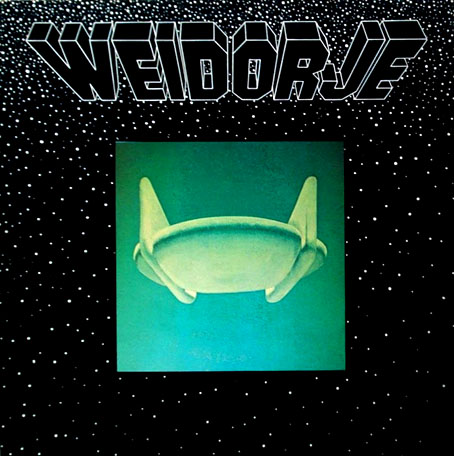
Weidorje (1978) by Weidorje. Cover art by Klaus Blasquiz.

• Shindig! Magazine: Magma in seven records, and Deeper Underground: the best albums by the Magma family by Warren Hatter.

• Prog Is Alive and Well in the 21st Century: My Favourite Zeuhl Albums of All-Time by Drew Fisher.

• Bandcamp: There is No Prog, Only Zeuhl: A Guide to One of Rock’s Most Imaginative Subgenres by Jim Allen.

• Discogs: Zeuhl lists by Neit and ultimathulerecords.

• Prog Archives: Top 100 Zeuhl.


4: Live Zeuhl
magma-poster.jpg

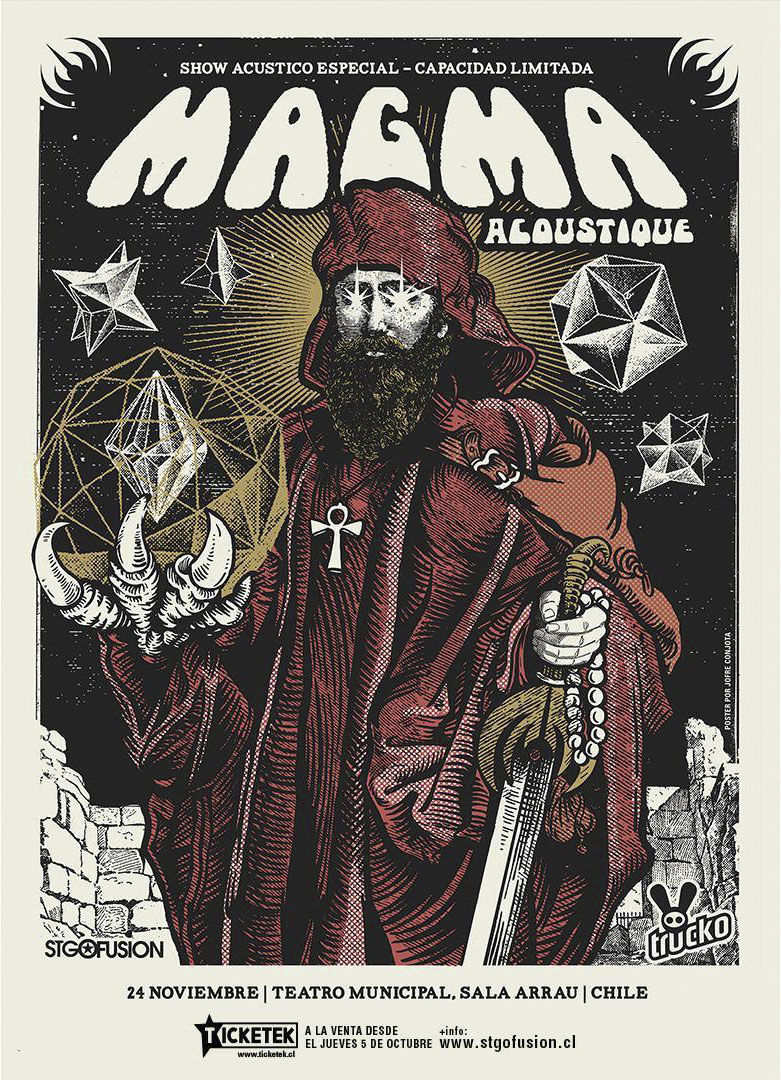
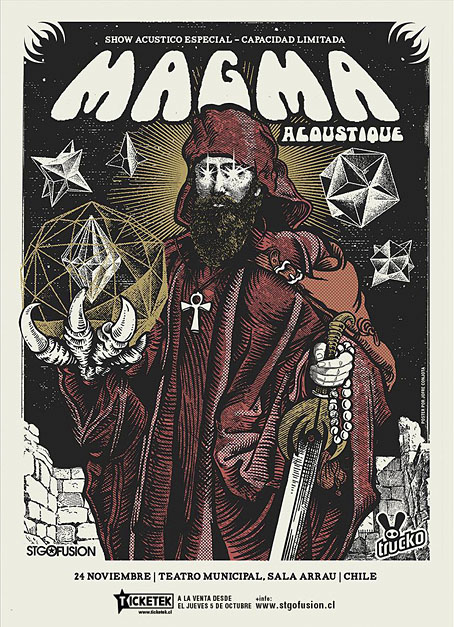
A poster by Jofre Conjota for a concert in Chile demonstrating that Zeuhl can exist without electricity.

• Magma, Hippodrome du Pantin, Paris, 1977 (46 mins; a French TV film that captures one of the 70s lineups in peak form. Includes an almost complete performance of Mekanïk Destruktïẁ Kommandöh.)

• Weidorje, French TV, 1979 (11 mins; Magma offshoot Weidorje were only active for a couple of years, this may be their only TV appearance.)

• Magma, Théâtre Bobino, Paris, 1981 (A complete concert—1 hr 53 mins—from the group’s weird-funk period: Christian Vander leaves his drumkit to sing and rant at the audience, everyone is dressed in spacey glitter outfits, and some of the songs from the Merci album can’t be classed as Zeuhl at all. The musicians are all first rate, however.)

• Magma play Köhntarkösz, 2005 (A fantastic 32-minute performance in a very cramped venue.)

• Collectif PTÄH interprète Magma (12 mins; a Magma covers band playing in a village square.)


5: Cinematic Zeuhl
tristan.jpg

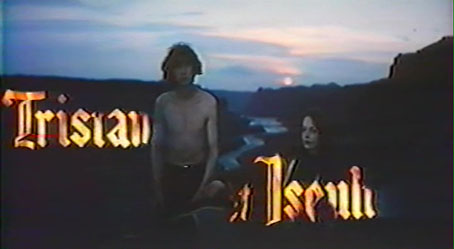
• Tristan et Iseult (1972): a French feature film with a score by Christian Vander and three members of Magma. The soundtrack album was later incorporated into the Magma official discography as Ẁurdah Ïtah.

• Moi y’en a vouloir des sous (1973): a French satire in which Magma make a brief appearance as a way-out rock group.


6: Lovecraftian Zeuhl
shub-niggurath.jpg

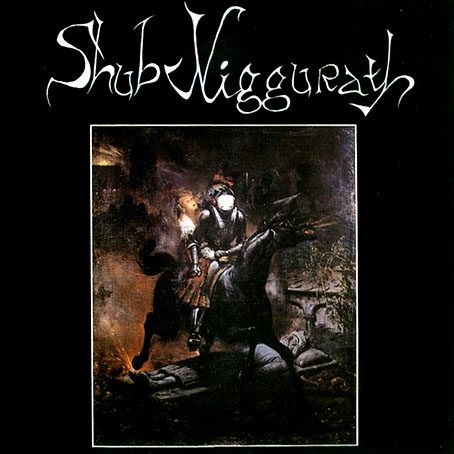
Les Morts Vont Vite (1986) by Shub Niggurath. Cover art: La Ballade de Lénore (1839) by Horace Vernet.

• Liriïk Necronomicus Kanht (1978) by Magma.

• Dagon (1980) by Eskaton.

• La musique d’Erich Zann (1981) by Univers Zero (a Belgian group, originally named Necronomicon, which included former members of an earlier group named Arkham).

• Yog-Sothoth (1986) by Shub Niggurath.


7: Comic Zeuhl

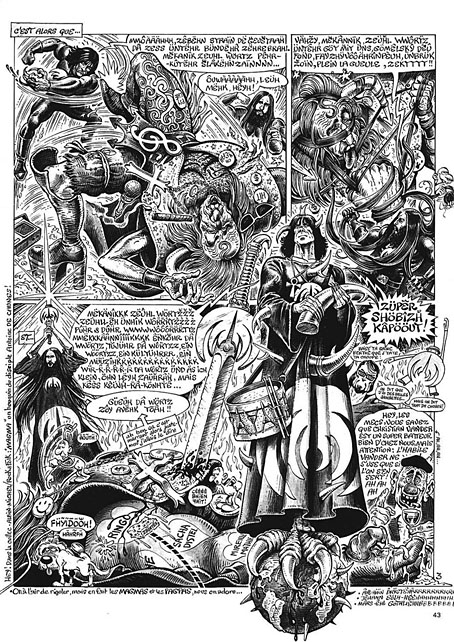
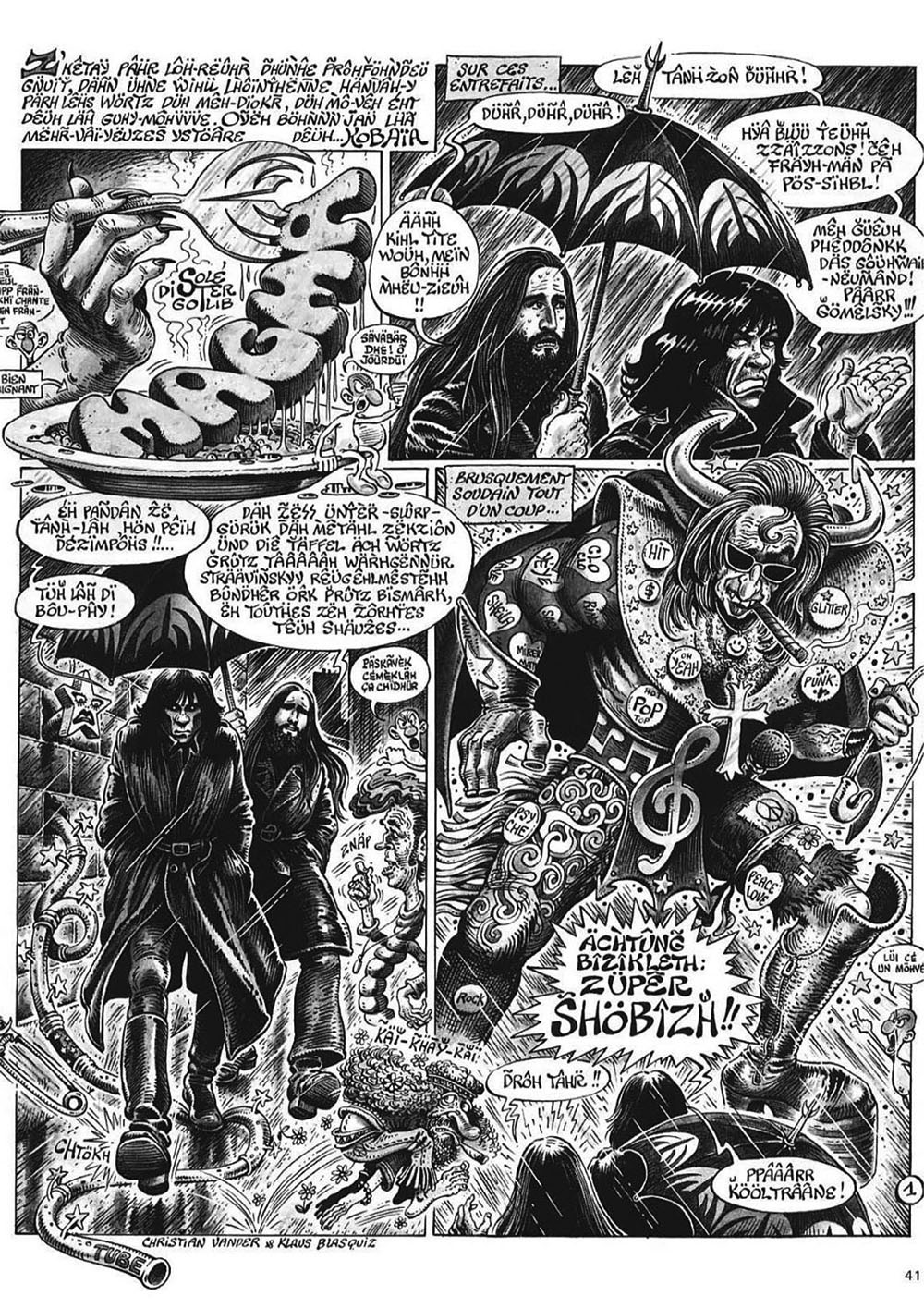
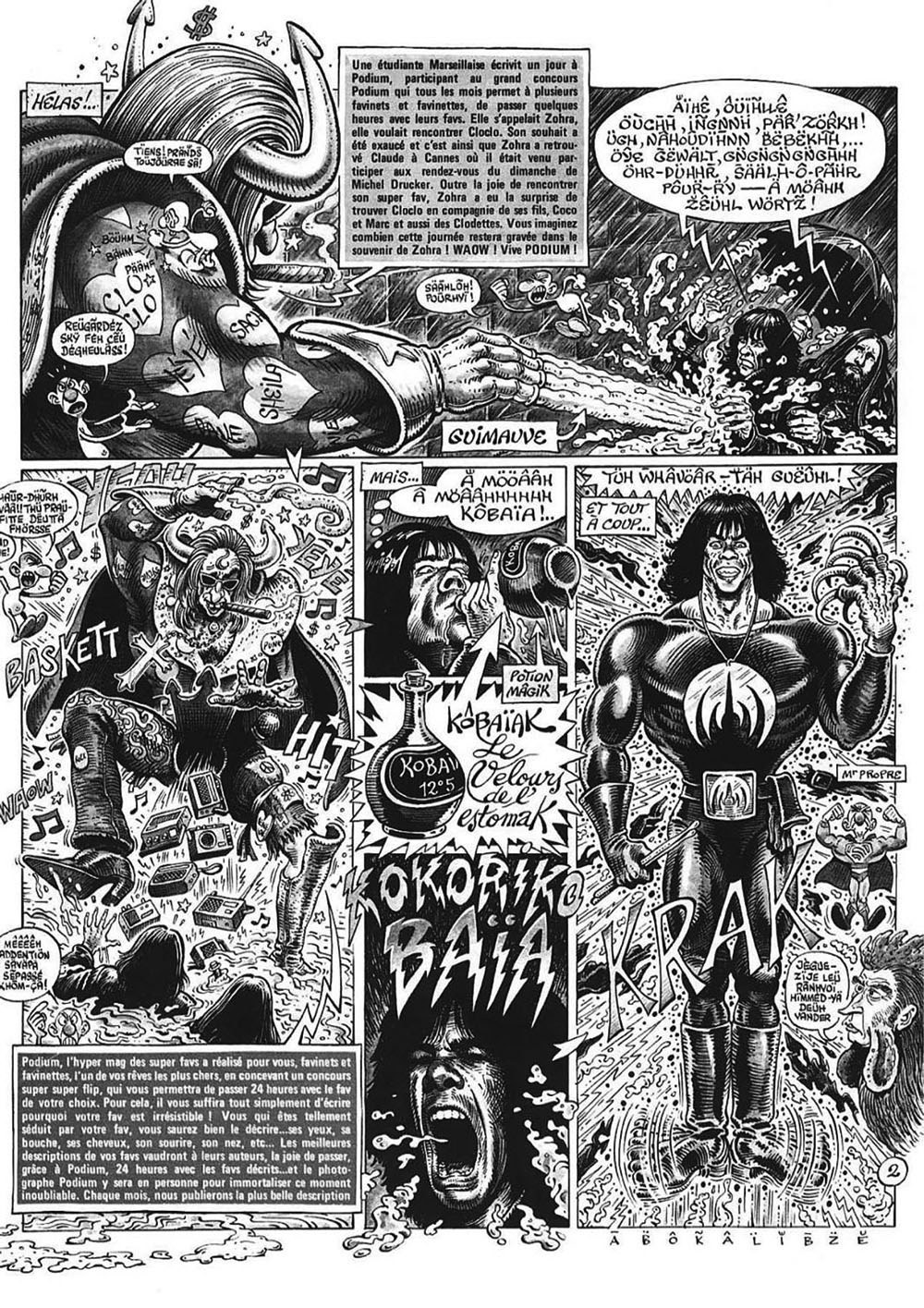
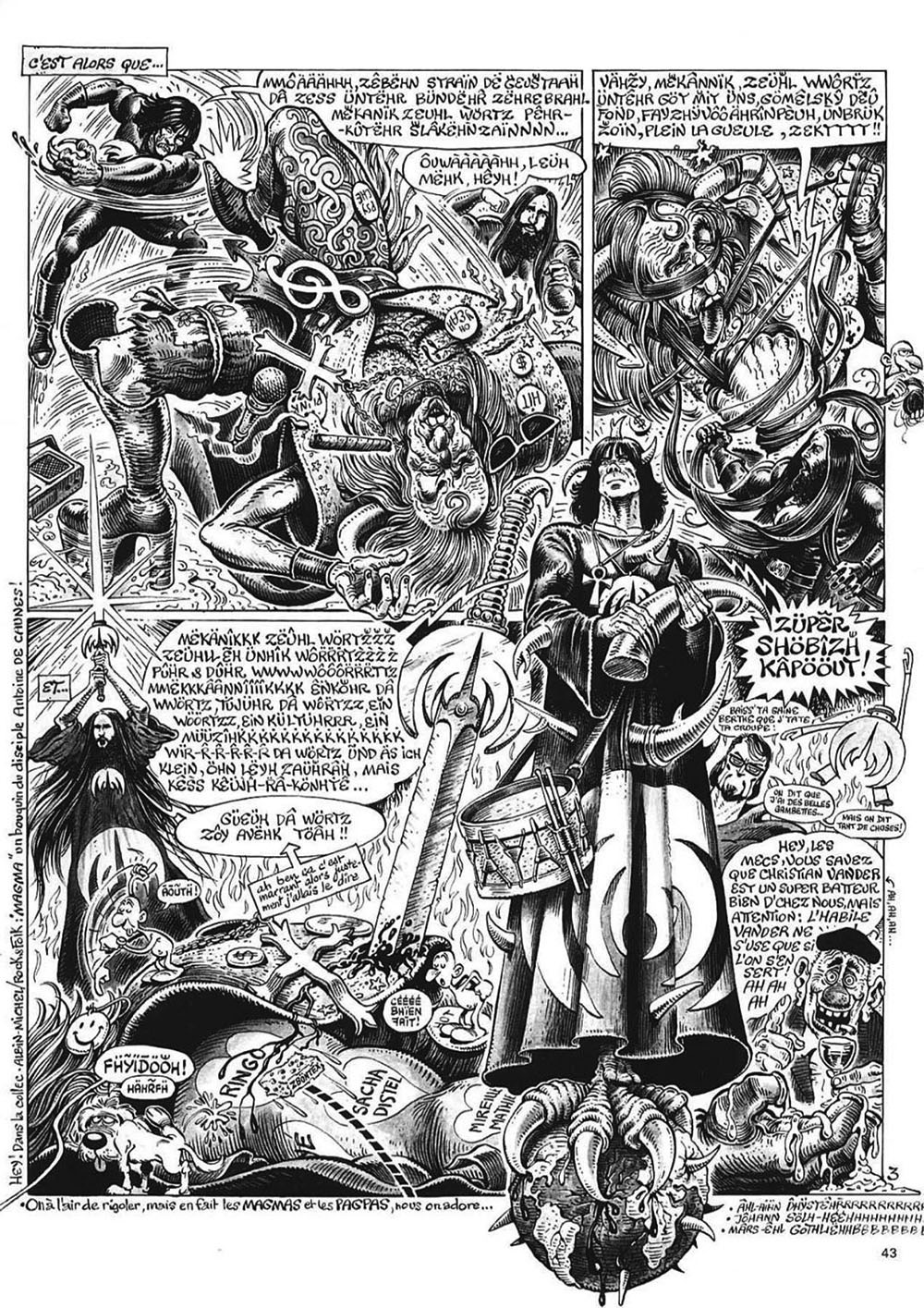
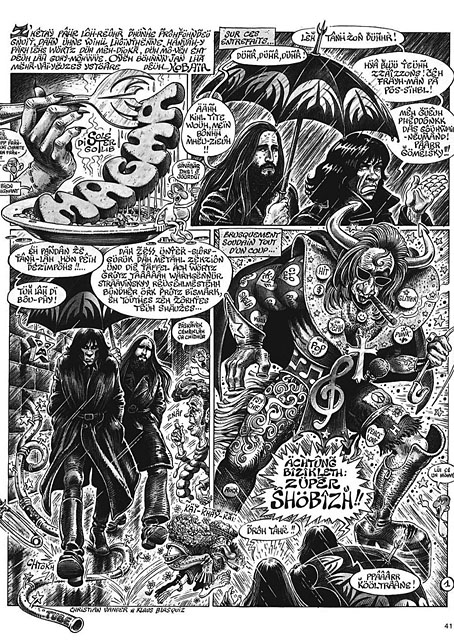
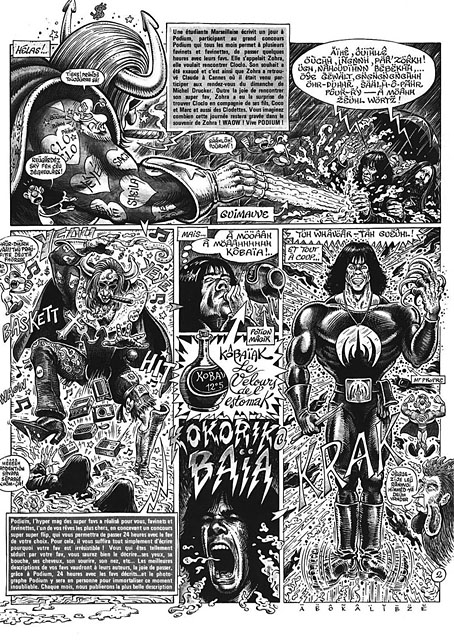
Magma’s Christian Vander and Klaus Blasquiz in a three-page comic strip from Pop & Rock & Colégram (1978), a collection of satirical music-themed pieces by Jean Solé, Alain Dister & Marcel Gotlib.
magma-comic1.jpg

magma-comic2.jpg

magma-comic3.jpg

Previously on { feuilleton }
• Dune: some French connections
• HR Giger album covers