Weekend links 683

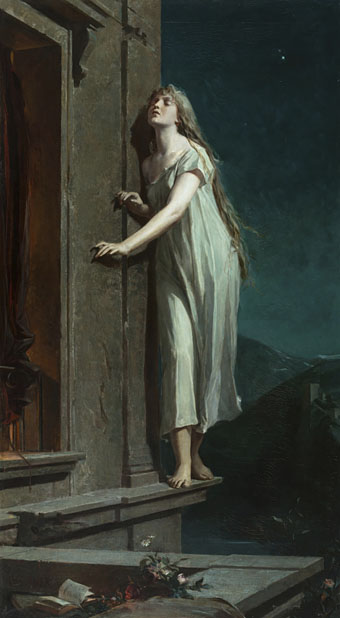
inshaw.jpg

She Did Not Turn (1974) by David Inshaw.

• “Pauline Kael compared Bruce Lee to Fred Astaire; I think the comparison works better with Rudolf Nureyev. Astaire had a besuited, playful grace, while Nureyev was shirtless, dramatic, and muscular. Astaire moved with athletic modesty, while Lee’s bravura dominated the screen.” Micah Nathan on 50 years of Enter the Dragon.

• New music: This Stolen Country Of Mine by Alva Noto, and Denshi Ongaku No Bigaku (The Aesthetics of Japanese Electronic Music) Vol.1 by Cosmocities Records.

• At Cartoon Brew: A profile of Sally Cruikshank. The spooky psychedelia of Face Like a Frog has long been a favourite round here.

• “My Life in a Hop, Skip and a Jump!” Clive Hicks-Jenkins answers a few questions about his art.

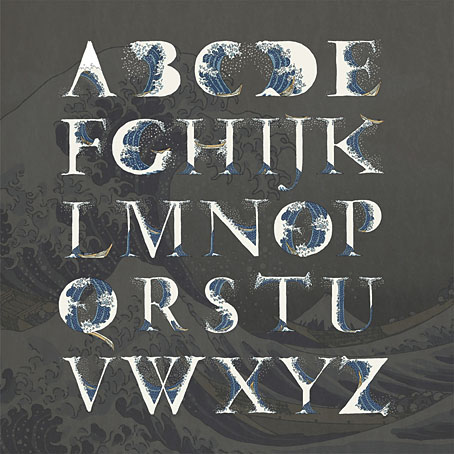
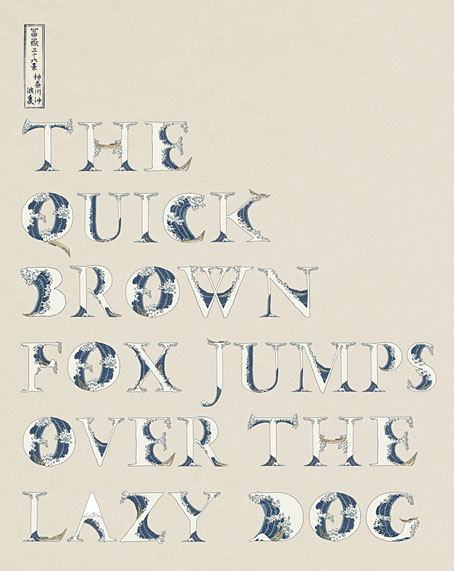
• At Public Domain Review: Hokusai’s Illustrated Warrior Vanguard of Japan and China (1836).

• More martial arts: Tom Wilmot on Bruce Lee’s greatest fight scenes at Golden Harvest.

• Submissions to the Astronomy Photographer of the Year Awards.

• At Dennis Cooper’s: Lucrecia Martel Day.

• RIP Jane Birkin.

Enter The Dragon (1974) by The Upsetters | Dragon Power (A Tribute To Bruce Lee) (1978) by JKD Band | Edit The Dragon (1985) by Colourbox

Weekend links 682

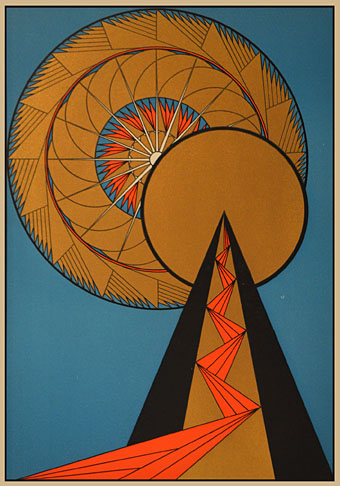
barbier.jpg

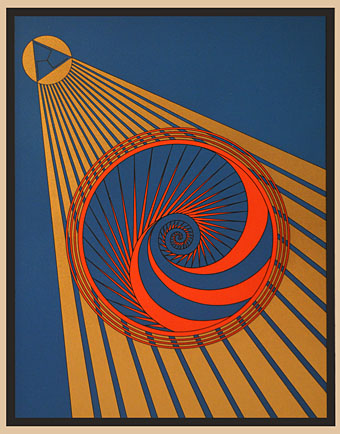
La Voie Lactée (1921) by George Barbier.

• Fun news of the week: “The Taylor Swift vinyl haunted by Britain’s weirdest musicians.” The “weirdness” is tracks from Happy Land: A Compendium of Electronic Music from the British Isles 1992–1996 which have been mispressed onto Swift’s latest, the re-recorded Speak Now. One of the offending pieces is Soul Vine (70 Billion People) by Cabaret Voltaire, a relatively understated instrumental from the Plasticity album which features samples from the Demon with a Glass Hand episode of The Outer Limits. “It’s possibly the most subversive thing we’ve ever done,” says Stephen Mallinder. Adventurous Swifties looking to broaden their horizons are advised to try The Crackdown next.

• “For McCarthy, violence is the signature of God: God, who cannot be seen, who is only indicated by an absence, who no amount of experimenting or observing will reveal, but whose existence is in evidence all around us, every day, through the apocalyptic and apophatic violence that makes up the very stuff of the world.” JC Scharl on the violent faith of Cormac McCarthy.

• Strange news of the week: Reclusive guitarist Master Wilburn Burchette (age 84) was found dead in a house with the body of his younger brother (age 76) after decades spent avoiding anyone showing an interest in his music. Numero Group, the label behind the recent reissues of Burchette’s albums, posted an interview from 2018.

Takrar by Waref Abu Quba is “an experimental film that celebrates the timeless and intricate beauty of ancient craftsmanship. Filmed in Istanbul, the film takes us on a mesmerizing journey into the past, paying homage to Islamic, Ottoman, Greek, and Byzantine art forms.”

• “Could an industrial civilization have predated humans on Earth?” Probably not, but if it was in the deep past how would we know? Joel Froelich investigates.

• At Dennis Cooper’s: Visual evidence from almost every museum devoted to prestidigitation in the world (for Derek McCormack).

• At Spoon & Tamago: Osaka celebrates Star Festival with river of 40,000 LED lights evoking the Milky Way.

• At Unquiet Things: Even more sneak peeks from The Art of Fantasy.

• Mix of the week is DreamScenes – July 2023 at Ambientblog.

• At The Daily Heller: Sign writing and glass engraving.

Out Of Limits (1963) by The Marketts | Trip Through The Milky Way–An Electronic Panorama (1969) by Raymond Moore | Milky Way (1971) by Weather Report

Kling Klang rundfunk

kraftwerk10.jpg

Kraftwerk on film and video, courtesy of recent uploads at the Internet Archive. These are mainly promotional clips, together with a few choice TV appearances. I’ve never liked music videos very much, even ones made for music that I enjoy a great deal, but I’m always curious to see how Kraftwerk portrayed themselves at different stages of their career, especially the early years when they were still tuning the group persona. I’m fairly sure I hadn’t seen the videos for Radioactivity and Antenna before, while some of the later videos are present in two or more versions. The quality is variable but that’s how things go with this group; everything from 1970 to 73 is treated like a period that never happened, while the years from 1974 to 1981 have been subject to continual revision. Kraftwerk is unique in being a very popular group that buries or reworks much of its own history, record covers included, leaving us with a trail of deleted or neglected “produkt” that ends up circulating secondhand or in bootleg form. A couple of these promo videos have been attached to CD singles but only a small portion of this material has been recycled into the official catalogue as it stands today.


Winter Soest (1970)

kraftwerk01.jpg

The group in their rock-freakout period playing to an audience of bored/bewildered/enthusiastic German hippies. With Klaus Dinger on drums and Ralf playing some kind of portable keyboard. Spot the leitkegel.


Pop2 (1973)

kraftwerk02.jpg

Pop2 was French TV’s equivalent of Germany’s Beat Club and the BBC’s Old Grey Whistle Test. This clip is from a programme devoted to “Kosmische” German music which also featured Tangerine Dream, Guru Guru, Klaus Schulze, and (in conversation) comic artist Philippe Druillet. The music here is very much in the melodic mode of the third album, Ralf & Florian. This is also about the last time you see Ralf wearing his leather jacket. The spectacles didn’t remain for long either.


Radioactivity (1975)

kraftwerk03.jpg


Antenna (1975)

kraftwerk04.jpg


Continue reading “Kling Klang rundfunk”

Weekend links 681

hunter.jpg

All Cats are Grey At Night (2009) by Kenny Hunter.

“They found ways to do the impossible”: Hipgnosis, the designers who changed the record sleeve for ever. Lee Campbell talks to Anton Corbijn about Squaring the Circle, Corbijn’s documentary about the Hipgnosis design team. Peter Christopherson is shown in the accompanying photo but Campbell doesn’t mention him at all, despite his having been an equal partner with Storm Thorgerson and Aubrey Powell from the mid-70s on. Many of those famous covers were photographed by Christopherson’s camera.

• A new book by Stephen Prince at A Year In The Country: “Lost Transmissions weaves amongst brambled pathways to take in the haunted soundscapes of electronica, the rise of the occult in the 1970s, cinema and television’s dystopian dreamscapes and hauntological work which creates and gives a glimpse into parallel worlds…”

• New music: Ambient Bass Guitar by John von Seggern, and Sturgeon Moon/Beaver Moon by Missing Scenes.

• How Samuel R. Delany Reimagined Sci-Fi, Sex, and the City.

• Mix of the week: Tranquility by A Strangely Isolated Place.

Galerie Dennis Cooper presents…Snow Globalists.

• The Strange World of…African Head Charge.

• Steven Heller’s font of the month is Baudot.

Nights on Earth.

Transmission (1979) by Joy Division | Clandestine Transmission (1994) by Richard H. Kirk | Transmission (1996) by Low

Telepathic Heights by Hawksmoor

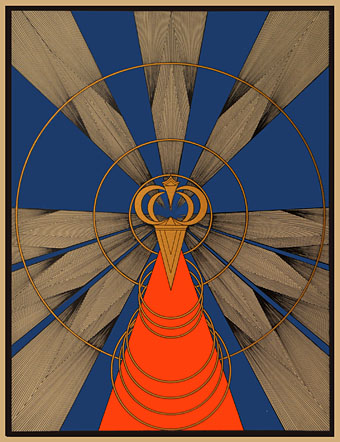
hawksmoor.jpg

No designer credited but probably the work of Adrian Self.

Too much unanticipated website wrangling has set my work back this week, but in the meantime I’ve enjoyed listening to more of the mostly-electronic music of Cabaret Voltaire (inevitably), plus the mostly-electronic music of Hawksmoor (James McKeown), whose latest album, Telepathic Heights, arrived a few days ago. According to the promotional copy this one “follows a path along the electronic skyways first created by the German/Krautrock electronic pioneers of the 1970s such as Cluster, Ash Ra Tempel, Roedelius and Michael Rother”. And so it does to an extent, although Hawksmoor’s buzzing timbres and synthesized rhythms are closer to those created by The Human League on their first two albums, Reproduction and Travelogue, a percussive pulse which an early reviewer of the League’s music compared to steamhammers in a mineshaft. The early League records, and the first album by Marsh & Ware as the B.E.F., Music For Stowaways, have always been cult items round here, so anything that approaches them is liable to catch my attention. Hawksmoor’s other albums push further buttons of interest with subjects that include Nicholas Hawksmoor’s churches (no surprise there), JG Ballard’s Concrete Island and The Crystal World, the psychogeography of Milton Keynes, and Old Weird Britain. I’m looking forward to seeing what future paths this 21st-century Hawksmoor chooses to follow.

Telepathic Heights is out now on Soul Jazz.

Previously on { feuilleton }
Talking time: Cabaret Voltaire interviews
Serious houses: The Lud Heat Tapes, 1979
German gear
Old music and old technology
A Clockwork Orange: The Complete Original Score