Weekend links 823

crab.jpg

NASA’s Hubble revisits Crab Nebula to track 25 years of expansion.

Snakes and Ladders is a video adaptation of the one-off Moon and Serpent performance presented by Alan Moore and Tim Perkins at Conway Hall, London, in 1999. With visual samples from Eddie Campbell’s comic-strip adaptation of the audio recording, plus my artwork from the CD release. (Thanks to Francis for the tip!)

• The spring catalogue of lots for the After Dark: Gay Art and Culture online auction. Homoerotic art, photos, historic porn, etc.

• New music: State Of Matter by Dobrawa Czocher; Plague Dogs by The Heartwood Institute.

• “Why we made a film about Mark Fisher called We Are Making A Film About Mark Fisher.

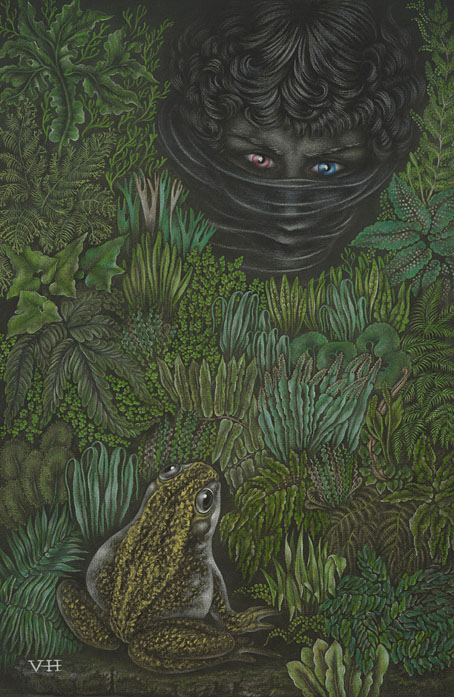
• At Colossal: “Ambiguity reigns in Olaf Hajek’s mysterious illustrations”.

• At Public Domain Review: Monet’s early caricatures (ca. late 1850s).

• At the BFI: George Orwell, film critic.

• The Strange World of…Ladytron.

The Plague (1967) by Scott Walker | A Plague Of Angels (2007) by Earth | The Plague (2014) by Cosmic Ground

Locked Groove

locked1.jpg

It’s been a while since Scotto Moore’s newsletter turned up any of the abstract animated visuals I enjoy. Locked Groove by Emanuele Kabu fits the bill perfectly, an exercise in vibrant random symmetry which bears the subtitle “A hypnotic audiovisual animation inspired by pareidolia”. The video might also have been inspired by psychedelic hallucination given the way it captures the tendency of the abstract patterns generated by psychedelic delirium to continually change their size, shape and colour. This is one feature of the psychedelic experience you don’t see reproduced very often even though animation has long been the ideal medium for creating such effects. Kabu has soundtracked the metamorphoses with analogue synth noises but you could just as easily watch them with a suitably psychedelic piece of music.

locked2.jpg

Previously on { feuilleton }
Short films by Hideki Inaba

Weekend links 821

tevis.jpg

The first UK paperback edition, 1976. Cover art by David Bowie’s illustrator friend George Underwood.

• At the BFI: “Humanity, lost and found”. The original Sight and Sound review by Tom Milne of The Man Who Fell to Earth which was released 50 years ago this month. The film is another Nicolas Roeg project whose lofty reputation today has made everyone forget the bewildered or even hostile reaction it generated at the time, including from the US distributor, Paramount, who hated it. Milne, by contrast, had read the novel it was based on, and paid close attention to what the film’s writer, Paul Mayersberg, described as its “minefield of images”.

• Among the new titles at Standard Ebooks, the home of free, high-quality, public-domain texts: The Varieties of Religious Experience by William James.

• Issue 13 of Verbal magazine features an interview with Michael Moorcock, Iain Sinclair in the “Talking Books” section, and more.

• New music: 4 Hours (DVATION 2026 Version) by Clock DVA; -Music For Oriental Hotel Okinawa Resort & Spa- by Harikuyamaku.

• The Shaw Brothers Cinema YouTube channel has whole feature films from the studio’s huge archive free to view.

• At Colossal: “Historic architecture emerges from stone in Matthew Simmonds‘ ethereal sculptures”.

• “Music with Balls”: Terry Riley performing live with an arrangement of shiny silver spheres on KQED TV in 1969.

• Mixes of the week: DreamScenes – March 2026 at Ambientblog, and Motorik by Jon Savage.

• “What is electronic music?” Daphne Oram explains.

• RIP Country Joe MacDonald.

Stardust (1941) by Artie Shaw And His Orchestra | Stardust (1959) by Martin Denny | Stardust (1985) by Yasuaki Shimizu & Saxofonettes

Weekend links 819

ohrai.jpg

Godzilla vs. Mothra (1992), poster art by Noriyoshi Ohrai.

• At Wormwoodiana: Douglas A. Anderson on the first English translation of The Luminous Fairies and Mothra, a multi-author serial that formed the basis for Ishirō Honda’s film about the giant moth.

• At the Library of Congress: “Lost 19th century film by Méliès discovered at the Library“. 45 seconds of Gugusse and the Automaton (1897).

• At Public Domain Review: The Blinkered Flâneur: Walking with Franz Hessel in 1920s Berlin by Paul Sullivan.

• At Juno Daily: Kevin Richard Martin lists ten albums that shaped his Sub Zero album.

• New music: And All The Clocks Ran Dry by Andreas Voelk & Scott Monteith.

• “Behold Belgium’s beauty in these 15 scenic photographs.”

A Spoon and Tamago Guide to Tohoku.

• The Strange World of…Shane Parish.

• At Dennis Cooper’s: Occults.

• RIP Éliane Radigue.

Mothra’s Song (1961) by Yuji Koseki | Mothra (1984) by Frank Chickens | Mothra (2014) by The 5.6.7.8’s

Weekend links 817

paolozzi.jpg

The Silken World of Michelangelo (1967) by Eduardo Paolozzi.

• “By the late 19th century, representing time as a line was not just widespread—it was natural. Like today, it would have been hard to imagine how else we could represent time. And this affected how people understood the world.” Emily Thomas on the evolution of our thinking about the nature of time.

• At Green Arrow Radio: Bill Laswell and the Cosmic Trip, in which the indefatigable performer/producer talks about his career and Cosmic Trip, a new album by saxophonist Sam Morrison.

• At Public Domain Review: Snail Homes, Bog Bodies, and Mechanical Flies: Robert Testard’s Illustrations for Les secretz de l’histoire naturelle (ca. 1485).

• Among the new titles at Standard Ebooks, the home of free, high-quality, public-domain texts: Continental Op Stories by Dashiell Hammett.

• The winter catalogue of lots for the After Dark: Gay Art and Culture online auction. Homoerotic art, photos, historic porn, etc.

• New music: The Third Mind. A Sonic Tribute to the Dreamachine by Various Artists.

• Mix of the week: DreamScenes – February 2026 at Ambientblog.

A Conversation with Tarotplane by AJ Kaufmann.

• RIP Bud Cort.

Timewhys (1971) by Tonto’s Expanding Head Band | Time Be Time (1990) by Ginger Baker | Time Scale (2009) by Belbury Poly