Weekend links 420

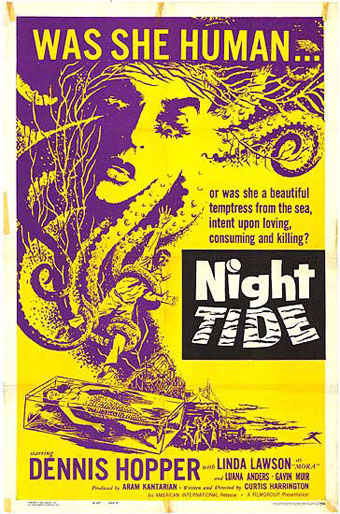
nighttide.jpg

• I’ve wondered for years why there was such a difference in quality between Plight & Premonition (1988) and Flux + Mutability (1989), a pair of instrumental albums by David Sylvian and Holger Czukay. The former warrants repeated listening while the latter…doesn’t. David Sylvian‘s reminiscences about the recording sessions are enlightening.

• “There’s something evil and dangerous that is too old to comprehend.” Justin Benson and Aaron Moorhead, directors of The Endless, talk to Virginie Sélavy about the creepiness of recorded media, the science of the supernatural and their belated readings of HP Lovecraft.

• “I hope my site will inspire people to see the world a different way,” says Nicolas Winding Refn, writing about the forthcoming launch of byNWR.com, a home for his collection of restored cult films. Good to see Night Tide (1961) by Curtis Harrington among the titles.

Dennis Cooper‘s favourite fiction, poetry, non-fiction, film, art, and internet of 2018 so far. Thanks again for the link here! Also: Laura Dern Day.

• Mixes of the week: FACT Mix 660 by 7FO, and Light Entertainment Programme: PRExotica 1914–1952 by Jesús Bacalão.

David Bennun on thirty years of the animated masterpiece that is Katsuhiro Otomo’s Akira.

Diane Mehta on the rare women in the rare book trade. Related: Pyewacket Books.

• At Greydogtales: One hundred years of Philip José Farmer.

• In Paris, an omnivorous Asian phantasmagoria.

• The Strange World of…Jon Hassell.

Night Tide (1994) by Scorn | Dark Noontide (2002) by Six Organs Of Admittance | Flowery Noontide (2004) by Espers

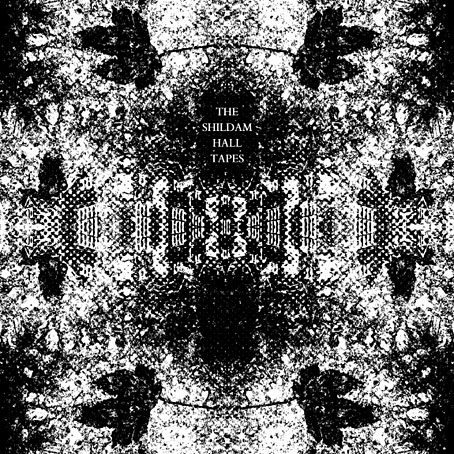
The Shildam Hall Tapes

shildam.jpg

The conceit of a “soundtrack for an imaginary film” dates back at least as far as Gandharva by Beaver & Krause, although only the second half of that album was the imaginary soundtrack, and a rather vague one at that. (A variation on the Gandharva suite did become genuine soundtrack music, however, when Robert Fuest asked Gerry Mulligan to rework his sax improvisation for The Final Programme in 1973.) The imaginary soundtrack idea didn’t really catch on until the late 80s and early 90s, with serious efforts such as Barry Adamson’s excellent Moss Side Story emerging alongside an increasing and often lazy use of the term “imaginary soundtrack” as a descriptor employed by journalists writing about instrumental electronic albums.

The Shildam Hall Tapes is neither lazy nor mis-labelled being the latest in this year’s themed compilation albums from A Year In The Country, and a collection described as “reflections on an imaginary film.”

In the late 1960s a film crew began work on a well-funded feature film in a country mansion, having been granted permission by the young heir of the estate. Amidst rumours of aristocratic decadence, psychedelic use and even possibly dabbling in the occult, the film production collapsed, although it is said that a rough cut of it and the accompanying soundtrack were completed but they are thought to have been filed away and lost amongst storage vaults.

Few of the cast or crew have spoken about the events since and any reports from then seem to contradict one another and vary wildly in terms of what actually happened on the set. A large number of those involved, including a number of industry figures who at the time were considered to have bright futures, simply seemed to disappear or step aside from the film industry following the film’s collapse, their careers seemingly derailed or cast adrift by their experiences.

Little is known of the film’s plot but several unedited sections of the film and its soundtrack have surfaced, found amongst old film stock sold as a job lot at auction—although how they came to be there is unknown. The fragments of footage and audio that have appeared seem to show a film which was attempting to interweave and reflect the heady cultural mix of the times; of experiments and explorations in new ways of living, a burgeoning counter culture, a growing interest in and reinterpretation of folk culture and music, early electronic music experimentation, high fashion, psychedelia and the crossing over of the worlds of the aristocracy with pop/counter culture and elements of the underworld.

The Shildam Hall Tapes takes those fragments as its starting point and imagines what the completed soundtrack may have sounded like; creating a soundtrack for a film that never was.

Track list:
1) Gavino Morretti—Dawn of a New Generation
2) Sproatly Smith—Galloping Backwards
3) Field Lines Cartographer—The Computer
4) Vic Mars—Ext – Day – Overgrown Garden
5) Circle/Temple—Maze Sequence
6) A Year In The Country—Day 12, Scene 2, Take 3; Hoffman’s Fall
7) The Heartwood Institute—Shildam Hall Seance
8) David Colohan—How We’ll Go Out
9) Listening Center—Cultivation I
10) Pulselovers—The Green Leaves of Shildam Hall

I’ve always enjoyed this kind of thing when it’s done well, as in Barry Adamson’s case, so was already predisposed to the new collection even before hearing it. The cumulative effect is much better than anticipated, thanks in part to a few deviations from earlier A Year In The Country compilations. The opening piece is by Gavino Morretti, a newcomer to the AYITC stable, and a musician whose albums to date are all in the imaginary soundtrack sub-genre. Morretti provides a marvellous piece in the Goblin/Fabio Frizzi manner that effortlessly conjures a title sequence of mists, coloured filters and Art Nouveau typefaces.

The following contributions range from the spookily atmospheric (Sproatly Smith, A Year In The Country, The Heartwood Institute) to electronic numbers such as The Computer by Field Lines Cartographer which suggests some kind of paranormal investigation like those in The Stone Tape and The Legend of Hell House. The biggest surprise for me was David Colohan’s How We’ll Go Out which is another electronic work, and very different to his earlier folk-oriented compositions. If, like me, you’ve been missing the “ghost” quotient among the recent releases on the Ghost Box label, then The Shildam Hall Tapes is a very welcome substitute: sinister, perfectly-pitched and leaving enough gaps in the scenario for the imagination to operate. I’m no doubt biased towards the format but for me this is the best A Year In The Country compilation to date so I’m now wondering what the follow-up will be like.

The Shildam Hall Tapes will be available for pre-order at Bandcamp from 10th July, and released on the 31st.

Previously on { feuilleton }
Audio Albion
A Year In The Country: the book
All The Merry Year Round
The Quietened Cosmologists
Undercurrents
From The Furthest Signals
The Restless Field
The Marks Upon The Land
The Forest / The Wald
The Quietened Bunker
Fractures

Weekend links 418

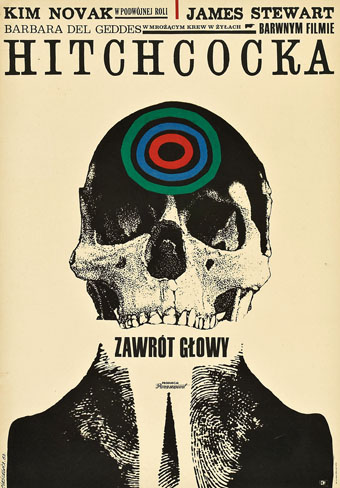
vertigo.jpg

Poster by Roman Cieślewicz for the 1963 Polish release of Vertigo. Via The Hitchcock Zone.

• Alfred Hitchcock’s Vertigo is sixty years old this year. It’s a film I’ve always found to be preposterous and very over-rated, despite the considerable strengths of its cast, production, etc; consequently, any claims to its being an unalloyed masterpiece (such as being voted the best film of all time in the 2012 Sight & Sound poll) have been difficult to accept. For the latest anniversary, David Thomson examined the film in the light of changing social attitudes.

• Currently seeking funding at Unbound: Stars, Fools and Lovers: An illustrated guide to the art and history of the Tarot by Joanna Ebenstein, Laetitia Barbier and Mark Pilkington. Another Tarot-related book, Pamela Colman Smith: The Untold Story by Stuart R. Kaplan with Mary K. Greer, Elizabeth Foley O’Connor and Melinda Boyd Parsons, will be published next month.

• Everybody wants to talk to Jon Hassell at the moment, which is no bad thing: recent interviews have appeared at The Vinyl Factory, Red Bull Radio and Vice.

• Coming soon from Lazarus Corporation: England’s Dark Dreaming by Paul Watson.

• Sean Kitching on The Strange World of Charles Hayward (This Heat et al).

• At Dennis Copper’s: The title sequences of 56 mostly horror movies.

• Stone circles: Adam Scovell chooses 10 notable cinematic examples.

• “You gotta be selfish. It’s a terrible thing,” says David Lynch.

Wolf’s Kompaktkiste shows off a serious record collection.

Boy with Cat (1966), a short film by Donald Richie.

• Mix of the week: Secret Thirteen Mix 256 by Nina.

Tank (2018), a short film by Stu Maschwitz.

Phantom Islands—A Sonic Atlas

Letraset, design and music

• Vertigo (1988) by Flash Cero | Psyko (Themes from Psycho and Vertigo) (1993) by Laika & The Cosmonauts | Vértigo Magnético (2014) by Liquidarlo Celuloide

Weekend links 417

coil.jpg

Cover of How To Destroy Angels (Remixes And Re-Recordings) (1992) by Coil. Artwork: Fine Balance (1986) by Derek Jarman.

• It’s that man again: “According to the late great short story writer Robert Aickman, the problem with our excessively modern world is not that it is strange, but that it is not strange enough.” Scott Bradfield on a writer who can no longer be described as neglected or overlooked.

• Coil may have expired over a decade ago after the death of John Balance but the posthumous releases persist. Latest of these is How To Destroy Angels, an album-length presentation of music (or audio) by Coil and Zos Kia (John Gosling) from 1983/84.

• “Two decades ago, a renowned professor promised to produce a flawless version of one of the 20th century’s most celebrated novels: Ulysses. Then he disappeared.” The Strange Case of the Missing Joyce Scholar.

• At Dangerous Minds: The Fool: The Dutch artists who worked for The Beatles (and made their own freak folk masterpiece). Previously here: The art of Marijke Koger.

• RIP Nick Knox. The Cramps were always best when playing live, as here in 1986 when they performed songs from A Date With Elvis on Channel 4’s The Tube.

• “The McKenzie Tapes is a collection of live audio recordings from some of New York City-area most prominent music venues of the 1980s and 1990s.”

• Beyond the veil: two extracts from Death by Anna Croissant-Rust, one of two new books from Rixdorf Editions.

• Impulse Responses: composer Deru on scoring with the Cristal Baschet.

Fleshback: Queer Raving in Manchester’s Twilight Zone Chapter 1–3.

• “Puzzler says he has cracked code to stolen Belgian masterpiece.”

• Mix of the week: FACT mix 657 by Beatrice Dillon.

Jenzeits

Death Have Mercy (1959) by Vera Hall | Oh Death (1964) by Dock Boggs | Oh Death (1967) by Kaleidoscope

Weekend links 416

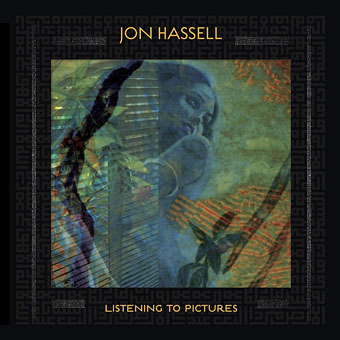
hassell.jpg

Cover art and design by Arien Vallzadeh, Dan Kuehn, Mati Klarwein & Taska Cleveland.

• At Bandcamp: “Jon Hassell collages the past on his absorbing new record”. The new album, Listening to Pictures (Pentimento Volume One), was released last week, and it joins the rest of Hassell’s catalogue in sounding unlike any of his other albums while still being recognisably the work of the same artist. Musical collage is a familiar technique today but was much less common thirty years ago; it’s almost a constant in Hassell’s work, however, going back to Possible Musics (1980), with its tape-looped rhythms and layered recordings, to the later Magic Realism (1983), an album which was in the vanguard of digital sampling, and which still sounds like nothing else.

• “We’re supposedly in the middle of a vinyl revival, streaming services are hoovering up all the coin, and everyone seems to have a cassette column. But, argues James Toth, it’s the humble compact disc that we should be celebrating.” No argument here, I’ve long favoured CDs over vinyl even before the current fad for overpriced antique (or not-so-antique) discs and equally overpriced new pressings.

• “Reading [Robert] Aickman’s strange stories is to glimpse a reality you would prefer to forget,” says John Gray. Among the other writers mentioned in Gray’s piece is the excellent (and under-recognised) Walter de la Mare; Wormwoodiana’s Mark Valentine reviews a previously unseen de la Mare story.

• At The Wire: Greetings Music Lover: The premiere of Steve Urquhart’s new audio documentary exploring the life and work of BBC Radio Lancashire broadcaster and Wire contributor Steve Barker.

• Out in November: k-punk: The Collected and Unpublished Writings of Mark Fisher (2004–2016).

• “European cinema embraces the vagina—what’s taken Hollywood so long?” asks Anne Billson.

Strange Stars: David Bowie, Pop Music, and the Decade Sci-Fi Exploded by Jason Heller.

• “Avoid all systems”: Ex-Can vocalist Damo Suzuki is interviewed at Dangerous Minds.

• “A new room in the Great Pyramid”: lost 1963 John Coltrane album discovered.

• Mixes of the week: FACT mix 656 by Mor Elian, and 6 by The Ephemeral Man.

• An introduction by Erik Davis to The Night Land by William Hope Hodgson.

Pyramid Of The Sun (1960) by Les Baxter | The Giant Pyramid Sitting At The Bottom Of The Sea Of Bermuda And The Ancient People (1979) by Isao Tomita | The Obsidian Pyramid (2005) by Eric Zann