Weekend links 608

timlin.jpg

The Temple, an illustration from The Ship that Sailed to Mars (1923) by William Timlin.

• “With the grotteschi, Piranesi produced hybrid forms of ornament juxtaposed in an array without regard to single-point perspective. With his capricci, he brought disparate structures into a landscape that existed only within the borders of the plate. Perhaps because of his early fidelity to accuracy and the long tradition of printmaking as a medium for the measured representation of antique forms, Piranesi’s capricci take on a particularly fantastic aura.” Susan Stewart on the ruinous fantasias of Giovanni Battista Piranesi, one of whose etchings happens to be providing the page header this month.

• At Dangerous Minds: 23rd Century Giants, the incredible true story of Renaldo & The Loaf! Oliver Hall conducts a long and very informative interview with two of Britain’s strangest music makers.

• New music: Nightcrawler by Kevin Richard Martin, recommended to anyone who enjoys the nocturnal doom of Bohren & Der Club Of Gore; and Murmurations by Lea Bertucci & Ben Vida.

“Throughout the book, McCarthy writes as if he knows something that more conventional historians aren’t always keen to accept: that the past doesn’t always make sense, that it’s often cruel and irrational, and that some things aren’t so explainable. History is not a book waiting to be opened so much as a Pandora’s box that might curse us and leave us chastened by what we find inside.”

Bennett Parten on Cormac McCarthy’s baleful masterpiece, Blood Meridian

• “Inside me are two wolves and they are both paintings by Kazimierz Stabrowski.” S. Elizabeth‘s latest art discoveries.

• At Wormwoodiana: Mark Valentine on Arthur Machen and the mysteries of the Grail.

• RIP Betty Davis and Douglas Trumbull.

• At Dennis Cooper’s: Tobe Hooper Day.

Temple Bells (1959) by Frank Hunter And His Orchestra | Temple Of Gold (1960) by Les Baxter | Temple (2018) by Jóhann Jóhannsson

Bruges-la-Morte, 1978

blm1.jpg

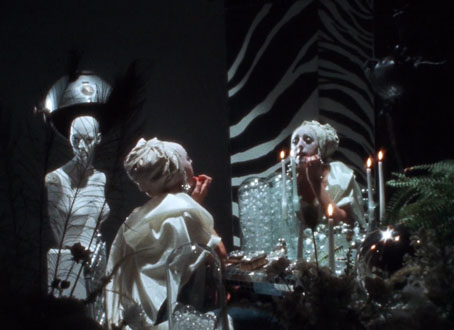
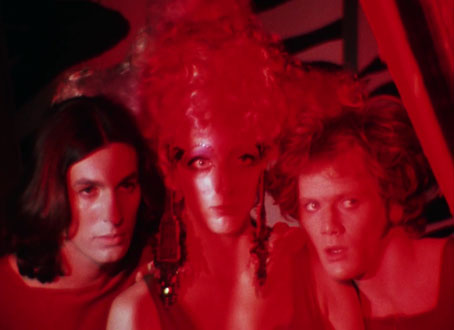
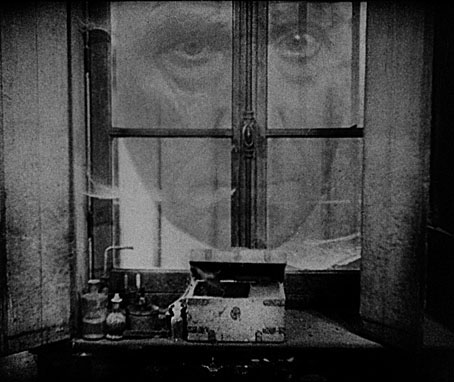
What we have here is a very creditable 67-minute film adaptation of the Symbolist novel by Georges Rodenbach. Ronald Chase directed, co-wrote the screenplay with Pier Luigi Farri, and also photographed the production with a small company of English actors in the city of Bruges. The film has recently been given a high-definition restoration and made available on the director’s Vimeo page. Chase describes his adaptation as a low-budget affair, the footage being originally intended for screening during performances of Die Tode Stadt by Eric Korngold, but it doesn’t come across as cheap or amateurish thanks to a professional cast and authentic locations. Rodenbach’s novel is distinguished by its early use of photographic illustrations, most of which are views of the canals of Bruges. Here we get to see the church steeples and crow-step gables from the viewpoint of a camera drifting along the same swan-filled waterways.

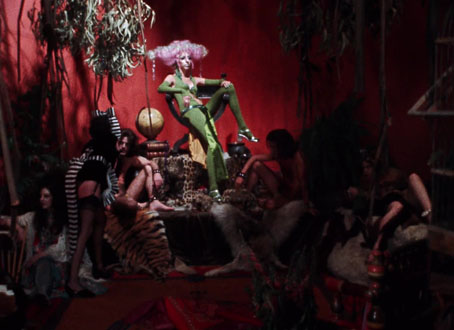
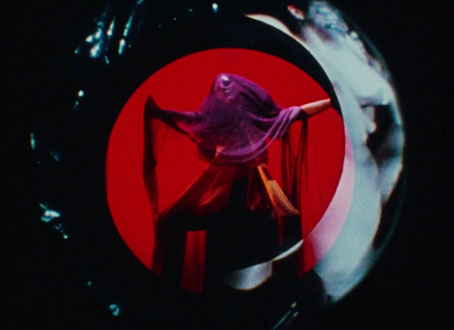
It’s a long time since I read Rodenbach’s novel so I can’t judge this version in any detail although my memories are of a dreamier narrative than the one the film delivers. Chase credits the story as being “suggested” by the novel but the broad outline follows Rodenbach, with a grieving widower (Richard Easton, whose character is unnamed in the film) meeting a dancer (Kristin Milward) who seems to be the double of his recently deceased wife. The dancer works with a troupe of performers who stage a nocturnal masque for the tormented man, an event which fails to alleviate his confusion or his anguish.

blm2.jpg

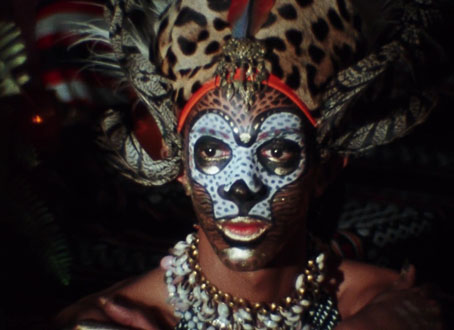
Chase’s film resembles one of the literary adaptations the BBC used to make throughout 1970s and 80s, modest and serious, and certainly of a quality that it could have been broadcast as a part of the Omnibus arts strand or in a late slot on BBC 2. Among the performers are a Pierrot character played by Anthony Daniels, an actor most people will know for his role as a gold robot in a space opera, and Nickolas Grace, who appeared as Oscar Wilde a decade later in Ken Russell’s Salomé’s Last Dance. There’s a touch of the diabolical Russell (and James Ensor) in the later masque scenes when the performers don papier-mâché masks, and a nun gets chased around a church. The mask-making is credited–very surprisingly–to Winston Tong, an artist and musician best known for his association with Tuxedomoon. I was hoping we might see more of the gloomy canals and equally gloomy architecture but the buildings and bridges that we do see look just as they would have done in Rodenbach’s day. If you want more there’s always the paintings and drawings of Fernand Khopff and Lucien Lévy-Dhurmer, or the photographs in the novel itself.

Previously on { feuilleton }
Bruges in photochrom
Bruges panoramas
Bruges-la-Morte

Weekend links 607

cadmus.jpg

Jerry (1931) by Paul Cadmus.

• “I wanted to photograph naked young men as opulently and as attentively as those professional ladies appearing in Playboy-type magazines.” RIP James Bidgood, photographer and director of no-budget gay-porn classic Pink Narcissus. Also in the obituary notices this week: Monica Vitti and John Appleton, composer of electronic music and inventor of the Synclavier sampling keyboard.

• “…the Sola Busca deck is limited in its use for divinatory purposes today, and yet, since its enigmatic imagery irresistibly invites decoding, the deck nonetheless beckons twenty-first century cartomancers into a game of high imagination.” Kevin Dann on the mysteries of the world’s oldest complete Tarot deck.

• “This Missouri company still makes cassette tapes, and they are flying off the factory floor.” Jennifer Billock reports.

He attended to his own talent, not in the interest of bombast or self-aggrandisement, but rather like a faithful watchman. He had the fixity of the great and therefore no need of vanity. He estimated that three shillings would be a reasonable price for Ulysses. A tiresome book, he admitted. At the same time he was dogged by fear that the printing house would be burnt down or that some untoward catastrophe would happen. He assisted Miss Beach in wrapping the copies, he autographed the deluxe editions, he wrote to influential people, he hawked packages to the post office. He knew that the illustrati would change their minds many a time before settling down to a final opinion and that many another would know as much about it as the parliamentary side of his arse.

Edna O’Brien on James Joyce

• At Wormwoodiana: Mark Valentine on The Secret Glory by Arthur Machen, another novel now in its centenary year.

• At Aquarium Drunkard: It Is Not My Music, (1978) an hour-long Swedish TV documentary about Don Cherry.

• At Bandcamp: The transportive psychedelia of Moon Glyph records.

• Mix of the week: Fact Mix 844 by A Psychic Yes.

• Steven Heller’s font of the month is Show.

• At Dennis Cooper’s: Guitar.

Mumblin’ Guitar (1960) by Bo Diddley | Electric Guitar (1979) by Talking Heads | Impossible Guitar (1982) by Phil Manzanera

Quay Brothers record covers

quays01.jpg

Institute Benjamenta (1998) by Lech Jankowski.

Continuing an occasional series about artists or designers whose work has appeared on record sleeves. Regular readers won’t be surprised to hear that I’ve had this one in mind for some time but it’s taken a while to put together. The main problem has been the Quay Brothers’ habit of using a variety of different names when they were working as designers; variations include “Stefen” rather than Stephen Quay, the Brothers Quai, Gebr. Quay, Jumeaux Quay, The Quays, Atelier Koninck (or Koninck Atelier), and so on. The catalogue compilers at Discogs do a good job of keeping up with the alternate names of groups or musical artists but stumble over those used by anyone else associated with an album’s production. Consequently, this collection of covers shouldn’t be taken as complete or final. Some of the discoveries would have been impossible without the checklist of Quays ephemera that accompanied the MoMA exhibition in 2012.

quays02.jpg

Blood, Sweat & Tears (1968) by Blood, Sweat & Tears.

This must be one of the earliest of the Quays’ commercial works. As with other covers from the first decade of their career, the credit is for illustration alone, graphic design came later.

quays03.jpg

Mozart: Violin Concerto No. 2 In D Major, Violin Concerto No. 5 In A Major (“Turkish”) (197?); Zurich Chamber Orchestra, Zino Francescatti, Edmond De Stoutz.

quays04.jpg

George Rochberg: String Quartet No. 3 (1973); The Concord String Quartet.

quays05.jpg

Fiction Tales (1981) by Modern Eon.

Continue reading “Quay Brothers record covers”

Arena: Andrei Tarkovsky

tarkovsky1.jpg

More slow cinema. The Antonioni documentary was broadcast by the BBC in their regular Arena arts strand, as was this 50-minute profile from 1987. Andrei Tarkovsky is a favourite Arena of mine, one I’ve watched many times over the years, whether original broadcast, VHS tape or digitised copy. As with the Antonioni film it’s one of many such episodes which functions as an ideal introduction to its subject.

tarkovsky2.jpg

1986 was the year of Tarkovsky’s untimely death so Charlie Pattinson’s documentary served as a memorial as well as a celebration of a director whose reputation had been growing throughout the decade. I love the way this one starts cold with a series of clips from all seven of the feature films; no comment required. Further clips follow but the real value is in the extracts from interviews and talks given by the director which punctuate the biographical chronology. The first of these is a declaration of Tarkovsky’s belief that film-making is a unique medium in its ability to capture and assemble temporal moments, something he explored in depth in his book, Sculpting in Time. In his talks and his writings he can often seem overly serious when discussing his work, especially in a world where film-making is largely regarded as merely another division of the entertainment industry. But he regarded both art and film-making as serious affairs, and many of his films required considerable effort to be made at all. Hollywood has long been notorious for confounding the endeavours of maverick directors but the apparatchiks at Goskino were seldom better, continually rejecting new proposals or interfering with the films after they were made. Tarkovsky’s diaries are filled with accounts of his struggles with the bureaucrats who oversaw film production. When he wasn’t fighting censorship attempts or refusals to release a new film, he was dealing with other refusals to approve his projects altogether. We’re fortunate that Stalker exists at all when most of the exterior footage needed to be reshot after the negative was ruined by incompetent processing. This calamity wasn’t the director’s fault but Goskino were reluctant at first to let him finish the film. These constant struggles eventually compelled him to leave the Soviet Union in order to make films elsewhere, a painful decision which is discussed in the final part of Pattinson’s documentary by the director’s wife and production assistant, Larisa. The pair were allowed to leave the country but they were also forced to do so without their young son, a typically cruel and petty punishment by the Soviet authorities.

In the Antonioni post I mentioned that Tarkovsky’s present popularity is sustained by Solaris and Stalker much more than by his other films. People who only know the director from his excursions into science fiction may be surprised to hear him dismiss Solaris as his least successful feature on a personal level. Documentaries such as this may encourage some of those viewers to explore the rest of his filmography.

Previously on { feuilleton }
Zone music
Sine Fiction
Rerberg and Tarkovsky: The Reverse Side Of “Stalker”
The Stalker meme