Weekend links 222

wicker.jpg

A self-portrait by Nadia Wicker from her Projectie series.

• “And boy, did that Rain Parade sleeve look cool with its picture of the insouciant band sitting in front of large hot-house (or glass palace), the sky behind them tinted a sickly shade of apocalypse pink…” Joe Banks on the Rain Parade’s finest moment, Explosions In The Glass Palace.

• “…there are pleasures to be had from books beyond being lightly entertained. There is the pleasure of being challenged; the pleasure of feeling one’s range and capacities expanding…” Rebecca Mead on the pleasure of reading to impress yourself.

• “If Gengoroh Tagame performed the acts he drew in his comics he’d probably be dead or in jail,” says Zac Bayly, interviewing Tagame for BUTT.

Crime does not fascinate James Joyce as it fascinates the rest of us—the suggestion of crime dismays him. He tells me that one of his handicaps in writing Work in Progress is that he has no interest in crime of any kind, and he feels that this book which deals with the night-life of humanity should have reference to that which is associated with the night-life of cities—crime. But he cannot get criminal action into the work. With his dislike of violence goes another dislike—the dislike of any sentimental relation. Violence in the physical life, sentimentality in the emotional life, are to him equally distressing. The sentimental part of Swift’s life repels him as much as the violence of some of his writing.

Padraic Colum attended Joyce’s 47th birthday party.

• I’m currently reading The Wanderer, “a weird document” by Timothy J. Jarvis, which is officially published this week.

The Changes, another remarkable children’s TV series from the 1970s, is out on DVD next week.

Sir Richard Bishop has made all 14 of his solo albums available as free downloads.

• “How long do CDs last? It depends, but definitely not forever,” says Laura Sydell.

• “Readers absorb less on e-readers than on paper, study finds

• Book designer Craig Mod wants to talk about margins.

• Mix of the week: a mix for The Quietus by Helm.

Ozu’s passageways

• The Rain Parade: No Easy Way Down (BBC TV, 1984) | No Easy Way Down (studio, 1984) | No Easy Way Down (Tokyo, 1984)
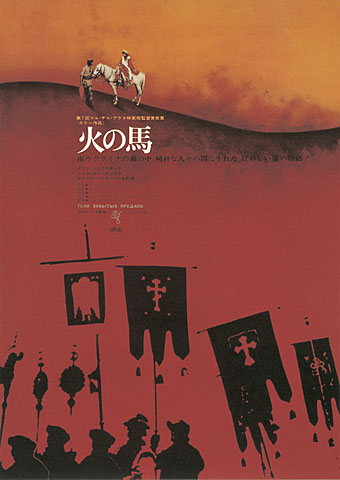
Parajanov posters

parajanov1.jpg

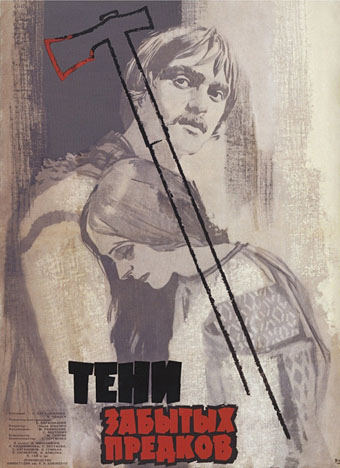
Shadows of Our Forgotten Ancestors (1964).

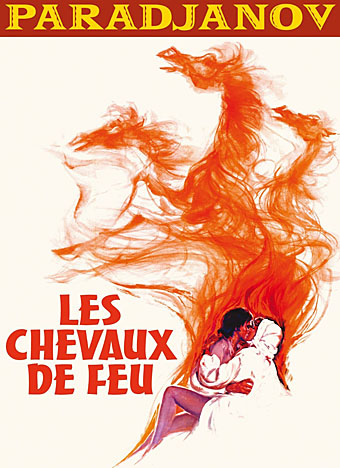
A selection of the better ones. Last week I was rewatching Sergei Parajanov’s The Colour of Pomegranates and was curious to see how it had been advertised. Shadows of Our Forgotten Ancestors is also known as Wild Horses of Fire (or Horses of Fire), after the novelette by Mykhailo Kotsiubynsky which provided the story. The Russian poster above shows the fateful axe which kills Ivan’s father at the beginning of the film, while the French and Japanese posters below play on the horses of fire in their titles.

parajanov2.jpg

parajanov3.jpg

Continue reading “Parajanov posters”

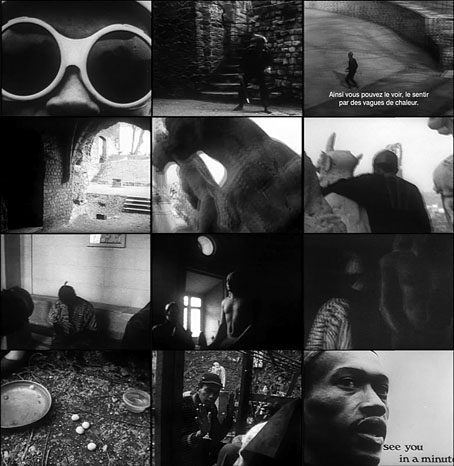
Don Cherry, 1967

doncherry.jpg

Poème, scénario, interprétation, musique: Don Cherry
Poème dit par Antony Braxton
Deuxième flûte jouée par Karl Berger
Réalisation: Jean-Noël Delamarre, Natalie Perrey, Philippe Gras, Horace
Image: Jean-Noël Delamarre, Horace
Montage: Natalie Perrey
Photographies: Philippe Gras

In which jazz trumpeter Don Cherry materialises in Paris to prowl the streets, joust with the gargoyles of Notre Dame, and encounter some ancient Egyptian statuary. This is listed all over the web as being from 1973 but more authoritative French sites say it’s from 1967, as does IMDB. Cherry’s music also sounds close to the improvised Mu sessions he’d record in Paris two years later. Watch Don Cherry at Ubuweb.

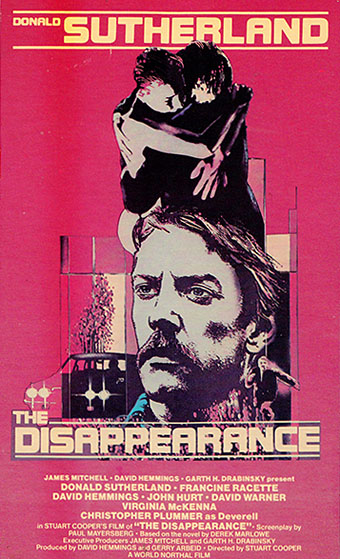
The Disappearance, a film by Stuart Cooper

disappearance1.jpg

If you’re an obsessive cineaste there’s a good chance you maintain a mental list of the films you’d like to see, the films you’d like to see again, and the films you’d like to see reissued on DVD. The vagaries of distribution and ownership often conspire to make older films fall out of sight even when they’ve been produced and promoted by major studios, have had TV screenings and so on. This was famously the case with five of Alfred Hitchcock’s features—Vertigo and Rear Window among them—which managed to remain out of circulation for two decades; more notoriously there was Stanley Kubrick’s neurotic embargo on any screening of A Clockwork Orange in the UK which meant that my generation of Kubrick-watchers had to make do with a variety of pirate VHS recordings.

marlowe.jpg

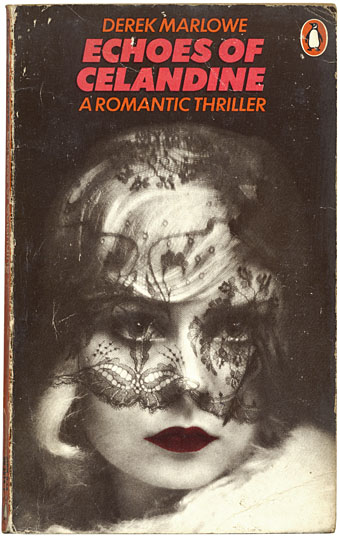
Penguin edition, 1973. Photo by Van Pariser.

DVD reissues have chipped away at my “must see again” list with the result that Stuart Cooper’s The Disappearance (1977) recently found itself at the top of the catalogue. This film has never been as inaccessible as some: it received at least two TV screenings in the UK, and was available on VHS cassette for a time. There was also a DVD release although by the time I started looking for it the only available copies were secondhand ones commanding high prices. A year or so ago I read Derek Marlowe’s Echoes of Celandine (1970), the novel on which the screenplay is based, and as a result became more eager than ever to see the film again. Having finally watched a very poor-quality transfer of a VHS copy on YouTube I now feel sated, even if the experience was unsatisfying.

The Disappearance is one of those odd productions that ought to have all the ingredients to make a very memorable film but which never works as well as you might hope. The screenplay was by Paul Mayersberg, written between his two films with Nicolas Roeg, The Man Who Fell to Earth (1976) and Eureka (1983); there’s a great cast: Donald Sutherland, David Warner, Peter Bowles, David Hemmings (who also produced), John Hurt, Virginia McKenna, Christopher Plummer; Kubrick’s cameraman of the 1970s, John Alcott, photographed the film shortly after winning an Oscar for his work on Barry Lyndon; the source material is very good: Marlowe’s novel is described as “a romantic thriller” but when the quality of the writing easily matches any literary novels of the period such a description makes it sound more generic and pot-boiling than it is.

Continue reading “The Disappearance, a film by Stuart Cooper”

Weekend links 221

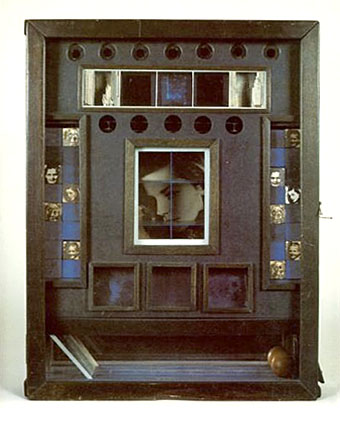
cornell.jpg

Untitled (Penny Arcade Portrait of Lauren Bacall) (1946) by Joseph Cornell.

• Having been a Bernard Szajner enthusiast for many years it’s good to see his music receiving some belated reappraisal. David McKenna talked to Szajner about his Visions Of Dune album (which is being reissued by InFiné next month), laser harps, The (Hypothetical) Prophets, and working with Howard Devoto.

• Priscilla Frank posts some big views of Marjorie Cameron’s occult paintings as a preview of the forthcoming exhibition at MOCA Pacific Design Center, Los Angeles.

• Fascinating reading in light of the recent kerfuffle over True Detective, Christopher Loring Knowles on the possible sources of HP Lovecraft’s Cthulhu Mythos.

Those who set up oppositions between the electronic technology and that of the printing press perpetuate Frollo’s fallacy. They want us to believe that the book—an instrument as perfect as the wheel or the knife, capable of holding memory and experience, an instrument that is truly interactive, allowing us to begin and end a text wherever we choose, to annotate in the margins, to give its reading a rhythm at will—should be discarded in favor of a newer tool. Such intransigent choices result in technocratic extremism. In an intelligent world, electronic devices and printed books share the space of our work desks and offer each of us different qualities and reading possibilities. Context, whether intellectual or material, matters, as most readers know.

Alberto Manguel, lucid as always, on the act and import of reading.

• “It’s time to give prog rock’s artist-in-residence Roger Dean his due,” says Amber Frost. No argument there, I did my bit in 2010.

• “Why do the covers of so many self-published books look like shit?” asks B. David Zarley.

• Mixes of the week: FACT mix 455 by Airhead, and Secret Thirteen mix 225 by Clock DVA.

• At Core77: Rain Noe chooses favourite skyscraper photos by Russian urban explorers.

• “O, Excellent Air Bag”: Mike Jay on the nitrous oxide fad of the early 19th century.

Nick Carr goes in search of Manhattan’s last remaining skybridges.

Lauren Bacall at Pinterest.

• Shaï Hulud (1979) by Zed (Bernard Szajner) | Welcome (To Death Row) (1980) by Bernard Szajner | Person To Person (1982) by The (Hypothetical) Prophets