Albin Grau’s Nosferatu

nosferatu01.jpg

For many directors a film like Nosferatu: A Symphony of Horror (1922) would have been a career peak, but Friedrich Murnau went on to make The Last Laugh (1924), Faust (1926) and Sunrise (1927). All those films improve cinematically on Nosferatu but the vampire film continues to cast the longest shadow: quoted, remade, and with even its production fictionalised in Shadow of the Vampire (2000). The lasting success of Nosferatu wasn’t all Murnau’s doing, however.

nosferatu05.jpg

It’s arguable that without the preliminary work of production designer Albin Grau (1884–1971) the film might have been little more than a curious precursor of the Universal Dracula (1931). Grau was responsible for the set design and the extraordinary appearance of Max Schreck’s Count Orlok; Grau also created the film’s memorable poster and advertising imagery in which the vampire’s appearance hints at something even more terrible than the figure that stalks before the camera.

nosferatu03.jpg

A great deal of German silent cinema is labelled “Expressionist” even if the films themselves show little in the way of overt Expressionism. Nosferatu isn’t very Expressionist at all but Albin Grau’s sketches and posters certainly tend in that direction, so much so that they make me wonder how different the film might have been if it had been as stylised as The Cabinet of Dr. Caligari (1919). In addition to his artistic pursuits, Grau was an occultist which explains the attention to detail in the bizarre contract drawn up between Knock and Count Orlok, a document that looks more like a page from a grimoire than anything used by an estate agent. There’s a quote from Grau in his occult capacity in John Symonds’ Aleister Crowley biography, The Great Beast, complaining in 1925 about Crowley’s ascension to the heights of the Ordo Templi Orientis.

nosferatu11.jpg

Nosferatu: The Knock-Orlok contract.

nosferatu12.jpg

Nosferatu comes out of the occult preoccupations, having been Grau’s project from the beginning when he formed a film company, Prana-Film, with Enrico Dieckmann. The pair announced plans for three films: Dreams of Hell, The Devil of the Swamp, and a drama about a vampire. Only Nosferatu materialised then sank the company almost as soon as it was finished: Prana-Film had spent more on publicity than on the film itself, and went deep into debt. The success of the film might have helped their finances but the death blow was struck by Florence Stoker and the British Society of Authors who won a court case against the company for filming Dracula without permission. The efforts of the Stoker estate to destroy Nosferatu are recounted in detail in David J. Skal’s fascinating Hollywood Gothic (1990). Many of Murnau’s minor films were lost through various misfortunes, and it’s a fluke that a handful of prints of Nosferatu survived. Happily for us, it’s not only vampires that manage to remain undead.

Continue reading “Albin Grau’s Nosferatu”

Count Dracula

dracula1.jpg

Vampires: if they’ve never been very scarce they didn’t used to be quite so commonplace. The fortunes of Dracula, on the other hand, seem to have diminished in recent years following a centenary peak in 1997. The surprising spike of interest in the 1970s might explain the BBC’s decision to adapt Bram Stoker’s novel for television in 1977. I often used to wonder why the corporation didn’t turn some of its costume-drama prowess to more generic material. Anthony Trollope’s The Pallisers sprawled over 26 50-minute episodes in 1974 but you’d search in vain for an adaptation of HG Wells. The closest was the yearly Ghost Story for Christmas most of which were period pieces.

dracula2.jpg

Louis Jourdan bares his fangs.

Gerald Savory’s Count Dracula, subtitled “A Gothic Romance”, was broadcast a few days before Christmas, 1977, in a single 150-minute programme. Repeat screenings broke the drama into two episodes so it’s often referred to as a mini-series. I’d read Dracula for the first time earlier that year so it was a thrill to see the story presented in such a faithful manner after all the liberties taken by feature films and derivative dramas. Count Dracula may seem primitive when compared to lavish Hollywood productions but 37 years later it’s still the adaptation that most closely adheres to Stoker’s epistolary novel.

dracula3.jpg

Louis Jourdan and Bosco Hogan (Jonathan Harker).

Continue reading “Count Dracula”

Weekend links 230

bebergal.jpg

Cover art by Arik Roper.

Peter Bebergal’s Season of the Witch: How the Occult Saved Rock and Roll was published this week. Articles about rock music’s occult preoccupations have been a recurrent feature of music magazines, especially around Halloween, but Bebergal’s book is the first attempt at a wide-ranging, full-length study. Despite the subtitle, the scope goes beyond the familiar—David Bowie’s Golden Dawn references, Jimmy Page’s Aleister Crowley obsession—to take in the pagan nature of the blues, pre-Beatles rock’n’roll, and the byways of electronic music. My old employers, Hawkwind, provide a title (Space Ritual) for one section, and I was pleased to see the Krautrock scene receiving some attention: years ago you couldn’t have counted on this from an American music study. As Bebergal notes, Can’s Aumgn on Tago Mago (1971) isn’t the hippy Aum/Om but originates in a mantra defined in Crowley’s Magick in Theory and Practice.

• “We don’t just have skeletons in our cupboard, we have an ossuary.” Another week, another Alan Moore interview, but Tim Martin‘s piece is as much a portrait of the man as a conversation about the usual subjects: art, science, magic, etc.

• “Europe’s history of penis worship was cast aside when the Catholic Church realized Jesus’s foreskin was too potent to control.” Stassa Edwards on venerated members.

Gays and horror actually have  somewhat of a lost history. FW Murnau, the director of Nosferatu, was openly gay. Frankenstein’s real creator, James Whale, was also out. Given the talent involved, and the illicit nature of the genre, amateur and professional critics have been divining queer themes from horror films for decades.

Patrick Rosenquist on Gory, Gay & Loving It: Why Homosexuals Heart Horror

• “I thought that fine art was fairly dishonest as an industry. It pretends to be about culture but it’s really about money.” Andy Butler interviews designer Neville Brody.

• Snapping, Humming, Buzzing, Banging: Richard B. Woodward on the creative partnership between David Lynch and sound-design genius Alan Splet.

• Also published this week: Discovering Scarfolk, Richard Littler’s guide to the occult-obsessed, rabies-infested English town.

• More rock music: When Art Rocked: San Francisco Music Posters, 1966–1971 by Ben Marks.

• The trailer for 808, a documentary about Roland’s celebrated drum machine.

• At The Millions: Devin Kelly on the collaborative art of words and images.

• More Crowley: Strange Flowers goes looking for Aleister Crowley’s Berlin.

• Mix of the week: Secret Thirteen Mix 130 by Gábor Lázár.

• Yello’s Boris Blank on his 10 favourite electronic records.

Richard Hirst‘s Top 5 Robert Aickman Stories.

I Put A Spell On You (1968) by Arthur Brown | I Put A Spell On You (1992) by Diamanda Galás | I Put A Spell On You (2004) by Queen Latifah

Newlyborn, a film by Dave Colohan

newlyborn1.jpg

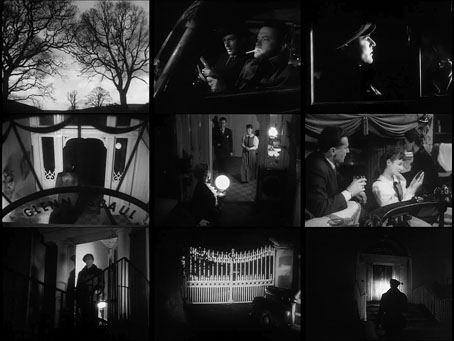
Dave Colohan was in touch recently to tell me he enjoyed the posts here (thanks, Dave) and also to point the way to Newlyborn, a short film he’s made. This is a moody piece that suits the season, black-and-white shots of South Longford, Ireland, accompanying Niamh Beirne’s narration. The music is minimal but Dave Colohan has a growing discography of music production by himself and in collaboration with others. I’d come across Taskerlands before—immediately notable because their name is a reference to The Stone Tape—and have had Raising Holy Sparks recommended to me, but there’s more there to explore. The No Longer Reel Vimeo channel has three videos for Raising Holy Sparks.

newlyborn2.jpg

newlyborn3.jpg

The Devil’s Cabaret

devil1.jpg

Halloween approaches so here’s a frivolous piece of Hollywood Diablerie. The Devil’s Cabaret (1930) was one of several short films made to showcase dance sequences shot for The March of Time, an MGM musical abandoned by the studio halfway through production. The footage from the earlier film is a short ballet sequence featuring a company of horned ballerinas dancing around an enormous, leering Devil’s head. Dimitri Tiomkin composed the music. All the footage was shot using an early Technicolor process so the film is subtitled “A Colortone Novelty”.

devil2.jpg

The framing narrative is a sequence of short sketches that offend many of the principles the Hays Code was brought in to protect a few years later. An uncredited Charles Middleton (Ming the Merciless in the Flash Gordon films) is a CEO-like Satan urging his Vice President Howie Burns (geddit?) to counter Heaven’s successes by bringing more souls to Hades (the word “Hell” only gets used at the end but after 1934 it was banned from use altogether). Burns does this by interrupting a religious meeting on Earth with a jazzy dance sequence that turns into a strip show; everyone in the audience rushes to join the damned. Once in Hades the newcomers are treated to the March of Time ballet. Elsewhere there’s some laboured humour, references to the Wall Street Crash and Prohibition, and a fair amount of salacious dialogue. Films such as these are always a good reminder of how risqué Hollywood could be before everyone adopted the production code. (Thanks to Gabe for the tip!)

The Devil’s Cabaret: part one | part two

Previously on { feuilleton }
Chocolate devils
Harry Lachman’s Inferno