Weekend links 295

dupre.jpg

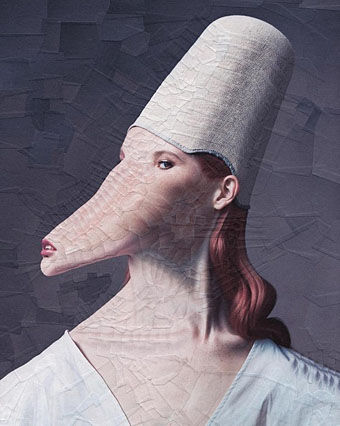
Untitled (2014) by Lola Dupré. Via.

Announcement of the week (if not the month/year) is the news that the BFI will be releasing all of the BBC dramas directed by Alan Clarke on DVD/Blu-ray in May. In addition to the long-awaited appearance on disc of Penda’s Fen (1974) we can expect a previously unseen director’s cut of Clarke’s last TV film, The Firm (1989), the DVD premier of Baal (1982) with David Bowie, plus many other works including some from the 1960s that were believed lost. (And it should be noted that this isn’t everything of Clarke’s; he also worked occasionally for ITV and later directed feature films for Channel 4.)

The BFI attention is a tribute to an exceptional director that’s overdue. Clarke has long been a cult figure among the British actors who worked with him, and among directors such as Harmony Korine and Gaspar Noé, but the tendency of TV to give one-off dramas a single screening has meant that much of his best work has been unavailable for years outside old VHS tapes. Clarke is important for having persistently chosen difficult subjects which he directed with a flair and intensity usually only found in cinema. When he died in 1990 the BBC repeated a handful of his films but the only ones given repeated DVD release have been the violent dramas with the big names attached: Scum (1979, with Ray Winstone), Made in Britain (1982, with Tim Roth), and The Firm (with Gary Oldman). Clarke’s oeuvre is much more than a parade of nihilistic villains, as will become evident later this year.

• A psychedelic video directed by Peter Strickland for Liquid Gate (ft. Bradford Cox) by Cavern of Anti-Matter. The debut album from Cavern of Anti-Matter, Void Beats/Invocation Trex, will be out later this month.

Celebrating Dusseldorf, the city that birthed Krautrock. (Article loses points for not mentioning producer Conny Plank.)

All Rivette’s features might be regarded as different kinds of horror films; Céline et Julie vont en bateau is his first horror comedy. The anxiety and despair of Paris Nous Appartient and La Religieuse, L’Amour Fou and Spectre seem relatively absent, yet they perpetually hover just beyond the edges of the frames. We still have no privileged base of ‘reality’ to set against the fictions, each of which is as outrageous as the other; and along with Borges, we can’t really say whether it’s a man dreaming he’s a butterfly or a butterfly dreaming he’s a man—although we may feel, in either case, that he and we are just on the verge of waking.

Jonathan Rosenbaum on work and play in the house of fiction: Jacques Rivette’s Out 1 and Céline and Julie Go Boating

• Mixes of the week: Finders Keepers Radio Show Krautrock Special, and The Ivy-Strangled Path Vol. XV by David Colohan.

• At Dangerous Minds: Super strange sculptures (by Shary Boyle) only the dark and demented could love.

• Beautiful Brutalites: S. Elizabeth questions Arabella Proffer about her paintings.

KTL is a musical collaboration between Peter Rehberg and Stephen O’Malley.

• Why study art when you can make it? The strange world of…This Heat.

Sarah Galo on the explicitly sexual female artists that feminism forgot.

Irmin Schmidt‘s favourite music (this week).

• LSD: My life-saving drug by Eric Perry.

The Occult Activity Book

Twenty Tiny Cities

Der LSD-Marsch (1970) by Guru Guru | Krautrock (1973) by Faust | Düsseldorf (1976) by La Düsseldorf
Mea Culpa, a film by Bruce Conner

conner.jpg

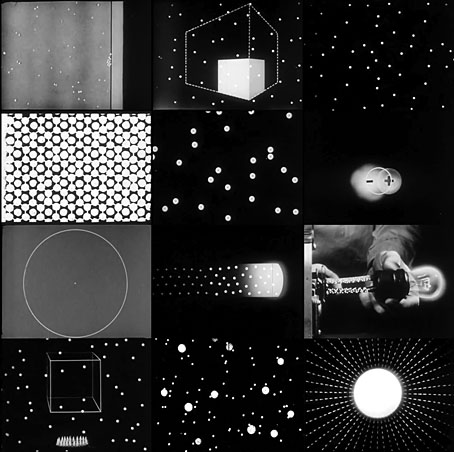
More David Byrne. Artist Bruce Conner made two films in 1981 using pieces of music from Byrne & Eno’s My Life In The Bush Of Ghosts album: America Is Waiting and Mea Culpa. The latter is the more abstract of the two, with the drums and fragmented voices matched to dancing particles from science films. Watch it here.

Previously on { feuilleton }
The South Bank Show: Talking Heads
The Catherine Wheel by Twyla Tharp
Moonlight in Glory
My Life In The Bush Of Ghosts

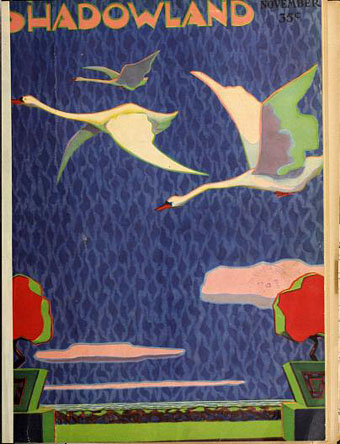
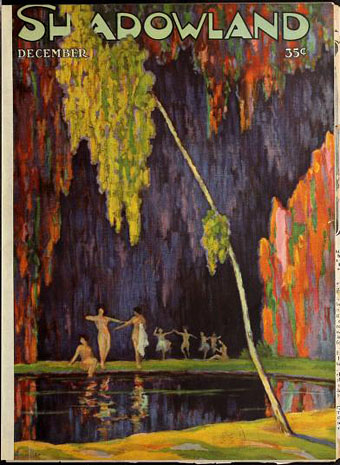
Shadowland covers

shadowland01.jpg

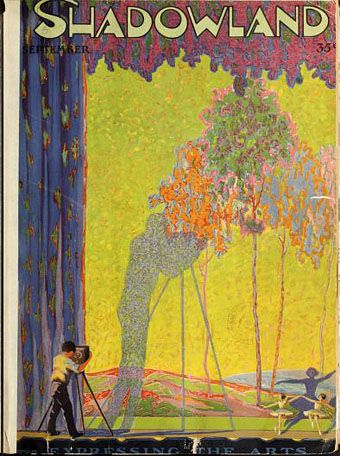
Not the horror magazine, this is an earlier American title that ran from 1919 to 1923. Shadowland covered the arts in general with a preference for stage and film. The thing that immediately sets it apart from other film magazines of the period is the cover art by AM Hopfmuller; many of the paintings resemble theatre backdrops or backgrounds for animated films. The Internet Archive doesn’t have a complete run, unfortunately—the examples here are from volumes 1, 7 and 8—but more of Hopfmuller’s work may be found on other sites. The magazine interiors are also worth a browse for their colour plates and art photographs. (Thanks to Kristian for the tip!)

shadowland02.jpg

shadowland03.jpg

Continue reading “Shadowland covers”

Weekend links 294

napoleon.jpg

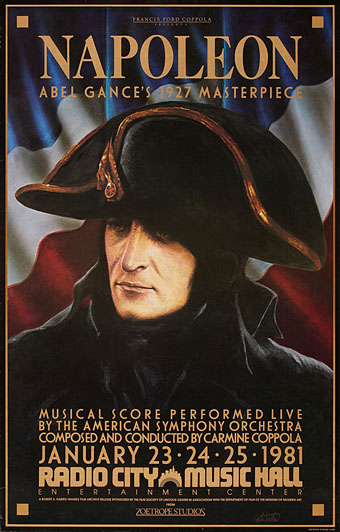
Painting by Alex Tavoularis.

• There are silent films, and then there is Abel Gance’s Napoleon (1927), a five-and-a-half hour historical drama following the emperor’s life from boyhood to the invasion of Italy. The word “epic” is overused but Gance’s film demands the description: in addition to the recreation of huge battles and scenes from the French Revolution, cinema screening required three projectors for sequences which are either multi-screen or three times the width of the Academy ratio. The film was revived in the early 1980s after an extensive restoration by Kevin Brownlow, but Napoleon is still more talked about than seen so news of a forthcoming digital release by the BFI is very welcome indeed. The poster above is from this collection which includes more information about the film and its troubled history. Related: a trailer for a 2012 screening at the San Francisco Silent Film Festival.

• “His films broke with traditional production methods, having virtually no shooting script and capturing the freshness of their genesis.” RIP Jacques Rivette. In 1998 Frédéric Bonnaud talked to Rivette about the director’s cinematic likes and dislikes. Elsewhere, Jonathan Romney speculates that Rivette’s Céline and Julie Go Boating (1974) “might be the only film in which the story is dreamed by a passing cat”.

Strange Flowers‘ selects 16 books for (what’s left of) 2016. Stand-out for me is Aubrey Beardsley: A Catalogue Raisonné by Linda Gertner Zatlin which will be published in May. Two cased volumes, a total of 1104 pages, and a price tag of $300.

It’s a powerful trope, but it also risks trading one stigma for another: ‘‘Phobia’’ is now so embedded in our language that it’s easy to forget that it is a metaphor comparing bigots to the mentally ill. The comparison also has the effect of excusing those Americans—like certain presidential candidates in the 2016 race—who wield prejudices strategically. It’s not your fault if you get sick. But hating people is a choice.

Amanda Hess on how “-phobic” became a weapon in the identity wars

• Delving into the shadowy world of occult art: Priscilla Frank talks to Pam Grossman about her Language of the Birds exhibition. Related: “The occult never quite goes away,” says Kenneth Anger.

• “It was a magic day in our happy, young lives.” A proposal for a monument in Baltimore celebrating the final scene of John Waters’ Pink Flamingos.

• Mixes of the week: Wrap Up Warm Mix by Moon Wiring Club, Secret Thirteen Mix 175 by Inner8, and FACT mix 533 by Roly Porter.

• “He was less an architect than a Busby Berkeley with a penchant for Black Masses.” Jonathan Meades on Albert Speer.

• More film posters: Benjamin Lee on the compromises that have made contemporary posters “drab and uninspiring”.

• The vast and ghostly landscape of “Britain’s only desert”: photographs by Robert Walker.

Wyrd Daze, Lvl2 Issue 5, is free and brimming with the weird.

• The films of Michael Mann in 44 shots.

Laurie Anderson‘s favourite films.

Flamingo (1959) by Henry Mancini | Moon Occults The Sun (2006) by Espers | The Moon Occults Saturn at Dawn (2015) by Steve Moore

The Making of an Englishman: Emeric Pressburger

pressburger1.jpg

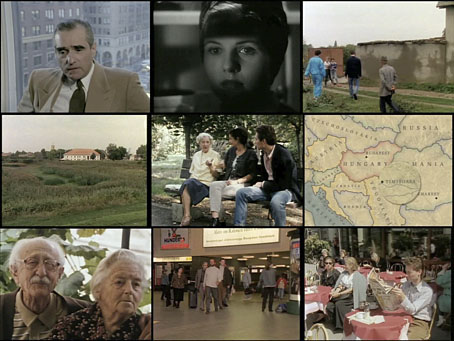
After Powell & Pressburger together, then Powell solo, here’s a biographical portrait of Emeric Pressburger by his grandson, Kevin MacDonald. Pressburger wrote the scripts of the films made under The Archers name, and Powell was the director, of course, but the pair always insisted on a shared credit for writing, production and direction. The Archers films were true “Third Mind” creations which is why (Peeping Tom aside) Powell or Pressburger working alone often seemed diminished.

pressburger2.jpg

The Making of an Englishman (1995) was Kevin MacDonald’s first documentary which he’s since followed with others including the excellent Donald Cammell: The Ultimate Performance (1998) and Touching the Void (2003), and feature films such as The Last King of Scotland (2006) and The Eagle (2011). His film about Emeric Pressburger was a welcome counterweight to the attention given to Michael Powell in The Archers partnership. Pressburger was Jewish, and emigrated to Britain from Hungary to escape the Nazis. This experience famously informs the script of The Life and Death of Colonel Blimp (1943), and it was Pressburger’s Continental character and an outsider’s eye that helps set the films of The Archers apart from those being made in Britain during the 1940s.

Previously on { feuilleton }
The South Bank Show: Michael Powell
Powell & Pressburger: A Pretty British Affair
The Rite of Spring and The Red Shoes
Michael Powell’s Bluebeard revisited
The Tale of Giulietta