Weekend links 67

hofstatter.jpg

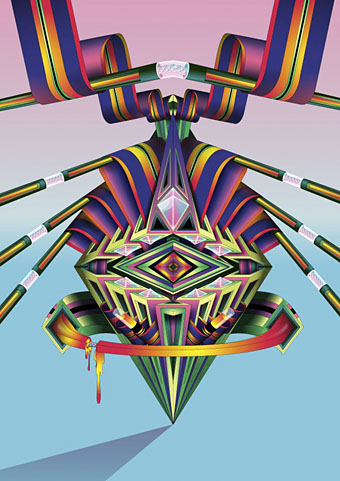
Neutron Drip (2011) by Amrei Hofstätter.

The Lavender Scare is “the first feature-length documentary film to tell the story of the U.S. government’s ruthless campaign in the 1950s and ’60s to hunt down and fire every Federal employee it suspected was gay”. A film by Josh Howard based on the book by David K Johnson which the author has made a free download here.

• “Annette Peacock, the avant garde American composer, collaborator with Salvador Dalí, friend of Albert Ayler and Moog-synth pioneer, brought this seismically influential session out in 1972…” John Fordham reviews Annette Peacock’s I’m The One which can be purchased here.

• Writer and graphic design historian Steven Heller looks at The Steampunk Bible (edited by SJ Chambers & Jeff VanderMeer) in his column for The Atlantic. He also talks to Galen Smith about the book’s design.

M John Harrison reveals more about his forthcoming sf novel Pearlent, a partial sequel to Light and Nova Swing. I just re-read Light, and I’m currently In The Event Zone with the follow-up, so I’m looking forward to this one.

The Raven, a book by Lou Reed & Lorenzo Mattotti (and Edgar Allan Poe). A Journey Round My Skull previewed this in 2009.

Orson Welles’ Falstaff film, Chimes at Midnight, emerges into the light once more. When do we get a decent DVD release?

• More of the usual concerns: Iain Sinclair’s struggles with the city of London and Erik Davis talks to Alan Moore about psychogeography, John Dee, comic gods, and the art of magic.

Eddie Campbell takes a tip from Jim Steranko. Related: “Hey! A Jim Steranko effect!

Lambshead Cabinet: Win Jake von Slatt’s Mooney & Finch Somnotrope!

• Tilda Swinton is The Woman Who Fell to Earth.

XXth Century Avantgarde [sic] Books at Flickr.

Sound sculptures & installations by Zimoun.

I’m The One (1972) by Annette Peacock.
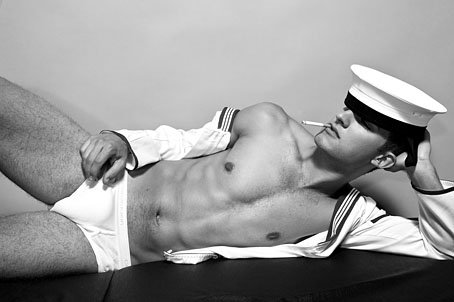
Hello, sailor

bossert.jpg

Homotography goes nautical again this week, sporting shots of model Lukas Bossert in a session by Mustafa Sabbagh. I’m not sure whether these have any purpose beyond showing off Mr Bossert’s physique but we don’t really need any other reason, do we? Homotography has bigger pics should you require them.

Incidentally, fashion photography is now the only place you regularly see photos of anyone smoking, whether posing or otherwise. With the march of prohibition, the cigarette-as-style-fixture seems to have shifted to become a vague signifier of rebellion. The fashion world loves its rebel iconography so I can see this trend continuing for some time, or at least until the habit starts to generate the inevitable complaints.

Previously on { feuilleton }
Querelle again
Sailors
Mikel Marton
Exterface

Deutsche Kunst und Dekoration #25

dkd25-01.jpg

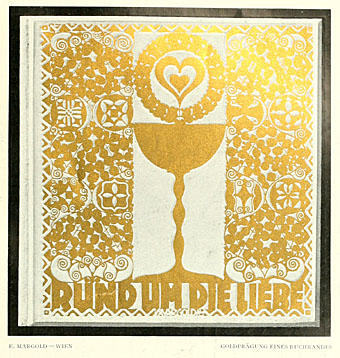
A design by Emanuel Margold.

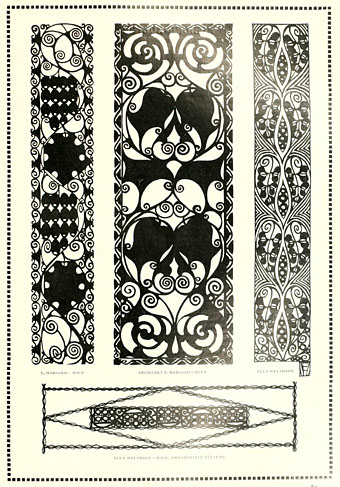
This post concludes the delve into back numbers of Deutsche Kunst und Dekoration, the German periodical of art and decoration. Volume 25 covers the period from October 1909 to March 1909, and while the Internet Archive has further editions available they make a big jump after this number to 1923. The later editions are still interesting, of course, but in presentation and content they’re very different to what went before. Despite the text of these magazines being entirely German it’s been an education going through them not only for the detailed attention given to artists often passed over in books, but also for the articles reporting notable events in European art history as they happened. We have the Robarts Library of the University of Toronto to thank for having made these publications available.

dkd25-02.jpg

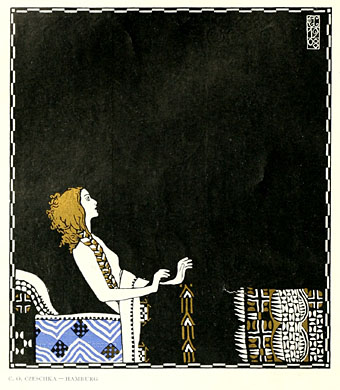
An illustration from a series by Carl Otto Czeschka for Die Nibelungen by Franz Keim.

dkd25-03.jpg

Continue reading “Deutsche Kunst und Dekoration #25”

Weekend links 59

duetemmo.jpg

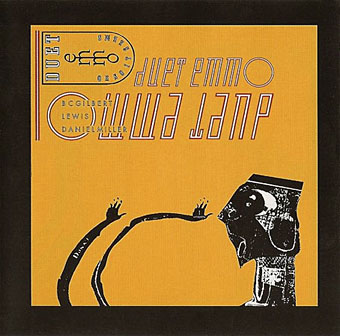
Or So It Seems (1983) by Duet Emmo. Design by The Brothers Quay.

• “Make things, no rules, but be quick.” Bruce Gilbert, musician in (among others) Wire, Dome and Duet Emmo is interviewed. Related: Daniel Miller, Mute label boss and another member of Duet Emmo is interviewed (and provides a mix) at The Quietus. For more electronica with nothing at all to do with Duet Emmo there’s this Matmos interview.

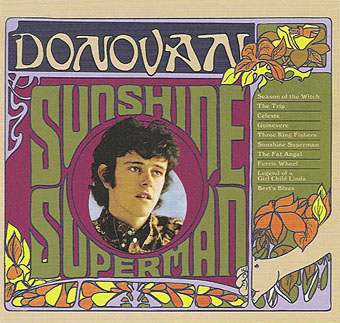
donovan.jpg

Design by Dick Smith.

“It’s psychedelic not because we were stoned before we wrote the songs, or stoned during composing them, but the experiences of searching for the transcendental world though altered states of consciousness were in the songs,” he says, which sounds suspiciously like another way of saying he was stoned before he wrote them, but perhaps it’s best not to quibble with the description of the method in the face of such impressive results…

Donovan revisits one of his finest works, Sunshine Superman.

• Yet more Guardian features: A Clockwork Orange: The droog rides again | Ira Cohen: psychedelic photography master | A life in writing: China Miéville | The stars of modern SF pick the best science fiction.

• There are many stars of the gaseous variety in Nick Risinger’s 5000-megapixel photograph of the Milky Way.

“It is quite true I have worshipped you with far more romance of feeling than a man should ever give to a friend. Somehow I have never loved a woman…. From the moment I met you, your personality had the most extraordinary influence over me…. I adored you madly, extravagantly, absurdly. I was jealous of everyone to whom you spoke. I wanted to have you all to myself. I was only happy when I was with you.”

Salon reviews the new unexpurgated edition of The Picture of Dorian Gray.

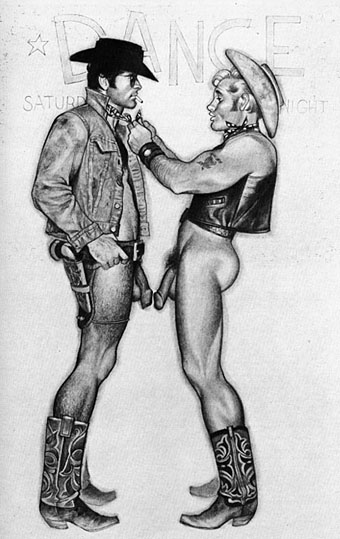
• Paul Gorman discovered the gay art origins of the notorious Cowboys T-shirt.

The full complement of Saul Bass’s designs for Vertigo‘s print advertising.

Photos of the recent Dodgem Logic event by Rosie Reed Gold.

Peter Ashworth is still taking great photos.

Jodorowsky’s Dune Finally Revealed?

Sunshine Superman (1966) by Donovan | Or So It Seems (1983) by Duet Emmo.

Lonesome Cowboys

cowboys.jpg

Years before Brokeback Mountain, and a few years before The Place of Dead Roads, another pair of gay cowboys were causing a stir on a T-shirt in the SEX boutique, London, a shop run by Malcolm McLaren and Vivienne Westwood in the mid-1970s. Paul Gorman’s latest piece of pop archaeology examines the history and possible genesis of this shirt, one of a number designed by McLaren whose challenging nature made them ideal gear for the first wave of London’s punks. SEX specialised in transgression (and was famously the birthplace of the Sex Pistols), selling fetish and bondage clothing, and with a variety of erotic material on its hand-made shirts. But it was the Cowboys image which caused the most fuss in 1975 when the shop-owners were prosecuted for “exposing to public view an indecent exhibition”, a piece of police action that was all-too-common during that decade, especially where punks were concerned. McLaren’s cowboys might seem quaint today but in 1975 this was a shocking image for a country which had only decriminalised homosexual acts eight years before, and where the only gay people in the media (although they never admitted it) were camp comedians and flamboyant sitcom stereotypes.

So much for the history but we still don’t know the origin of the picture. Paul has his own theories; mine would be that McLaren borrowed this from one of the many gay mags which proliferated post-Stonewall. It’s not a Tom of Finland drawing, and it’s not George Quaintance either, an artist who drew many naked cowboys but never showed any genitalia. Vivienne Westwood still sells a version of the shirt: yours for ninety quid, dearie. Meanwhile, you can see a couple of the original Lonesome Cowboys here.

Update: That didn’t take long… It was Jim French after all. Paul has the details.

Elsewhere on { feuilleton }
The gay artists archive

Previously on { feuilleton }
More Queer Noise