Cheeky Frawg Books

cheeky1.jpg

Being a new ebook imprint from Ann & Jeff VanderMeer:

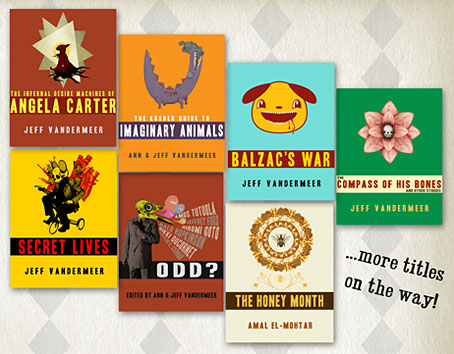
Cheeky Frawg Books has launched a new website. Does it sell our ebooks? Yes! But very…cheekily. It’s an interactive and mysterious experience you truly won’t want to miss, in a 180-degree scrollable environment. Free content, hidden treasures, singing fish, the animated Myster Odd video, and, of course, the full catalogue of Cheeky Frawg ebooks, including Amal El-Mohtar’s The Honey Month and the ODD? anthology, featuring Jeffrey Ford, Caitlin R. Kiernan, Amos Tutuola, Hiromi Goto, Nalo Hopkinson, and many more.

Cheeky Frawg specializes in quality, self-aware e-books. We hand-craft every e-book on a letterpress using only the best, most perfectly formed 00000s and 111111s.  Forthcoming titles include the legendary The Encyclopedia of Victoriana by Jess Nevins, It Came From the North: Finnish Weird edited by Jukka Halme and Tero Ykspetäja, Jagganath by Swedish sensation Karin Tidbeck and Don’t Pay Bad for Bad by iconic Nigeria writer Amos Tutuola.

Note: A percentage of direct sales in December will go to aid iconic fantasy editor, artist, and writer Terri Windling, who is suffering from financial woes.
cheeky2.jpg

In the first run of titles is the ebook edition of The Kosher Guide to Imaginary Animals whose print edition I designed a while back. And mention of Amos Tutuola reminds me that I’ve had a copy of his My Life in the Bush of Ghosts for years and still not read it. While we’re on the subject of Ann & Jeff’s projects, a reminder that Weird Fiction Review is still posting unique pieces of weird fiction, interviews and essays.

Previously on { feuilleton }
Weird Fiction Review

Pogány’s Turkish fairy tales

pogany05.jpg

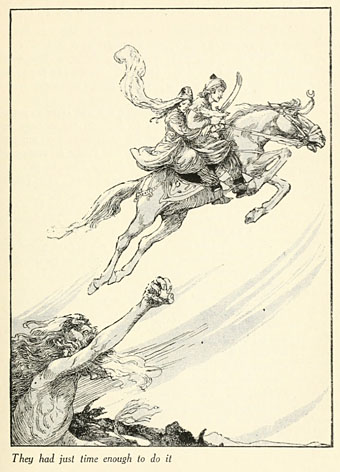
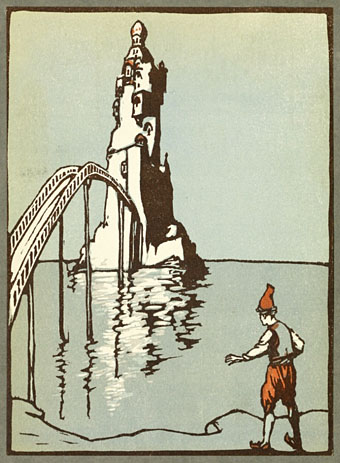
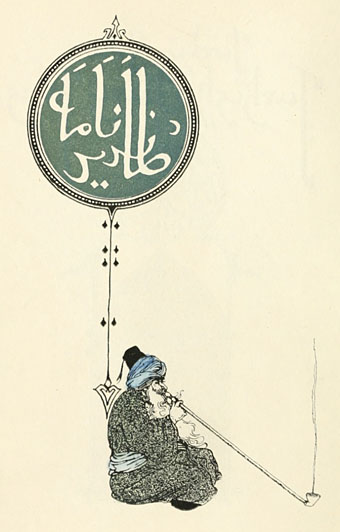
The illustrations are by Willy Pogány, the forty-four fairy tales were collected and translated by Ignácz Kunos. This wasn’t the first edition of Kunos’s book which dates back to 1889, but Pogány’s edition must be one of the most heavily illustrated, with drawings in a variety of styles throughout. The tipped-in plates look like woodcuts which is a style I’ve not seen from Pogány before. Elsewhere there are many comic demons and monsters rather like the kinds of things Sidney Sime used to enjoy inventing. And many Orientalist motifs, of course The Internet Archive copy isn’t dated but other sites give a date of 1913. This copy is also poorly hand-painted in places. Sacred Texts has the illustrations sans daubings.

pogany01.jpg

pogany02.jpg

Continue reading “Pogány’s Turkish fairy tales”

Weekend links 84

enok.jpg

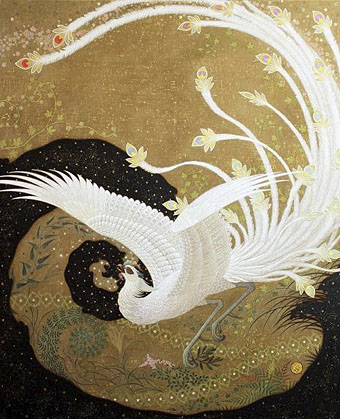
Regeneration (2011) by Toshiyuki Enoki. Via.

HIDE/SEEK: Difference and Desire in American Portraiture, the art exhibition that caused such a fuss last year at the Smithsonian Institution, opens at the Brooklyn Museum, NYC, on November 18th. Among the events associated with the show is a screening of James Bidgood’s lusciously erotic Pink Narcissus. David Wojnarowicz’s video piece, A Fire in My Belly, is still a part of the exhibition so the New York Daily News reached for the outrage stick to prod some reaction from people who’d never heard of the artist or his work before. Will history repeat itself? Does the Pope shit in the woods? Watch this space…

Magic is not simply a matter of the occult arts, but a whole way of thinking, of dreaming the impossible. As such it has tremendous force in opening the mind to new realms of achievement: imagination precedes the fact. It used to be associated with wisdom, understanding the powers of nature, and with technical ingenuity that could let men do things they had never dreamed of before. The supreme fiction of this magical thinking is The Arabian Nights, with its flying carpets, hidden treasure and sudden revelations…

Marina Warner, whose new book, Stranger Magic: Charmed States and the Arabian Nights, is reviewed here and here.

• Those Americans who adore big business but loathe the idea of gay marriage will be dizzy with cognitive dissonance at the news that 70 major US companies—including CBS, Google, Microsoft and Starbucks—have signed a statement saying the Defense of Marriage Act (DOMA) is bad for business. Mark Morford at SFGate says this now means that real homophobes don’t Google.

Divining with shadows and dreams, tears and blood: S. Elizabeth talks to JL Schnabel of BloodMilk about her “supernatural jewels for surrealist darlings“.

Earth: Inferno (2003), a short film by Mor Navón & Julián Moguillansky based on the book by Austin Osman Spare. Via form is void.

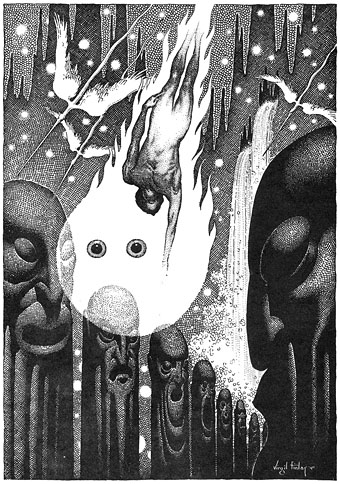
finlay.jpg

Illustration by Virgil Finlay for A. Merritt’s The Face in the Abyss. From a 1942 Finlay portfolio at Golden Age Comic Book Stories.

The Mute Synth as created by Dirty Electronics & designed by Adrian Shaughnessy.

Phil Baker reviews two new Aleister Crowley biographies at the TLS.

A Brief Rant on the Future of Interaction Design

The Most Amazing Room In Queens, NYC.

Brian Eno on composers as gardeners.

Alan Turing is Alan Garner’s hero.

• Paintings by Guy Denning.

Static (1998) by Redshift | The Owl Service (2000) by Pram | Lover’s Ghost (2010) by The Owl Service.

Weekend links 83

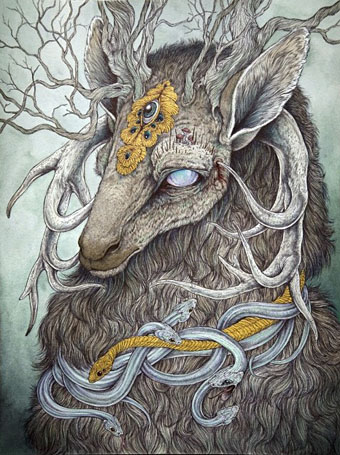
hackett.jpg

In Memory by Caitlin Hackett who describes her astonishing drawings as “contemporary mythology”.

• David Lynch’s solo album, Crazy Clown Time has just been released so The Guardian last Friday let the artist/director/musician edit their G2 supplement. Xan Brooks tried to get Lynch to open up about his inspirations while elsewhere Lynch had a chat with ZZ Top’s Billy Gibbons. Of more interest to me was news that some of the deleted sequences from Blue Velvet have been discovered. I’ve known about these for years from a feature in Video Watchdog magazine but never thought we might get to see them. Related: a mixtape by David Lynch & musical collaborator/engineer ‘Big’ Dean Hurley.

• “Book jackets these days, for reasons I won’t unpack, seem to revel, overtly, in wit, conceptual deviousness, unusual clever or droll juxtapositions – we, as a professional community, seem to have elevated the visual bon mot above all other virtues.” Peter Mendelsund in a great post about certain problems in book design, starting with the very problematic question of what to do with Nabokov’s Lolita. Related: Covering Lolita, a gallery of covers through the ages which run the gamut of bad decisions.

• “For his sins Pinocchio is not only hanged but robbed, kidnapped, stabbed, whipped, starved, jailed, punched in the head, and has his legs burned off.” Nathaniel Rich goes back to Carlo Collodi’s original Pinocchio. Disney it ain’t.

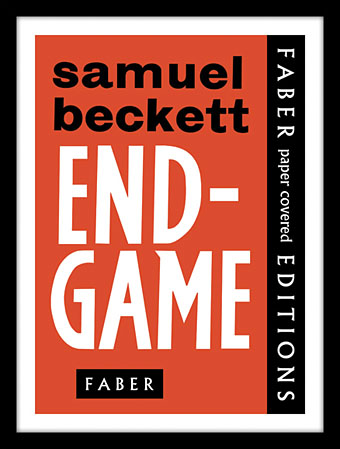
wolpe.jpg

Some of Berthold Wolpe’s Faber cover designs are now available as prints from wire-frame whose Pelham/Ballard prints were mentioned here recently. Related (and worth another visit): Faber 20th century classics at Flickr.

Technical Vocabularies – Games for May, a small collection of poems by Alan Moore & Steve Moore, is now online with authorial permission. Alan’s Beardsley pastiche on the cover is a bonus.

• Cabaret Voltaire’s Richard H. Kirk says the group’s Virgin albums will be reissued next year by Mute. A new edition of The Crackdown? Yes, please.

• “Homo Riot can only think of six or seven street artists in the world who regularly feature gay themes in their work, and he knows all of them.”

Rub Out The Words: Letters from William Burroughs and Philip K. Dick on the language virus theory of William Burroughs.

L’exilé de Capri: the connections between Jacques d’Adelswärd-Fersen and Roger Peyrefitte explored at Strange Flowers.

• Flying cars and monorails: Soviet Russia in the 1960s also had a Gerry Anderson view of the future.

Are You An Anarchist? The Answer May Surprise You.

Baby’s On Fire (1973) by Brian Eno | Baby’s On Fire (live, 1974) by Eno & The Winkies | Baby’s On Fire (live, 1976) by 801 | Baby’s On Fire (1998) by The Venus In Furs.

Weird Fiction Review

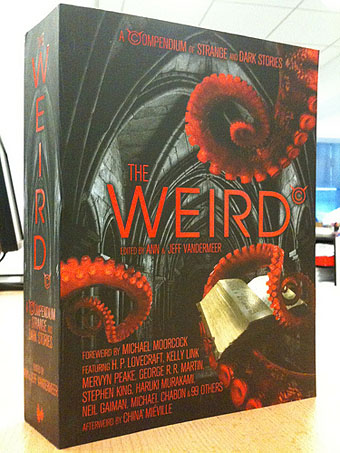
weird.jpg

weird, a.

1. Having the power to control the fate or destiny of human beings, etc.; later, claiming the supernatural power of dealing with fate or destiny. Originally in the Weird Sisters = †(a) the Fates; (b) the witches in Macbeth.

2. a. Partaking of or suggestive of the supernatural; of a mysterious or unearthly character; unaccountably or uncomfortably strange; uncanny.

b. of sounds or voices.

3. Of strange or unusual appearance, odd-looking.

4. a. Out of the ordinary course, strange, unusual; hence, odd, fantastic. (Freq. in recent use.)

b. Colloq. phr. weird and wonderful, marvellous in a strange or eccentric way; both remarkable and peculiar or unfathomable; exotic, outlandish. Freq. ironical or derog.

5. Comb., as weird-looking adj.

Oxford English Dictionary

Weird: I’ve relished the word since I was at school for the way it managed to embody or describe so many of the things I was deeply attracted to, especially in the world of fiction. Weird Tales magazine when it was at its height in the 1930s was able to publish stories of fantasy, horror and science fiction, or hybrid stories of fantasy/horror or horror/sf, none of which needed to be alloted specific definitions when “weird” was there to cover everything. China Miéville noted the usefulness of the “weird” designation ten years or so ago, and I’ve been hoping ever since that other people might pick up the broader, more inclusive term instead of dividing the major genres into ever smaller sub-genres. “Weird” could accommodate generic work but also encompass those stories that were simply strange without possessing the usual genre trappings.

So far the term hasn’t found the widespread favour I’d been hoping for but that may change thanks to the Weird Fiction Review, a site launched this week by my friends and occasional collaborators Ann and Jeff VanderMeer whose enormous brick of an anthology, The Weird: A Compendium of Strange and Dark Stories, is published by Corvus this month. Weird Fiction Review states that:

its primary mission over time will be to serve as an ongo­ing explo­ration into all facets of the weird, in all of its many forms—a kind of “non-denominational” approach that appre­ci­ates Love­craft but also writers like Franz Kafka, Angela Carter, and Shirley Jack­son—along with the next gen­er­a­tion of weird writ­ers and inter­na­tional weird.

Already on the site is an interview with Neil Gaiman who says:

I think of Hor­ror as a sec­tion of a book­shop, gothic as a type of book that ended, truly, with North­hanger Abbey, and The Weird as an attempt to unify what­ever it was that Robert Aick­man did, that Edward Gorey did—using the tools of hor­ror to delight and trans­form.

I’m re-reading some of Aickman’s stories at the moment. He called them “strange” but I’d call them 100% weird. There’s one in Ann & Jeff’s anthology whose contents are an ideal introduction to this zone of literature.

Previously on { feuilleton }
The Vengeance of Nitocris
Die Andere Seite by Alfred Kubin
The King in Yellow
Hugo Steiner-Prag’s Golem