The Cremator by Juraj Herz

cremator1.jpg

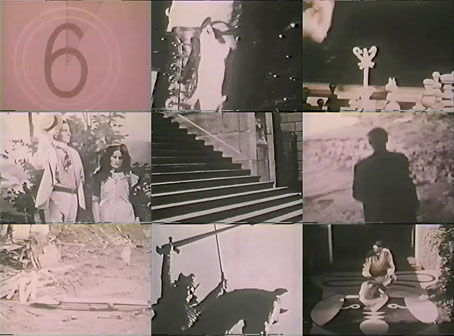
The Cremator, a film directed by Juraj Herz, missed out on the attention given to other Czech films in the late 1960s, something the Brothers Quay note in their enthusiastic introduction to the Second Run DVD. Unlike other films made during the Czech New Wave, Herz’s film premiered in 1969 then was promptly banned, and didn’t receive a wider distribution until 1989.

cremator2.jpg

It’s easy to see why the Communist authorities would have a problem with a film about a Prague crematorium director in the 1930s, a man who not only delights in his ability to efficiently turn human beings into ash in 75 minutes, but also has no problem siding with the invading Nazi regime when it becomes apparent that this will further his obsession with incineration. Rudolf Hrušínský dominates the proceedings as cremator Kopfrkingl, a stout and ebullient presence who Herz directs without resorting to any clichés of macabre or morbid characterisation. We’re with Kopfrkingl in every scene, and for the most part he remains cheerful and reasonable, whether showing new workers around the crematorium, dealing with his family (or the prostitutes he visits), or happily shopping all the Jews he knows to his collaborationist associates. A Holocaust subtext becomes overt when Kopfrkingl is asked to lend his incineration skills to a “secret project” the new authorities have in mind, an offer which sends the cremator into a fantasising rant (filmed against Hieronymus Bosch’s painting of Hell) in which he realises he might be allowed to turn many thousands of bodies into ash.

cremator3.jpg

Described like this the film is a blackly comic satire at the expense of all those Czechs who collaborated with the Nazis during the war. What attracts the praise of viewers such as the Brothers Quay, and puts the film in the essential category, is the additional details of Herz’s direction. Anyone familiar with the early films of Jan Švankmajer will feel quite at home with the sequences of rapid editing, with the scenes introduced by unexpected close-ups, and with the grotesquery of a visit to a chamber of horrors which includes a special area showing bottled foetuses and the consequences of disease. The Švankmajer atmosphere is reinforced by a marvellous score from Zdeněk Liška whose music can be heard in many of Švankmajer’s early films. One of these, The Flat (1968), features Juraj Herz in an acting role, while The Ossuary (1970) would be ideal for a screening with The Cremator even if Kopfrkingl would disapprove of all those unburnt bones. Liška’s score is as idiosyncratic as in the Švankmajer films, and helps augment a sense of disquiet that shades to outright horror.

cremator4.jpg

There’s more: the skilful way that Herz and screenwriter Ladislav Fuks (whose novel provides the basis of the story) link otherwise disconnected scenes; Kopfrkingl’s obsession with Tibet which gradually descends into mania; and the mysterious and silent dark-haired woman whose presence in so many scenes is never explained. Given all this, and the successful way that Herz blends his outré material, I’m surprised this film isn’t better known. Herz’s later Morgiana (1972) has more of an audience, and is also worth seeking out. It’s also very different to The Cremator, to such a degree that it might be the work of a different director altogether. Both films can be found on Region 2 DVD at Second Run.

Previously on { feuilleton }
Sedlec Ossuary panoramas
The Hourglass Sanatorium by Wojciech Has
Jan Svankmajer: The Complete Short Films

Elric 1: Le trône de rubis

elric1.jpg

The closest I ever got to illustrating Michael Moorcock’s Elric character was the sleeve for The Chronicle of the Black Sword in 1985, a Hawkwind concept album based on the first couple of Elric books. That design favoured a decorative approach over anything illustrative, however. At the time I felt too intimidated by the renderings of Elric’s first illustrator, James Cawthorn, and subsequent depictions by book cover artists such as Michael Whelan, to attempt my own version of the character. These days I pay little attention to heroic fantasy of any kind but I do look out for new depictions of Moorcock’s anti-hero. Earlier this year the French bande dessinée publisher, Glénat, released the first album in a planned series of five comic-strip adaptations of the Elric books. Many creditable Elric comics have appeared since the 1970s, not least the Cawthorn version of Stormbringer, one of the earliest and best, and Philippe Druillet’s own somewhat eccentric production. Mike Moorcock very generously sent me a copy of the Glénat volume this week, and I’d say this is now the one to beat.

elric2.jpg

Writer Julien Blondel has adapted the books with the art duties being taken by Didier Poli and Robin Recht. Jean Bastide is the colourist. I’ve always preferred the French and Belgian approach to comic art over the American style so I’m naturally biased towards a book such as this. That said, the art is marvellous, and so many of the details feel just right. Moorcock portrays the Melnibonéans as decadent and cruel, something that Poli and Recht portray with scenes of naked slaves being bled, butchered, and even used as human torches for the blithe amusement of their masters. The general atmosphere in the opening pages is like something from Flaubert’s Salammbô with its combination of antique depravity and the massing of great armies prior to battle. They don’t slouch with the monstrosities, either, there’s a spot of Lovecraftian weirdness when Elric is rescued by Straasha, the Sea King. I look forward to seeing how they deal with Arioch (who puts in an appearance at the end) and the other Chaos Lords. The dialogue is all in French, of course, but if you know the books it’s easy to follow even with French as limited as mine.

elric3.jpg

The Glénat site has a few more page samples. Moorcock has been watching these books being adapated and re-adapted for decades, and he says this is among the very best. For anyone with more than a passing interest in the brooding albino prince it’s well worth seeking out.

Previously on { feuilleton }
Salammbô illustrated
Jim Cawthorn, 1929–2008

Valerie and Her Week of Wonders

valerie1.jpg

First English translation, 1970. Faux-Penguin edition by gregoreverb.

1: A Surrealist novel (1932) by Vítezslav Nezval.

valerie2.jpg

Design by Rudolf Nemec.

2: A feature film (1970) by Jaromil Jires (director), Ester Krumbachová (screenplay) and Jirí Musil (dialogue). (Region 2 DVD from Second Run.)

valerie3.jpg

Design by Josef Vylet’al. Figure originally by Aubrey Beardsley from The Comedy Ballet of Marionettes III (1894).

valerie4.jpg

3: Valerie: A song (2003) by Broadcast.

valerie5.jpg

4: The Valerie Project: A musical group and album (2007).

Previously on { feuilleton }
The Robing of The Birds

Mati Klarwein book covers

mati1.jpg

The World’s Desire (1972) by H. Rider Haggard & Andrew Lang. Painting: Astral Body Asleep (1968).

The use of Mati Klarwein’s paintings on album covers is well documented, the official Klarwein site has a small section devoted to some of the covers. Less well-known are these book covers which were evidently the product of a brief enthusiasm for Klarwein’s work in the Ballantine Books’ art department. As with many of the album covers, these are all pre-existing paintings which have been cropped for use as cover art.

The most surprising example is the cover for The Alien Condition with its detail from Annunciation, a painting better known for its appearance on Abraxas (1970), a very successful Santana album. Given how visible that cover art would have been in 1973 you have to suspect that the painting’s use as a book cover was a deliberate bid to attract a youthful readership. All these titles are works of science fiction or fantasy; I don’t recall having seen a Klarwein cover for any non-genre titles. If anyone knows of an example then please leave a comment. (Thanks to Jay for the tip!)

mati2.jpg

With a Finger in My I (1972) by David Gerrold. Painting: Blessing (1965).

mati3.jpg

The Alien Condition (1973) edited by Stephen Goldin. Painting: Annunciation (1961).

mati4.jpg

Two Views of Wonder (1973) edited by Thomas N. Scortia & Chelsea Quinn Yarbro. Painting: Unknown.

mati5.jpg

Arrive at Easterwine: The Autobiography of a Ktistec Machine (1973) by RA Lafferty. Painting: Nativity (1961).

Elsewhere on { feuilleton }
The book covers archive

Previously on { feuilleton }
The art of Mati Klarwein, 1932–2002

Weekend links 168

bell.jpg

Window to the Universe (1967) by Roberta Bell. From Summer of Love: Psychedelic Posters from SCMA currently showing at the Smith College Museum of Art, Northampton, MA.

Sympathy for the Shoggoth: China Miéville’s Revolution of the Weird Tale, an essay by Christina Scholz which features one of my Cthulhu pictures among its embellishments. Related: “‘New Strange’ stories hold a chilling mirror to life” says Rick Kleffel discussing Robert Aickman and others. And speaking of Aickman (so to speak), Reese Shearsmith has recently recorded Aickman’s Cold Hand in Mine for Audible.

• An erotic alphabet book from the Soviet Union circa 1931, created to promote adult literacy. Who says porn can’t be educational?

Angelystor is a new 39-minute composition by Phil Legard which he describes as “often heavy, Saturnine and melancholic”.

• James Ward’s postcards of the Post Office Tower. Related: film of the revolving restaurant at the top of the Tower in 1967.

•You Might Never Find Your Way Back: Shirley Jackson’s Hangsaman by Nicholas Rombes.

satty.jpg

Stone Garden (1967) by Wilfried Sätty.

High Over Blue is “a mind-warping 20-minute freakout” by Moon Duo.

• Queer Visual Splendour: Jon Macy discusses his erotic comics.

The Origin of the Pilcrow, aka the Strange Paragraph Symbol.

• Mix of the week: the Kranky 20th Anniversary Mixtape.

Ten Amazing Cheeses and their Literary Counterparts.

PingMag looks at the past and present of Ginza.

Mind Gardens (1967) by The Byrds | The Garden (1981) by John Foxx | The Toy Garden (2006) by Helios