The Knowles’ Norse Fairy Tales

knowles01.jpg

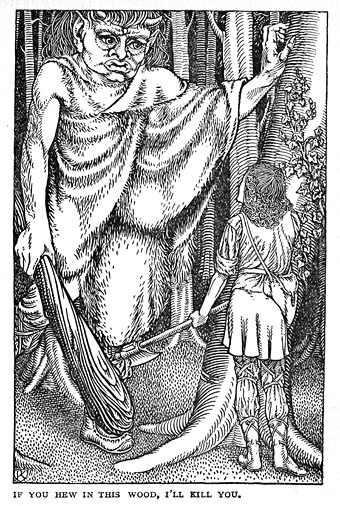
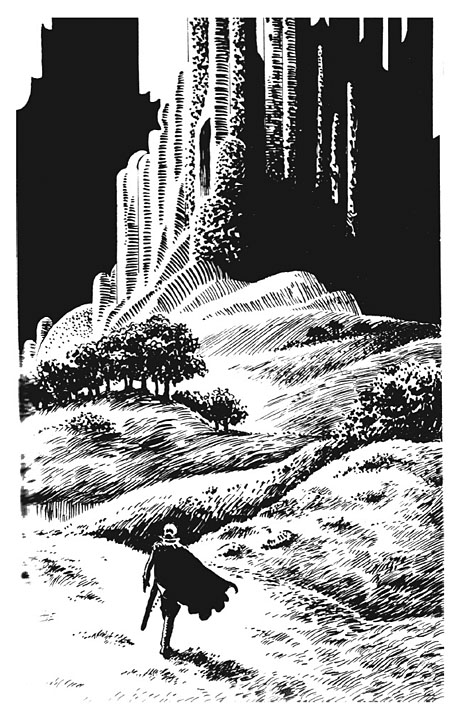
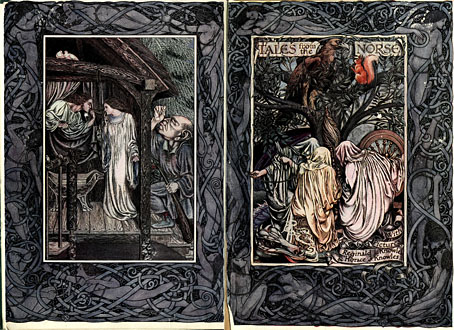
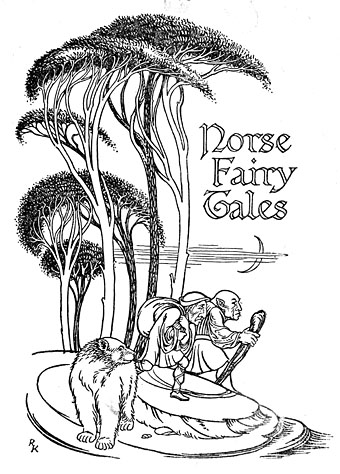
More tales from the northern lands, and a book illustrated by two people this time. The Knowles were a pair of brothers, Reginald Lionel (1879–1954) and Horace John (1884–1954), who produced several illustrated editions together while also working independently. Sibling illustrators are unusual but not unprecedented; the Knowles’ contemporaries included the Robinson brothers—Charles, William (Heath) and Thomas—who worked together on an edition of Hans Christian Andersen’s stories. Norse Fairy Tales (1910) is a collection of folk stories that overlap in places with the more familiar tales from Denmark and Germany. The book was compiled by FJ Simmons from Norwegian collections by Peter Christen Asbjørnsen and Jørgen Moe which had been translated into English by George Webbe Dasent. Simmons says in his introduction that he edited (or bowdlerised) his selection a little in order to make some of the pieces suitable for a young readership although he doesn’t give any details. His book is one I ought to have gone looking for sooner after I swiped part of a related illustration for a CD design some time ago. A drawing by Reginald Knowles of a troll walking among trees appears in a source book of Art Nouveau graphics which I’ve borrowed from for many years. Reginald’s trees proved to be perfect for the CD. This was a lazy move on my part but I’d been asked to rescue a design which wasn’t working, and the deadline was a tight one.
knowles16.jpg

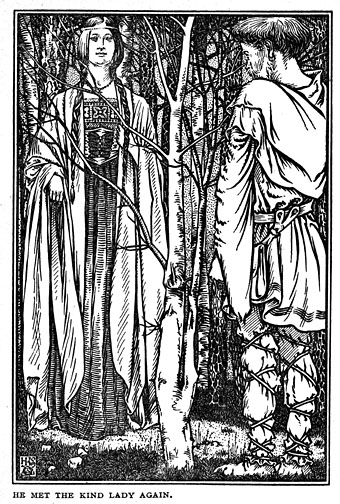
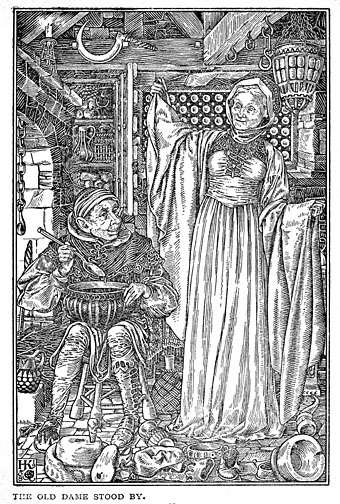
Simmons may have trimmed some of the texts but Norse Fairy Tales still runs to 55 stories that fill 500 pages for which the Knowles’ provide full-page illustrations, a few colour plates and many smaller drawings. Each artist is identifiable by their initials. All the black-and-white art is pen-and-ink but Horace’s drawings imitate the style of early wood engravings, a look that works well with the material, while Reginald’s drawings would be identifiable even without his initials since his work tends to be a little more stylised, as with the sinuous trees that I borrowed. This is an impressive book that might be better known if there wasn’t such a profusion of illustrated Brothers Grimm and Hans Andersen collections. Find out what the trolls are getting up to here.

(Note: the Internet Archive scan has excessively browned pages. All the images here have been run through filters to remove the colouration.)
knowles15.jpg

knowles14.jpg

knowles13.jpg

Continue reading “The Knowles’ Norse Fairy Tales”

Weekend links 599

achilleos.jpg

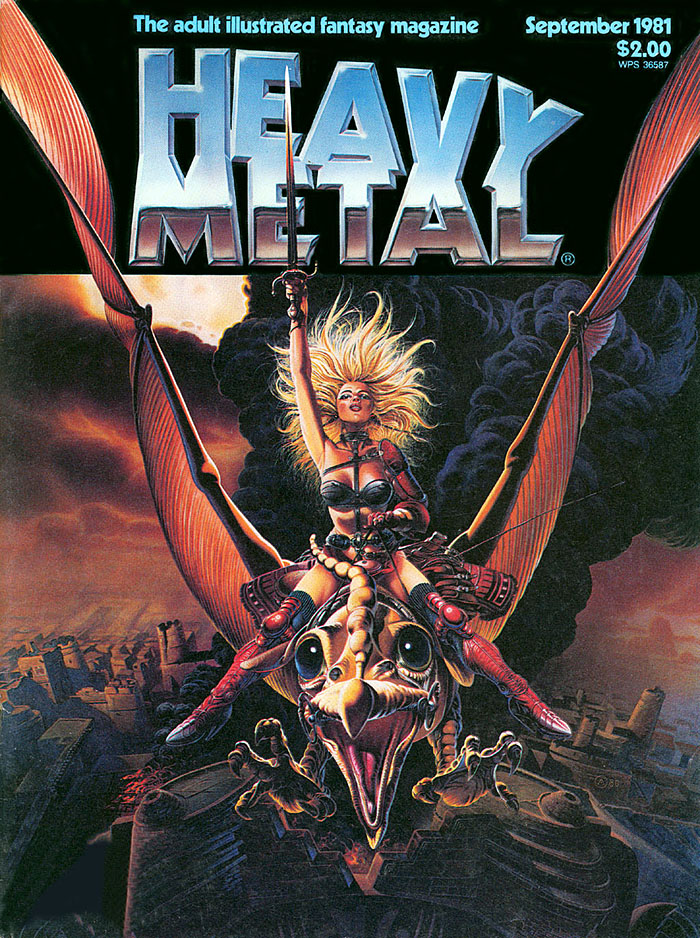
Taarna by Chris Achilleos for Heavy Metal, September 1981. A typical piece by Achilleos, whose death was announced this week, and very typical for a Heavy Metal cover. Achilleos was a prolific illustrator.

• New music: The Truth, the Glow, the Fall (Live At Montreux) by Anna von Hausswolff, from her forthcoming album, Live At Montreux Jazz Festival. The last gig I went to was in October 2019, to see Sunn O))) supported by Anna von Hausswolff. Easily one of the best things I’ve ever experienced. Meanwhile, Anna von Hausswolff has had to cancel a Paris church concert following protests by a rabble of outraged Catholics. Bravo les crétins!

• “…it is easy to forget that Montesquiou—regardless of his own work—was not merely emblematic of Decadence, he was essentially patient zero in its viral spread.” Strange Flowers explores the exquisite life of the bat-obsessed, hydrangea-cultivating Robert de Montesquiou.

• “Kotatsu have been around longer than we imagine. And art history has the proof.” Spoon & Tamago on an old Japanese method for warming a room during winter. Also further evidence that cats always find the warmest place in any house.

Dennis Cooper‘s favourite fiction, poetry, non-fiction, film, art, and internet of 2021. Thanks again for the link here!

The Wire magazine has opened its collection of articles by the late Greg Tate so they may be read by non-subscribers.

• “Neil Bartlett is a gay writer’s gay writer,” says Jeremy Atherton Lin reviewing Bartlett’s latest, Address Book.

• James Balmont on the psychedelic cinema of Nobuhiko Obayashi.

• Steven Heller’s font of the month is Erotique.

Northern lights photographer of the year.

• The Strange World of…Takuroku.

• RIP Robbie Shakespeare.

• Robbie Shakespeare’s bass x 3: King Tubby Meets Rockers Uptown (1974) by Augustus Pablo | Nightclubbing (1981) by Grace Jones | Bass And Trouble (1985) by Sly & Robbie

Prints update

tarot.jpg

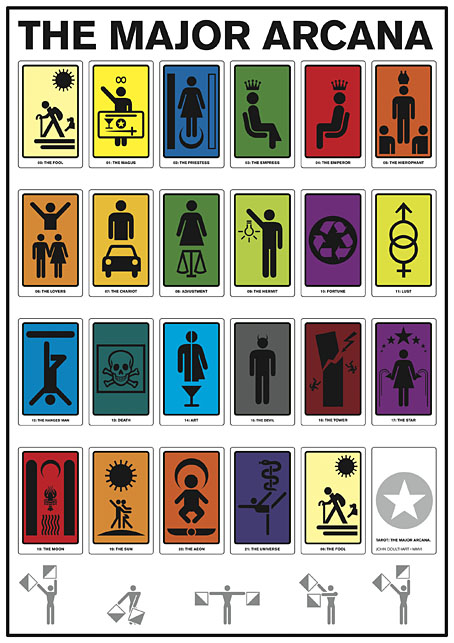
The Major Arcana (2006): a C-type print on Fuji gloss paper. A1 or A2 sizes.

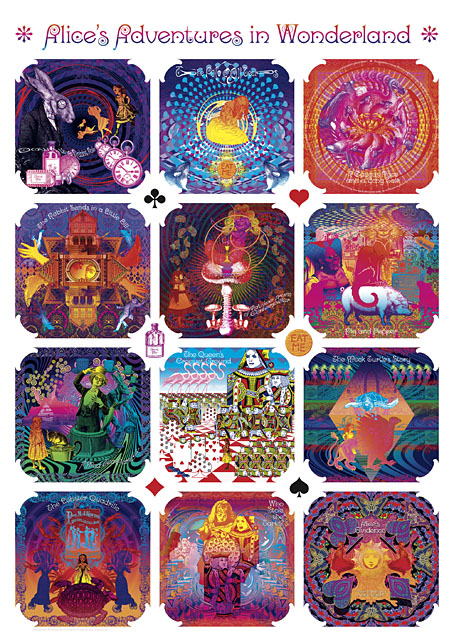
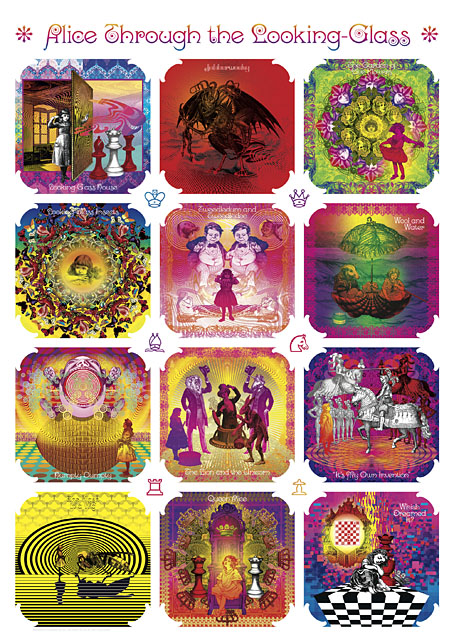
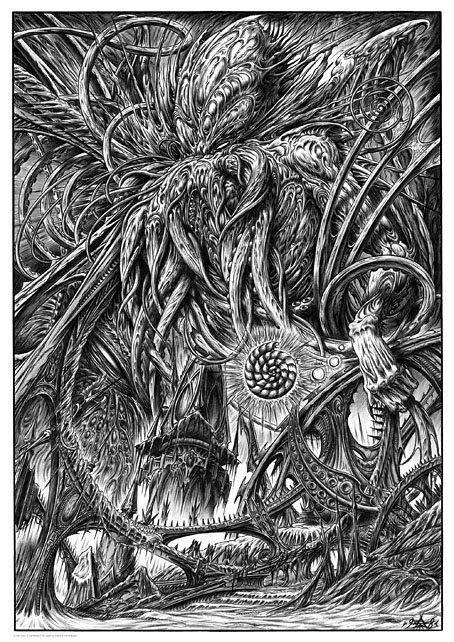
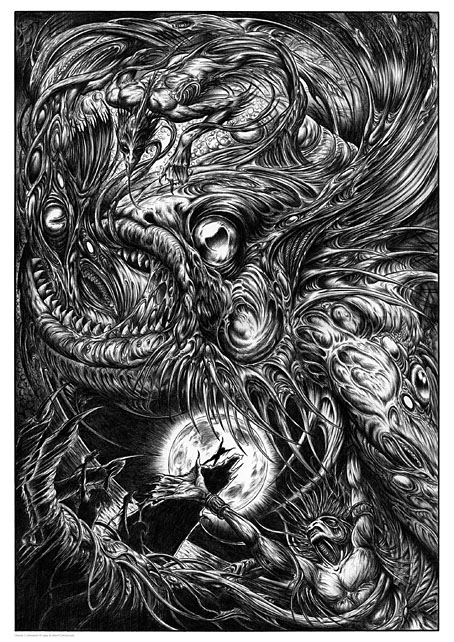
I’m continuing to add artwork to Etsy which will be available as prints in a variety of sizes and papers. I would have done more of this by now but I’m still very busy working through the commissions of the past few months so progress has been slow. The system does actually work as intended, however, with orders being routed automatically to the printer then printed and shipped within 24 hours. The initial setup may take longer than places like CafePress but the benefits are multiple, not only a faster turnaround (and cheaper worldwide postage) but now I can create prints of any size I want, and with a variety of papers and finishes. Most of the items there at the moment are the things I consider “greatest hits” so the latest additions include new poster versions of my psychedelic Alice in Wonderland artwork, together with the International Symbols Tarot poster and yet more Lovecraftiana. Requests are, of course, still welcome.

wonderland.jpg

Psychedelic Wonderland (2009): a C-type print on Fuji gloss paper. A1 or A2 sizes.

looking-glass.jpg

Psychedelic Looking-Glass (2010): a C-type print on Fuji gloss paper. A1 or A2 sizes.

cthulhu.jpg

Cthulhu (1998): a giclée print on Canson Aquarelle rag paper. A3 size.

dagon.jpg

Dagon (1999): a giclée print on Canson Aquarelle rag paper. A3 size.

Previously on { feuilleton }
Prints at Etsy

Weekend links 597

okazaki.jpg

Untitled art by Toshio Okazaki from JCA Annual 5, 1984.

• “Yeah, when I first started writing it, nobody knew what to call it at all. I mean, the publishers didn’t know what to call it. They thought that Tolkien was (writing about) a post-apocalyptic nuclear world. That’s the only way they could perceive an alternate world, in other words. And it was the same with Mervyn Peake… they’re all interpreted that way. The idea of putting ‘fantasy’ on a book meant usually meant that it was a children’s book. And if you put fantasy as the genre, they usually put ‘SF’ larger than ‘fantasy’ to show that it was what it was.” Michael Moorcock (again) talking to Derek Garcia about fiction, games, and (of course) Elric.

• “Non-payment, low payment, late payment and promises of jam tomorrow, or at some unspecified future date, bedevil the freelance life as they did five centuries ago.” Indeed. Boyd Tonkin on Albrecht Dürer, patron saint of stroppy freelancers.

• “All at once, Non-Stop Erotic Cabaret is tender, outrageous and daft.” Patrick Clarke compiles an oral history of Soft Cell’s debut album.

Yeah, it was kind of a media hype. In January [1967], the media said, [breathless] ‘Oh my god, San Francisco is the place to be. Come to San Francisco, wear flowers in your hair.’ So we had a meeting of the people in the Haight-Ashbury about how we were going to deal with so many people coming. The Diggers decided to kind of make it a university of the streets, an alternative anarchist culture.

We knew that all these people were coming to San Francisco, and we knew they weren’t going to stay. And we thought, well, the best thing we could do would be to kind of educate them about the kinds of things that are possible in society, and then let them go back to where they’re from, and they would carry these ideas. And that is what happened. We were quite successful in that.

Judy Goldhaft of the San Francisco Diggers talking to Jay Babcock for another installment of Jay’s verbal history of the hippie anarchists

• “What ‘impossible’ meant to Richard Feynman; what I learned when I challenged the legendary physicist,” by Paul J. Steinhardt.

• At Strange Flowers: part one of James Conway’s essential end-of-year shopping list, Secret Satan.

• Mixes of the week: Part II and Part III of the three-part At The Outer Marker series by David Colohan.

• At Dennis Cooper’s: Olivia Duval presents…Suave: A History of Les Disques du Crépuscule.

Mystery and Truth of the Cthulhu Myth, a Japanese guide to the Cthulhu Mythos.

• Intimacy, Loss and Hope: Inside Florian Hetz’s beautiful 2020 photo diary.

• New music: The Tower (The City) by Vanessa Rossetto/Lionel Marchetti.

Nite Jewel’s favourite albums.

• RIP Stephen Sondheim.

Nothing Is Impossible (1974) by The Interns | Mission Impossible Theme (1981) by Ippu-Do | Impossible Guitar (1982) by Phil Manzanera

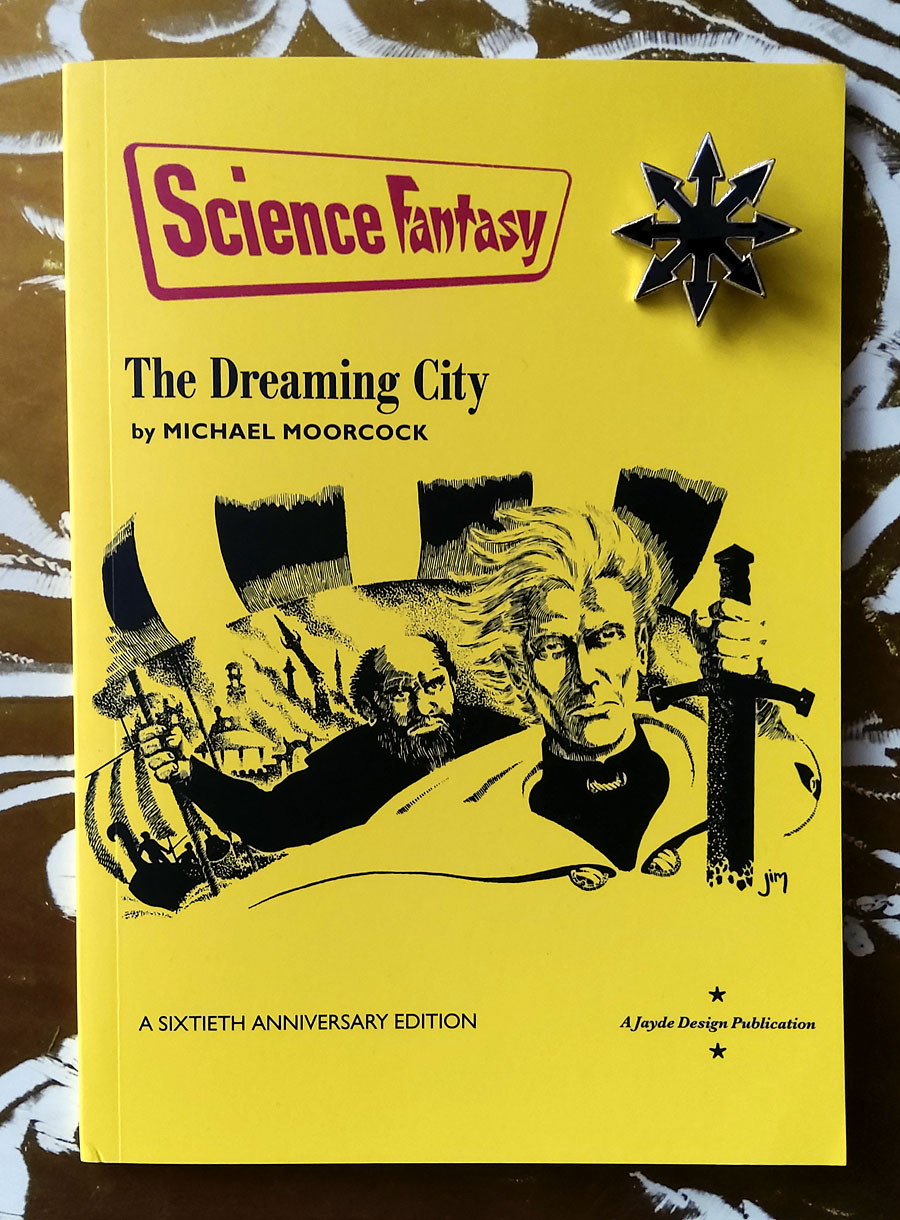
The Dreaming City by Michael Moorcock

dreaming.jpg

Cover art by James Cawthorn. Chaos pin not included.

More sword and sorcery. Last month I was asked to design a reprinting of the very first Elric story by Michael Moorcock, a standalone publication from Jayde Design intended to commemorate the 60th anniversary of Moorcock’s most popular character. The Dreaming City was published in issue 47 of Science Fantasy magazine in June 1961, following a request from the editor, John Carnell, for Moorcock to write a new series of fantasy stories. Over the next three years Science Fantasy published all ten of the novellas that established Elric’s character and his world, ending with Doomed Lord’s Passing in April 1964, the entry which saw Moorcock destroy his creation in a Boschian apocalyptic finale.

The Dreaming City: A Sixtieth Anniversary Edition is a compound facsimile of these publications. The interior design follows the template of the magazine interiors while the front cover is based on one of the later numbers which ran the fifth Elric story, The Flame Bringers, with a cover illustration by James Cawthorn. That illustration may have been attached to a different story but it actually depicts a scene from the end of The Dreaming City when Elric is leaving Imrryr in burning ruins after the place has been sacked by the raiding party he led there. It’s also a much better illustration than the one by Brian Lewis that appeared on the cover of the June 1961 issue. In addition to recreating the cover we’ve also restored the drawing, which in its printed form was slightly cropped at one side, with the complete version taken from Cawthorn’s original. Jim Cawthorn was closely involved with the creation of Elric, and even co-wrote Kings in Darkness, another of the stories in the Science Fantasy sequence. Inside the new edition there are four further illustrations which Cawthorn produced for a German collection of Elric stories published by Heyne in 1979.

dreaming2.jpg

One of James Cawthorn’s interior illustrations.

This small publication will only be of interest to collectors but it was a good thing to be involved with. In the past I’ve designed an Elric-themed album cover for Hawkwind, and last year designed The Stormbringer Sessions, a very limited publication of Jim Cawthorn’s sketched outline for his unfinished Elric graphic novel. The Dreaming City is the first Elric design of mine that features Moorcock’s own text. For an opening shot in what would become a saga spanning several decades and a variety of media The Dreaming City is a remarkably confident piece of work, even more so when you consider that the author was only 21 at the time. Elric begins and ends the story as an outsider, exiled and alone, and with his existence bound to his cursed sword, Stormbringer. Subsequent novels and stories would fill in the history before pitching Elric into the multiverse along with many of Moorcock’s other characters. But this is where it all begins, with six Sea Lords waiting in a tavern wondering whether the albino prince will turn up at all.

The Dreaming City: A Sixtieth Anniversary Edition is available here.

Previously on { feuilleton }
The Stormbringer Sessions by James Cawthorn
James Cawthorn: The Man and His Art
The Chronicle of the Cursed Sleeve
Moorcock: Faith, Hope and Anxiety
Elric 1: Le trône de rubis
The Sonic Assassins
Jim Cawthorn, 1929–2008