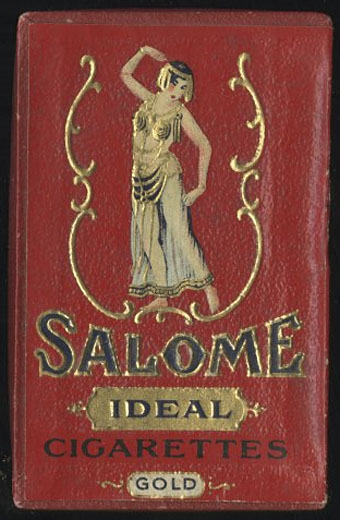
Salomé cigarettes

salome1.jpg

Many food and drink brands are still marketed today as exotic pleasures; some long-running products—Fry’s Turkish Delight, for example—even continue to sell themselves via an Orientalist mystique that now seems quite outmoded. This will never happen again with cigarettes, of course, although I wouldn’t be surprised to see it tried with cannabis if it’s ever legalised.

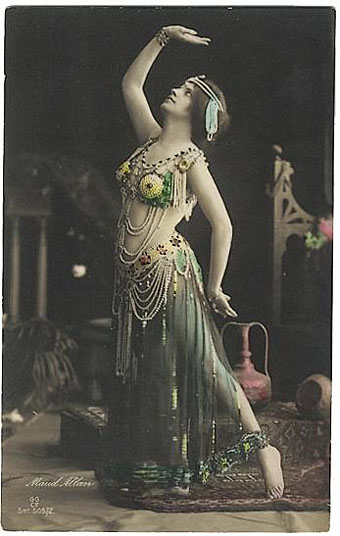
Salome Ideal was a brand of gold-tipped scented cigarette sold to American women from 1915 to the late 1940s. I’ve not been able to find out how they were scented but the figure on the pack is a flagrant borrowing from photos of Maud Allan’s scandalous Dance of the Seven Veils. This page has a couple of ad designs.
salome2.jpg

Maud Allan c. 1908.

salome3.jpg

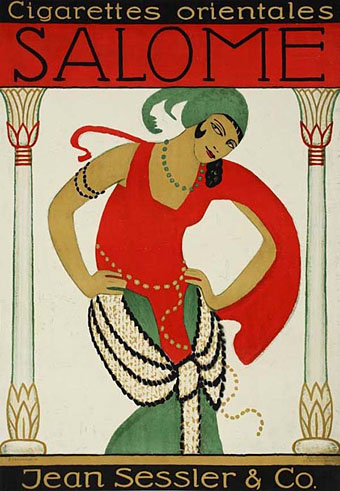
Emil Cardinaux poster from 1914 may have been for the same brand of cigarette or for a different one of the same name. Cardinaux was a Swiss advertising artist so it’s possible there was a Salomé cigarette for European smokers. More of Cardinaux’s poster art can be seen in this Pinterest collection.

Elsewhere on { feuilleton }
The Salomé archive

Weekend links 176

dlouhy.jpg

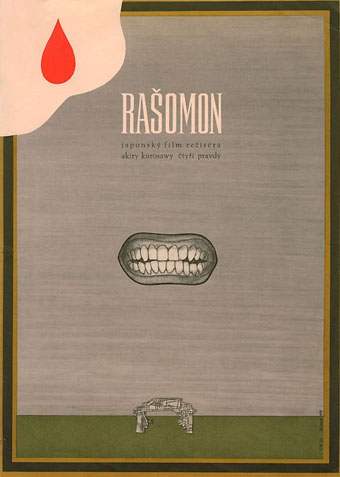
This week PingMag was looking at Czech film posters. This one by Bedrich Dlouhy is for the belated 1970 release of Kurosawa’s Rashomon.

• In October Alison Goldfrapp curates an exhibition for The Lowry, Salford, featuring her favourite art. Examples will include work by Leonora Carrington, Lotte Reiniger and Henry Darger so I’ll definitely be seeing this one. The new Goldfrapp album, Tales of Us, is released this week. Alison Goldfrapp & Lisa Gunning’s film for Annabel is here.

Michael Glover profiles artist Tom Phillips who has a new show of his paintings at the Flowers Gallery, London. The indefatigable Phillips also talked to Tracy McVeigh about his design for the new 50 pence coin which celebrates the centenary of Benjamin Britten.

Get Carter director Mike Hodges remembers re-teaming with Michael Caine for the island-set crime thriller Pulp, and shares a letter that JG Ballard wrote to him in admiration of the film.

Dismantling the surveillance state won’t be easy. Has any country that engaged in mass surveillance of its own citizens voluntarily given up that capability? Has any mass surveillance country avoided becoming totalitarian? Whatever happens, we’re going to be breaking new ground.

Bruce Schneier on how to deal with the total surveillance state.

• Babel/Salvage presents The Midnight Channel, the newest montage of poetry by Evan J. Peterson, inspired by cinema of the horrific, fantastic and bizarre.

• Mixes of the week are from composer Amanda Feery at The Outer Church, and Pinkcourtesyphone (Richard Chartier) at Secret Thirteen.

• At Dangerous Minds: Kimberly J. Bright on the psychedelic poster art of Hapshash and the Coloured Coat. Related: LSD may not be bad for you, says study.

Queer Zines: a 400-page study edited by AA Bronson & Philip Aarons.

• Justin Abraham Linds on The Walt Whitman of gay porn.

• Designs for theatre and print by Oskar Schlemmer.

Beautiful Mars: a Tumblr.

Catleidoscope!

• Goldfrapp: Lovely Head (2000) | Strict Machine (2003) | Caravan Girl (2008)

More Cameron

cameron3.jpg

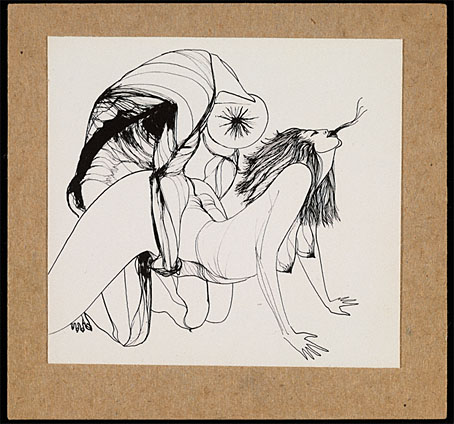
Untitled (Peyote Vision), 1955, Cameron (from Semina journal, no. 1).

Thanks to Erik Davis for drawing my attention to a small online exhibition of Marjorie Cameron artwork and documentary material. Semina was the magazine founded by Cameron’s artist friend, Wallace Berman. The exhibition note tells us that:

Wallace Berman’s only exhibition at Ferus Gallery in 1957 was raided by the LAPD vice squad because of the small reproduction of this sexually graphic work by Cameron that was part of Berman’s assemblage, Temple.

Allen Ginsberg’s Howl successfully fought off an obscenity charge in the same year but the immediacy of visual art means it always fares less well with disapproving authorities. We can assume that Cameron had personal experience of peyote given some verse written by her husband, Jack Parsons, that Robert Anton Wilson quotes in Cosmic Trigger (1977):

I hight Don Quixote, I live on peyote,
marjuana, morphine and cocaine,
I never know sadness, but only a madness
that burns at the heart and the brain.

cameron4.jpg

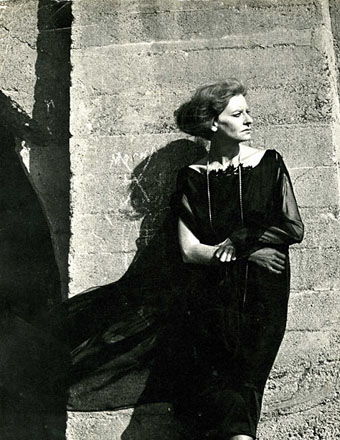
On the same site is this wonderful still (or is it a location photo?) from the shooting of Curtis Harrington’s Night Tide in 1961. Seeing this makes me want to watch the film again.

Previously on { feuilleton }
The Wormwood Star
Street Fair, 1959
House of Harrington
Curtis Harrington, 1926–2007
The art of Cameron, 1922–1995

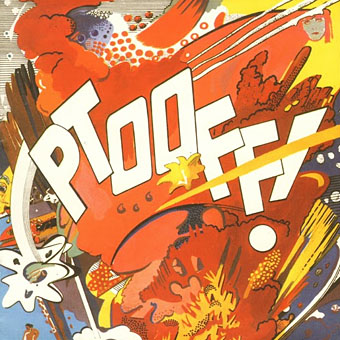
Ptooff!

ptoof1.jpg

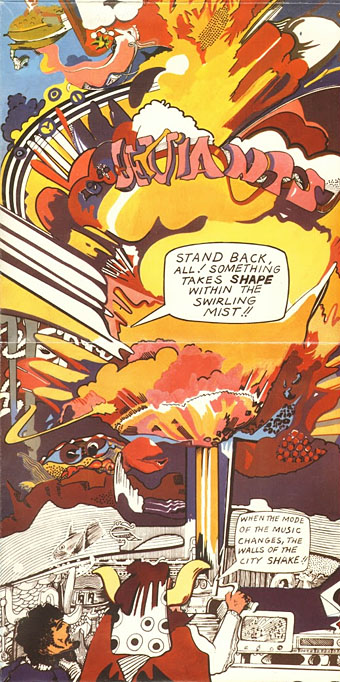
There’s a sub-genre of the psychedelic album cover in which florid, unfocused and vividly polychrome doodles by friends of the band are used as the principal artwork. (The cover of The Parable Of Arable Land [1967] by The Red Crayola is a typical example.) The art which decorates the fold-out sleeve of Ptooff! (1967), the debut album by British group The Deviants, isn’t quite in the doodle league but it treads a narrow divide between drug-addled scribbles and American comic-strip art à la Jack Kirby. Someone named “Kipps” receives the art credit. Viewed today the swirls and explosions on the sleeve’s outer panels also seem to predict the graffiti art which would flourish a decade later.

ptoof2.jpg

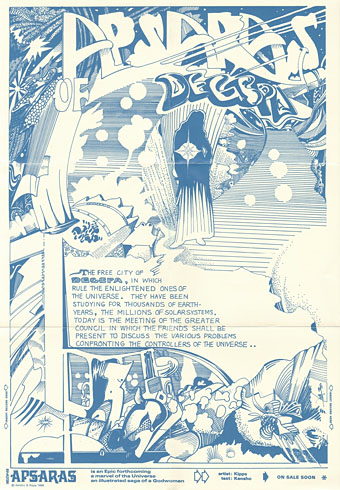
The Deviants were the first musical vehicle for writer and singer Mick Farren who died last week. At the time Farren was known as a journalist for International Times which explains the disembodied head of Theda Bara (from the paper’s logo) floating in the top right-hand corner of the front cover. The lysergic wildness continues inside with an incoherent scene and the promise that “APSARAS—is an Epic forthcoming—a marvel of the Universe—an illustrated saga of a Godwoman. On sale soon.” John Peel provided some sleeve notes. See the artwork at larger size here.

ptoof3.jpg

Charles Shaar Murray penned a memorial note for Mick Farren last week. My favourite track from Ptooff! is the opening song I’m Coming Home, a number that demonstrates the group’s ability to combine humour with hard-rock freakout.

Elsewhere on { feuilleton }
The album covers archive

Previously on { feuilleton }
International Times archive

Weekend links 169

anderson.jpg

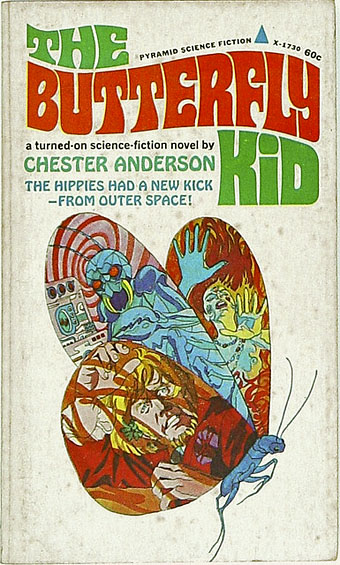
Cover illustration by Gray Morrow, 1967. One of the less exploitative examples from a collection of hippy book covers.

• Ten Photographs by Alain Resnais: Mise en scène of Memory, Aesthetics of Silence by Ehsan Khoshbakht. In the comments to that post someone shows an old Penguin book with cover photos by Chris Marker. This confirms that the “C. Marker” whose name I found on the back of another Penguin book was indeed Monsieur Chat.

• There’s more (there’s always more…): Cornelius Castoriadis interviewed by Chris Marker in 1989, the complete footage of an interview edited down for Marker’s TV series L’héritage de la chouette (The Owl’s Legacy). Watch the series itself at YouTube.

• “A generation of innovators want to change the way we have sex and consume porn, but Google, Apple, and Amazon won’t let them,” says Andrea Garcia-Vargas. Related: Sam Biddle on how Tumblr is pushing porn into an internet sex ghetto.

• Mix of the week: the Chop Quietus Mix, “a jagged journey all the way from Broadcast to the uneasy thrum of Suicide, kosmische flavours from Popol Vuh and Cluster, Alexander Robotnik and many more.”

Strange Flowers looked back at The Student of Prague: “the first art film, the first horror film and the first auteur film”, and now a century old.

Clive Hicks-Jenkins talked to animator Barry Purves about the pleasures and difficulties of creating animated films for adults.

• Mazzy Star released a song, California, from their new album which arrives in September. Can’t wait.

Suzanne Ciani, “American Delia Derbyshire of the Atari Generation” explains synthesizers, 1980.

Christer Strömholm‘s photos of Parisian transgender communities in the 1950s.

What are These Giant Concrete Arrows Across the American Landscape?

• How Kiyoshi Izumi built the psych ward of the future by dropping acid.

Alan Moore: The revolution will be crowd-funded.

Fuck Yeah Mazzy Star

• Suzanne Ciani: Lixiviation | The First Wave—Birth Of Venus (1982) | The Eighth Wave (1986)