
Weekend links 657

foxx.jpg

• Cover art for a new album by John Foxx which will be released on CD in March. This catches my attention for being based on Walter Benjamin’s compendious collection of esoterica, with the music being solo piano pieces. If the latter are anything like the albums Foxx recorded 20 years ago with Harold Budd then this is all very promising. Is the cover design by Jonathan Barnbrook? The typography and formal treatment of the photo suggest as much.

• “The new game was not providing access to everything but finding out how many expensively licensed properties you could cull from your service before people started to question how much they were paying a month.” Sam Thielman on the sudden unavailability of hundreds of classic Warner Brothers cartoons. Regarding his comment about the unplayability of Internet Archive videos: you download them and put them on a USB drive.

Frost Flowers on the Windows (1899) is a book that documents “the extraordinary power of windowpane frost to take ‘ice photographs’, images capable of expressing the ‘vital qualities’ of life forms close to the glass,” according to its author, Albert Alberg.

• New music: ev THe norTH, “a sound journey through the winter of the far north” by Lorenz Weber. (The encoding of the album title won’t display properly on this page.)

• RIP Yukihiro Takahashi, singer, songwriter and drummer with the fabulous Yellow Magic Orchestra. The space-disco video for YMO’s Rydeen never gets old.

• “I want an indescribable feeling”: composer Kali Malone on her search for the sublime.

• Old music: Roundtrip by Don Cherry & Jean Schwarz, a live performance in Paris, 1977.

• At Spoon & Tamago: Glass artist Genki Sudo crafts tentacle earbuds.

• At Unquiet Things: The Incandescent Otherworlds of Gervasio Gallardo.

• At Dennis Cooper’s: Acid Westerns Day.

Arcade (1987) by Chris & Cosey | The White Arcades (1988) by Harold Budd | Arcade (2018) by Philip Jeck

Weekend links 654

crm.jpg

Drawing for a New Year’s Card (c. 1900) by Charles Rennie Mackintosh.

• “Almanacs appealed to the perennial lust for wonder and weirdness in the world. They were the fantastic literature of the day.” Mark Valentine on English Almanacs 1500–1800. Reading this had me wondering whether Old Moore’s Almanac is still being published. Yes, it is.

• “Meet the designer of the fanciful subway entrances to the Paris Métro.” Susannah Gardiner on the architecture, design and anarchist philosophy of Hector Guimard.

• “Apocalypse is not alien to HR Giger,” says Steven Heller, reviewing Atomkinder, a book of the artist’s early cartoons for which he also provided an introduction.

• “Nabokov loved film, hopelessly.” Luke Parker on a short poem, The Cinema (1928), from Vladimir Nabokov’s Berlin years.

• From Loki to Behemoth: waves of the English coastline photographed by Rachael Talibart.

• Mix of the week: Winter Solstice 4: “In C” by ambientblog.

• At Dennis Cooper’s: Grace Zabriskie Day.

Atom Sounds (1978) by Jackie Mittoo | Atom Blaster (1985) by Vangelis | Atomic Buddha (1998) by Techno Animal

The Dillons at Caedmon

dillons18.jpg

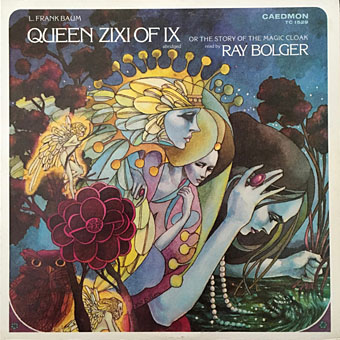
L. Frank Baum: Queen Zixi Of Ix (Or The Story Of The Magic Cloak) Read By Ray Bolger (1977).

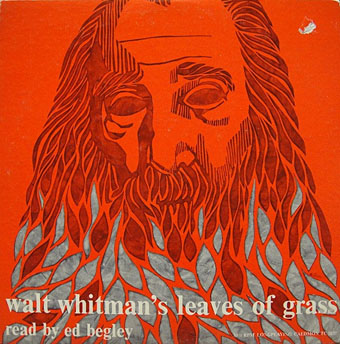
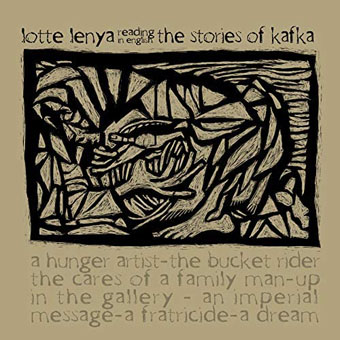
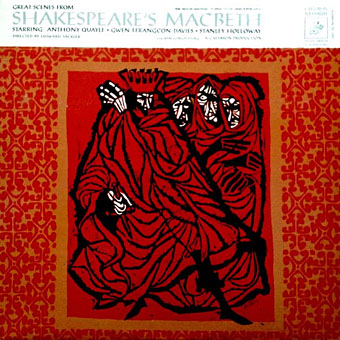
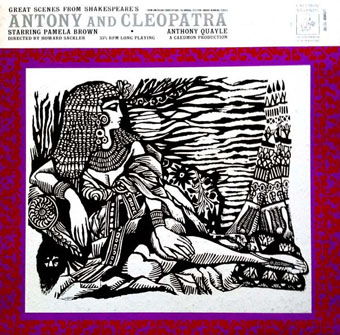
There’s a lot you could write about illustrators Leo and Diane Dillon. They were very prolific for a start, creating many book covers and interior illustrations in a variety of styles and different media. They also maintained a long-running association with Harlan Ellison whose praise for the pair was never less than fulsome. Like Bob Pepper and other versatile illustrators, they created art for album covers as well as books, with regular commissions from Caedmon Records, a label that specialises in spoken-word recordings.

dillons12.jpg

Walt Whitman’s Leaves Of Grass Read By Ed Begley (1959).

During the time the Dillons were working for Caedmon most of the label’s releases were on vinyl, a format that tended to restrict the readings to poetry, short stories or extracts from novels and plays. The format was limited for writers and listeners but beneficial for book illustrators, giving them a larger canvas to work on. These examples are a small selection of the Dillons’ output, more of which may be seen at Discogs. Not everything on Caedmon looked this good. I used to own the David McCallum reading of The Dunwich Horror, an album whose cover art was so amateurish it might have been drawn by Wilbur Whateley himself. The Dillons’ cover for The Rats in the Walls is much better, with a gnawing figure that resembles the woodcut-style illustrations the pair created for Harlan Ellison’s Dangerous Visions anthologies. I’ve never read anything about the Dillons’ techniques so can’t say whether their woodcut style was a product of actual wood engraving rather than linocut, a more convenient medium. I’d guess the latter since the end results look pretty much the same, but if anyone knows the answer then please leave a comment.

dillons01.jpg

The Stories Of Kafka Read By Lotte Lenya (1962).

dillons07.jpg

Great Scenes From Shakespeare’s Macbeth: Anthony Quayle, Gwen Ffrangcon-Davies, Stanley Holloway (1962).

dillons06.jpg

Great Scenes From Shakespeare’s Antony And Cleopatra: Pamela Brown And Anthony Quayle (1963).

Continue reading “The Dillons at Caedmon”

A.R.T. art

ARTflyer.jpg

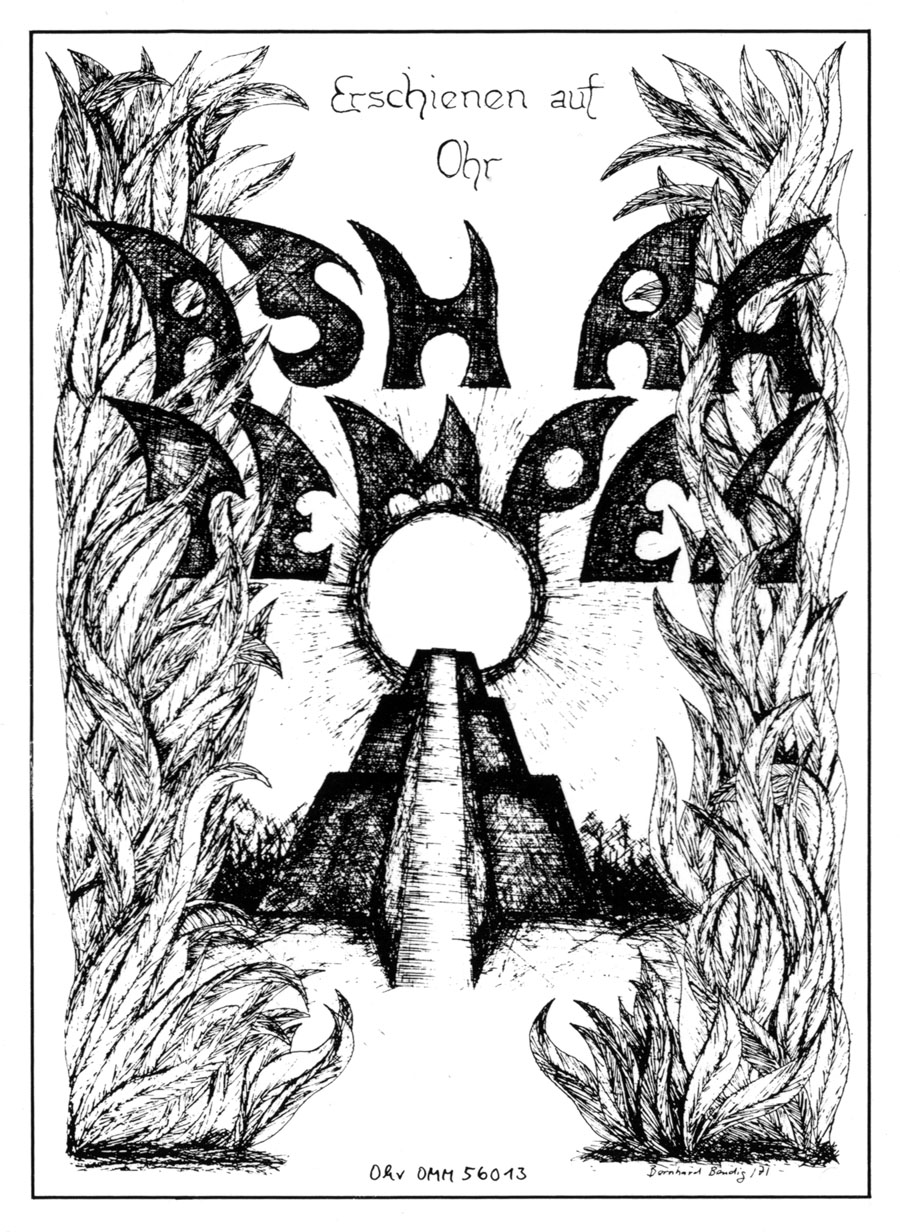
Some Manuel Göttsching-related graphic ephemera. This 1971 flyer for Ash Ra Tempel seems to be a rare item, the only place I’ve seen it being inside one of the inserts for The Private Tapes, a series of six CDs limited to 1000 copies each that Manuel Göttsching released in 1996. I was lucky to buy these when they were first released. A double-disc selection from the series followed two years later but neither this nor the rest of the set have been reissued since, despite containing a wealth of previously unreleased recordings from Göttsching’s archives, including many live concert recordings of Ash Ra Tempel. The flyer was the work of Bernhard Bendig who also drew the sleeve art for the group’s first two albums.

ARTcosmic.jpg

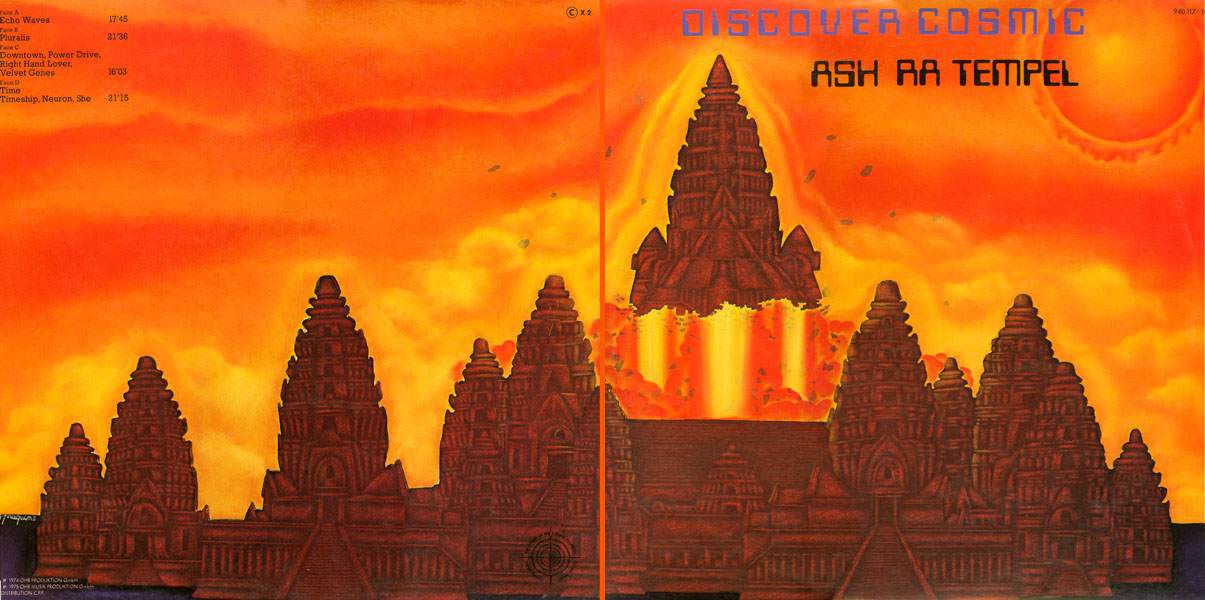
Not as scarce, but not very visible either, is this painting of another somewhat wonky temple by P. Praquin for a 1975 reissue of two Ash Ra Tempel albums: Inventions For Electric Guitar (which isn’t really ART), and Seven Up, the ramshackle studio jam which is mostly spoiled by the bellowings of Timothy Leary and friends. Discover Cosmic was a short-lived series of double-disc reissues of albums originally released on Cosmic Music, an imprint of Barclay Records that repackaged releases from Ohr and Kosmische Musik for the French market. There were three volumes of Discover Cosmic, the other two showcasing Popol Vuh and “The Klaus Schulze Sessions”, this being the first Cosmic Jokers album plus Join Inn by Ash Ra Tempel. The mysterious P. Praquin was responsible for all three cover paintings of which this is the best, wonky or not, a variation on the church-as-spaceship idea that may have been borrowed from the Roger Dean cover for Space Hymns by Ramases. This is one of those graphic contrivances that I usually expect to find repeated elsewhere, although to date the only other example I’ve seen was a Viennese museum poster. But there are more than enough churches that resemble spaceships to give people ideas, especially recent constructions like the Hallgrímskirkja in Reykjavík. If you know of any other steeples blasting off then please leave a comment.

Previously on { feuilleton }
Manuel Göttsching, 1952–2022
The kosmische design of Peter Geitner
Raising the roof

Weekend links 649

chihuly.jpg

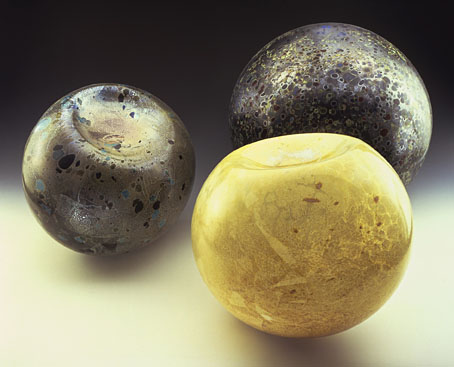
Niijima Floats: Mottled Blue Black Float with Silver Leaf (1991) by Dale Chihuly.

• “Blue whale songs fall below the range of human hearing. If you want to listen to one, to actually hear its ethereal patterns of wobbly pulses and haunting moans, you have to speed it up by at least two-fold. But according to Hildebrand and McDonald’s instruments, the tonal frequencies of the songs had been sinking to even greater depths for three straight years. ‘This is weird,’ Hildebrand thought. To figure out if it was just an anomaly or something more, Hildebrand and McDonald embarked on a quest to find some really old songs. Eventually they got their hands on some of the earliest known recordings, created by the Navy in the 1960s and stored on analog cassettes. They were floored. The frequencies had declined by 30 percent over 40 years.” Kristen French on a mysterious development in blue whale songs.

• “She didn’t see it as a game, or for divination, but as a model of the universe.” Joanna Moorhead on the Tarot designs of Leonora Carrington.

• “A collection of blogs about every topic”: ooh.directory. (Ta to whoever added this place to the list.)

• New music: Pop Ambient 2023 by Various Artists, and Aeolian Mixtape by Quinta.

• At Public Domain Review: The Tanzmasken of Lavinia Schulz and Walter Holdt.

• At Wormwoodiana: Mark Valentine on mazes and labyrinths. (Previously)

• At Spoon & Tamago: Paper-cut cityscapes by kirie artist Hiroki Saito.

• At Smithsonian Magazine: The Unrivaled Legacy of Dale Chihuly.

• Mix of the week: Neo-Medieval Mix by Moon Wiring Club.

• Old music: Back To The Woodlands by Ernest Hood.

• At Dennis Cooper’s: Jacques Rivette Day.

Weyes Blood’s favourite music.

(Gorgeous Curves Lovely Fragments Labyrinthed On Occasions Entwined Charms, A Few Stories At Any Longer Sworn To Gathered From A Guileless Angel And The Hilt Edges Of Old Hearts, If They Do In The Guilt Of Deep Despondency.) (2004) by Akira Rabelais | The Private Labyrinth (2008) by The Wounded Kings | Labyrinths (2018) by Jonathan Fitoussi & Clemens Hourrière