Weekend links 291

brooks.jpg

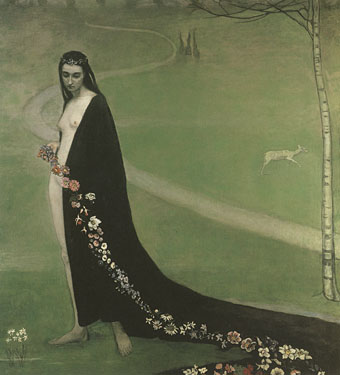
Femme avec des fleurs (1912) by Romaine Brooks.

• This week’s anniversary of the Charlie Hebdo murders was noted by some of those who defended the magazine last year. “I don’t write about Charlie Hebdo in France,” said Robert McLiam Wilson, “they have plenty of people who can do that. But I’ll do almost anything I’m asked to do in the anglosphere. Why? Well, two reasons. Because none of the other Charlie people bothers to do it. And because, really, that’s where all the bullshit lives.” A year on, and the bullshit-mongers seem to have fallen silent, what with knee-jerk outrage being a short-lived affair, and the Bataclan massacre having demolished one of the main criticisms, namely that the magazine wouldn’t have been attacked if the artists and writers had shown some respect. “[Charlie Hebdo‘s] real crime is not racism but its challenge to what has become an unbreakable commandment for many contemporary liberals: ‘Thou shalt not cause offence’,” says Kenan Malik. At Literary Hub Adam Gopnik explored the same issue in a foreword for Stéphane Charbonnier’s Open Letter.

• “Immersion in the past is no escape from the present, but it supplies a constant corrective to the narrative spit out daily by media, advertising, politics, and all those other forces that attempt to mould our thinking like jelly in a pan.” Luc Sante (again) talking to Simone Wolff about his books, Low Life and The Other Paris.

• “…throwing a lot of money behind vintage equipment? Well, that’s just a millionaire’s game. Dave Grohl can do that, but David Bowie doesn’t care about that. Just stick a microphone in front of him and he’s really happy.” Tony Visconti talking to Allyson McCabe about the music business and producing Bowie.

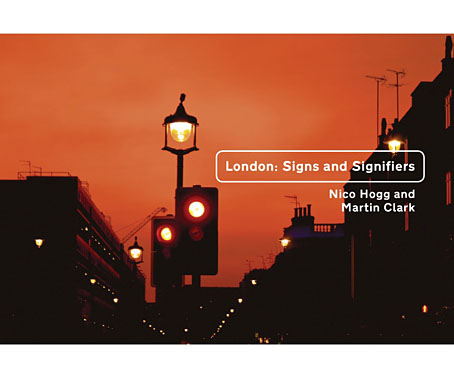
• “Nico Hogg’s photography captures the transformation of urban London,” says George Kafka who talks to Nico about a collection of his work, Sign & Signifiers, which I designed late last year.

• At Strange Flowers: James Conway talks to Cassandra Langer about her recent biography of artist Romaine Brooks (1874–1970).

• At Dangerous Minds: Godzilla, girls and guns, the science-fiction art of Noriyoshi Ohrai. There’s more at Pinterest.

• Mixes of the week: XLR8R Podcast 420 by Andrey Pushkarev, and Secret Thirteen Mix 172 by Julien Bayle.

• Alan Moore’s magnum opus, Jerusalem, will be published later this year. Gosh Comics has a teaser.

• New York Public Library makes 180,000 high-res images available online.

• Prints of darkness: macabre vintage posters

• Scarfolk Television is coming

• Godzilla (1977) by Blue Öyster Cult | Giant Robot / Machines in the Modern City / Godzilla (1992) by Praxis | Free-Bass (Godzillatron Cush) (1995) by Axiom Funk
Weekend links 290

coin

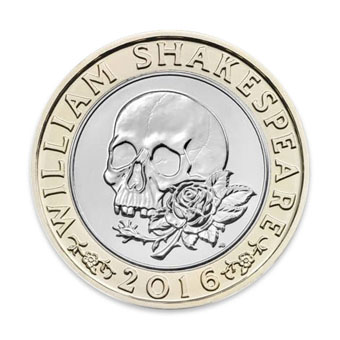
The Royal Mint celebrates 400 years of William Shakespeare with new £2 coins. The “Tragedies” design gives Britain the Gothiest coin of all time.

• “I hate successful films that travel on an easy wave of ‘good taste’: for me, that is simply anti-culture.” Cinematographer Luciano Tovoli talks to Alexandra Heller-Nicholas about photographing Dario Argento’s masterwork, Suspiria.

• Mixes of the week: Für die Liebe II, an hour of ambient drift by Matthew Dekay, and Carwyn Ellis Mixtape No. 354 by The Voice Of Cassandre.

• Americans in Europe: Frances Mayes on the enduring mystique of the Venetian lagoon, and David Farley on the trail of Kafka in Prague.

“We’d read that Brion Gysin and William Burroughs had played around with some scientific equipment from Columbia University,” [Jim] Jarmusch recalls. It was “some kind of strobe light that they claimed, by placing eidetic pulses on the outside of your eyelids, could cause states of hallucination and trance. We found out how to check out this machine and experimented with … not fantastic results! In a way though, Luc [Sante] channels ghosts: he’s able to imagine and mentally reconstruct events and places from the past and weave them into stories. He can cross influences like Blaise Cendrars and JG Ballard with James M Cain and Raymond Roussel.”

[…]

If New York celebrates amnesia, perpetual transformation, accelerated obsolescence – and offers newcomers a blank slate, a chance to be born again – then Sante offers a mordantly heretical vision of the city. For him it’s full of layers and depths, of echoes and eerie reverberations, of occult whispers. “The tech crowd thinks that we can’t afford the past to be sitting on our shoulders. It’s a burden, a dead weight. We’ve got to innovate constantly. We have to … disrupt. But the 20th century is littered with valuable stuff – writers, ideas, daily certainties – that gets discarded and that needs to be picked up and looked at again.”

Sukhdev Sandhu profiles writer Luc Sante

• The Edge Question for 2016: What do you consider the most interesting recent (scientific) news? What makes it important?

• Bradley L. Garrett’s foreword for Secret Tunnels of England: Folklore and Fact (2015), a book by Antony Clayton.

• Caitlin R. Green on the monstrous landscape of medieval Lincolnshire.

• Mistaken Memories of Mediaeval Manhattan by Brian Eno.

• Arche (live, 2013) by Master Musicians of Bukkake.

• A Year In The Country returns for another year.

• Kafka (1982) by Masami Tsuchiya | Manhattan (1984) by Seigen Ono | Tunnel (1997) by Biosphere

London: Signs and Signifiers

nico01.jpg

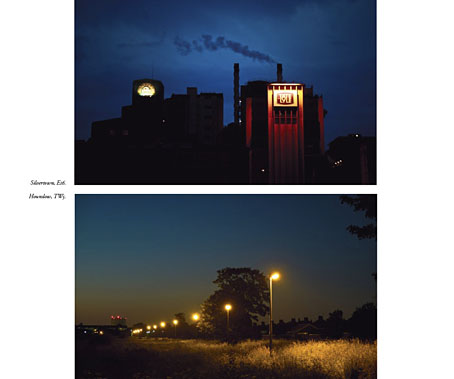
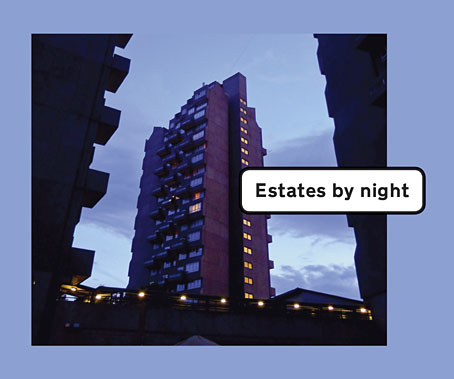
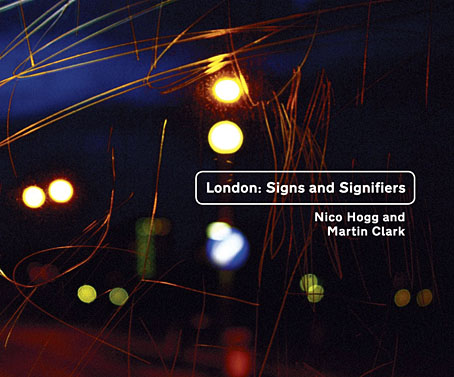
By coincidence, two of the projects I was working on in the summer are released this week. First up is London: Signs and Signifiers, a collection of Nico Hogg’s photographs of the streets and architecture of London’s East End. I’ve mentioned Nico’s photography before as his pictures have been used on several of the albums and singles I’ve designed for Keysound Recordings, some of which are featured in the book. This is being published as part of the Keysound catalogue, with a launch event taking place today (the 8th) at the Doomed Gallery, London. See this post for details, and a link to download a free chapter.

nico02.jpg

Nico’s work is notable for the way it avoids the stereotype of the style of urban photography that presents deprived or run-down areas in grim monochrome. Nico doesn’t avoid the decay—there are shots of burned-out flat-blocks, and a chapter devoted to the recent Tottenham riots—but the colour in his pictures shows a different side to these areas of the city.

nico03.jpg

My design for the book follows the minimal approach I’ve used on the Keysound albums, organising the information clearly and giving the photos as much room as possible. The font used for the titles and chapter headings is Transport, the typeface designed by Jock Kinneir and Margaret Calvert used on roads signs throughout the UK.

nico04.jpg

Continue reading “London: Signs and Signifiers”

Cabaret des Truands

truands1.jpg

Up until 1950 Montmartre retained an aura of evil for provincials and foreign visitors, and did its best to satisfy them with a tawdry kind of satanism. The most famous of these places, in the Boulevard de Clichy, was called L’Enfer.

Philippe Jullian, Montmartre (1977)

L’Enfer is still the most famous of these vanished Parisian establishments thanks to photos by Eugène Atget and others of its hell-mouth entrance. Among the other novelty cabarets on the Boulevard de Clichy there was Le Ciel (Heaven) next door to L’Enfer, and the death-themed Cabaret du Néant (Cabaret of Nothingness, or Limbo as Jullian has it). The exterior of the latter was suitably funereal but otherwise mundane, although once inside you were in crypt-like surroundings.

truands2.jpg

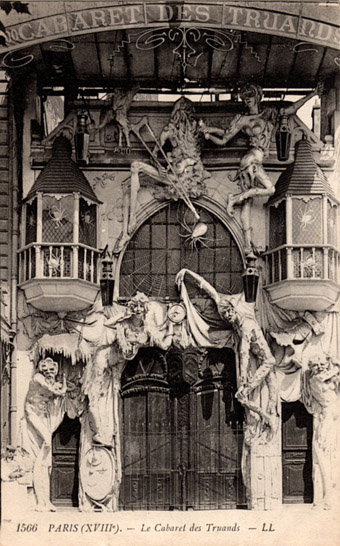
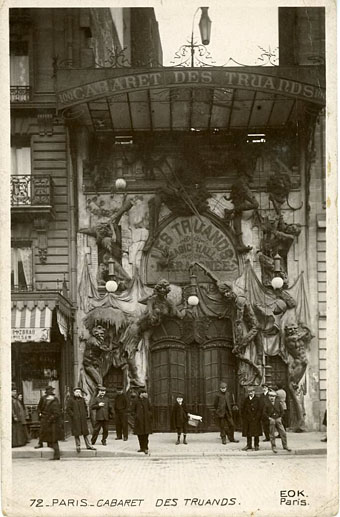
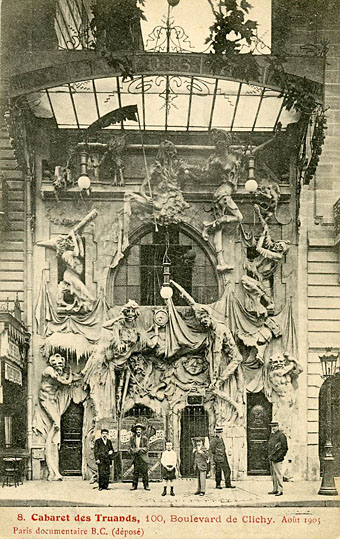
Another cabaret with a striking exterior that I hadn’t come across before was at no. 100 Boulevard de Clichy. The Cabaret des Truands (Cabaret of Truants) had a generally medieval interior with staff dressed like serving wenches and troubadours, but the exterior could almost be that of a fairground haunted house, replete with spider webs and plaster grotesques. Descriptions in English are unclear but the spiders seem to relate to a shared establishment, L’Araignée. It’s surprising to think of all these extravagant façades standing in a single (long) street in the heart of Paris, but then Montmartre in the late 19th century was the wild nighttown. Searching for photos of the Cabaret des Truands reveals an exterior changing by degrees with the passing years.

truands3.jpg

Previously on { feuilleton }
• Infernal entrances

Weekend links 281

fini.jpg

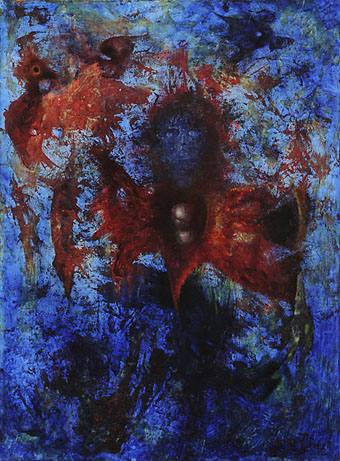
Chimère du soir (1961) by Leonor Fini. Réalisme irréel is an exhibition of Fini’s work currently running at the Weinstein Gallery, San Francisco.

• ” ‘Paris invented the flâneur,’ he notes, ‘and continues to press all leisurely and attentive walkers into exercising that pursuit, which is an active and engaged form of interaction with the city, one that sharpens concentration and enlarges imaginative empathy and overrides mere tourism.’ ” David L. Ulin reviewing The Other Paris by Luc Sante.

• “A lot of posters promise so much that how can they ever deliver?” Nicolas Winding Refn talking to Mat Colegate about his book, The Act Of Seeing, a collection of posters for exploitation films.

• “Sexuality is present throughout and often subverts a narrative we might read entirely differently from a straight poet.” Callum James reviews Physical by Andrew McMillan.

This movie will lose a lot of people along the way, but then again, as far back as 1962, Ballard wrote a manifesto for a new form of science fiction, Which Way to Inner Space?, in which he insisted that “from now on, most of the hard work will fall, not on the writer, but on the readers. The onus is on them to accept a more oblique narrative style, understated themes, private symbols and vocabularies.” This is exactly what Wheatley wants from his audience.

Mike Holliday comparing Ben Wheatley’s forthcoming film of High-Rise with JG Ballard’s novel. Ballard’s suggestion for a new SF now seems increasingly like a road not taken. But that’s another discussion entirely…

• The Lost Library of John Dee, an exhibition of books owned by the Elizabethan magus, opens at the Royal College of Physicians museum, London, in January.

• Clive Hicks-Jenkins has been writing about his illustration heroes including Alexander Alexeieff.

• Cameron: Cinderella of the Wastelands. The exhibition has just finished but the art is still online.

• Mixes of the week: FACT Mix 518 by Fis, and Secret Thirteen Mix 165 by Damien Dubrovnik.

• At Dirge Magazine: Tenebrous Kate on Fantômas, the French King of Crime.

• Suitably seasonal: Polish Night Music by David Lynch & Marek Zebrowski.

• Kickin’ In, a previously unreleased EP of music by Patrick Cowley.

• Jean-Michel Jarre‘s favourite albums.

• Seeing It As You Really Are (1970) by Hawkwind | Seeing Out The Angel (1981) by Simple Minds | Seeing Red (1998) by Red Snapper