Weekend links 611

ltpf.jpg

Let The Power Fall (1981) by Robert Fripp. A postcard included with the original vinyl release of the Let The Power Fall album.

Exposures 1977–1983 is the title of another wallet-busting CD/DVD/blu-ray box which will be released by DGM at the end of May. Unlike the previous King Crimson sets this one will be devoted to Robert Fripp’s first run of solo releases, covering the albums that emerged from the artistic campaign he described at the time as “The Drive to 1981”: Exposure (1979), God Save The Queen/Under Heavy Manners (1980), The League Of Gentlemen (1981), and Let The Power Fall (1981). If you’re as interested as I am in this period of Fripp’s career then this is all very exciting. Exposure has been reissued several times over the years, and exists in three different “editions” featuring alternate mixes and song variations, but the other albums have been unavailable in any form for decades, possibly as a result of the turmoil caused by the mismanagement and eventual collapse of the EG label. In addition to the reissues the box will include live recordings, a League Of Gentlemen Peel session plus a substantial quantity of Frippertronics material, including the loops that were recorded for Eno & Byrne’s My Life In The Bush Of Ghosts. Fripp retained a credit for his contribution to Regiment but the results are so far down in the mix that they’re easy to miss. Related: The Drive to 1981: Robert Fripp’s Art-Rock Classic Exposure.

• Galerie Georges-Philippe & Nathalie Valloisin, Paris, is currently creeping out visitors to Strange Aeons—We will meet you there, an exhibition by Peybak (Peyman Barabadi and Babak Alebrahim Dehkordi) that borrows its title from HP Lovecraft and includes a number of creatures, “neither embryos nor chimeras”, which may be found prostrate and breathing on the gallery floor.

• New music: Sub Zero, in which Kevin Richard Martin returns to the subterranean/subaqueous/subarctic zones he charted on his Isolationism and Driftworks compilations in the 1990s; plus The Carrier by Large Plants, an album of “psych rock belters” coming soon on the Ghost Box label.

• Science fiction as revolution: Joe Banks talks to Iain McIntyre, co-editor of Dangerous Visions and New Worlds—Radical Science Fiction, 1950–1985, about the flourishing of the New Wave of SF in the 1960s and 70s.

• “We know from his letters that Joyce sent a Greek flag to Nutting for him to colour-match. So, he was aiming for ‘Greek’ blue.” It’s that book again. Cleo Hanaway-Oakley on Ulysses, blindness and blue.

• Intermittent Eyeball Fodder: More visual delights gathered by S. Elizabeth.

• Steven Heller’s font of the month is Nicholas.

• Galerie Dennis Cooper presents…Liz Larner.

Let The Power Fall (1971) by Max Romeo | Minor Man (1981) by The League Of Gentlemen ft. Danielle Dax | Heptaparapashinokh (1981) by The League Of Gentlemen

Old Marvel versus Sherlock Holmes

oldmarvel4.jpg

Arriving in the post this week, one of the books whose covers I was creating late last year. Work-wise, the past year has been busier than usual which means I’ve fallen behind with the logging of recent commissions. In the past few months I’ve created several album designs, more book covers, an entire book design (cover plus interior), and also been working on two bigger projects at the same time. Things have calmed down a little now so updates will be forthcoming.

oldmarvel1.jpg

Old Marvel: The Scientific Detective is another design for Mark Williams’ Dark Lantern Tales imprint which once again resurrects a forgotten detective from pulp obscurity, and in a larger format than before. The new volume is significant for presenting a Sherlock Holmes-like character—credited to the pseudonymous “Grip”—who predates Holmes’ first appearance by three years, thereby suggesting a possible inspiration for Arthur Conan Doyle. Holmes collector Joe Rainone provides the details of publication and sets out the available evidence in an informative foreword. The Old Marvel character not only pre-empts Holmes by using his scientific knowledge to solve mysteries but he also pre-empts subsequent generations of spies and investigators with the various gadgets he uses, including what may be the first fictional deployment of an Edison voice recorder. My brief for the cover was to combine the illustration of the character with a vignette showing a shipping disaster from the story plus some of the contents of the detective’s tool kit.

oldmarvel2.jpg

The book is actually two stories in one volume, with the second half being a reprint of the very first Sherlock Holmes novel, A Study in Scarlet. Both stories are presented as semi-facsimiles of their original US printings, together with reproductions of title pages and so on. The Holmes story is reproduced from its appearance in The Illustrated Home Guest in 1892, and includes rare illustrations one of which appears on the cover. Doyle’s first Holmes novel is the most controversial of all his stories—at least if you’re a Mormon—since this is the one where the inhabitants of Salt Lake City are depicted as a murderous religious cult. I filled out the cover with panels showing the two main story locations: a view of London via Ludgate Circus and a canyon in Utah. Finding a period engraving of St Paul’s Cathedral that remained visually interesting when narrowed down in this way took some time.

oldmarvel3.jpg

Previously on { feuilleton }
More detectives
The Joe Phenix Detective Series
Illustrating Sherlock Holmes

Weekend links 609

tv1.jpg

Cover of Tom Veitch Magazine #1 (1970).

• RIP Tom Veitch, a writer with whom I almost created a comic-book series in the 1990s. Things didn’t work out for a variety of reasons but we had some good conversations. All the news notices focus on his writing for comics, a career which ranged from angry, political strips with Greg Irons to typical franchise fare. But he had short stories published in New Worlds magazine when it was at its peak under Michael Moorcock’s editorship, and in Quark, a short-lived paperback magazine edited by Samuel Delany & Marilyn Hacker. Veitch was also among the first 35 contributors to John Giorno’s Dial-a-Poem service when it launched in 1968, part of a select group that included John Ashbery, William Burroughs and Allen Ginsberg. Related: An interview with Tom Veitch on William Burroughs at Reality Studio.

• “I won’t deny that I thought very much about a post punk influence on it. Everybody knows that I love post punk, but I didn’t want to copy anybody.” Robert Hampson talking to Jonathan Selzer about the return of Loop.

• “What Joyce and Eliot, Ulysses and The Waste Land, had in common was a showiness, an overt ambition as well as a magpie approach to literature as assemblage.” John Self on the year 1922, “literature’s year zero”.

• At Spoon & Tamago: All of Japan’s 47 prefectures captured in expressive typography.

• At Public Domain Review: Composition (1905) by Arthur Wesley Dow, a book for art students influenced by the example of Japanese prints.

• At Wormwoodiana: Mark Valentine on the unending attempts to solve The Mystery of Edwin Drood.

• Mixes of the week: Fact Mix 846 by Ehua, and Soylent Green – No Escape by The Ephemeral Man.

• At Dennis Cooper’s: Matthew Suss presents…Joseph Cornell Day.

• At Bandcamp: A guide to Alvin Lucier.

Loop The Loop (1980) by Young Marble Giants | Q-Loop (1995) by Basic Channel | Loop-Loop (1996) by Michael Rother

Weekend links 608

timlin.jpg

The Temple, an illustration from The Ship that Sailed to Mars (1923) by William Timlin.

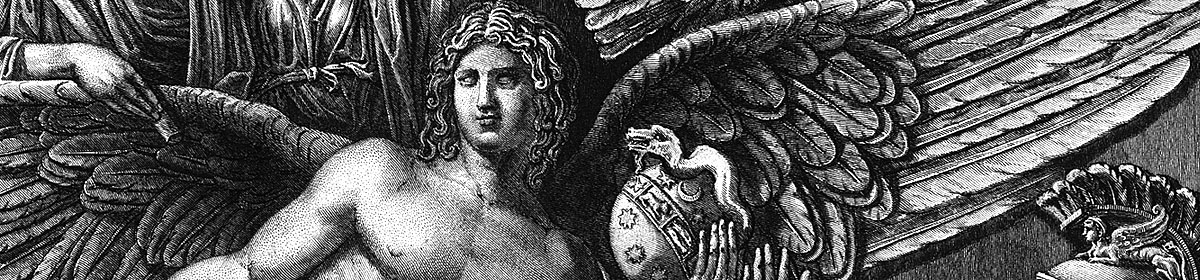
• “With the grotteschi, Piranesi produced hybrid forms of ornament juxtaposed in an array without regard to single-point perspective. With his capricci, he brought disparate structures into a landscape that existed only within the borders of the plate. Perhaps because of his early fidelity to accuracy and the long tradition of printmaking as a medium for the measured representation of antique forms, Piranesi’s capricci take on a particularly fantastic aura.” Susan Stewart on the ruinous fantasias of Giovanni Battista Piranesi, one of whose etchings happens to be providing the page header this month.

• At Dangerous Minds: 23rd Century Giants, the incredible true story of Renaldo & The Loaf! Oliver Hall conducts a long and very informative interview with two of Britain’s strangest music makers.

• New music: Nightcrawler by Kevin Richard Martin, recommended to anyone who enjoys the nocturnal doom of Bohren & Der Club Of Gore; and Murmurations by Lea Bertucci & Ben Vida.

“Throughout the book, McCarthy writes as if he knows something that more conventional historians aren’t always keen to accept: that the past doesn’t always make sense, that it’s often cruel and irrational, and that some things aren’t so explainable. History is not a book waiting to be opened so much as a Pandora’s box that might curse us and leave us chastened by what we find inside.”

Bennett Parten on Cormac McCarthy’s baleful masterpiece, Blood Meridian

• “Inside me are two wolves and they are both paintings by Kazimierz Stabrowski.” S. Elizabeth‘s latest art discoveries.

• At Wormwoodiana: Mark Valentine on Arthur Machen and the mysteries of the Grail.

• RIP Betty Davis and Douglas Trumbull.

• At Dennis Cooper’s: Tobe Hooper Day.

Temple Bells (1959) by Frank Hunter And His Orchestra | Temple Of Gold (1960) by Les Baxter | Temple (2018) by Jóhann Jóhannsson

Félicien Rops et Son Oeuvre

rops01.jpg

More Belgian Symbolism of a kind, although it’s debatable the degree to which Félicien Rops should be regarded as a Symbolist even though his work is generally listed as such. Decadent, certainly, and he did touch on popular Symbolist themes such as the temptation of St. Anthony, but only as part of his persistent obsession with that very fin-de-siècle icon, the Bad Woman. In Rops’ work this manifests as a succession of hollow-eyed femmes damnées—erotomanes, seducers and addicts—all of whom resemble each other.

rops02.jpg

Félicien Rops et Son Oeuvre (1900) is a short monograph by Gustave Kahn which is is mostly of interest for the self-portraits and minor pieces, those drawings and prints that you’d only find now in a comprehensive examination of the artist’s career. In 1900 Rops’ overtly erotic drawings wouldn’t have been available outside private publications whereas today, in a reversal of fortune that might have surprised the artist, these are the works of his that everyone likes to see. The Internet Archive has a later study by Gustave Kahn which includes some of the more erotic pieces seen here, none of which are too explicit but there’s enough that his book might have encountered legal disapproval if anyone had tried to sell a copy in England.

rops05.jpg

rops03.jpg

rops04.jpg

Continue reading “Félicien Rops et Son Oeuvre”