Weekend links 678

hablik.jpg

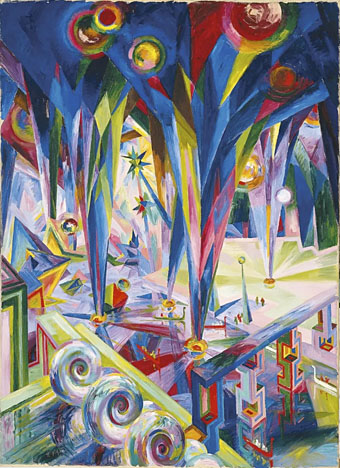
Interior of a Cathedral (1921) by Wenzel Hablik.

• The inevitable Cormac McCarthy features: “Cormac McCarthy took us beneath the surface,” says Kevin Berger at Nautilus magazine, publishers of McCarthy’s essay about the origins of language. At The Paris Review, three writers reminisce about reading McCarthy’s fiction.

• At Bajo el Signo de Libra: Bhupen Khakhar (1934–2003). “Su obra examina las implicaciones políticas y socioculturales de la homosexualidad en la India.”

Dennis Cooper’s favourite fiction, poetry, non-fiction, film, art, and internet of 2023 so far. Thanks again for the link here!

• New music: Telepathic Heights by Hawksmoor, and Golden Apples of the Sun by Suzanne Ciani & Jonathan Fitoussi.

• Mixes of the week: DreamScenes – June 2023, and isolatedmix 121: Oslated & Huinali Showcase mixed by S-Pill.

• At Unquiet Things: Crystal Castles and Harmonious Heavens: Wenzel Hablik’s Glittering Utopias.

• At Public Domain Review: Wonder and Pleasure in the Oude Doolhof of Amsterdam.

• At Spoon & Tamago: Exploring Tokyo’s Hidden Shrines.

• At Aquarium Drunkard: Bush Tetras interviewed.

Ben Chasny’s favourite albums.

• RIP Glenda Jackson.

Utopiat No. 1 (1973) by Utopia | Utopia (2000) by Goldfrapp | Utopia (2013) by Brown Reininger Bodson
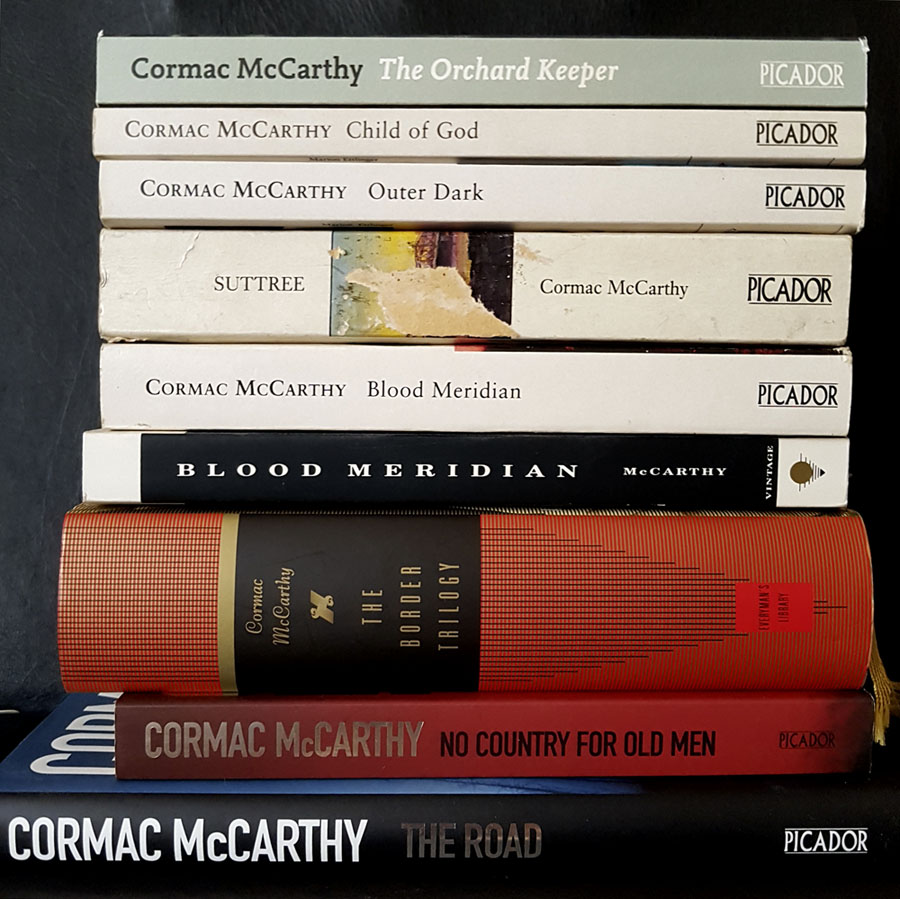
Cormac McCarthy, 1933–2023

cormac.jpg

Yes, I liked his books. Blood Meridian remains the favourite although my late friend James insisted that Suttree was the finest on a sentence level. I tend to agree. I’ve read The Border Trilogy twice, and don’t mind the parts that everyone else seems to hate, when significant older characters launch into strange reminiscences that last for several pages. I still wonder what those episodes are all about. The same with the trilogy’s curious mystical moments. Contemplating these enigmas adds to the enjoyment. I’ve yet to read his last two works, having spent most of the year so far re-reading other books. But I’m looking forward to them.

• NYT: Cormac McCarthy, Novelist of a Darker America, Is Dead at 89

Previously on { feuilleton }
Repackaging Cormac
Cormac McCarthy book covers

The art of Davis Meltzer, 1929–2017

meltzer01.jpg

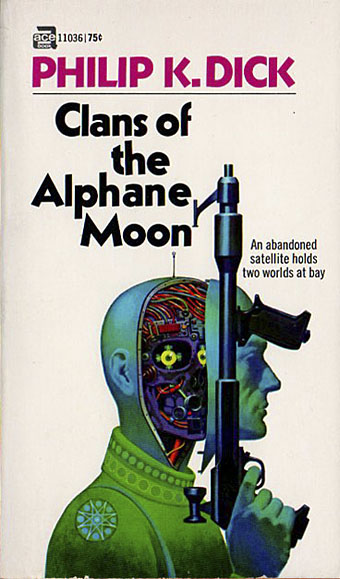
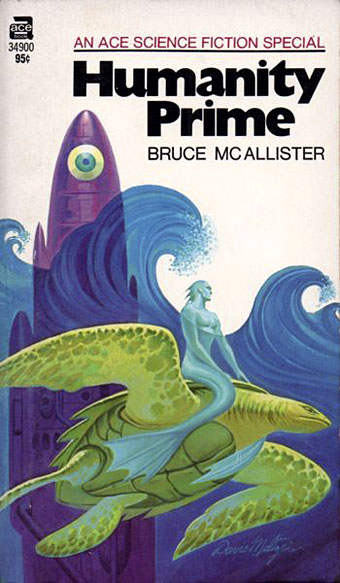
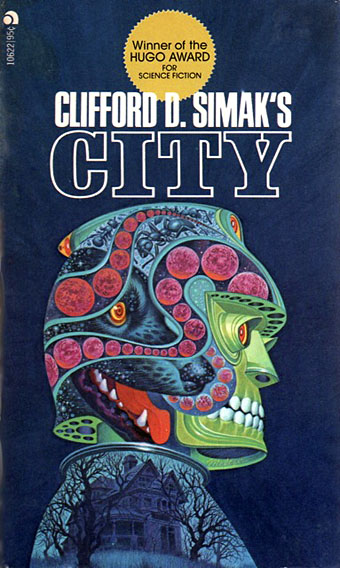
Illustrators were often easy to miss in the pre-internet days, when paperbacks published overseas could be hard to find or even see. Such is the case with Davis Meltzer whose work I hadn’t really noticed before until this cover turned up at 70s Sci-Fi Art. Meltzer had a long career as a scientific illustrator for National Geographic but his work as a cover artist for SF novels only lasted a decade, from 1970 to 1981. Not everything is as dramatically eye-catching as his Simak cover but there’s a unique sensibility at work, with only occasional similarities to other artists of his generation like Kelly Freas.

meltzer22.jpg

The Temptation of St. Gerome.

The piece above is from an auction site which doesn’t reveal any information apart from the title. If this was a religious illustration it’s one of the strangest I’ve ever seen. Auction listings state that Meltzer’s paintings were mostly done in gouache, a common medium for illustrators and graphic designers owing to its flat bright colours. The following selection favours the more visually arresting examples over generic spaceship art.

meltzer06.jpg

meltzer05.jpg

meltzer08.jpg

Continue reading “The art of Davis Meltzer, 1929–2017”

Weekend links 677

cv-brody.jpg

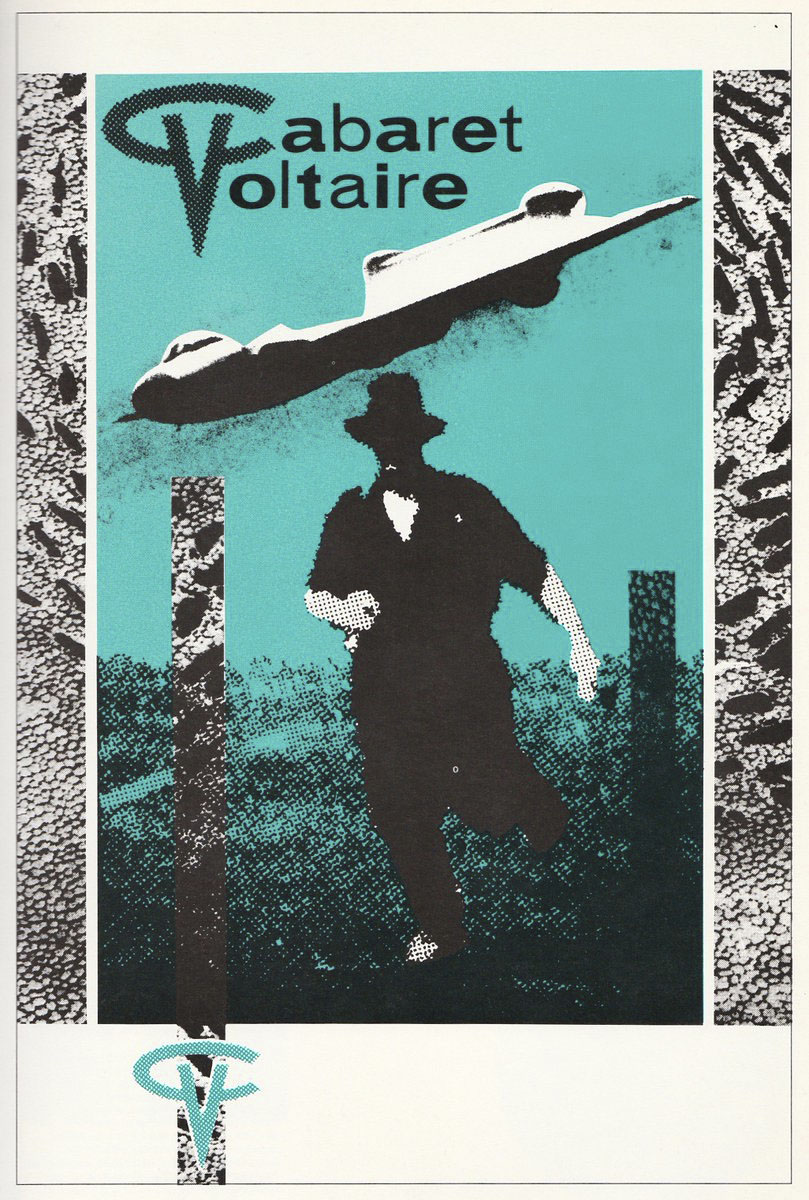
Design by Neville Brody, 1980.

• My work soundtrack for the past couple of weeks has been non-stop Cabaret Voltaire so this is pertinent. Neville Brody designed many of the group’s record sleeves in the 1980s as well as this poster and another one that I’ve only seen as a small picture in the first Brody book. He was also responsible for the CV logo which I never managed to find in badge form.

• “Anger’s preferred mode of artistry in his last decades was self-mythologising, and while he would return to filmmaking late in life, it was less as hierophant than totem—the worn keepsake of a once powerful magick.” Ryan Meehan remembers Kenneth Anger.

• New music: Waves by Ben Chasny and Rick Tomlinson, Topos by UCC Harlo, and Zango by WITCH.

Kafka’s perpetual redescription of his plight suggests that throughout his writing life he was less interested in finding a solution or even arriving at a single, definitive formulation of the problem than he was in exploring the implications and complications of his situation from new, unexpected angles and crafting an ever-expanding lexicon of figures for its inescapability.

Ross Benjamin, the translator of Franz Kafka’s diaries, on the neurotic concerns that Kafka turned into art

• “Why are men seemingly always naked in ancient Greek art?” Sarah Murray investigates.

Artists for Bibi: an auction in aid of Arthur Machen’s great-great-granddaughter.

• At Public Domain Review: Unidentified Floating Object: Edo Images of Utsuro-bune.

• Steven Heller’s font of the month is Acorn.

• Old music: Moon Journey by Mort Garson.

• RIP Tony McPhee.

Kafka (1964) by The Rowdies | Kafka (1982) by Masami Tsuchiya | Kafka (Main Title) (1992) by Cliff Martinez

Covering Maldoror

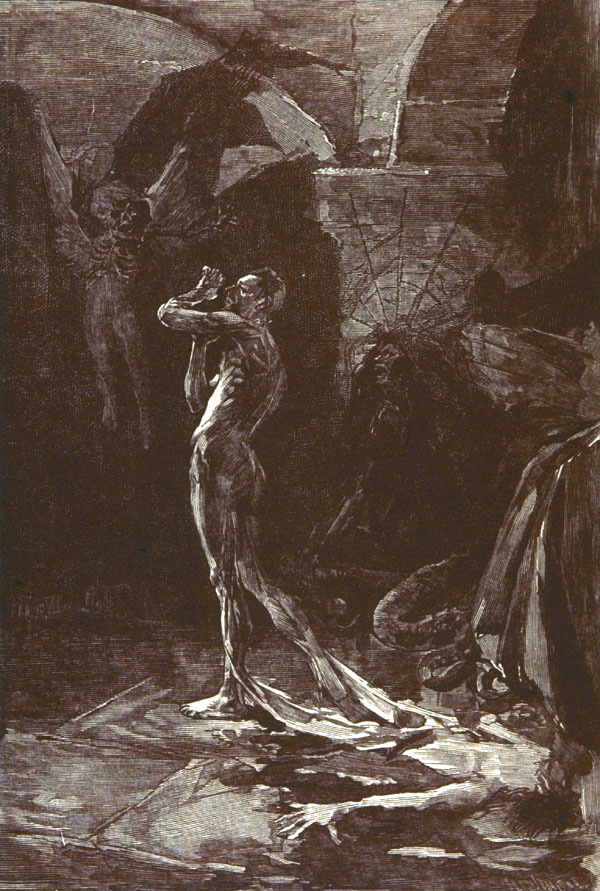
roy.jpg

This illustration by José Roy is a frontispiece created for a rare edition of Les Chants de Maldoror published by Genonceaux in 1890. Roy (1860–1924) was a French artist whose work receives little attention today but his Maldoror illustration happens to be the first of its kind, and a picture that serves the text better than some of those being produced a few years later. The detail of a flayed man stepping out of his skin prefigures Clive Barker by almost a century, a further example of the ways in which Lautréamont’s baleful masterpiece was ahead of his time.

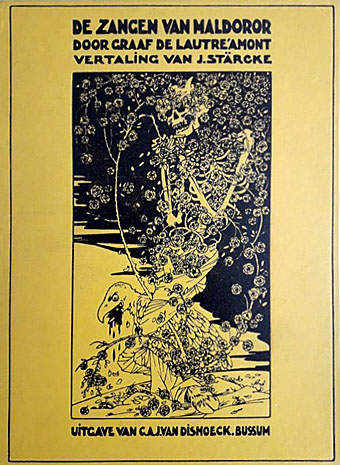
maldoror01.jpg

Netherlands, 1917. Cover art by WF Gouwe.

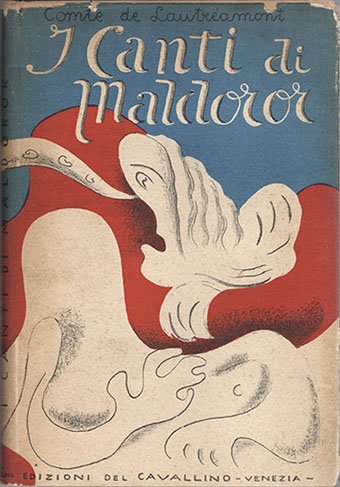
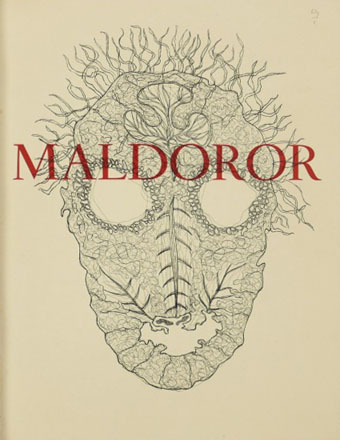
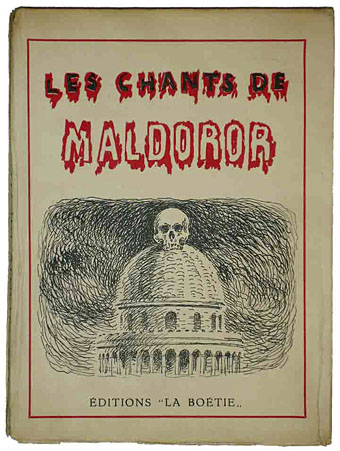
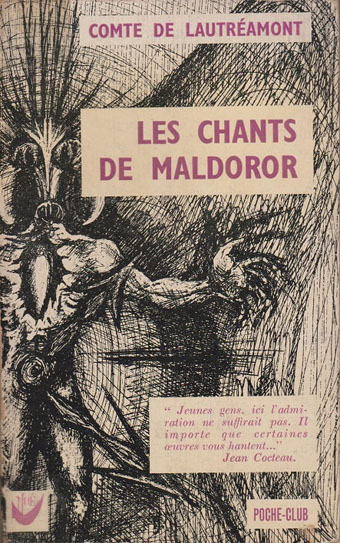
Previous posts here have concerned illustrated editions of Maldoror but this one is all about the covers. Literary classics aren’t always very rewarding in this respect but Maldoror’s textual and imaginative wildness has prompted an assortment of illustrative choices that range from the appropriate to the bewilderingly arbitrary. The following covers are a selection of the more notable examples, avoiding those without pictures or ones that use photographs of the book’s enigmatic author, Isidore Ducasse.

maldoror02.jpg

Italy, 1944. Cover art by Mario De Luigi.

maldoror26.jpg

France, 1947. Cover and interior illustrations by Jacques Houplain.

Salvador Dalí was the first well-known artist to illustrate Maldoror but his 1934 edition was published with plain black boards. Houplain’s illustrations follow the text more closely than do those by Dalí, Magritte or Bellmer, all of whom remain preoccupied with their own obsessions.

maldoror03.jpg

Belgium, 1948. Cover and interior illustrations by René Magritte.

maldoror04.jpg

France, 1963. Cover art by Paul Jamotte.

Continue reading “Covering Maldoror”