Weekend links 713

hishida.jpg

Black Cat (1910) by Shunso Hishida.

• “A duck goes quack quack in English but coin coin in French. In Spanish a dog goes guau-guau, not woof woof, while in Arabic it goes haw haw, and in Mandarin wang-wang. In Japanese cats go nyaa, and bees—having no access to the zz sound—go boon-boon.” Caspar Henderson asks “Could onomatopoeia be the origin of language?”

• Coming soon from MIT Press: Blotter: The Untold Story of an Acid Medium by Erik Davis; “the first comprehensive written account of the history, art, and design of LSD blotter paper, the iconic drug delivery device that will perhaps forever be linked to underground psychedelic culture and contemporary street art.”

• At Aquarium Drunkard: The late Damo Suzuki is remembered with a recording of Can playing at the Volkshalle Wagtzenborn-Steinberg, Giessen, October 22, 1971.

• At Unquiet Things: Another collection of Intermittent Eyeball Fodder. I was sorry to hear from that post that artist Dan Hillier had died recently. RIP.

• At Bandcamp Daily: Mouse On Mars discuss 30 years of dynamic electronic music.

• Old music: Rare Soundtracks & Lost Tapes (1973–1984) by Alain Goraguer.

• At Spoon & Tamago: The imaginary architectures of Minoru Nomata.

• Mix of the week: DreamScenes – February 2024 at Ambientblog.

• At Vinyl Factory: Julia Holter on some of her favourite records.

• At Public Domain Review: Wanda Gág’s Millions of Cats (1928).

• Steven Heller’s Font of the Month is Cuatro.

A brief history of London’s gas lamps.

• New music: Pithovirii by Aidan Baker.

Black Cat Bone (2000) by Laika | Black Cat (2005) by Broadcast | Black Cat (2008) by Ladytron

Weekend links 711

paalen.jpg

Les Étrangers (1937) by Wolfgang Paalen.

• “I was picturing Monty Python’s spoof Pasolini cricket film The Third Test Match, a man frantically rubbing his groin with a cricket ball.” Paul Gallagher writing about the time that Kenneth Anger wanted to make a film about cricket.

• The week in deserts: This camera is taking a 1,000-year-long exposure photo of Tucson’s desert landscape; Explore the surface of Mars in spectacular 4K resolution.

• At the Wired YT channel: puzzle-box maker Kagen Sound talks about the creation and operation of his amazing boxes.

• RIP Wayne Kramer, the MC5’s other incendiary guitarist. Here they are kicking out the jams on Beat-Club in 1972.

• National Gallery of Ireland acquires Harry Clarke artwork for national collection.

• At Bajo el Signo de Libra: The (mostly homoerotic) Italy photographed by Herbert List.

• New music: Fragmented by Parallel Worlds, and The Crystal Parade by Cate Brooks.

• At Wormwoodiana: Aquarius, Arcania, Arcturus: Exploring New Age shops.

• At Public Domain Review: Early modern blackwork prints.

Sun In Aquarius (1970) by Pharoah Sanders | Aquarius (1998) by Boards Of Canada | Aquarius (2018) by Beautify Junkyards

Weekend links 710

Menace (1974) by Ivan Tovar.

• “I find myself going back to Early Water more and more in recent years. It should be better known.” B. Sirota reviewing the one-off musical collaboration between Michael Hoenig and Manuel Göttsching. (Previously.) It should indeed be better known.

• At Unquiet Things: “Come for the cosmic awe, stay for the skeletons in spacesuits”; S. Elizabeth talks to Adam Rowe about the science-fiction art of the 1970s.

• “The architectural style wars have started all over again.” Owen Hatherley on the unending debate between traditionalists and modernists.

• At Public Domain Review: Clear Shadows (1867), a book of Japanese silhouette portraits by Ochiai Yoshiiku.

• New music: Flux Gourmet Original Motion Picture Soundtrack by Various Artists, and Volta by Loula Yorke.

• Meta machine mantras: Steve Barker on the birth of the Buddha Machine.

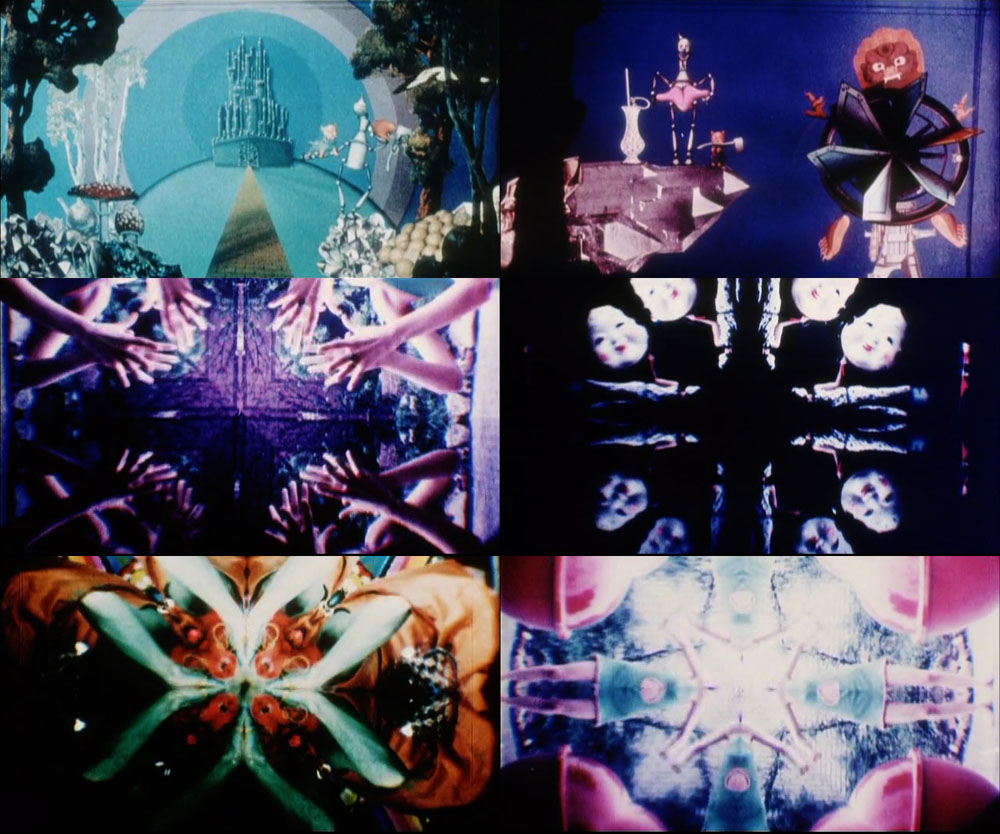
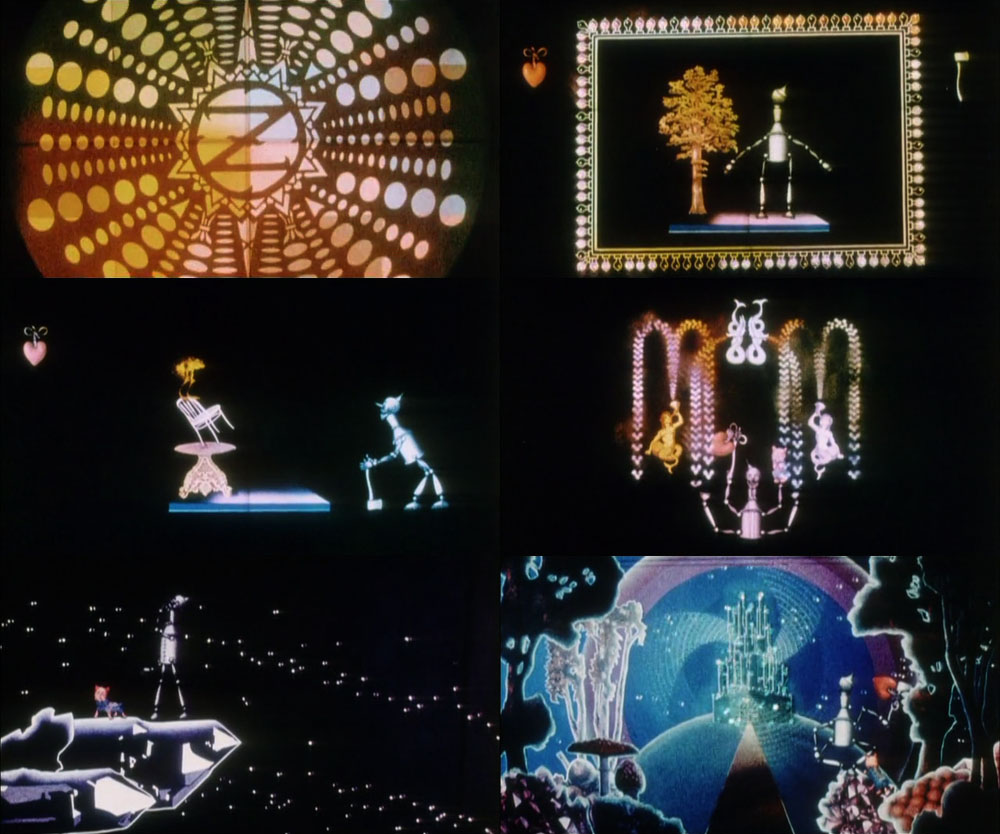
Cosmohedron, a short animated film by Duncan Hatch.

• Mix of the week: isolatedmix 125 by Sa Pa.

Chelsea Wolfe’s favourite music.

• At Dennis Cooper’s: Mirrorers.

A Silhouette Of A Man And A Wasp (1995) by Add N To (X) | A Silhouette Approaches (2005) by Robin Guthrie & Harold Budd | Silhouette (2015) by Julia Holter

Leonora Carrington’s Surrealist Survival Kit

cline.jpg

An assemblage by Steven Cline.

Joanna Moorhead writing in Surreal Spaces: The Life and Art of Leonora Carrington (Thames & Hudson, 2023):

Penelope [Rosemont] also remembers that Leonora was keen on what the group called their “Surrealist Survival Kits”; these were “a collection of poetic, magical, talismanic objects, along with images and other ‘Surrealist things’. A kit might include a feather, a pebble, a piece of glass, some verses from a poem. ‘The purpose of these kits is to offset the destructive facts of daily life, to pull us through the hardest times, to reawaken our sense of wonder and to renew our capacity for reverie and revolt.’” For Penelope, it spoke to Leonora’s wider vision of the world: “tentative, playful, humorous, generous, adventurous, egalitarian, non-dogmatic, the opposite of conventional either/or thinking”.


Penelope Rosemont writing in Surrealism: Inside the Magnetic Fields (City Lights, 2019):

Well, Leonora laughed and said, “Yes, I did that too. But what we really need now is a Surrealist Survival Kit,” and we had much fun deciding what would go into our Surrealist Survival Kit.

She spoke frequently of the urgent need for this special piece of equipment, the “Surrealist Survival Kit”—which is described by Kenneth Cox in the wonderful book What Will Be (2014) as a “collection of poetic, magical, talismanic objects, images, and other ‘favourite things.’ A kit could include, for example: a pebble, a feather, a bird’s egg, a piece of wood, a chunk of coral, a bead, a shell, a bit of coloured glass, a painting the size of a postage-stamp, a poem by Benjamin Péret, a ‘Let There Be Wolves!’ sticker). Every item small enough to keep in a cloth sack children kept marbles in.

“Its purpose: to offset the destructive effects of daily life, to pull us through the hardest times, to reawaken our sense of wonder and to renew our capacity for dream and action. Designed to function symbolically; each would be different, for no two people are exactly alike.

“Overcome by demoralization and defeat, depressed or suicidal, then is the time to open one’s “Surrealist Survival Kit” and enjoy a breath of magical fresh air. To lay out its marvellous contents carefully before oneself, one by one, and let the objects and images play together, arrange them, rearrange them, enter the play with them. Relaxing and soothing as well as exhilarating and reinvigorating. In other words, just what every surrealist needs.”


From Athens meeting report, June 2011, by SLAG (Surrealist London Action Group):

As we reflected together on the unfolding results of our game, we understood that what made the kits significant was not the personal collection of “favourite things” by individuals—“each one […] different, for no two people are exactly alike” in Penelope Rosemont’s words—but the process of assembling them, of finding or constructing oneiric objects from literally any old rubbish that was lying around, the transmutation of base matter into the gold of future time. In other words, our Survival Kit was not the objects themselves, but the ability to find and transform them. Surrealism is our survival kit, and as such is a necessary—though insufficient—condition for the social revolution that must come.

Elsewhere on { feuilleton }
The Surrealism archive

Previously on { feuilleton }
Leonora Carrington and the House of Fear

Herald of Ruin

herald1.jpg

New year, new book cover. Herald of Ruin is my latest for Aconyte, a sequel to Tim Pratt’s The Ravening Deep, which featured my last cover in this series of novels spun from the Arkham Horror games:

Chaos is coming to Arkham, and its herald is Randall Tillinghast. The dapper older gentleman has recently arrived in the city and his establishment of a new occult bookshop draws the ire of Carl Sanford, the head of Arkham’s secret, esoteric order, the Silver Twilight Lodge.

Sanford expects to crush the newcomer like an ant and take what he wants from the wreckage… but Randall Tillinghast isn’t quite as humble and harmless as he seems. In possession of an array of magical artifacts, Tillinghast begins to consolidate his dreams of power before turning his sights on the Lodge.

All six covers to date have followed a similar style, combining Art Deco graphics with various kinds of Lovecraftian weirdness, views of significant architecture and pictures of the main characters. With the new book being a sequel the cover was designed as an inverse companion to The Ravening Deep. The general structure is the same but with earth tones replacing the aquarian colours, and with the character shots and interlaced septagram flipped around.

herald2.jpg

That towering edifice in the background is supposed to be the city of Sarnath which I spent some time drawing even though I knew most of it was going to be covered over. The way I work I often have to do this since I like to create all the different elements with only a vague composition in mind, after which I can shuffle things around until they assume a satisfying appearance. I also like to keep my options open in the early stages. This is something you can do more easily in Illustrator than in Photoshop, the Illustrator interface being an artboard upon which you assemble the various components of your design. Vector graphics aren’t always ideal when you’re trying to create something this complex, but the hard edges suit the Deco style and the general appearance which is more of a poster design than a picture window.

herald3.jpg

Among the other details, the eye-in-a-triangle, a device I’ve used a lot in the past, was prompted by the source material for a change. And the woman’s face is based on a photo of Musidora, one of the stars of early silent cinema in her role as Irma Vep from Feuillade’s Les Vampires (1915–16). The visual source for this character wasn’t very informative but she’s a cat burglar, and Feulliade’s serial happens to concern a group of Parisian cat burglars. I think Irma Vep may have been the first cat-burgling woman in cinema history so Musidora was a good choice with the right look for the cover.

Herald of Ruin will be published in July.

Elsewhere on { feuilleton }
The Lovecraft archive

Previously on { feuilleton }
The Ravening Deep
Diamonds
The Devourer Below
Litany of Dreams
The Last Ritual