
Weekend links 269

cluster.jpg

Grosses Wasser (1979) by Cluster. Cover art by Dieter Moebius.

• RIP Dieter Moebius: one half of Cluster (with Hans-Joachim Roedelius), one third of Harmonia (with Roedelius and Michael Rother), and collaborator with many other musicians, including Brian Eno and Conny Plank. Geeta Dayal, who interviewed Moebius for Frieze in 2012, chose five favourite recordings. From 2008: Cosmic Outriders: the music of Cluster and Harmonia by Mark Pilkington. At the Free Music Archive: Harmonia playing at ATP, New York in 2008. Live recordings of Cluster in the 1970s have always been scarce but in 1977 they played a droning set at the Metz Science-Fiction Festival, a performance that was broadcast on FM radio (the Eno credit there seems to be an error).

• “I’ve since had the feeling that, if the attacks against The Satanic Verses had taken place today, these people would not have defended me, and would have used the same arguments against me, accusing me of insulting an ethnic and cultural minority.” Salman Rushdie on the fallout from the Charlie Hebdo killings.

• “The effect of these memories is to make you think you know the film better than you do, and wonder what it’s like actually to sit down and watch it.” Michael Wood on rewatching Orson Welles’ Touch of Evil (1958). Related: Tipping My Fedora on the film’s source novel, Badge of Evil (1956).

“To me, it’s simple,” he says. “Fantasy became as bland as everything else in entertainment. To be a bestseller, you’ve got to rub the corners off. The more you can predict the emotional arc of a book, the more successful it will become.

“I do understand that Game of Thrones is different. It has its political dimensions; I’m very fond of the dwarf and I’m very pleased that George [R R Martin], who’s a good friend, has had such a huge success. But ultimately it’s a soap opera. In order to have success on that scale, you have to obey certain rules. I’ve had conversations with fantasy writers who are ambitious for bestseller status and I’ve had to ask them, ‘Yes, but do you want to have to write those sorts of books in order to get there?’”

Michael Moorcock talking to Andrew Harrison about fantasy, science fiction, the past and the present.

• “Architects love Blade Runner, they just go bonkers. When I was working on the film, it was all about, let’s jam together Byzantine and Mayan and Post-Modern and even a little bit of Memphis, just mash it all together.” Designer and visual futurist Syd Mead talking to Patrick Sisson.

• “Lucian of Samosata’s True History reads like a doomed acid trip,” says Cecilia D’Anastasio, who wonders whether or not the book can be regarded as the earliest work of science fiction.

• Mixes of the week: A Tribute to Dieter Moebius by Vegan Logic, and another by Totallyradio.

• The Phantasmagoria of the First Hand-Painted Films by Joshua Yumibe.

Islamic Geometric: calligraphic tessellations by Shakil Akram Khan.

Michael Prodger on The Dangerous Mind of Richard Dadd.

A chronological list of synth scores and soundtracks.

Touch Of Evil (Main Theme) (1958) by Henry Mancini | Badge Of Evil (1982) by Cabaret Voltaire | Touch Of Evil (2009) by Jaga Jazzist
Escher’s snakes

escher

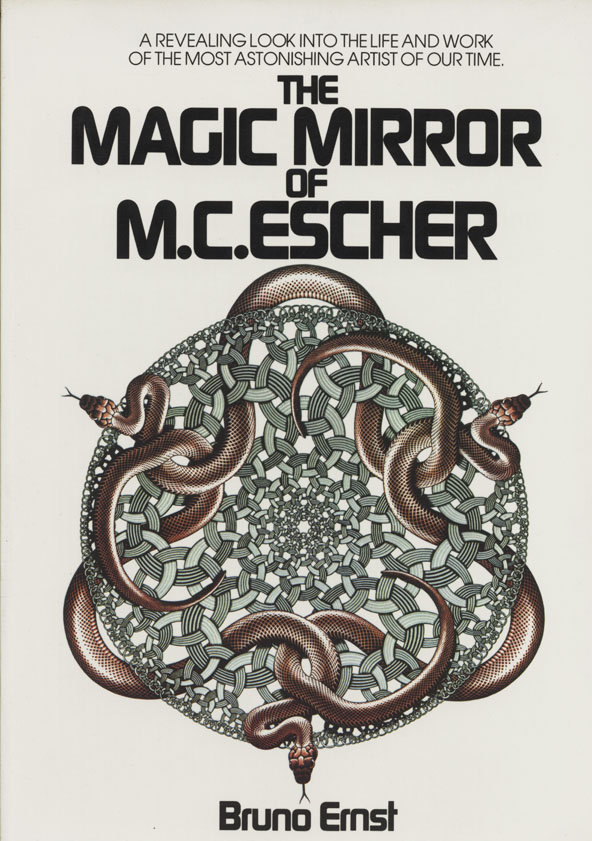
The Magic Mirror of MC Escher (1985).

MC Escher has been in the news recently as a result of the exhibition at the National Galleries of Scotland. By coincidence, I’ve been engaged in some Escher-like work of my own this week, the project at hand being one that makes reference to Escher-style effects rather than anything specifically derived from the artist’s prints. As a consequence of this I’ve had Bruno Ernst’s book lying around, the cover of which kept catching my eye with its astonishing precision. The standard collection, The World of MC Escher (1971), has been on the shelf for many years but I only picked up a copy of the Ernst book a few months ago. It’s an ideal complement to the earlier volume being a combined monograph and analysis of Escher’s pictorial effects which includes sketches, reference material and even a few pieces that aren’t included in the bigger book.

snake.jpg

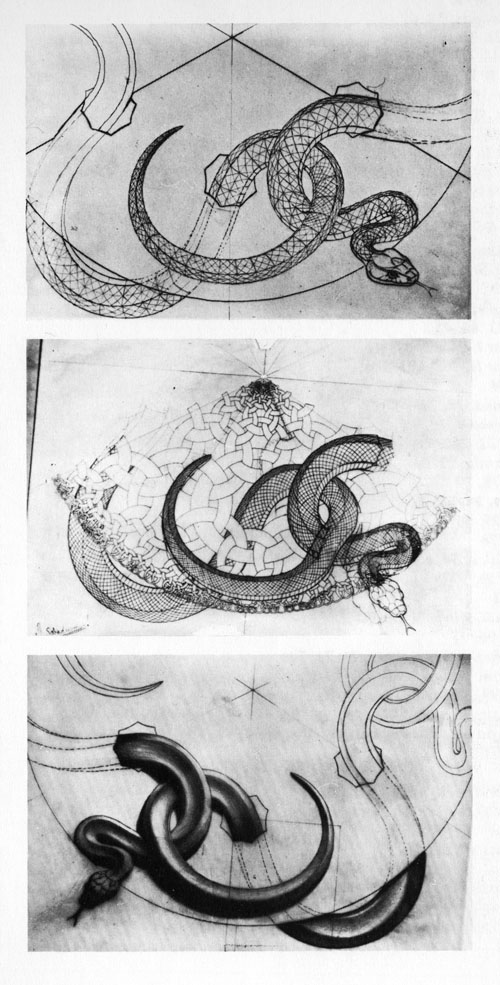
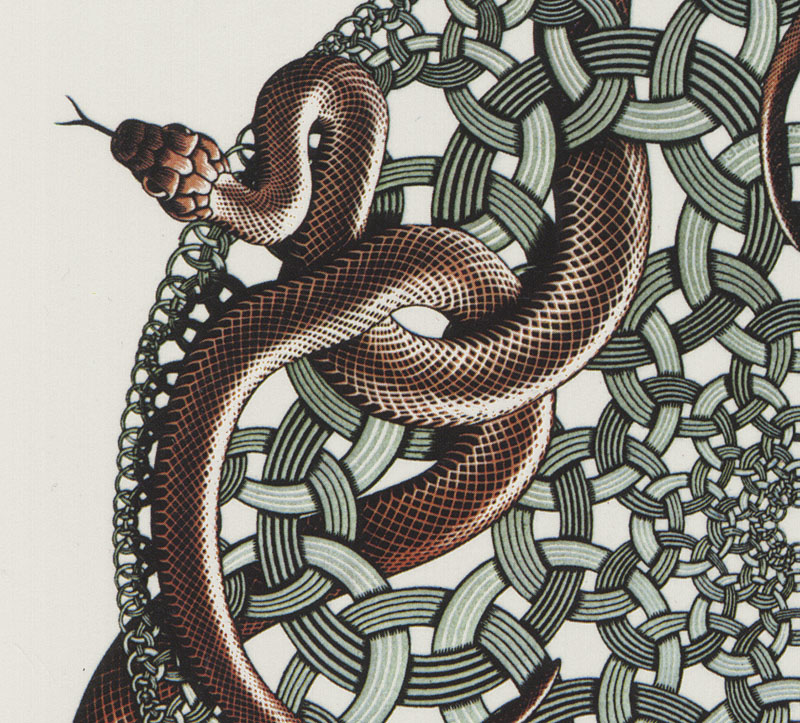
The print on the cover, Snakes (1969), is a woodcut of incredible accuracy, a quality that’s much more evident in the Ernst book which not only shows the print in colour but also shows more of the preliminary sketches that the earlier book. Many viewers of this print might be fascinated by the fractally interlaced circles but for me the fascination is in the scales of the snakes and the perfect grading of light and dark, concave and convex. We’re used to woodcuts being fairly crude representations (see yesterday’s post) but Escher used the medium with absolute precision. The sketches show how he worked out the arrangement of the scales although he still had to carve every line perfectly—then do the same again for the other two snakes. This was Escher’s last print but as Ernst says, “it proved that there was no diminution in his skill”.

snakes.jpg

Previously on { feuilleton }
The Fantastic World of MC Escher
MC Escher album covers
Escher and Schrofer

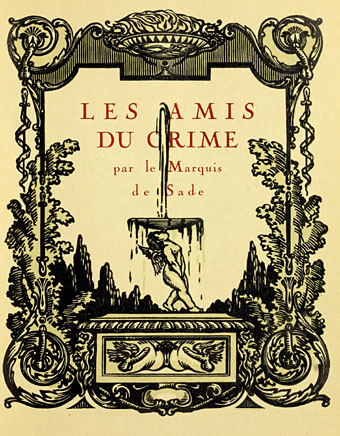
Célio’s Les Amis du Crime

celio01.jpg

More porn. The Internet Archive has, until recently, been a somewhat chaste place where illustrations of sexual encounters are concerned. That’s mostly a result of their books being scans of works from libraries that wouldn’t have stocked illustrated editions of De Sade and company. Les Amis du Crime, together with yesterday’s volume, is part of the Wellcome Library’s sexology collection, an archive that includes eye-catching titles such as Curious Cases of Flagellation in France (1901).

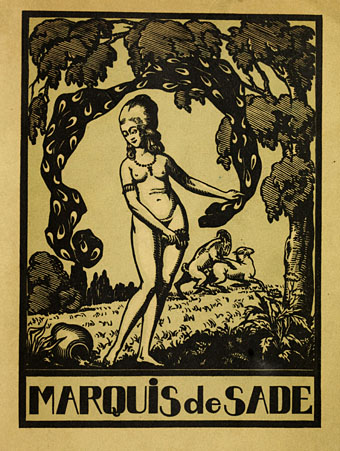
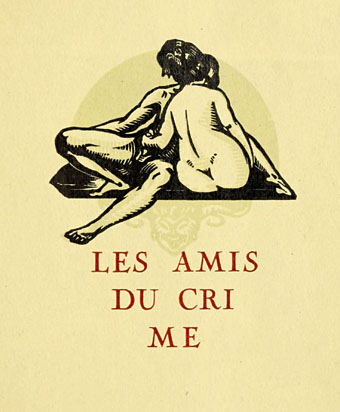
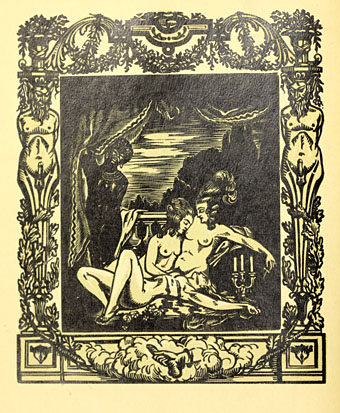
Les Amis du Crime dates from around 1929. “Célio” was a pseudonym of artist Paul-Albert Moras whose woodcut illustrations imitate the engraved illustrations of De Sade’s own time. The borders follow the erotic style favoured by Franz von Bayros, albeit without Bayros’s attention to detail and graphic invention. This is, however, the first book I’ve seen where the page numbers are positioned between a woman’s open legs.

celio02.jpg

celio03.jpg

celio04.jpg

Continue reading “Célio’s Les Amis du Crime”

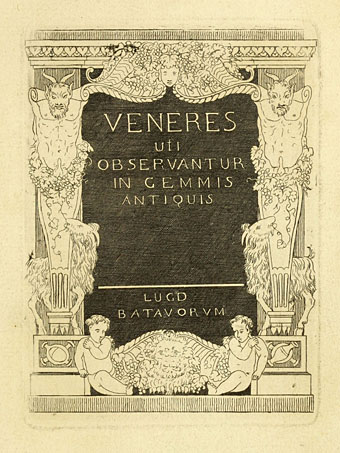
Veneres uti observantur in gemmis antiquis

veneres01.jpg

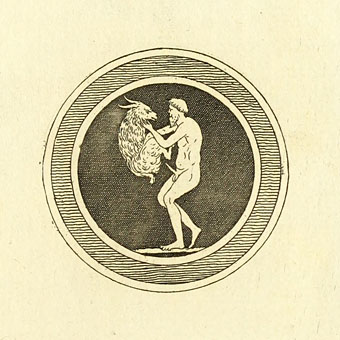
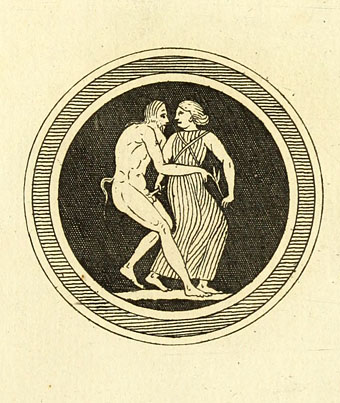
A small selection of illustrations from Veneres uti observantur in gemmis antiquis (1785), a study of the pornographic art of antiquity by Pierre d’Hancarville. The book comprises 80 or so drawings with accompanying text in English and French, so for once it’s possible to read the commentary. Most of the selections here are (predictably) of the phallic variety but the book runs the gamut of mythological liaisons. The phallic procession shown below has a long history (so to speak) which has been discussed here on more than one occasion.

veneres02.jpg

veneres03.jpg

veneres04.jpg

Continue reading “Veneres uti observantur in gemmis antiquis”

Weekend links 268

paul.jpg

A City on Pluto (1940) by Frank R. Paul. Related: Paul’s predictions about life on other planets.

23 Skidoo’s Peel Session from September 16th, 1981. Only 18 minutes of music but I’m thrilled for its being unique material that’s never been given an official release. There are many more Peel Sessions at the uploader’s channel, not all of which were reissued on the Strange Fruit label. Download favourites in their as-broadcast form (some with John Peel’s introductions) before they vanish or get blocked like the 1981 Cabaret Voltaire session. Related: Wikipedia’s list of Peel Sessions.

• Mixes of the week comprise two collections by Jon Dale of strange and beguiling Italian music: The Prevarications Of The Sky Against The Earth and La Verifica Incerta; the Summer Window Mix (“telly detritus, new-not-new synth nonsense & off-colour pop oddities”) by Moon Wiring Club; and Secret Thirteen Mix 158 by Haunter Records.

• “Hello, this is David Bowie. It’s a bit grey out today but I’ve got some Perrier water, and I’ve got a bunch of records…” Two hours of the Thin White Duke playing favourite music on BBC Radio One, 20th May, 1979.

Some of Vidal’s guests were writers, not exactly his favorite group. “Writers are the only people who are reviewed by people of their own kind,” Vidal said in an interview. “And their own kind can often be reasonably generous—if you stay in your category. I don’t. I do many different things rather better than most people do one thing. And envy is the central fact of American life.”

Frank Pizzoli reviews Sympathy for the Devil: Four Decades of Friendship with Gore Vidal by Michael Mewshaw

• Yair Elazar Glotman’s new album, Études, conjures “bone-rattling resonance, thick, alien-like atmospheres, and percussive fragments”. Stream it in full here.

• London’s Lost Department Store of the Swinging Sixties: Inge Oosterhoff on the splendours of Biba.

• It’s that Ungeziefer again: Richard T. Kelly on 100 years of The Metamorphosis by Franz Kafka.

• The History of Creepy Dolls: Linda Rodriguez McRobbie explores the uncanny valley.

• At Dangerous Minds: Matt Groening tells the story of The Residents in 1979.

• The NYT collects NASA’s photos from the New Horizons Pluto flyby.

The Museum of Imaginary Musical Instruments

Written on the Body: tattoos in cinema

The Doll’s House (1981) by Landscape | Voodoo Dolly (1981) by Siouxsie and the Banshees | Devils Doll Baby (1986) by Sonny Sharrock