
Weekend links 526

colquhoun.jpg

La Cathédrale Engloutie (1952) by Ithell Colquhoun.

• Many of the recent lists of “where to start with the music of [x]” aren’t filling an urgent requirement, but in the case of Sun Ra—whose discography runs to 95 albums—any guide is a useful one: Sean Kitching chooses 10 recordings from the Ra galaxy. I’m not unacquainted with Sun Ra’s music but there’s so much of it that almost all these suggestions are news. Related: Namwali Serpell on the life and work of a cosmic visionary.

• Coming soon from Strange Attractor, Ithell Colquhoun: Genius of The Fern Loved Gulley by Amy Hale, the first book-length study of the life and work of the British Surrealist and occult artist.

• I doubt I’ll get to see it but I’m pleased to know that the prematurely shuttered Aubrey Beardsley exhibition is returning to Tate Britain. You’ll need a Decadent face-mask.

• And speaking of music lists, Alexis Petridis compiles a ranking of all the songs by a little-known post-punk band from Manchester.

• The Last Arcadian (Process Mix): more psychotropic nougat from Moon Wiring Club.

• Kill Me Again… Ken Hollings on Ennio Morricone and the music of the future.

• Mervyn Peake‘s visual archive has been acquired by the British Library.

• Anitra Pavlico on the fantastic world (and music) of Maurice Ravel.

• Stanley Stellar‘s photos of the New York gay scene in the 1980s.

• At Dennis Cooper’s: Fetish.

• RIP Judy Dyble.

• Wikidelia

• Chelsea Morning (1968) by Fairport Convention | I Talk To The Wind (1968) by Giles, Giles & Fripp feat. Judy Dyble | Morning Way (1970) by Trader Horne
Notes from the Underground

hawkwind1.jpg

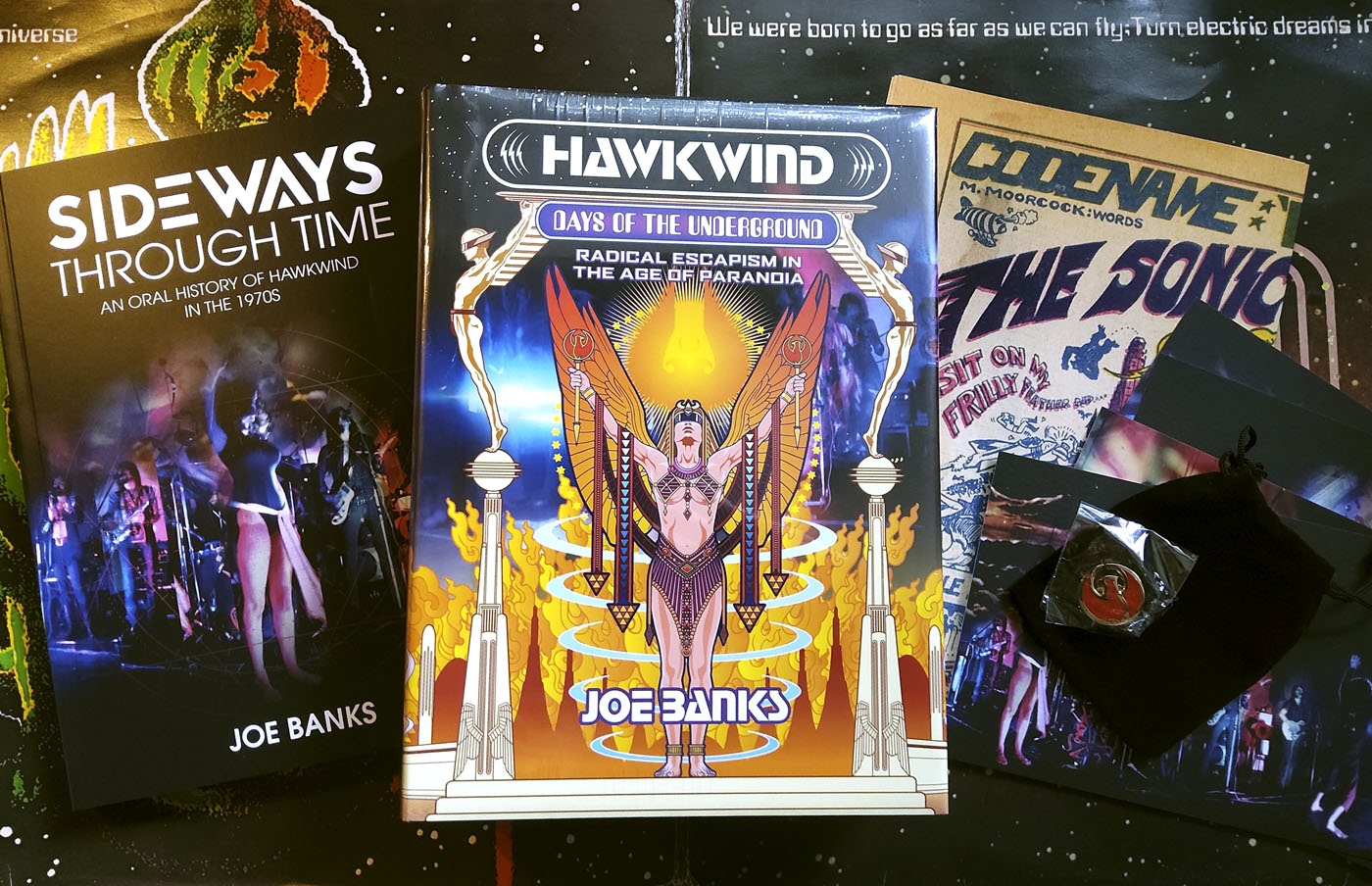
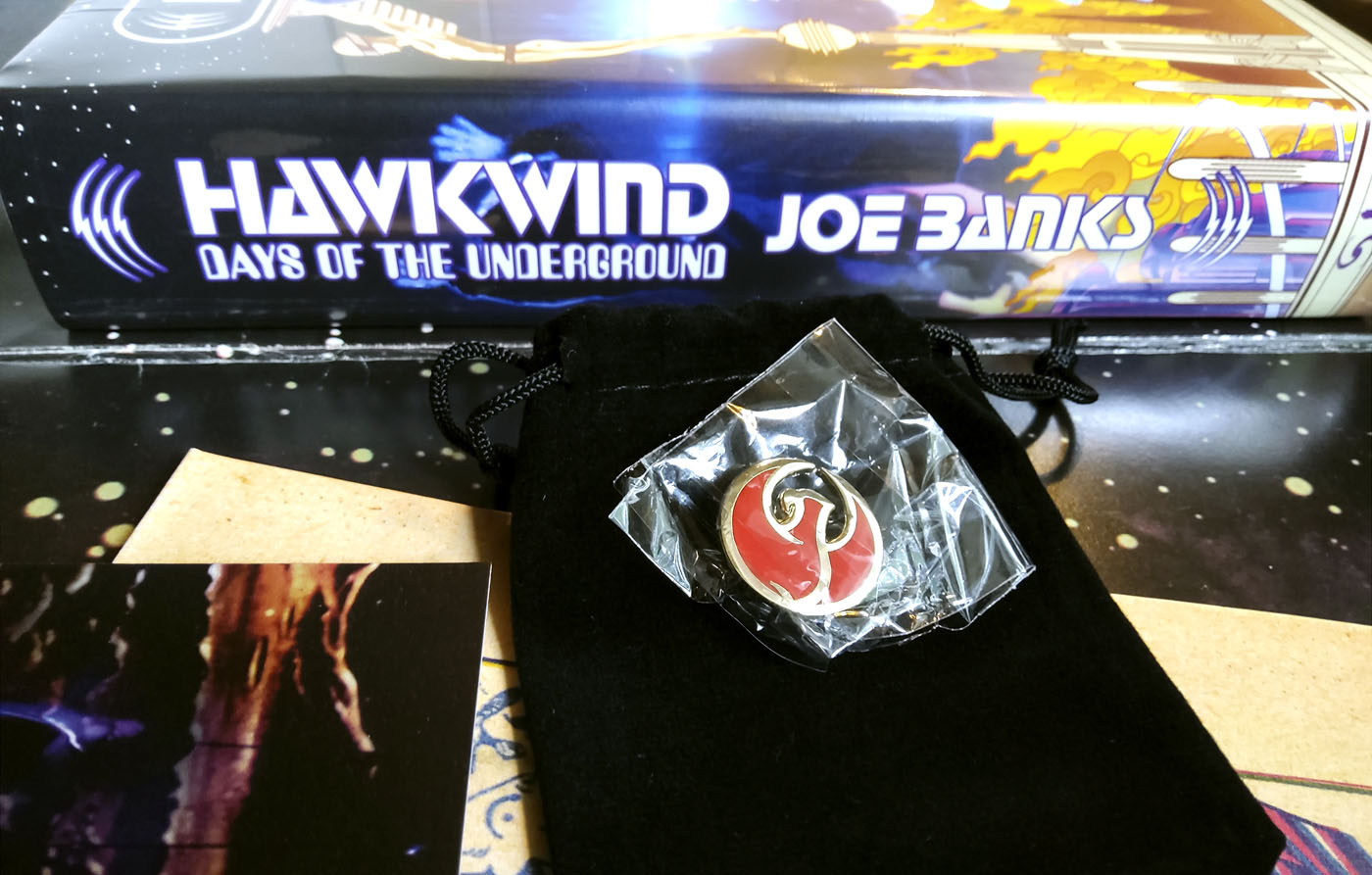
This time last year I was about to start working on the cover of Joe Banks’ Hawkwind book, and here it is at last, after a considerable delay. The special edition has been worth the wait since it comes with an additional 200-page volume, Sideways Through Time, containing the interviews that Joe used for his research. There’s also a set of cards with photos by Laurie Lewis from the session used for the cover of Space Ritual (we used some of the same photos on the book cover), and a print of the Moorcock/Cawthorn Hawklords comic strip from Frendz which further developed the group’s self-mythologising begun by the In Search Of Space “Hawklog”. And for people who pre-ordered the book last year then had to wait for months, there’s a bonus enamel pin based on the hawk design I supplied for the front board. I like badges, and I designed a few for Hawkwind in the past, but this is a better design and a nicer object than any of those I did in the 1980s.

hawkwind2.jpg

It’s a big book.

Now that the book is out I can show off the full cover wrap. As mentioned earlier, I followed Barney Bubbles’ preference for retro futurism by creating a cityscape based on the Deco-styled architecture that Frank R. Paul liked to use in his pulp illustrations. Some of the details refer obliquely to Hawkwind’s cover art or songs of the 1970s, so the speeding car can be taken as a reference to both Kerb Crawler and Death Trap, as well as the speeding Art Deco vehicle on the cover of Roadhawks. The flying saucers are a nod to those by Barney Bubbles on the inner sleeve of the Doremi album (and on one of his black-and-white posters from the same period), while the Philippe Druillet rocket refers to Barney’s own appropriation of a Druillet figure in his Hawk graphics. The combination of vehicles fleeing a burning city gives us the recurring theme in the group’s lyrics about the need to escape from a self-destructing society/planet. Welcome to the future.

Hawkwind: Days of the Underground is available now from Strange Attractor.

Previously on { feuilleton }
• Hawkwind: Days of the Underground
• The Chronicle of the Cursed Sleeve
• Rock shirts
• The Cosmic Grill
• Void City
• Hawk things
• The Sonic Assassins
• New things for July
• Barney Bubbles: artist and designer

Other Sides

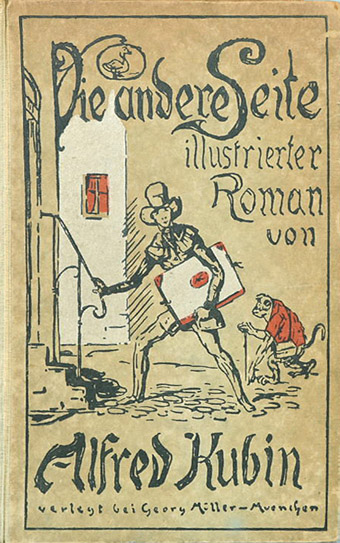
kubin01.jpg

Cover designer unknown.

What becomes clear in the course of Kubin’s long career is how literary a temperament he was, not only because of implicit narratives in much of his work, illustrative and otherwise. Some of his most arresting images in pen and ink seem to arise from some middle ground between writing and drawing, not calligraphy, exactly, but rather as though typeface had sprouted roots and tendrils and spread like invasive groundcover over the whole expanse.

Christopher Benfey, The Shadow World of Alfred Kubin

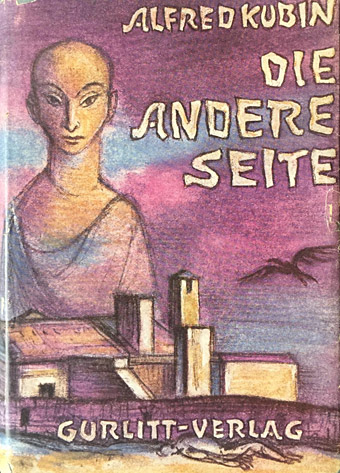
kubin02.jpg

All art by Alfred Kubin unless otherwise noted.

• All the illustrations from the first edition.

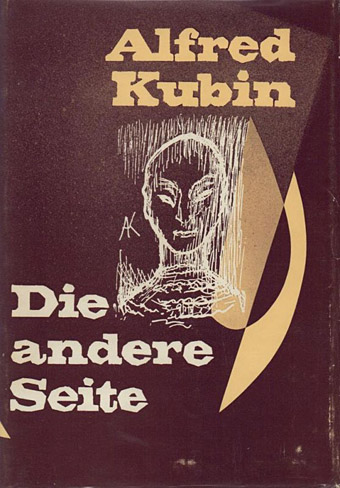
kubin03.jpg

kubin04.jpg

kubin05.jpg

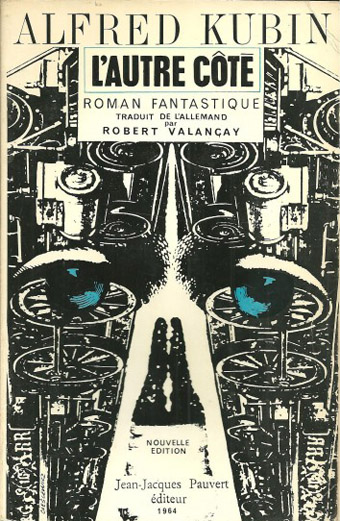
Cover art by Roman Cieślewicz.

Continue reading “Other Sides”

The Fantastic Fiction of Hannes Bok

bok1.jpg

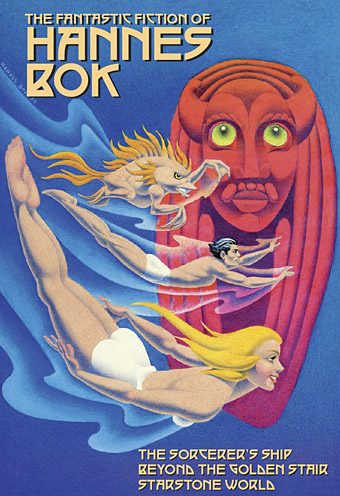
A belated note of thanks to Robert T. Garcia who sent me a PDF of this book a few weeks ago. The Fantastic Fiction of Hannes Bok is a hardcover collection of three fantasy novels by artist Hannes Bok, all of which have been out of print for decades (75 years in the case of Starstone World). Bok has a lasting reputation as an illustrator of fantasy, science fiction and horror during the pulp era but he also wrote fiction and poetry for the pulps, in addition to essays for Mystic Magazine that included a short-lived astrology column. Two of Bok’s novels were published posthumously by Lin Carter in the Ballantine Adult Fantasy series, the existence of which intrigued me for many years, not least because the Ballantine paperbacks weren’t easy to find in UK bookshops. Bok’s fantasy isn’t quite to my taste (I prefer things to be generally darker and more grotesque) but I’m pleased to see these stories back in the world.

bok2.jpg

Contents:
• The Fantastic Fiction of Hannes Bok‘s cover art is by Bok (published previously in Hannes Bok: A Life in Illustration in a poor image, scanned here for the first time from the original).
• Original Introduction by Charles de Lint!
• Ballantine Adult Fantasy editor Lin Carter’s introductions to The Sorcerer’s Ship and Beyond the Golden Stair, plus an all-new afterword detailing the publishing history of The Sorcerer’s Ship by Bok collector and college professor William Lorenzo. Publisher, Bob Garcia provided an introduction to Starstone World.
• A number of unpublished photos of Bok.
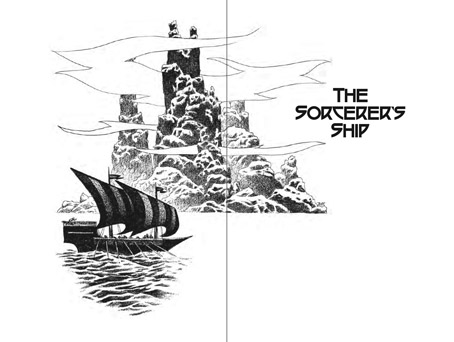
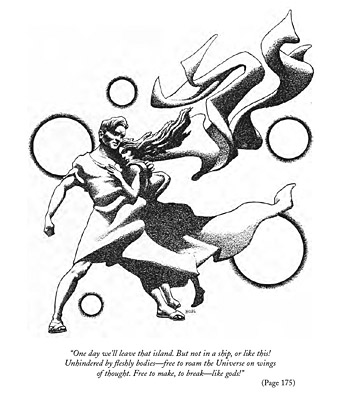
• Bok’s pulp art for The Sorcerer’s Ship is included, plus two paintings specified by the artist as illustrating that novel: a color reprise of an interior illustration and a color portrait of the creature Yanuk done for a fan.
• Since the other two novels did not have artwork by the artist, Jim Pitts provides us a wonderful original frontispiece for each.
• Bok sketches from The Hannes Bok Sketchbook Folio, and A Hannes Bok Sketchbook plus unpublished sketches.

bok3.jpg

Previously on { feuilleton }
• Ballantine Adult Fantasy covers

Zemania

zeman01.jpg

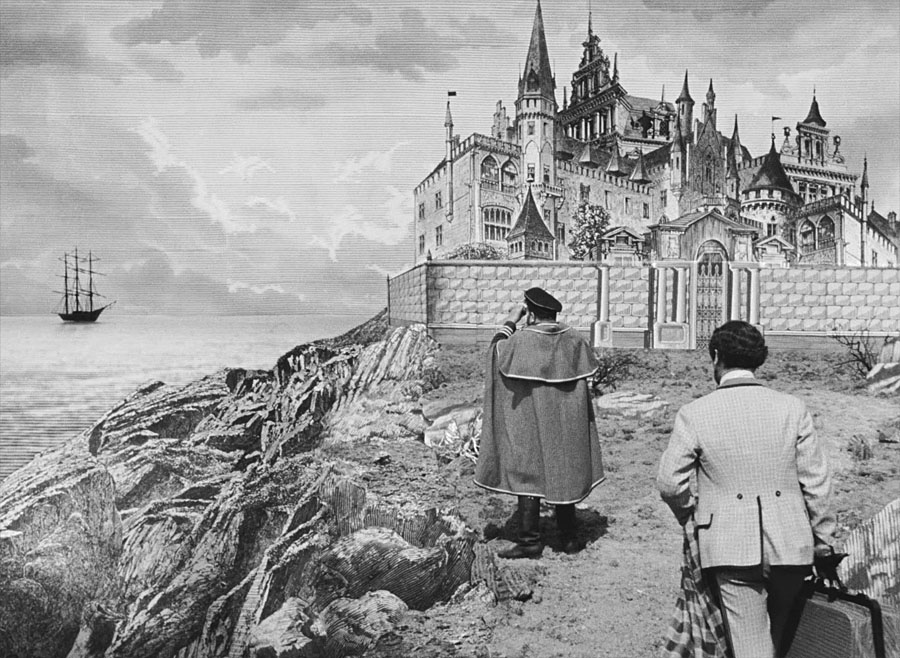
Invention for Destruction (1958).

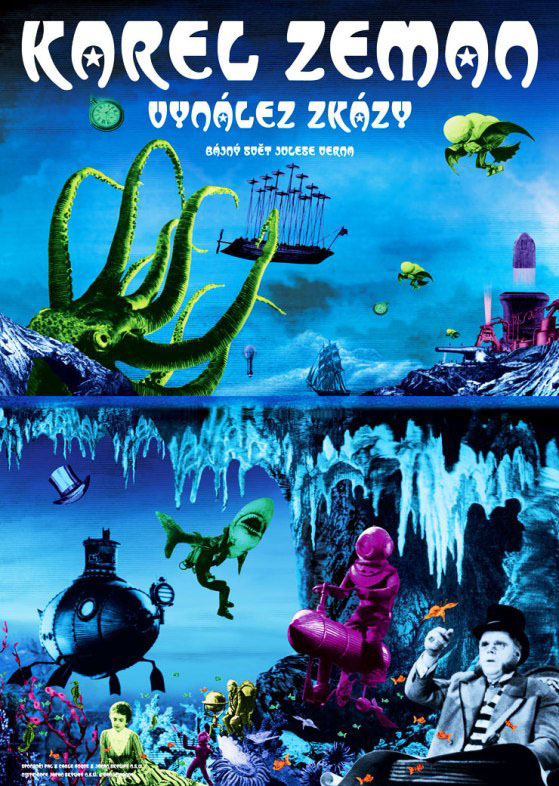
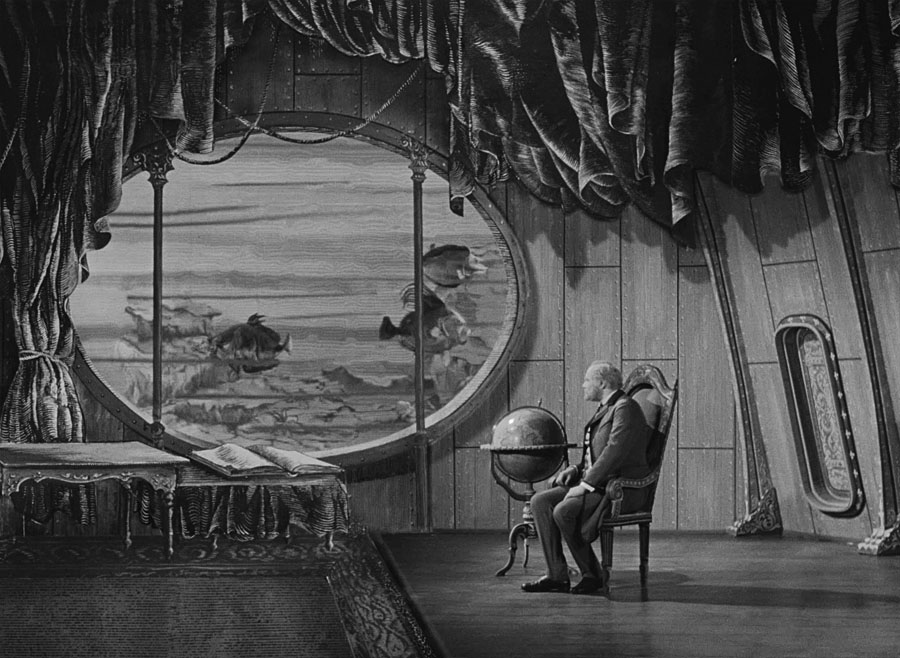
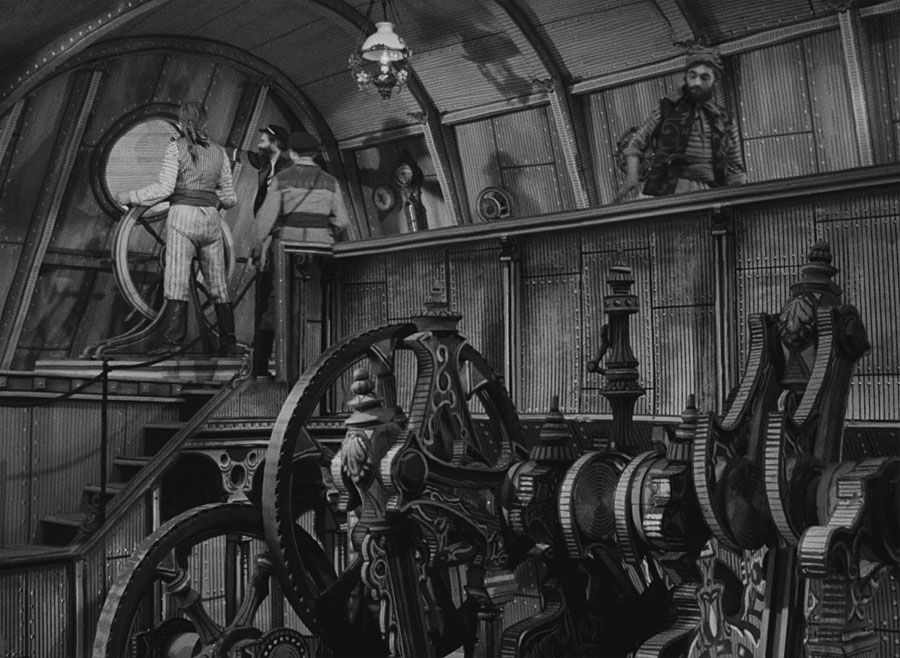
In addition to Jean Kerchbron’s Golem my weekend viewing involved a fresh immersion in the semi-animated fantasies of Karel Zeman, one of which, Invention for Destruction, I’d not seen for many years. It hadn’t occurred to me before how closely Zeman’s technique on these films matches some of my own recent illustration when it applies original drawn elements to settings constructed from old engravings. For Zeman, combining actors with animated models and pictorial backgrounds was an economical way of bringing to life the worlds of Jules Verne, Rudolf Erich Raspe and others while retaining the feel of the original book illustrations. These films are also closer to the Max Ernst school of engraved collage than they may at first seem. The mansion at the beginning of Invention for Destruction could easily have been an illustration of a single building but Zeman offers a hybrid construction with unrealistically conflicting perspectives; later on we see a desert cavalry of camels on roller skates. It’s no surprise that Jan Švankmajer admires Zeman’s films. And having recently watched all the Švankmajers it’s good to know there are several Zeman features still to see.

zeman02.jpg

zeman03.jpg

zeman04.jpg

zeman05.jpg

zeman06.jpg

Continue reading “Zemania”