Poster Art in Vienna

klinger08.jpg

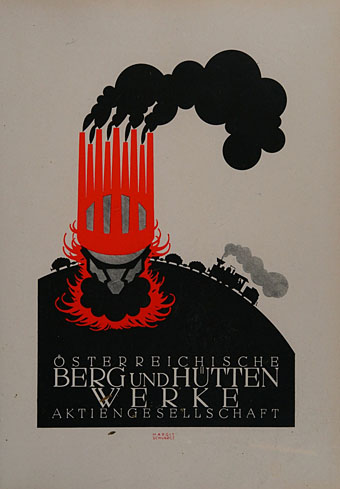
Margit Schwarcz, 1923.

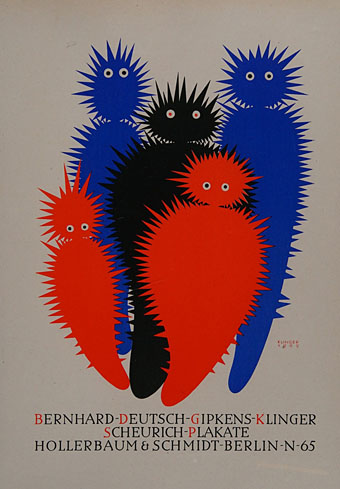
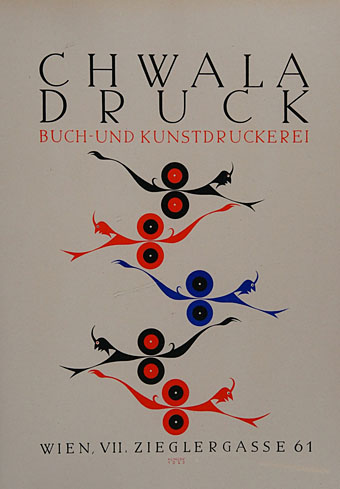
From Art Nouveau (see previous post) to Deco…almost. These posters are more Austrian Moderne, or Plakatstil, most of them being too early for Art Deco which only became an identifiable trend in the mid-1920s. The design above by Margit Schwarcz appeared here last August when I wrote an appreciation of the weird fiction of Stefan Grabiński. Schwarcz’s poster had been reworked as a cover for The Motion Demon, a collection of Grabiński’s rail stories, and I wanted to see the original. The same design appears in Poster Art in Vienna (1923), an introduction to work from the Julius Klinger school of poster art which seems to have been produced to promote the work of the Klinger artists (and Klinger himself) in the USA. The Schwarcz poster is very typical of the Klinger style, with bold shapes, bright inks, spiky serifs and cartoon-like drawings. Klinger’s earlier illustration work was very much in the post-Beardsley style, albeit with a similar cartoon-like approach, so there’s a trace of Beardsley still present in some of the figures.
klinger01.jpg

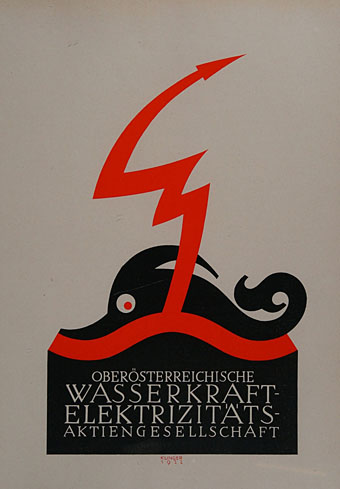
Julius Klinger, 1922.

This is a great book even if it provokes the melancholy thoughts that tend to arise when looking at something bright and inventive from Austria or Germany in the 1920s. I always find myself wondering how the artists fared during the storm of Nazism and war that would bear down on them in the following decade. Klinger was Jewish, and didn’t manage to escape to his beloved America; he was prevented from working after 1938, and was killed in Belarus in 1942. His name lives on in the Julius Klinger fonts which were based on his type designs. More of Klinger’s poster and illustration work may be seen at Vienna Secession.

klinger02.jpg

Julius Klinger, 1923.

klinger03.jpg

Julius Klinger, 1909.

klinger04.jpg

Julius Klinger, 1923.

Continue reading “Poster Art in Vienna”

Typographische Jahrbücher, 1902

tj02.jpg

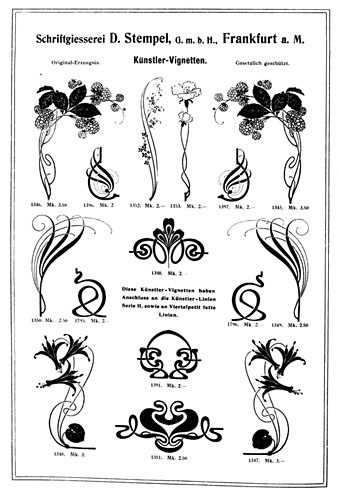
My work this week is more Deco than Nouveau but I enjoy looking at Art Nouveau graphics even when I don’t have any immediate use for them. Typographische Jahrbücher was a German publication for typographers and printers whose pages are filled with samples of the latest type styles and print decorations, together with many adverts that use the same graphics. The examples here are from issues for the year 1902 when Art Nouveau (or Jugendstil as it was in Germany and Austria) had reached its peak as the predominant European style. This is the kind of book I love to see, one with a wide variety of borders, letterforms and motifs for print use alone, not designs for textiles or other crafts. Of note are the pages below promoting a pair of recent typefaces, Eckmann and Siegfried. Both designs soon fell out of fashion but returned to prominence in the 1960s among the typefaces of the occult revival. It’s a shame the quality of this book isn’t better—it’s another poor Google scan—but I’m happy to find it. 750 pages; dig in here.

tj20.jpg

tj05.jpg

tj01.jpg

tj09.jpg

Continue reading “Typographische Jahrbücher, 1902”

Weekend links 557

grygar.jpg

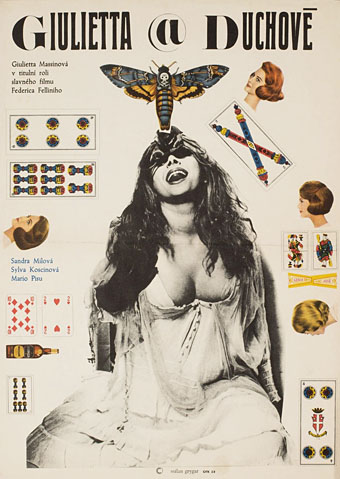
Poster by Milan Grygar for the 1969 Czech release of Fellini’s Juliet of the Spirits.

• “By encouraging composers to engage with sound as something more than just ‘notes on a keyboard’, the result [of the Buchla] was the kind of intricate sound design last heard in musique concrète. Works such as Morton Subotnick’s, Silver Apples of the Moon (1967) show a futurism completely absent on Wendy Carlos’ otherwise highly influential Switched-on Bach (1968), which used the keyboard-controlled Moog modular as if it were merely a glorified organ.” Oli Freke on the evolution of the synthesizer.

• “As humans began settling more consistently in one place to grow and thrive, the penis—or, more specifically, its erect form, the phallus—often came into use as a protector of fields that would prove fertile. In contrast to the comparative prudery of today, the phallus adorned everything from gods to shrines to personal homes and jewellery.” Emily Willingham on penial evolution in the animal kingdom.

• “The Trumpets of Jericho is, in part, so uniquely unsettling because it allows the woman in question to narrate her own horror. She is eager to give birth not to meet her child but so that she can go ahead and kill it.” Reed McConnell on the writings of Unica Zürn and (once again) Leonora Carrington.

At the center of it all, there was one director whom everyone knew, one artist whose name was synonymous with cinema and what it could do. It was a name that instantly evoked a certain style, a certain attitude toward the world. In fact, it became an adjective. Let’s say you wanted to describe the surreal atmosphere at a dinner party, or a wedding, or a funeral, or a political convention, or for that matter, the madness of the entire planet—all you had to do was say the word ‘Felliniesque’ and people knew exactly what you meant.

In the Sixties, Federico Fellini became more than a filmmaker. Like Chaplin and Picasso and the Beatles, he was much bigger than his own art. At a certain point, it was no longer a matter of this or that film but all the films combined as one grand gesture written across the galaxy. Going to see a Fellini film was like going to hear Callas sing or Olivier act or Nureyev dance. His films even started to incorporate his name—Fellini Satyricon, Fellini’s Casanova. The only comparable example in film was Hitchcock, but that was something else: a brand, a genre in and of itself. Fellini was the cinema’s virtuoso.

Martin Scorsese on “Il Maestro”, Federico Fellini

• At Dennis Cooper’s: For Your Crushed Right Eye: The instrumental films of Takahiro Iimura, Tetsuji Takechi, Toshi Matsumoto, Masao Adachi and Takashi Ito.

• “We wanted people to see that we exist.” Joan E. Biren, the photographer who recorded lesbian life in the 70s.

•New music: Alkisah by Senyawa, and Bishintai by Unknown Me.

• Mix of the week: XLR8R Podcast 683 by Laila Sakini.

Phallus Dei (1969) by Amon Düül II | Sidereal Hands At The Temple Of Omphalos (1996) by Scenic | Starman (feat. Peter Brötzmann) (2017) by Phallus Dei

Weekend links 556

wilson.jpg

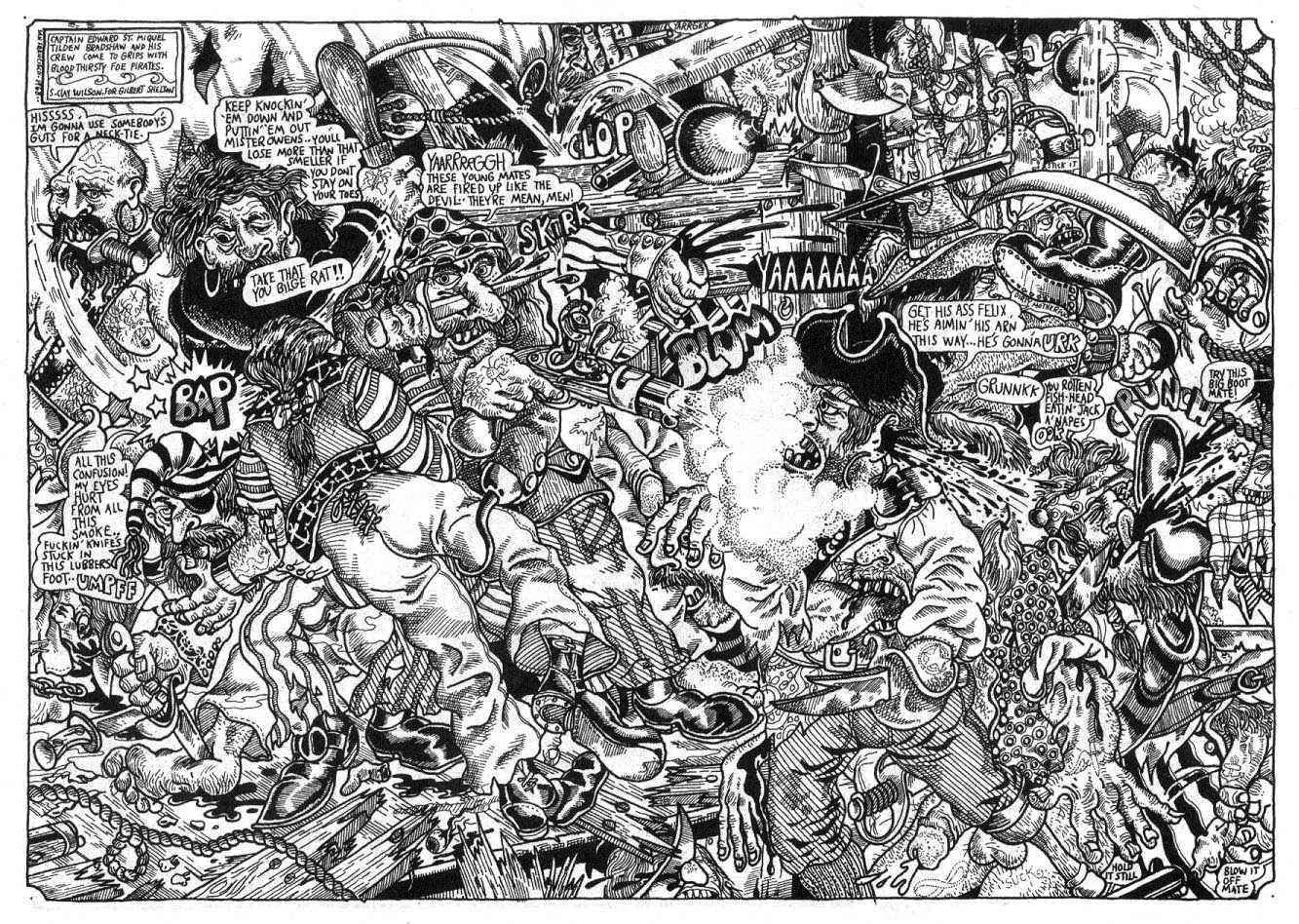
Captain Edward St. Miquel Tilden Bradshaw and his Crew Come to Grips with Bloodthirsty Foe Pirates by S. Clay Wilson, Zap Comix no. 3, 1968.

• RIP S. Clay Wilson, the wild man of American comics. The scene of mayhem above is typical in being barely coherent at a small size; click for a larger view. Patrick Rosenkranz at The Comics Journal describes Wilson as “the most influential artist of his generation…creating an extensive body of work that will defy authority and offend propriety until the end of days”. When Moebius was writing in the 1980s about the founding of Métal Hurlant he had this to say about the American undergrounds: “They were the first in the world to use comics as a means of communication, to express real emotions. Before, comics were used only to do stories, entertainment. They had some great moments but they were all very conventional. The American Underground showed us in Europe how to express true feelings, how to tell something to the reader through the comics. They blew the minds of the few professionals in Europe who saw them.” Also at TCJ, the S. Clay Wilson Interview. Wilson sent me a postcard once. I wish I knew what the hell I’d done with it.

• Michael Hoenig, synthesist for Agitation Free and (briefly) Tangerine Dream, plays one of the pieces from his debut album of electronic music, Departure From The Northern Wasteland, on a radio show in 1977. Hoenig’s album is long overdue a remastering and re-release.

• “My job, which the BBC has tasked me to do, is to provoke people and ask them, ‘Have you thought about looking at the world this way?'” Adam Curtis talks to Michael J. Brooks about his new TV series, Can’t Get You Out Of My Head.

m_chat.jpg

{ feuilleton } celebrates its 15th birthday today. Monsieur Chat, the mascot of this place, is happy about that but then Monsieur Chat is happy about most things.

• At Greydogtales: Opening The Book of Carnacki. A call for contributions to a collection of new stories about William Hope Hodgson’s occult detective. I’d be tempted if I didn’t already have more than enough to keep me occupied.

• “I’m being asked to talk about it a great deal at the moment, with the pandemic.” Roger Corman and Jane Asher on filming The Masque of the Red Death.

• New music: Cygnus Sutra by Mike Shannon, “a soundtrack to a fantasy/sci-fi epic not yet written”.

• A trailer for The Witch of King’s Cross, a documentary about occult artist Rosaleen Norton.

• At Dennis Cooper’s: Spotlight on…Hans Bellmer & Paul Eluard The Games of the Doll (1949).

• RIP also this week to Rowena Morrill, fantasy artist, and to Chick Corea.

• “Computers will never write good novels,” says Angus Fletcher.

• DJ Food on Zodiac posters by Funky Features, 1967.

• Mix of the week: Fact Mix 794 by Lutto Lento.

Annie Nightingale’s favourite music.

Zodiac (1984) by Boogie Boys | From The Zodiacal Light (2014) by Earth | Zodiac Black (2017) by Goldfrapp

Covering Genet

pelham-genet1.jpg

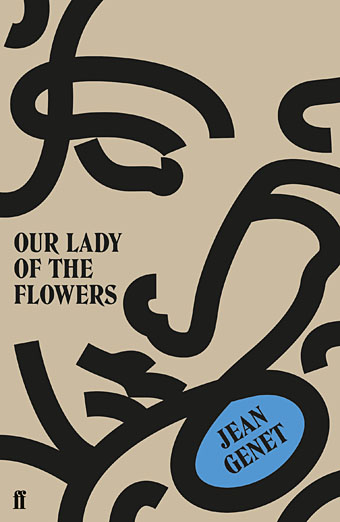
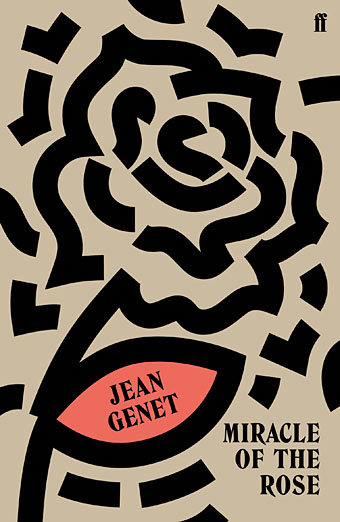
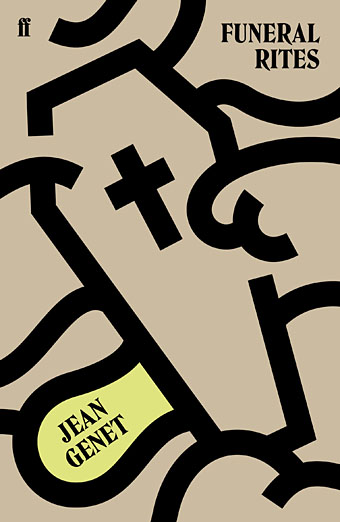
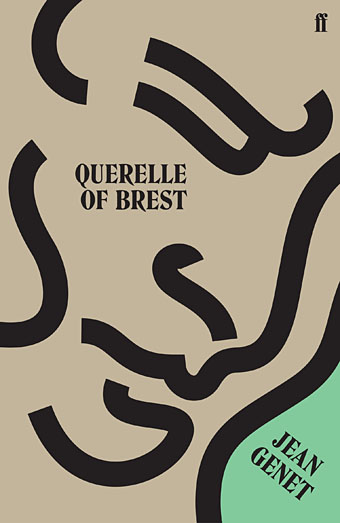
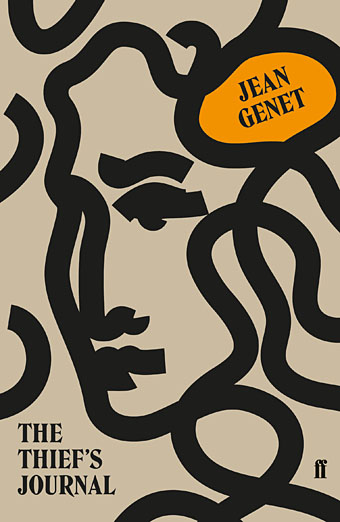
While writing Monday’s post I came across this series of new cover designs for the most recent Faber editions of Genet’s novels. I hadn’t seen these before but I liked the way they look as a set. Jonathan Pelham is the designer. At first glance the covers infringe one of my personal rules for cover design, that you should try and create something that couldn’t easily be used on another book by a different author; this is more of a challenge when a design is minimal or tending towards abstraction as these are. But Genet’s covers from British publishers have veered from the featureless (the Anthony Blond hardbacks of the 1960s) to the bizarrely random (the 1971 Penguin edition of Miracle of the Rose with a detail from Max Ernst’s Europe After the Rain—see below), so anything that looks this smart and consistent is a plus. I still like the series of paperbacks that Panther published in the early 1970s (also below) but they only did three of the books, with the Rubens typeface being a carry over from the Grove Press hardbacks designed by Roy Kuhlman. The new editions from Faber also feature new introductions by Neil Bartlett (Funeral Rites), Terry Hands (Miracle of the Rose), Jon Savage (Querelle of Brest), and Ahdaf Soueif (The Thief’s Journal).

pelham-genet2.jpg

pelham-genet3.jpg

pelham-genet4.jpg

pelham-genet5.jpg

Continue reading “Covering Genet”