Anger Magick Lantern Cycle, 1966

magick01.jpg

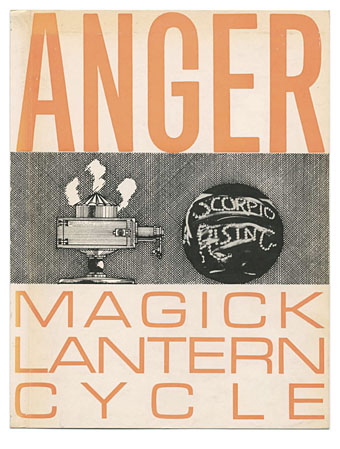
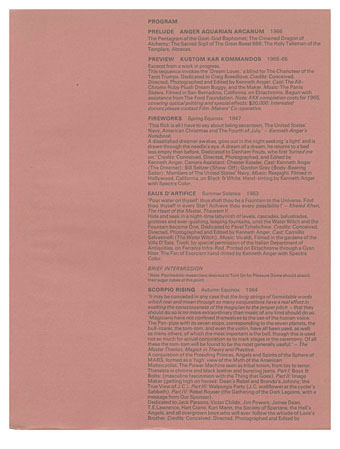
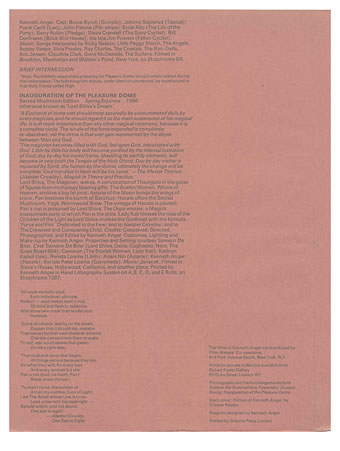
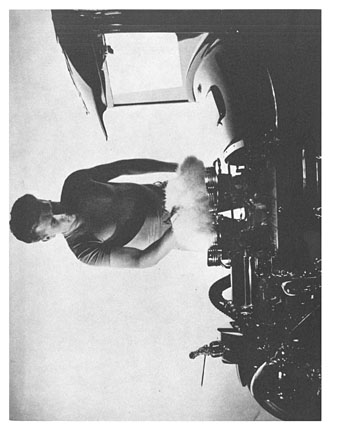
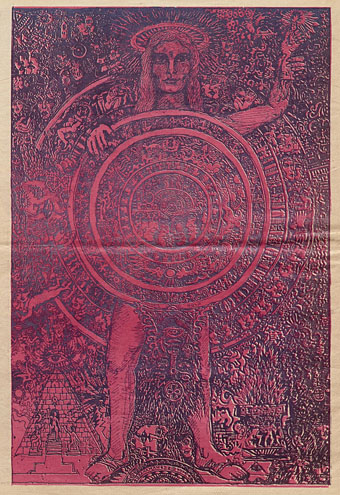
Here’s a rare thing: Kenneth Anger’s programme (PDF) for a Spring Equinox screening of his films in New York in 1966, an event that saw the first public appearance of Magick Lantern Cycle as a collective title. This small publication is described at some length by Bill Landis in the unauthorised Anger biography, while the cover design appears on the first page of the booklet inside the BFI collection of Anger’s films. There are 13 pages in the scan, the original item being a collection of loose sheets inside a folded cover.

magick02.jpg

Among the many points of interest are Anger’s evocative production notes and dedications for the films, comments which have been recycled ever since in articles about the director and his work. There’s also a page of biographical detail which includes a list of Anger’s preferences and interests, a Crowley-style piece of hyperbolic self-description, and a collage bearing the title The Golden Grope of Marilyn Monroe. The latter features a Gustave Doré illustration which prefigures the appropriation of Doré for the first Lucifer Rising poster.

magick03.jpg

This being early 1966, LSD was hip and still legal, so the screening information suggests the ideal time for psychedelic voyagers in the audience to ingest their sugar cubes. The evening was to begin with the Anger Aquarian Arcanum, a prelude comprising a display of various magical symbols and iconography. Some writers have taken this to be a lost film but Landis says it was a slide show, presumably with Anger’s explanatory commentary. Enough of the programmes for the event were printed that you can still find them for sale today, although if you want to buy one the cheaper copies start at around £500.

magick04.jpg

magick05.jpg

Continue reading “Anger Magick Lantern Cycle, 1966”

Weekend links 672

heilbronn.jpg

Le Vice Errant (1902) by Vincent Lorant-Heilbronn.

• “So however surreal those cities, the invisible ones that he builds, they have their counterpart in the real. They always have their counterpart in visible cities.” Darran Anderson on Italo Calvino’s Invisible Cities.

• At Wormwoodiana: Mark Valentine on the centenary of The Riddle and Other Stories by Walter de la Mare, with special attention paid to The Vats, a very strange story.

• New music: A Bad Attitude by African Head Charge; Lapsed Gasps by Push For Night + Jon Mueller; Forevervoiceless by Brian Eno.

The strands of medicine, consciousness expansion, intoxication, addiction, and crime were tightly entangled in fin-de-siècle Paris, where ether and chloroform circulated among bohemian demi-mondaines alongside morphine, opium, cocaine, hashish, and wormwood-infused absinthe. These solvents were often carried in small glass vials and medicine bottles by the asthmatic, tubercular, and neurasthenic, added to patent tonics and syrups, and, on occasion, to cocktails: an ether-soaked strawberry floating in champagne produced a heady rush, the fruit preventing the volatile liquid from evaporating too quickly. Literary references to ether abounded, either as a signifier of decadence or as a literary prop to shift a realistic narrative into the landscape of dreams and symbols, where its dissociative qualities became a portal to strange mental states, psychological hauntings, uncanny doublings, and slippages of space and time.

Mike Jay on Jean Lorrain and the ether dreams of fin-de-siècle Paris

• At Aquarium Drunkard: Jim Jarmusch and Carter Logan talk about the recording of Silver Haze, their first album as Sqürl.

James Balmont offers a beginner’s guide to the films of Dario Argento.

• At Unquiet Things: Rachael Bridge’s Luminous, Technicolor Shadows.

• Mix of the week: A mix for The Wire by Erika.

Ether Ships (1978) by Steve Hillage | Ether (1998) by Redshift | Ether (2000) by Coil

Weekend links 671

cassel.jpg

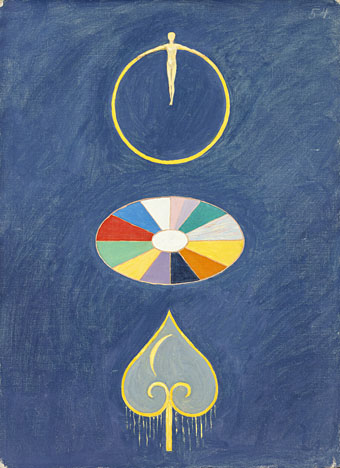
No. 54 (1915) by Anna Cassel.

• “I called it the treasure hunt: two years of tapes appearing from closets, letters dropping out of attics, persuading a film company to find the rushes of a TV show buried in a warehouse, paying a film director to digitise unused footage and a radio company to surface an old broadcast.” Nick Soulsby on pursuing the ghosts of Coil for his book about the group, Everything Keeps Dissolving.

• “It is likely that af Klint scholarship is on the brink of some radical changes regarding attribution and authorship.” Susan L. Aberth on the researches revealing collaborations between Hilma af Klint and other mystically-inclined women artists. It makes a change reading something about this group that isn’t completely dismissive about the beliefs that informed their work.

• New music: No Highs by Tim Hecker (“a beacon of unease against the deluge of false positive corporate ambient currently in vogue…”), and Seascape–polyptych by Jan Jelinek.

I think an unfortunate effect of Foucault’s work, as it was absorbed by academia, was that it made historians reluctant to call people or sexual acts in the past ‘homosexual’ or ‘gay’ since these terms ‘did not exist at the time’ or were recent creations. This gave some homophobes a spurious defence when suggestions were made as to the inclinations of their heroes, but it also—or so I thought—tended to downplay the reality of non-opportunistic homosexual desire as a constant in history, reducing it to recorded acts performed and then deeming these inadequate evidence anyhow, because they were assumed to have taken place in a fuzzy sexual universe.

If, as it seems to me, and as it seemed to Symonds and Carpenter, terms like ‘homosexual’ were invented in the effort to describe a type of person that has always existed, then they are in essence just a shorthand. Each term has its history, associations and effects, but—and perhaps this makes me an unsophisticated thinker—I think it’s the sexual feelings that fundamentally matter, and that these have existed across time. For that reason, I don’t find the Victorian sexual psyche, as far as it can be defined, alien or outlandish, or hard to speculate on. It is the product of sexual feeling filtered through observable social beliefs and conditions.

Tom Crewe talking to Amia Srinivasan about The New Life, Crewe’s debut novel which explores Victorian sex and sexuality

• “I’ve been tumbling down the rabbit-hole of toy theatre all my life, and I’m tumbling still.” Clive Hicks-Jenkins on the dark art of the toy theatre.

• At Public Domain Review: Jean Baptiste Vérany’s Chromolithographs of Cephalopods (1851).

• “Glass is perhaps the most frequently overlooked material in history,” says Katy Kelleher.

• At Cartoon Brew: Chris Robinson remembers the surreal animations of Run Wrake.

• At Unquiet Things: Of Dreams and Dark Pasts: Surrealist Painter Sofía Bassi.

• RIP Harry Belafonte.

House Of Glass (1969) by The Glass Family | Heart Of Glass (1978) by Blondie | Slow Glass (1997) by Paul Schütze

Consulting the Oracle

sfo01.jpg

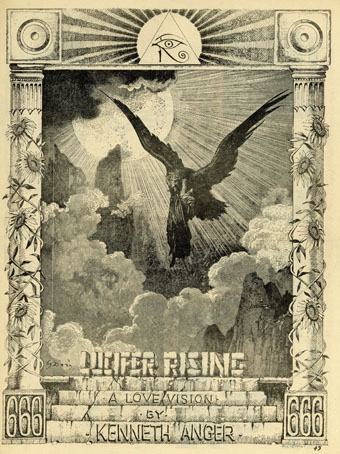
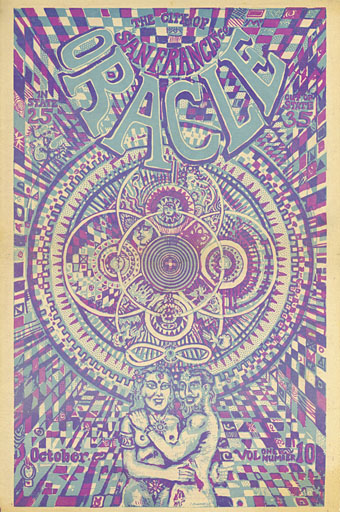
Good to find such a pristine reproduction of this Rick Griffin poster. Kenneth Anger commissioned the design in 1967 when he was putting together a package of promotional items to stimulate the interest of potential investors in his new film. Bill Landis in the unofficial Anger biography says the ploy was a successful one, investors were forthcoming although it would be several years before Anger had enough footage for the ill-fated first version of Lucifer Rising to appear in public. While we’re on the subject, I’ll note again that the Gustave Doré engraving used here is from the Purgatorio section of The Divine Comedy, not Paradise Lost as some people continue to claim. Milton’s Lucifer had wings of his own, as well as god-like powers, he didn’t need to be ferried around by a giant bird.

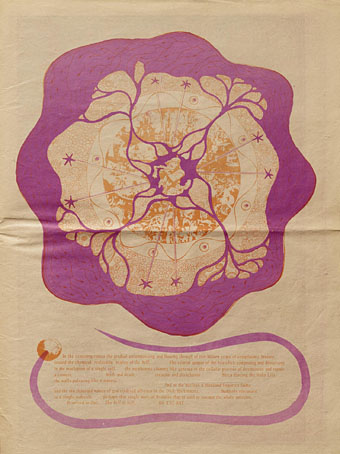
This copy of Griffin’s poster is from issue 7 of the Oracle, or the San Francisco Oracle as it was later titled and known outside the city, an underground newspaper, and one of the best where graphics are concerned.

sfo02.jpg

Underground papers and magazines of the late 1960s often followed the form of other amateur or semi-professional publications, with attractive cover art wrapped around more prosaic interiors. The Oracle ran for 12 issues, from 1966 to 1968, and in its later issues gave as much attention to the appearance of its inner pages as its covers, assisted by artists like Griffin and Bruce Conner. Being based in the city that gave the world so many exceptional concert posters was an obvious advantage.

sfo03.jpg

I was hoping the Internet Archive might have a complete run of the Oracle but only four of the highly-decorated issues are currently available. There’s no Wilfried Sätty artwork in evidence either, although I’m not sure he ever worked for the undergrounds despite there being many titles to choose from in the Bay area. Of note in one of the later issues is a full-page announcement for the forthcoming march on the Pentagon, an anti-war protest that took place in October 1967. Kenneth Anger attended the event although the exact nature of his involvement, like so many other Anger stories, varies according to the reporter.

San Francisco Oracle – Vol 1, No 7
San Francisco Oracle – Vol 1, No 9
San Francisco Oracle – Vol 1, No 10
San Francisco Oracle – Vol 1, No 12

sfo04.jpg

sfo05.jpg

Continue reading “Consulting the Oracle”

Saga de Xam revived

saga1.jpg

Saga est magnifique. Saga a la peau bleue. Saga est une extraterrestre. Envoyée par la reine de la planète Xam, la voici qui parcourt la Terre à plusieurs époques, traitées dans des styles différents. Son but: découvrir la quintessence artistique, politique et poétique de notre belle Terre. Marquée par l’Art nouveau, le psychédélisme américain, l’érotisme des années 1960 et la contreculture occidentale, Saga est une oeuvre hors norme et inclassable, dessinée sur des formats géants et publiée une première fois par Éric Losfeld en 1967. Hélas, le livre est très vite épuisé et devient un objet pour les collectionneurs. Cette édition reprend l’intégralité des planches de Saga, renumérisées et dotées d’une nouvelle mise en couleurs fidèle à l’originale. Saga peut enfin repartir dans une nouvelle… saga.

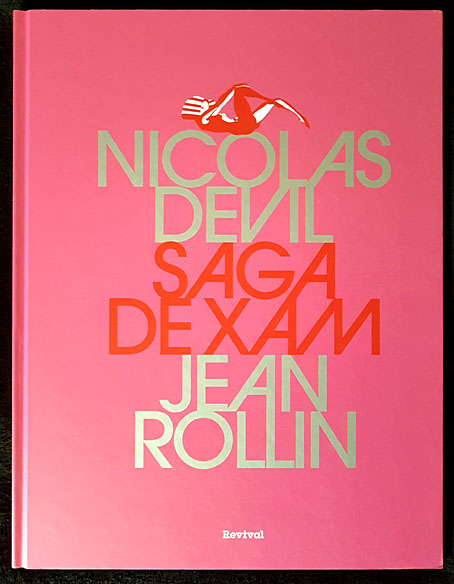
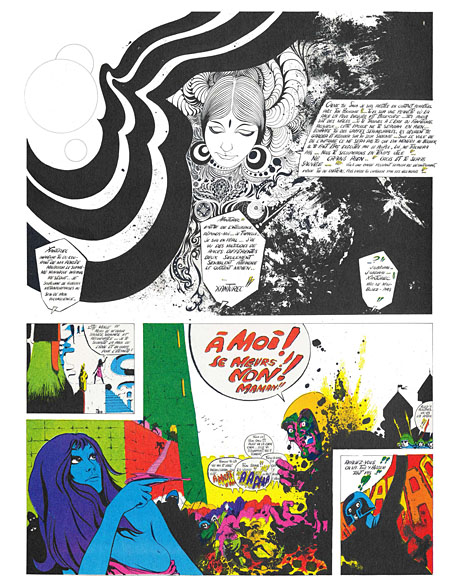
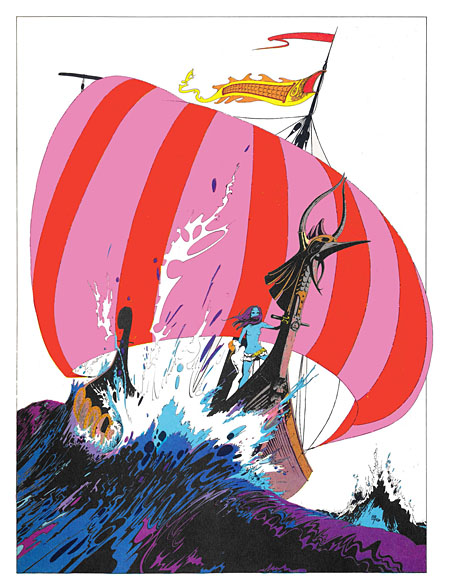
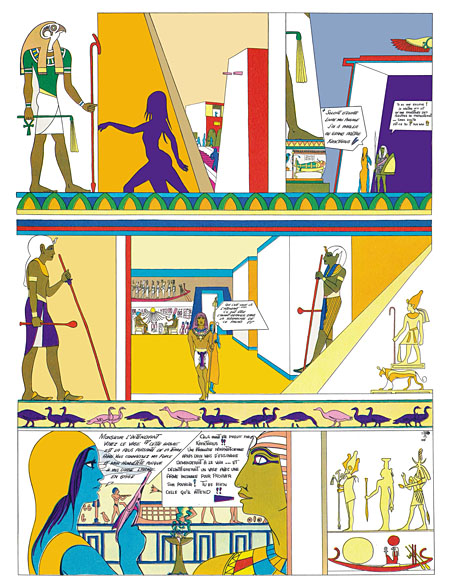
Here’s a book I never expected to see in a new edition. Saga de Xam is a 100-page bande dessinée depicting the time- and space-voyaging adventures of a blue-skinned alien woman, Saga, newly arrived on Earth from the planet Xam. The Xamians are a race of humanoid lesbians (their reproduction is parthenogenetic) whose planet is at war with the masculine Troggs; Saga has been sent to Earth to find a way to combat the Trogg invasion, an expedition that instructs her in the propensity of humans towards conflict and violence. The story was drawn by Nicolas Devil, with contributions from guest artists, and based on an outline by Jean Rollin which had been intended originally for a science-fiction film. There’s no need to go into detail about this cult item, I wrote about it at length several years ago after a couple of its pages stimulated my curiosity when they turned up in an exhibition catalogue. The book was published in 1967 by Éric Losfeld, an edition of 5000 which the publisher said he would never reprint, partly because of the expense, but also because he liked to think of the book becoming a rare object in the future. Rare it still is, although the embargo was broken in 1980, a year after Losfeld’s death, by the publication of a second edition. This was only a partial reprint, however, with a poor cover design and all the interior pages reproduced without their colour overlays.
saga2.jpg

The new edition from Revival is slightly larger than the original (27.5 x 36 cm to the original 24 x 31 cm), and bound between heavy boards. A lengthy preface by Christian Staebler describes the book’s history, offering a few biographical details about Nicolas Deville (as he was known pre-1967), together with further information about the story’s creation. The wildness of the final pages is explained as an attempt by all involved to capture some of the delirium of an LSD trip, while also bringing the story of Saga’s investigation of the human race and its violent nature into the present day. Jean Rollin was apparently unhappy with this dénouement but I find the ending to be a satisfying one for a story where each chapter explores a different period of time (and of space, when Saga returns to her home planet).
saga3.jpg

The icing on the cake is the appearance near the end of a few early drawings by Philippe Druillet, together with several beautiful pages by Devil, one of which found wider circulation when reprinted as a poster. The text in the new edition is still in French, of course, and even on slightly larger pages the legibility problem from the original remains. Devil was drawing on boards that were twice the size of their printed equivalents, without caring too much whether the story would be readable when scaled to a printable size. Losfeld’s solution was to provide a magnifying glass with each copy of the book. This isn’t too much of a problem; the story is easy enough to follow once you know the general outline, and for this story it’s the art that counts more than the words.
saga4.jpg

Continue reading “Saga de Xam revived”