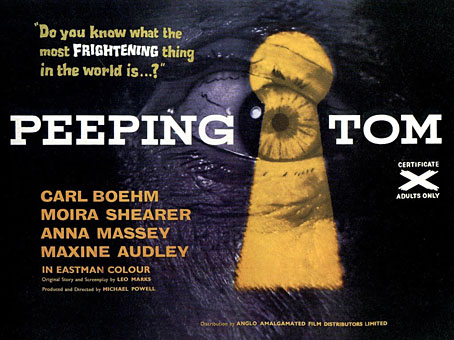
Michael Powell’s Peeping Tom is fifty-years old this year, an occasion celebrated with a limited UK cinema run and a reissue on Blu-ray and regular DVD. This was the film which famously ended Powell’s career as a director in Britain for reasons which have never been quite clear. Was the film’s critical vilification the culmination of an impatience with the director’s alleged excesses over the years? Was it an unarticulated discomfort at the way Powell and screenwriter Leo Marks implicated themselves and the audience in the sordid murders they (we) were watching in the dark? Or was the film withdrawn simply because producer Nat Cohen wanted a knighthood and was worried over his reputation as a peddler of “filth”? The bitterest blow for Powell would have been seeing his long-time rival Alfred Hitchcock have another success a few months later with Psycho, a film which allows its audience similar female-slaughtering thrills without questioning the role of the viewer in sustaining the drama. Hitchcock spent much of his career “punishing” women in a manner that verges on outright misogyny yet was indulged all along by audience and critics; Powell made a single film about a murderer and was himself punished for it. His other films often featured strong female characters, and I’ve long regarded him as the superior artist.
• The Guardian this week celebrated Powell’s film with a number of articles: Peeping Tom may have been nasty but it didn’t deserve critics’ cold shoulder, Peeping Tom, pornography and the press, The Peeping Tom timebomb.
• A Wizard of Earthsea: an unfilmed screenplay from 1983 by Michael Powell and Ursula K Le Guin based on Le Guin’s first two Earthsea novels.
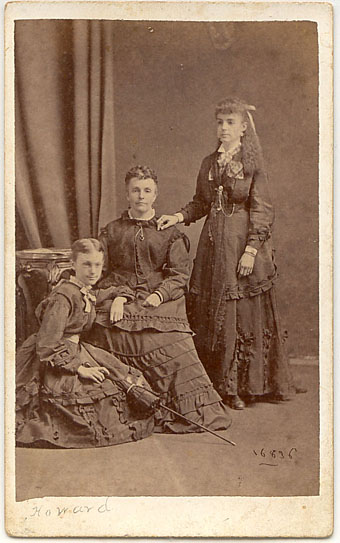
A boy in a dress with mother and sister, 1860. Yesterday was the 12th Annual Transgender Day of Remembrance.
• Quaintance by Reed Massengill and Dian Hanson, in which the pioneer of 20th century beefcake art gets the heavyweight Taschen treatment. Expensive but they’re making these volumes for obsessives. Related: Hide/Seek: Difference and Desire in American Portraiture, an exhibition of gay and lesbian art at the Smithsonian’s National Portrait Gallery. The gallery has a preview of the exhibition here. On a more humble level, BUTT magazine has a recreation of Quentin Crisp’s inevitably messy New York City apartment.
• From gay art to gay song and dance: Queer To The Core!: Queer Rock From The Vaults! Super-rare novelty singles with titles like Queer Police by Billy Devroe and The Devilaires. Meanwhile Cleveland Street: The Musical is a forthcoming stage celebration of Victorian London’s notorious male brothel. By Glenn Chandler, creator of the popular TV detective series Taggart (!) whose earlier musicals have titles like Boys of the Empire and Scouts in Bondage.

Strikingly androgynous male model Andrej Pejic photographed by Armin Morbach. There’s a lot more Andrej Pejic at Homotography.
• Thrilling Wonder Stories II, “eight hours of architectural futurism featuring an unbelievable line-up of novelists, game designers, animators, scientists, comic book artists, architects, and more”. At the Architectural Association, London, November 26.
• “The iPad is one of the oldest things in the world…a pad or a slate.” Artist Tom Phillips reworks A Humument for a new medium. Related: Creating new books from old, in which Jonathan Safran Foer follows Phillips’ lead by cutting words from Bruno Schulz’s Street of Crocodiles to create a new work, Tree of Codes.
• “Technology is turning us into switchboard operators in the communication networks of our own lives.” I know the feeling. Rick Poynor on the seductive tyranny of design technology.
• Comic artist Moebius gets the Tumblr treatment. And speaking of Tumblr, my thanks to everyone who’s been reblogging the Cephalopod Bride.
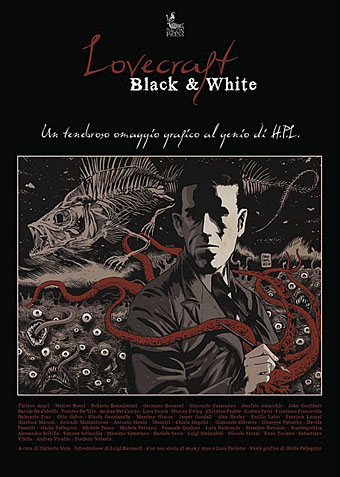
• Skull Comics, 1970–72, at Golden Age Comic Book Stories. Underground artists excavate Lovecraftian horrors, among other things.
• The lost town of Dunwich.
• The Bells of Dunwich (1975) by Stone Angel | Dunwich Beach, Autumn, 1960 (1982) by Brian Eno.