Jean de Bosschère’s Folk Tales of Flanders

bosschere01.jpg

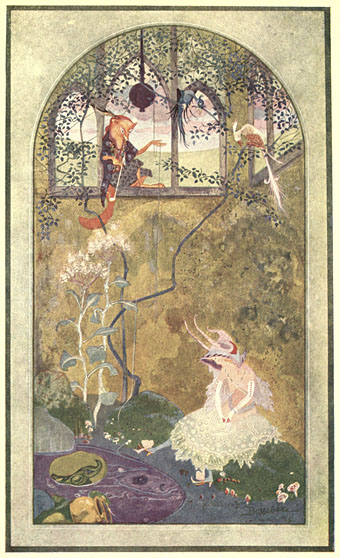
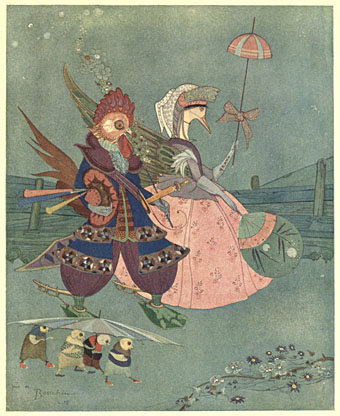
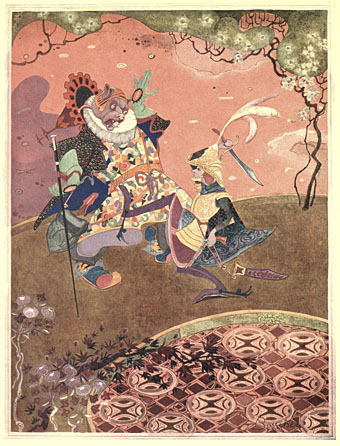
The illustrations of Belgian artist Jean de Bosschère (1878–1953) aren’t as easy to find as those of his British and American contemporaries so it’s a shame there isn’t more of his idiosyncratic work at the Internet Archive. Folk Tales of Flanders is there, however, an edition from 1918 featuring a number of colour plates and many black-and-white illustrations. For once I prefer the paintings over the line drawings, de Bosschère’s colour work perhaps owes something to Edmund Dulac’s style but it’s a lot more eccentric, especially here where he’s required to depict the activities of a host of anthropomorphic animals. The eccentricities extended to the artist’s life and the books he wrote, one of which is an autobiography entitled Satan l’Obscure (1933). A lighter work, Weird Islands (1921), was featured at BibliOdyssey a couple of years ago.

bosschere02.jpg

bosschere03.jpg

Continue reading “Jean de Bosschère’s Folk Tales of Flanders”

Weekend links 103

fripp.jpg

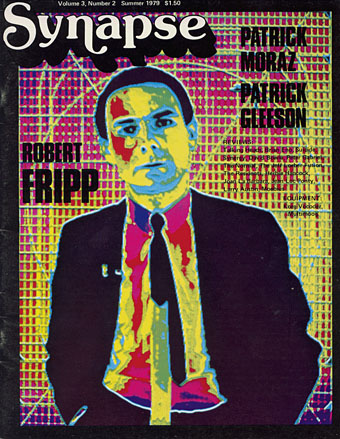
Robert Fripp photographed by Chris Stein. Video posterization by Michael Schiess.

Scans of Synapse, “The electronic music magazine”, are posted here. Issues range from 1976 to 1979, and include interviews with the more notable synthesists of the period, Kraftwerk included. Brian Eno was regularly interviewed by synth mags despite always being reluctant to talk about what equipment he might be using; sure enough he’s featured here. Far more interesting is a longer interview with Robert Fripp that catches the guitarist as he emerged from his self-imposed retirement in the mid-70s with the extraordinary Exposure album. (See a 1979 promo video for that here.) Related: TR-808 drum sequences in poster form by Rob Ricketts.

• More electronic music from the 1970s: “[Don Buchla] showed me that the idea of playing a black-and-white keyboard with one of these instruments was completely ridiculous. It was inappropriate and had nothing to do with the way you would use an electronic instrument.” Suzanne Ciani talks to John Doran about electronic music composition. A collection of her early recordings, Lixiviation, is released by Finders Keepers. Related: The Attack of the Radiophonic Women: How synthesizers cracked music’s glass ceiling.

• “Her writing—full of immigrants, circus animals, freaks, socialists, hipsters, servants, and suffragettes—revels in the atmosphere of the ‘Yellow Nineties,’ a period characterized by Wildean decadence and art for art’s sake.” Jenny Hendrix on Djuna Barnes.
brunovsky.jpg

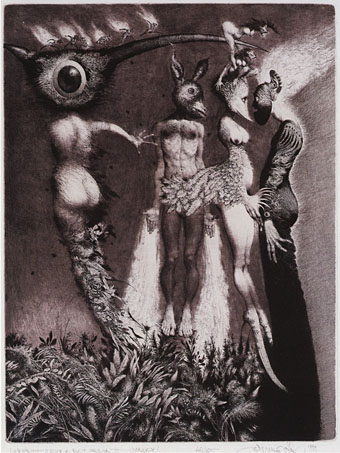
More etchings by Albin Brunovsky at But Does It Float.

• More scanned magazines: the Fuck You Press archive at Reality Studio. A trove of rare publications produced by Ed Sanders in the 1960s with contributions from world-class writers, William Burroughs included.

• “[My parents] were horrified by what I did, but they encouraged me to keep doing it because I was obsessed, and what else could I do?” John Waters writing in (of all places) the Wall Street Journal.

• A time-lapse assembly of Alfred Hitchcock’s Rear Window (1954) by Jeff Desom who explains how he did it here.

The Occult Experience: a 95-minute documentary on the international occult scene, filmed in 1984–85.

• Compost and Height re-post A Gold Thunder, a song by Julia Holter first sent to them in 2010.

• Drawings by Bette Burgoyne.

Schroeter’s Salomés

Cats are liquids

Fade Away And Radiate (1978) by Blondie (featuring Robert Fripp) | Exposure (1978) by Peter Gabriel (produced by and featuring Robert Fripp) | Exposure (1979) by Robert Fripp | Babs And Babs (1980) by Daryl Hall (produced by and featuring Robert Fripp) | Losing True (1982) by The Roches (produced by and featuring Robert Fripp).

Gerald Scarfe’s Long Drawn-Out Trip

scarfe.jpg

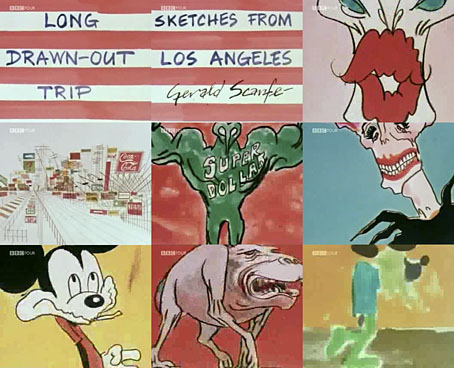
Yet more animation. Long Drawn-Out Trip was Gerald Scarfe‘s first foray into the medium, produced in 1972 at the request of the BBC who sent the artist to Los Angeles to try out the new De Joux animation system. The process needed only six or eight drawings per second of film thus reducing the usual amount of labour. Scarfe says in the first book collection of his work, Gerald Scarfe (1982), that the 16-minute film was still very labour intensive.

The subject of Long Drawn-Out Trip is Los Angeles and America itself, the concerns being the same ones that Ralph Steadman was depicting the same year in his illustrations for Hunter S. Thompson’s Fear and Loathing on the Campaign Trail ’72: venality, violence, vulgarity and the omnipresent spectre of Richard Nixon, a president who had the good fortune to be drawn many times by two of Britain’s greatest living satirists although he wouldn’t have thanked them for it. In Scarfe’s film we also find Mickey Mouse being reduced to his constituent lines and colours after smoking a joint. In the 1980s Scarfe regularly drew Ronald Reagan wearing the famous mouse ears, something that nearly got him fired from his post at the Sunday Times after Rupert Murdoch saw one of the cartoons. Long Drawn-Out Trip had a more favourable effect when it was seen by Roger Waters who asked Scarfe to create some animations for Pink Floyd’s Wish You Were Here tour. The animated sequences for The Wall have their origin in this short film. Watch it here.

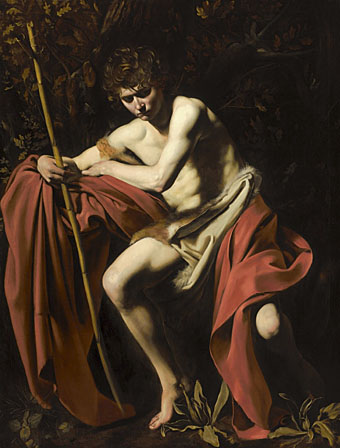
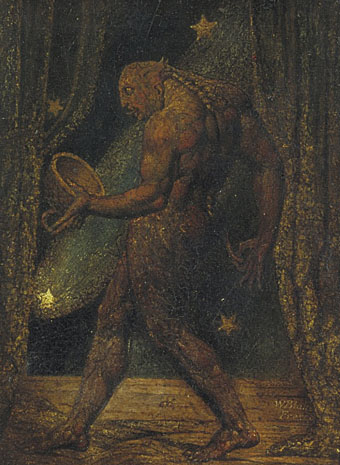
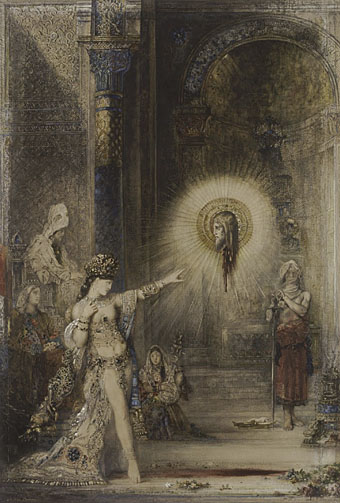
Google Art Project revisited

google1.jpg

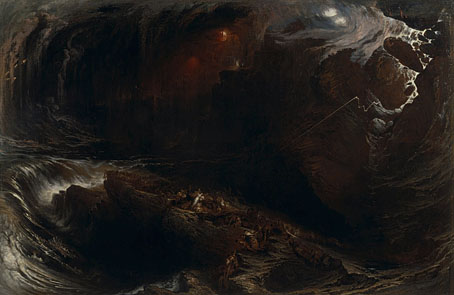
The Deluge (1834) by John Martin.

One of John Martin’s Biblical cataclysms succumbs to a Turner-like nebulosity at the Yale Center for British Art, something that can now be viewed in detail thanks to Google’s expansion of its Art Project. 151 additional galleries have been added, and the collections of those already present expanded, which means there are now 30,000 paintings and other art objects waiting to be examined. The examples here are those picked from a very cursory look at what’s on offer. Good to see the Musée d’Orsay is now one of the featured galleries where I ignored all the Van Goghs, Monets and the rest in order to select one of Gustave Moreau’s Salomés. Blake’s Ghost of a Flea is actually a lot more visible in its online state than in the original. Many of the works in the Blake collection at Tate Britain are so fragile the lights are kept low to avoid damaging their pigments. Most of Blake’s paintings are also very small, Ghost of a Flea included. Even peering at it up close doesn’t yield as much as the opportunity we now have to explore its frosted craquelure.

google2.jpg

Saint John the Baptist in the Wilderness (1604–1605) Michelangelo Merisi, called Caravaggio.

google3.jpg

The Ghost of a Flea (c. 1819) by William Blake.

google4.jpg

The Apparition (c. 1876) by Gustave Moreau.

Previously on { feuilleton }
The Ambassadors in detail

The art of Luis Toledo

toledo1.jpg

Invariancia.

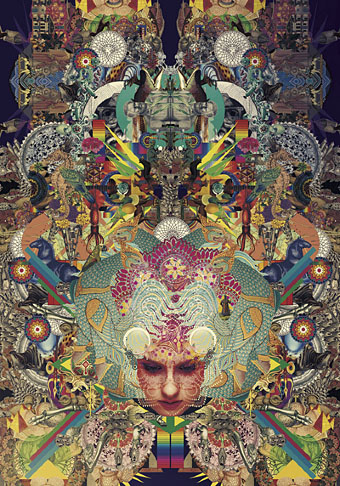
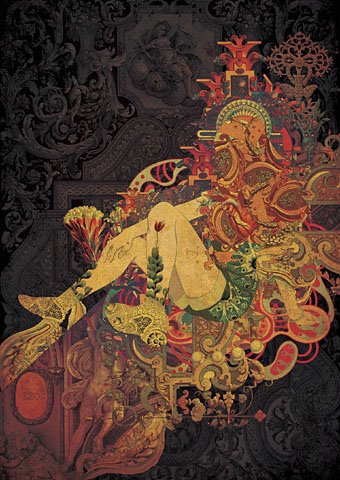
The workload has increased recently so posting here may tend to laziness for a while. I think I first saw the hyper-detailed digital collages of Luis Toledo aka Laprisamata at Form is Void where Thom has a knack for spotting the good stuff. I was reminded of them again last week thanks to Dressing the Air. The detail and variety of these works means they really need to be seen at a much larger size, something you can do at the artist’s Behance pages and at his website. As always with collage, composition is crucial, and Toledo certainly knows what he’s doing on that score. Those familiar with Ernst Haeckel’s Kunstformen der Natur can have fun playing spot the image source.

toledo2.jpg

Desaparecida.

Elsewhere on { feuilleton }
The fantastic art archive

Previously on { feuilleton }
Jacques Brissot’s Hay Wain
The art of Jindřich Štyrský, 1899–1942
Initiations in the Abyss: A Surrealist Apocalypse
Vultures Await
Wilfried Sätty: Artist of the occult
Illustrating Poe #4: Wilfried Sätty
Metamorphosis Victorianus
Max (The Birdman) Ernst
Gandharva by Beaver & Krause
The art of Stephen Aldrich