Weekend links 235

shadows.jpg

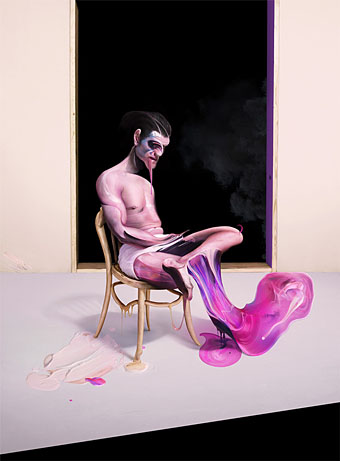
Shadows (1974) by Pawel Nolbert & Lukasz Murgrabia, one of three images recreating Francis Bacon’s Triptych–August 1972.

Breaking the Code (1996), a BBC film by Herbert Wise based on Hugh Whitemore’s stage play about Alan Turing. Wise’s film has been linked here before but it’s relevant again thanks to the release of The Imitation Game. Derek Jacobi played Turing on stage and screen, and Whitemore’s script managed to deal with Turing’s life and work without insulting the man or the intelligence of its audience.

• “…if you listen to A Beacon From Mars by Kaleidoscope or if you listen to some Turkish taxim then something starts happening.” Robert Plant talking to Julian Marszalek about the music that excites him.

• “CGI has become wearingly dull and clichéd. Can its deep weirdness be recovered and filmgoers’ minds stretched again?” asks Jonathan Romney.

The cult of the Thirty-Seven Nats is unique to Burma. […] The junta’s attempts to subdue nat worship had an unintended effect: the role of the nat wife was embraced by an already marginalized group. Homosexuality is illegal in Burma and has been since its British colonizers instituted a late-nineteenth-century ban on “intercourse against the order of nature”. Government restrictions opened a professional vacuum, says scholar Tamara C. Ho. Becoming a nat kadaw offered the achauk—a Burmese term for gay and transgender men—both “a vocation and queer visibility”.

After the Green Death by Will Boast

• “Cat memes and other frivolities aren’t the work of an Internet culture. They’re the work of an American one, ” says Caitlin Dewey.

• Hear the cavernous reverb of Berlin’s Kraftwerk captured by Emptyset’s James Ginzburg and Yair Elazar Glotman.

• Take part in the first #psychedelicpride photoshoot in central London on Saturday, December 13th.

• Mix of the week: FACT Mix 470 by Jonny Trunk who also appears in the list of vinyl hoarders below.

• Queer Noise: Abigail Ward on the history of LGB music and club culture in Manchester.

More photos of the steampunk exhibition at 751 D-Park, Beijing, China.

A chronological list of synth scores & soundtracks.

• Animated photography by Julien Douvier.

• A Third Ear Band archive at SoundCloud.

The secret lives of vinyl hoarders.

Taxim (1968) by Kaleidoscope | Water (1970) by Third Ear Band | Love Is The Devil (1998) by Ryuichi Sakamoto

George Platt Lynes revisited

lynnes1.jpg

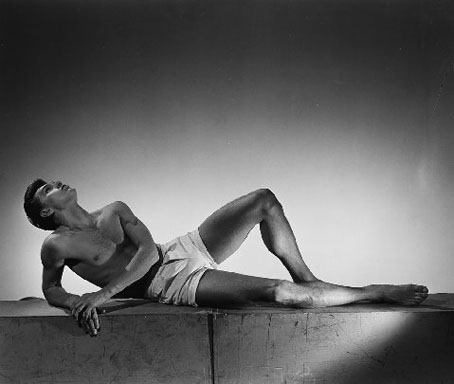
Untitled (reclining with bathing trunks), circa early 1950’s.

Photographs by George Platt Lynes have appeared here before, as have links to exhibitions at Wessel + O’Connor Fine Art. The latter are showing prints by the former in a new exhibition that opens today, and if I’m unlikely to visit their gallery any time soon I still enjoy passing on the news. Unlike many of the gallery press releases I receive, the ones from Wessel + O’Connor are always of interest, and their site is generous with its display of the work on offer. (They also sent me a card from their Czanara show which I was very pleased to receive.)

lynnes2.jpg

Buddy Stanley and Tex Smutney (1941).

Most of the prints on this occasion tend away from the artier side of Lynes’ work towards outright beefcake (for the artier side, see this post). Among the nudes there’s one of the famous photos from a session Lynes made with Yul Brynner in 1942, pre-fame and with hair but sans clothes. See that photo, and more, here.

Previously on { feuilleton }
Balanchine, Lynes and Orpheus
The recurrent pose 17
George Platt Lynes

The art of John Jack Vrieslander, 1879–1957

vrieslander01.jpg

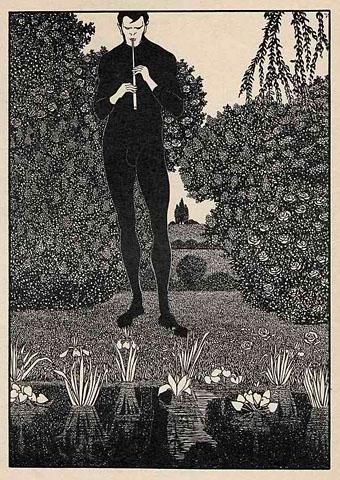
The Darkness (1900).

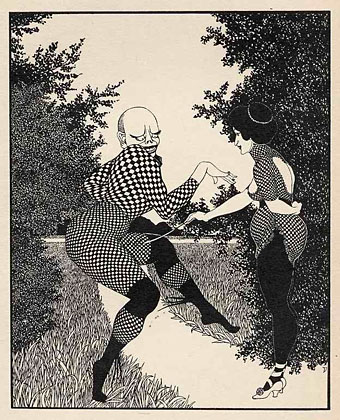
Another discovery to add to the long list of post-Beardsley illustrators, John Jack Vrieslander was a German artist whose not-very-German name was a pseudonym of Hans Zarth. It took some searching to establish that a) it is Zarth, not “Zahrt” as one site has it, and b) the two were indeed one person. I’ve used the Vrieslander name here since that’s the credit used for most of these examples. Vrieslander/Zarth signed his pictures with a V or a Z according to the prevailing persona.

vrieslander02.jpg

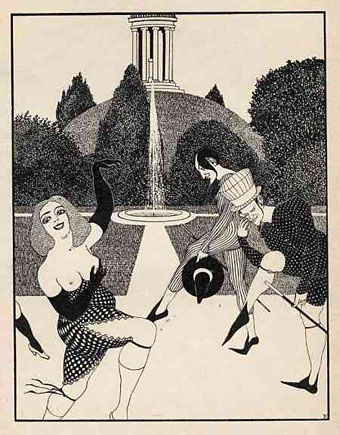
As Beardsley imitations go these drawings could be better—they lack Aubrey’s natural sense of balance and composition—but they’re of interest for leaning so heavily on the style of the later illustrations which favour elegant gardens and meticulously rendered foliage. Some of the figures refer to the earlier Aubrey, however, as does the vaguely lascivious atmosphere. The phallic plant pot in the Lilly Peters picture below is the kind of detail nobody in 1901 would have dared attempt without Aubrey’s lead.

vrieslander03.jpg

Continue reading “The art of John Jack Vrieslander, 1879–1957”

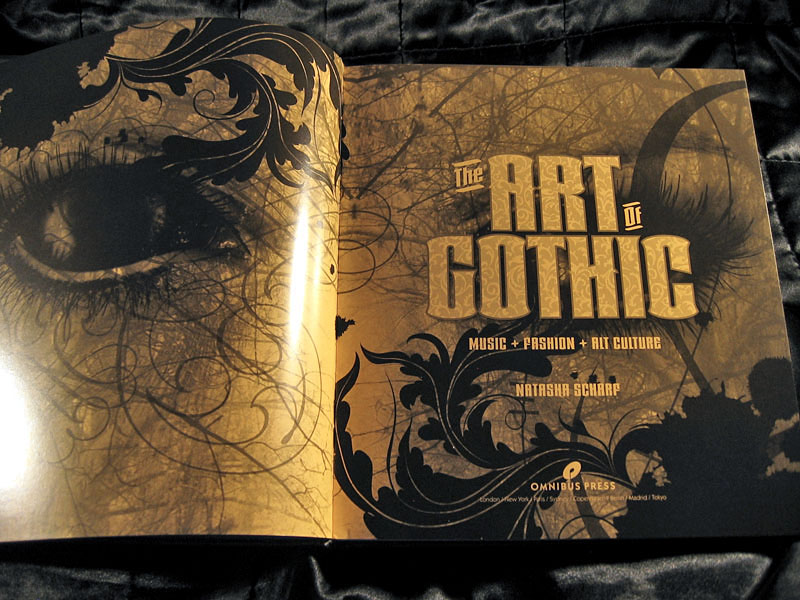
The Art of Gothic by Natasha Scharf

goth01.jpg

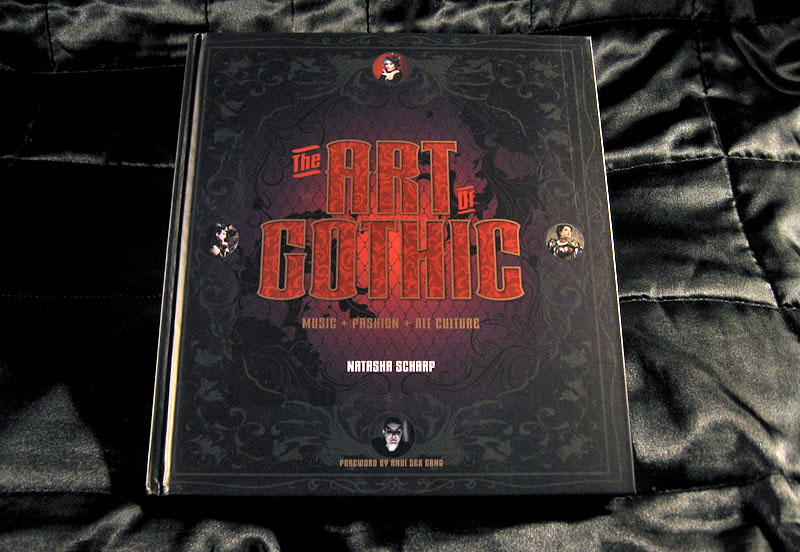
This weekend I was at the Louder Than Words music conference in Manchester to meet Peter Bebergal, author of Season of the Witch: How the Occult Saved Rock and Roll, and Mark Pilkington of Strange Attractor. By coincidence the event was hosting a discussion about goth music and culture based around The Art of Gothic, a new art book by Natasha Scharf. As mentioned last month, this book features some of my work but I hadn’t seen a copy until now.

goth02.jpg

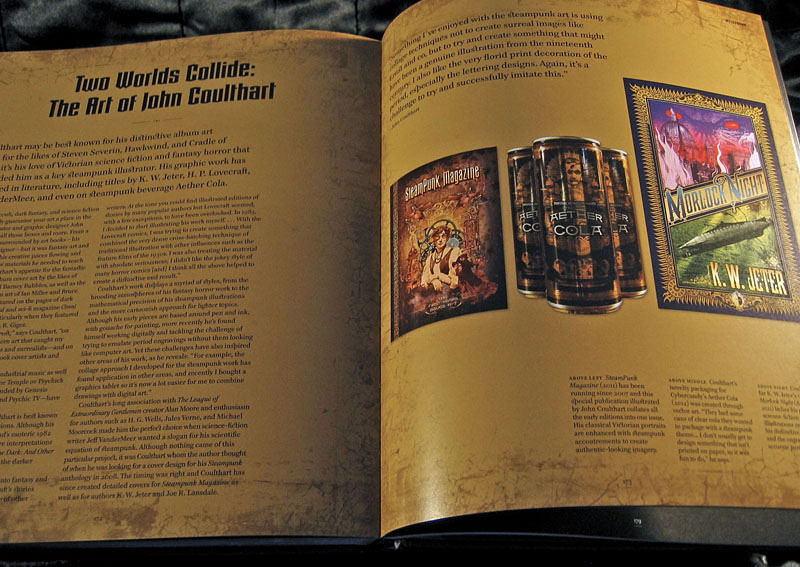
I’ve been fortunate recently to have my work appear in some impressive volumes but this outsize hardback takes some beating. It’s a very lavish production, 224 colour pages on heavy paper with gorgeous design by Paul Palmer-Edwards. Goth has been subject from the outset to mocking stereotypes, to a degree that many people would imagine they know exactly what a study such as this would contain. A recurrent theme of the Louder Than Words discussion was the growth of the goth subculture beyond its clichéd boundaries which is one reason my work is featured in the book. When Natasha was first in touch I thought it might be for the Cradle of Filth album covers but I’m in the chapter that examines the increasingly tangled goth/steampunk crossover. This is one development that’s come to seem almost inevitable given the roots of so much of the goth aesthetic in Victorian nightmares. Many steampunk novels tend towards the dark in their blend of science fiction and horror so the traffic goes in both directions.

goth03.jpg

Elsewhere in the book there are chapters on Futuristic Goth, Japanese Goth, and Cybergoth, all of which maintain the requisite darkness while evolving away from the top hats, lace and veils (the latter are all present and correct elsewhere, of course). It’s a beautiful book, out now in the UK from Omnibus Press, and in the US from Backbeat Books. A few more page samples follow. There’s more at Amazon UK.

• See also: 13 Things That Prove Gothic Art Is Enchanting And Beautiful

goth04.jpg

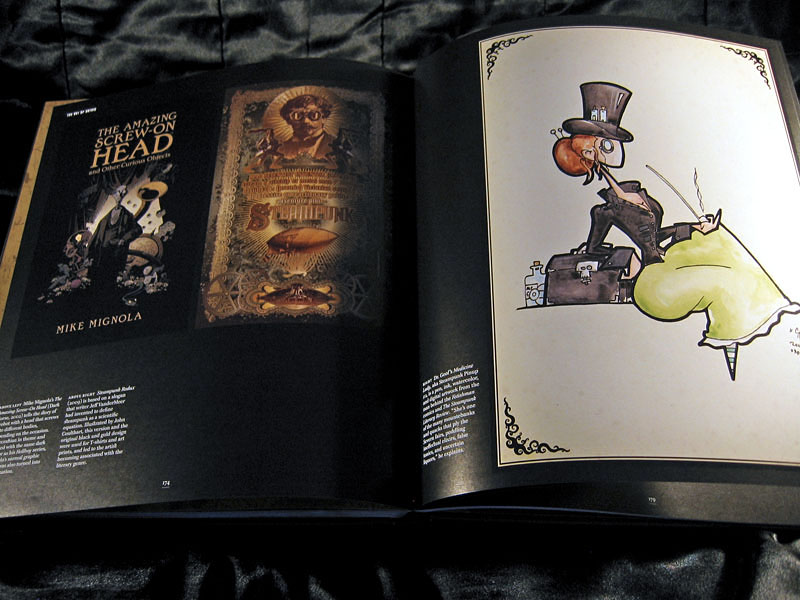
left: The Amazing Screw-On Head by Mike Mignola (2002); centre: the full-colour version of the ever-popular Steampunk Equation (2009), words by Jeff VanderMeer, graphics by John Coulthart; right: Dr Geof’s Medicine Lady, aka Steampunk Pinup #2.

goth05.jpg

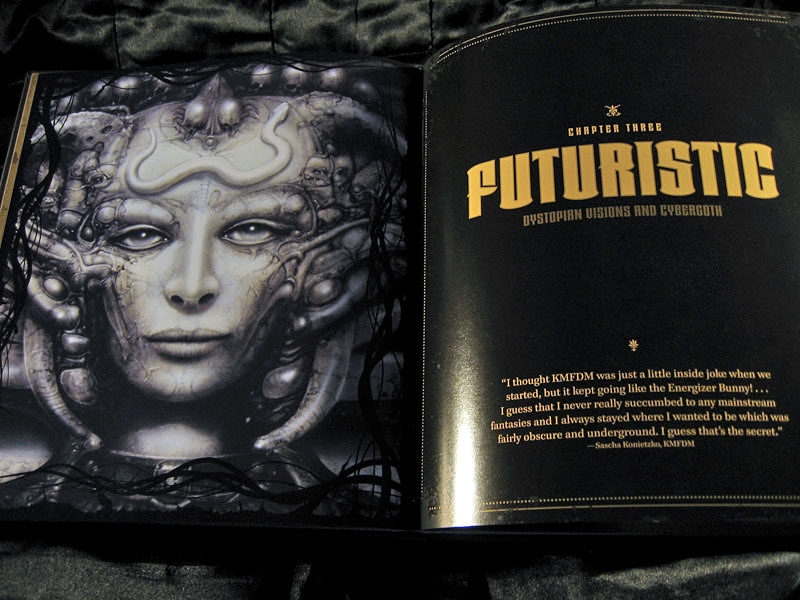
The mighty Giger again. I’ve got a framed print of that picture on the wall, a fact that will surprise nobody.

Continue reading “The Art of Gothic by Natasha Scharf”

Albert Weisgerber’s Grimm Fairy Tales

weisgerber01.jpg

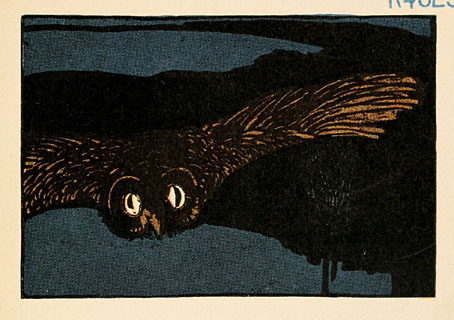
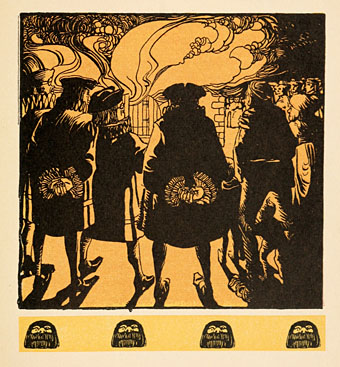
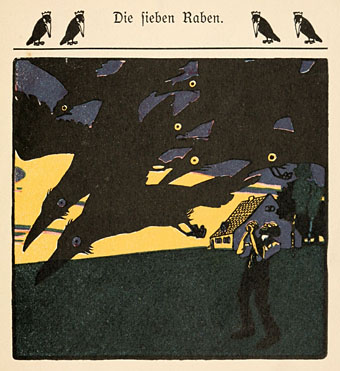
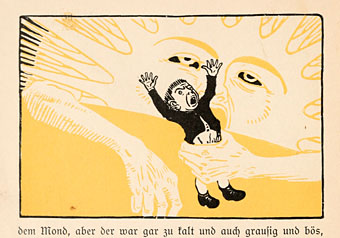
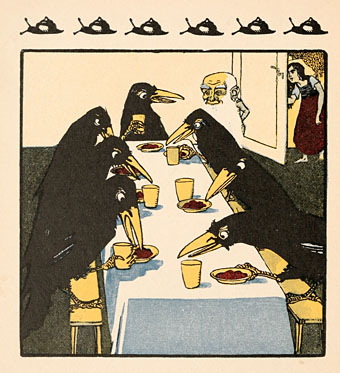
Following yesterday’s artwork by Andrea Dezsö, some illustrations from a German edition of Grimm’s Fairy Tales from around 1900. Albert Weisgerber (1878–1915) was more of a fine artist than a jobbing illustrator—Alfred Kubin was a friend—but some of his drawings appeared in Jugend magazine as well as this book. The heavy shading and blocks of colour are reminiscent of the Beggarstaffs, while the illustration choices don’t avoid the darker moments of the tales, as with the picture of Gretel pushing the witch into the oven. 50 Watts has some of Weisgerber’s other drawings. Browse the book here or download it here.

weisgerber02.jpg

weisgerber03.jpg

weisgerber04.jpg

weisgerber05.jpg

Continue reading “Albert Weisgerber’s Grimm Fairy Tales”