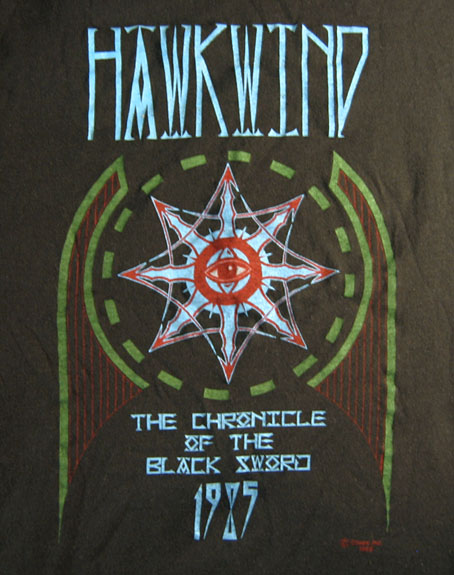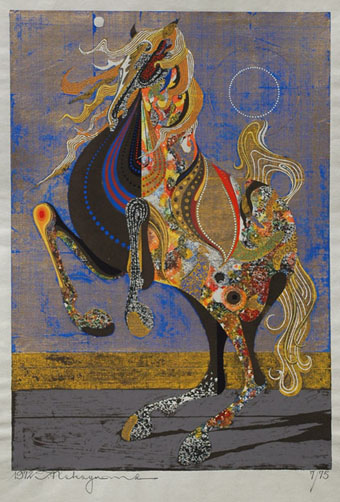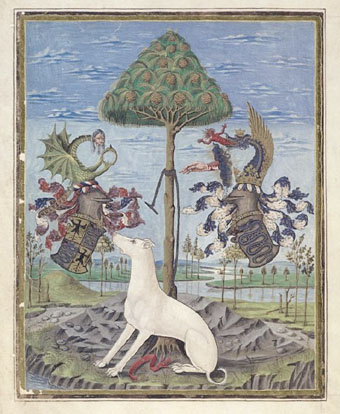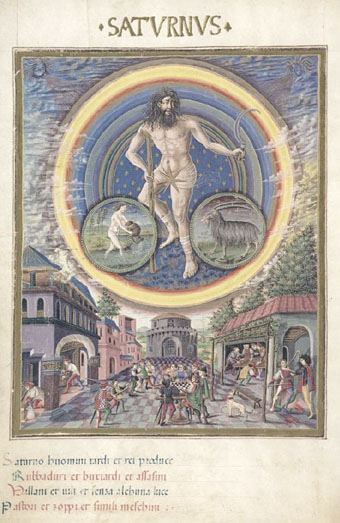
Cthulhu playing cards

cthulhucards.jpg

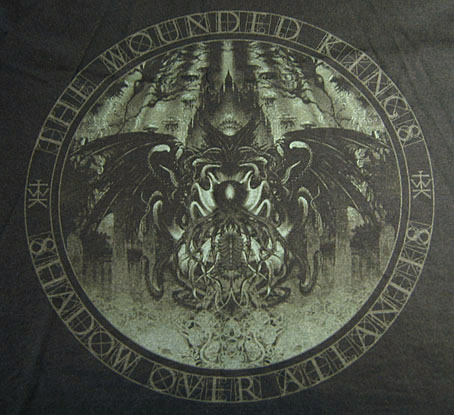
You know, there was a time when HP Lovecraft’s dreaming monster was a rare entity known only to aficionados. Cthulhu may not have achieved Hello Kitty-style ubiquity yet but it’s only a matter of time (or strange aeons).

Adding some new products to my CafePress pages recently I noticed that the ever-expanding product line there now includes playing cards, so here’s a new addition to the growing mountain of Cthulhuiana. I was going to add a playing card option to some of my recent designs (the Summerisle one in particular) but there seems to be a fault in the processing at the moment so the ones I’ve tried haven’t shown up. This design seems to have worked because it was a png rather than the usual jpg. If I can persuade the software to behave I’ll add more in future. As usual the price is relatively steep, a consequence of the high base price rather than my rapacity.

Update: After another CafePress malfunction (or something) my shop vanished. But you can now get a similar set of cards at Zazzle.

cthulhugod3.jpg

Previously on { feuilleton }
More CthulhuPress
Cthulhu Calendar
Cthulhu for sale
Cthulhu God
CthulhuPress

Weekend links 252

brizzi.jpg

Waiting by Liz Brizzi.

• “Music, politics, sex, and art were also widely represented by Evergreen. Gerald Ford famously maligned the magazine on the floor of Congress for printing the likeness of Richard Nixon next to a nude photo.” Jonathon Sturgeon on the return of an avant-garde institution.

• “The hallucinogenic properties of language are widely recognized by all repressive societies…which treat words like other tightly controlled substances.” Askold Melnyczuk reviews Where the Bird Sings Best, a novel by Alejandro Jodorowsky.

• Mixes of the week: A Mix For Thomas Carnacki by Jon Brooks whose Music for Thomas Carnacki has been reissued on vinyl; Solid Steel Radio Show 27/3/2015 by DJ Food.

One of the few vice-friendly cities left in the US, New Orleans remains his spiritual home, or whatever the atheist equivalent is. Waters’ supposed favourite bar in the world is here in the historic French Quarter. The Corner Pocket is a gay dive bar with tattooed strippers—filthy in exactly the way Waters likes.

“Trash and camp just don’t cut it any more,” he told a rapt audience at his interview panel on Friday. “Filth still has a punch to it. The right kind of people understand it and it frightens away the timid.”

John Waters growing older disgracefully

Songs of a Dead Dreamer and Grimscribe by Thomas Ligotti are being republished in a single edition by Penguin. Jeff VanderMeer wrote the foreword.

• “The film is brimming with Bacchanalian revelry, arcane mystery and mortal dread.” Robert Bright on The Saragossa Manuscript by Wojciech Has.

Alistair Livingston has posted page scans from When Darkness Dawns, volume two of his zine from the early 80s, The Encyclopedia of Ecstasy.

• “Without first understanding the flâneur we cannot understand the development of arcades,” says Aaron Coté.

• At A Journey Round My Skull: Jo Daemen cover designs; at 50 Watts: the art of Manuel Bujados.

• Vast spacecraft and megastructures: Jeff Love on the science-fiction art of Chris Foss.

• At Dangerous Minds: RE/Search’s Vale on JG Ballard and William Burroughs.

• RIP John Renbourn

Pentangling (1968) by Pentangle | Lyke-Wake Dirge (1969) by Pentangle | Lord Franklin (1970) by Pentangle

Yuggoth details

yuggoth01.jpg

Yuggoth Cultures (1994) by John Coulthart.

Earlier this week I spent a day scanning this painting—which I’m now surprised to find is 21 years old—so I might at last have a good quality digital copy. There’s been a copy on the website for years but that was a print made at a high-street copy shop that did nothing for the detail and range of colour. It’s quite a large piece—49.54 x 71.39 cm (19.5 x 28.1 inches)—done with acrylics on board. Since 2003 the painting has been used (in another poor reproduction) on the cover of The Starry Wisdom, the controversial collection of Lovecraftian fiction from Creation Books. The painting wasn’t originally intended for that collection, however, and doesn’t quite fit since a number of the portraits don’t feature in the book at all.

Yuggoth Cultures would have been an earlier collection of Lovecraftian fiction and non-fiction that Alan Moore had begun writing for Creation in 1993. Alan’s idea was to take Lovecraft’s Fungi from Yuggoth sonnet sequence as the basis for a collection that would explore Lovecraft’s fictional world and also draw together a variety of figures from the same era: fellow writers, occultists like Aleister Crowley and Austin Spare, and Harry Houdini for whom Lovecraft ghost-wrote Imprisoned with the Pharaohs in 1924. Unfortunately the stars were not right on this occasion; Alan took the sole copy of the half-written manuscript to London in order to read selections at an event in Soho but left the papers in a cab. Some pieces survived, having been copied and stored elsewhere—The Courtyard in The Starry Wisdom is one of these—and there was talk for a while of the lost pieces being rewritten but enthusiasm for the project flagged.

yuggoth08.jpg

This is Alan’s sketch for the cover, the idea being to have a Lovecraft head made of fungal growths rather like an Arcimboldo painting. The head would be sprouting tendrils whose loops would contain pictures of some of the people featured in the book. Alan’s quick sketch is actually a better approximation of Lovecraft’s strange features than my painted version which isn’t narrow enough. For the record (and because people always ask), the other people on the cover are Alan himself, Austin Osman Spare, Aleister Crowley, Harry Houdini, Robert E Howard (not Al Capone as people often think) and Clark Ashton Smith.

yuggoth09.jpg

yuggoth10.jpg

While searching through the archives I discovered these lettering designs although they’re probably not bold enough to read very well on such a busy painting. Before I started using a computer, designs like this had to be drawn at large size then scaled down using a photocopier.

Continue reading “Yuggoth details”

Jo Daemen’s The Sacred Flame

daemen00.jpg

Johanna Maria Hendrika Daemen (1891–1944), credited here as “Jo”, wrote and illustrated The Sacred Flame: The Fairy-Tale of Stefan Pártos (1927), a tribute to a Hungarian violinist who died young. Daemen was a Dutch illustrator, graphic designer and glass artist who one suspects would be better known if she’d been British or American. The detail and composition of these illustrations is exceptional, falling somewhere between Kay Nielsen’s meticulous detailing and Harry Clarke’s stained-glass designs. This is another volume currently for sale at silver-gryph’s eBay pages where larger views of the drawings may be seen. (Thanks again to Nick for the tip!)

daemen12.jpg

daemen01.jpg

daemen02.jpg

Continue reading “Jo Daemen’s The Sacred Flame”

John Yunge-Bateman’s King Lear

yunge01.jpg

When Majesty turns to folly!

John Yunge-Bateman (1897–1971), aka “Yunge”, is another British illustrator whose work I’d not noticed until now, possibly because this 1930 edition of King Lear is an early creation in a derivative style the artist abandoned. The ten black-and-white drawings are closer to Harry Clarke than Aubrey Beardsley, and a couple of them even try to match Clarke’s more grotesque inventions albeit with variable results. Some of the faces are rather dopey for my taste but I like the use of solid blacks. These samples are taken from a scarce copy currently up for auction at silver-gryph’s eBay pages should anyone be interested. (Thanks again to Nick for the tip!)

yunge02.jpg

Than doth, within a dull, stale, tired bed, go to the creating a whole tribe of fops.

yunge03.jpg

If you come slack of former services you shall do well.

Continue reading “John Yunge-Bateman’s King Lear”