The Egyptian Tarot

tarot01.jpg

I: The Magus

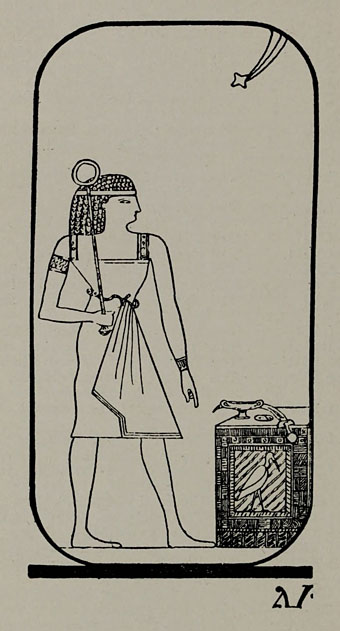
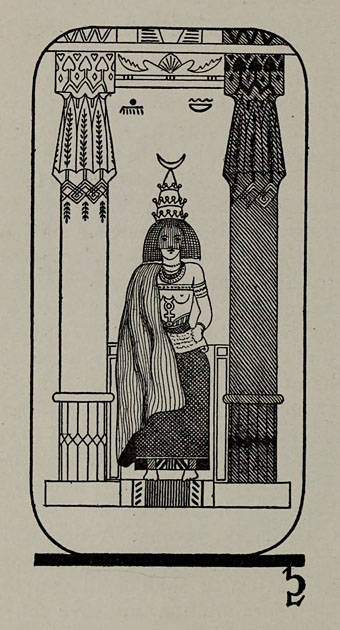
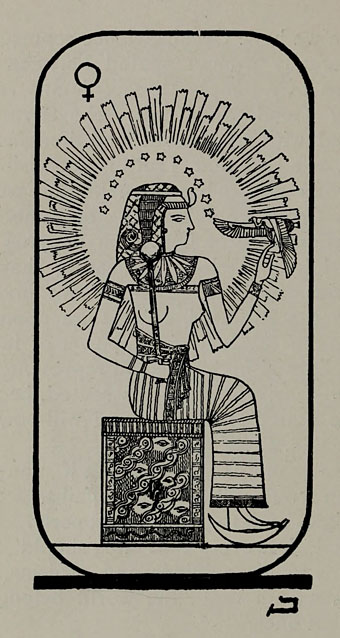
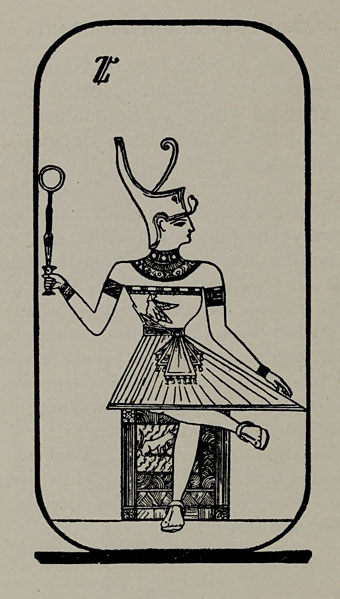
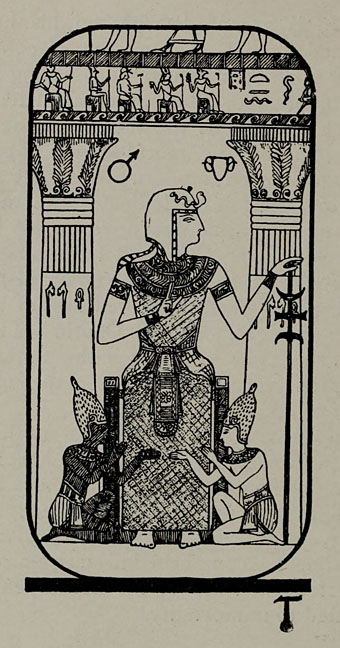
While looking at Tarot designs for work purposes (again) I remembered a book I used to own that demonstrated the symbolism of the Major Arcana by using side-by-side comparisons of cards from the more well-known decks: the Tarot de Marseille, Aleister Crowley’s Thoth deck, the Rider-Waite-Smith cards, and so on. One of the decks shown wasn’t so familiar, a 19th-century design that purported to depict the Ancient Egyptian figures from which the modern Tarot is derived. Like much occult history, this is an invention but I liked the look of the cards with their simple line drawings and clever matching of Egyptian motifs with the traditional symbols. My book was borrowed years ago and never returned (the second Tarot book I’ve had this happen to; don’t lend people your Tarot books!), so I couldn’t look for a reference, but this account of the history of the so-called Egyptian Tarot supplies all the relevant details and more.
tarot02.jpg

II: The Gate of the Sanctuary

The examples shown here are from Practical Astrology (1901), a book by Edgar de Valcourt-Vermont writing under the preposterous pseudonym “Comte C. de Saint Germain” (a real person, albeit dead by 1901, with a long history of appropriation by writers and charlatans). The drawings are reworkings of the first appearance of the Egyptian designs in an earlier book, Les XXII Lames Hermètiques du Tarot Divinatoire (1896) by R. Falconnier, the drawings there being the work of one M.O. Wegener. In addition to copying the designs Valcourt-Vermont filled out the set with a Minor Arcana of his own devising that looks distinctly amateurish next to the Wegener set. Since then the cards have continued to evolve, a more recent version being the Ibis Tarot which colours the drawings in a manner that doesn’t really suit this type of art. The cards shown in my errant book were memorable in part because they stood out from their vividly-coloured counterparts.
tarot03.jpg

III: Isis-Urania

It’s good to see these again, and also surprising to discover a further detail, that the Wegener drawings had been based on descriptions by Paul Christian in another occult study, Histoire de la Magie (1870). Christian’s book was the subject of a previous post for also being the source of an illustration of a witches’ sabbat that turns up all over the place, usually without credit. Not for the first time, the occult world is smaller than it seems.
tarot04.jpg

IV: The Cubic Stone

Wikipedia has copies of the drawings from the Falconnier book which may also be seen at Gallica, although the copy I found there was incomplete. The Valcourt-Vermont designs were published as a complete deck, The Egyptian Tarot, by Müller in 1978.
tarot05.jpg

V: Master of the Arcanes

Continue reading “The Egyptian Tarot”

Weekend links 530

yoshino.jpg

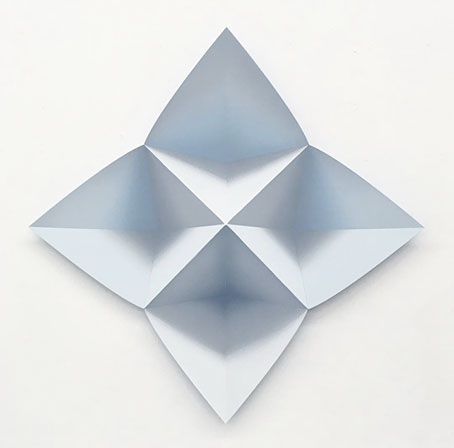
Kami #58 -bloom- (2019) by Momo Yoshino.

• “Set amid the countryside and the beaches of coastal Sussex, They depicts a world in which plundering bands of philistines prowl England destroying art, books, sculpture, musical instruments and scores, punishing those artistically and intellectually inclined outliers who refuse to abide by this new mob rule.” Lucy Scholes on They: A Sequence of Unease (1977) by Kay Dick, which she calls “a lost dystopian masterpiece”. This is revelatory in a minor way since for years I’ve remembered seeing a slim volume with the title They in a bookshop, and which I later thought might have been a Rudyard Kipling book (there’s a Kipling story with the same title). The timing is right, the sighting would have been in 1977 or 78. The combination of that short, one-word title with a stark cover image and a sinister description on the rear was hard to forget but I didn’t take note of the author’s name. (I also didn’t buy the book, opting instead for some inferior work.) A shame that it seems to be resolutely out of print.

• “The threat to civil liberties goes way beyond ‘cancel culture’,” says Leigh Phillips. It makes a change seeing this coming from Jacobin when so much of the left today can find nothing wrong with censorship so long as it’s in a good cause. (Every censor that ever lived believed they were acting in a good cause, were on “the right side of history”, etc, etc.) The piece includes a dismissal of the increasingly common riposte that “only the state can censor”: this would be news to my colleagues at Savoy Books who endured years of police harassment including the seizure and destruction of printed material; the same with the long history of police action against UK rap artists. Related: “Work that’s cancelled for being ‘of its time’ was probably objected to, at the time.” Dorian Lynskey on chronocentrism and “the narcissism of the present”.

• “Cruising baths, bars, and subway toilets, snorting poppers and ‘fist fucking with 40 guys for 14 hours’ (as he recalled in You Got to Burn to Shine, his 1993 collection of prose and poems), he found meaning in a religion of radical eros whose sacrament was anonymous sex.” Mark Dery reviewing Great Demon Kings: A Memoir of Poetry, Sex, Art, Death, and Enlightenment by John Giorno.

Aubrey Powell says his best photograph is the burning man from the cover of Wish You Were Here by Pink Floyd.

• Mixes of the week: Fact mix 770 by Lyra Pramuk, and mr.K’s Kooky Kuts Vol.4 by radioShirley & mr.K.

• The Alchemical Brothers: Brian Eno & Roger Eno interviewed by Wyndham Wallace.

• Origami-inspired optical illusion oil paintings by Momo Yoshino.

Alexander Larman on the demise of the second-hand bookshop.

• New music: Follow The Road by Yumah, and Röschen by Pole.

• At Dennis Cooper’s: Lighting.

• RIP Linda Manz.

My Boyfriend’s Back (1963) by The Angels | Carnival of the Animals, R. 125: VII. The Aquarium (Camille Saint-Saëns) (1975) by the Württemberg Chamber Orchestra, Heilbronn with Marylene Dosse & Anne Petit, conducted by Jörg Faerber | Kill All Hippies (2000) by Primal Scream

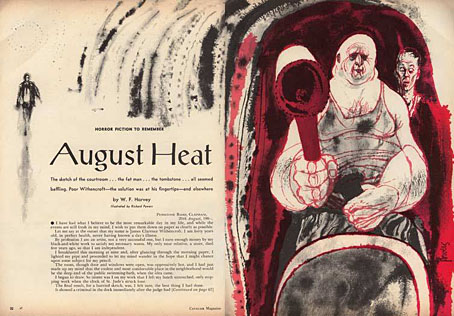
August Heat

powers.jpg

Richard Powers (no date) in Cavalier magazine.

Here in The North we may not be sweltering as much as they are in the infernal South but the temperature today is still reaching 28C. Anything higher than this and work becomes impossible when my brain starts to malfunction.

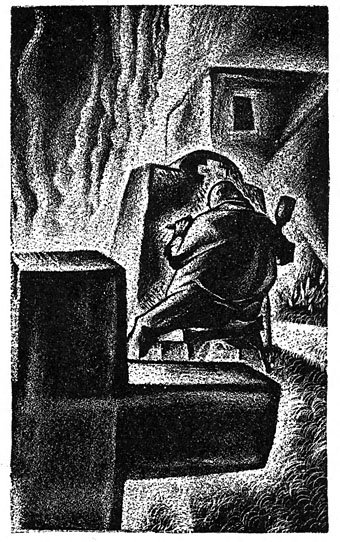
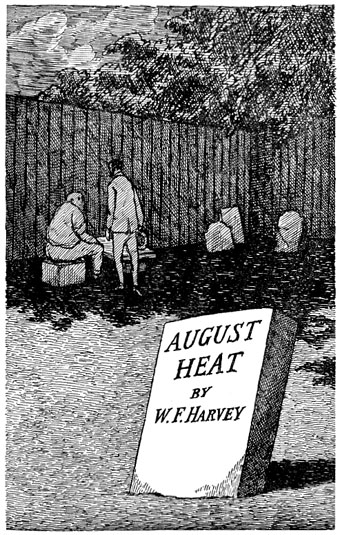
William F. Harvey (1885–1937) wrote two stories that have been anthologised many times: The Beast with Five Fingers is a tale of a disembodied hand; August Heat concerns a fateful encounter at the end of a day like today. Read it here.

ward.jpg

Lynd Ward (1937).

gorey.jpg

Edward Gorey (1959).

coye.jpg

Lee Brown Coye (1976).

Weekend links 529

hiroshige.jpg

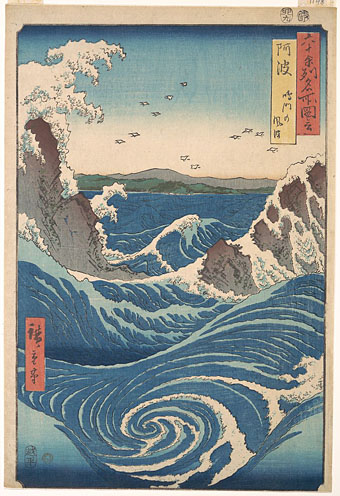
Naruto Whirlpool, Awa Province, from the series Views of Famous Places in the Sixty-Odd Provinces (c. 1853) by Hiroshige.

• Eric Margolis: “Yukio Mishima may have gone out in an inglorious blaze in 1970, but three of his previously untranslated works have been released in the English-speaking world in the last two years, with another on the way.” The forthcoming novel is Mishima’s only venture into science fiction (!), A Beautiful Star. The book was filmed by Daihachi Yoshida in 2017.

• “[Ace in the Hole] did well in Europe but not here, perhaps because Americans expected a cocktail and felt I was giving them a shot of vinegar instead.” Billy Wilder discussing his career with Charles Higham in 1967.

• Mixes of the week: All these things invisible by The Ephemeral Man, and Secret Thirteen Mix 306 by Yogev Freilichman.

“So I got a phone number for Vangelis, he was living in Paris and I went there and called him up. He said (affects a gruff Greek accent) ‘Hello’, I said, ‘My name’s Jon Anderson’. He said ‘What?’ I said, ‘I’m in a band called Yes’, he said, ‘Are you a singer? Well, come over’, so I went over. There was this big guy with a long kaftan on and a bow and arrow around his shoulder. I got into his palatial apartment near the Champs-Élysées and there’s quite a long hallway down to his living room, and there’s a little old man there sitting by the TV. Vangelis takes out his bow and sends this arrow down the hallway and it goes right through the window, because the window was open. I said, ‘Vangelis, you could have killed somebody’, he said, ‘Oh, don’t worry, I’m Greek’. I said, ‘I know you’re Greek, but come on’.”

Jon Anderson talking to Duncan Seaman about his first encounters with Vangelis

Tarot cards though the ages; examples from a new book on the subject published by Taschen.

The Suspended Vocation again: Ryan Ruby on Pierre Klossowski, “Brilliant Brother of Balthus”.

• Secret Sound podcast #17 is devoted to The Galaxy of Turiya aka Alice Coltrane.

• At Dennis Cooper’s: Shaye Saint John Day.

Kenneth Anger smiles!

Make Me Smile (Come Up And See Me) (1975) by Steve Harley and Cockney Rebel | Uncertain Smile (1983) by The The | Fleeting Smile (1988) by Roger Eno