
Weekend links 813

bruenchenhein.jpg

Dwellers of the Sea (1962) by Eugene Von Bruenchenhein.

• Among the new titles at Standard Ebooks, the home of free, high-quality, public-domain texts: Conan Stories by Robert E. Howard.

• At Colossal: “Uncanny personalities appear from nature in Malene Hartmann Rasmussen’s ceramics.”

• New music: Glory Black by Sunn O))); Through Lands Of Ghosts by Foster Neville; Sirenoscape by NIMF.

If we insist that art functions as a tool for promoting a limited set of political principles, what happens when an ideology that doesn’t share our values sweeps into power? Learning to engage with complexity is a necessary skill if we are ever to drag ourselves out of the puerile swamp of the culture wars. But if we continue to reduce art to moralistic soundbites, we will only succeed in stripping it of its capacity to transform us, which would be a huge loss. Art can help us to better understand ourselves, and the world we live in, by expressing those things that words cannot. It exposes us to a vast range of experiences, and asks us to sit with the fundamental ambivalences, moral complexities and conflicting emotions that are a part and parcel of being human.

Rosanna McLaughlin on attempts to make art of the past reflect the moral platitudes of the present

Strange Attractor is having a winter sale with 30% off all its available titles.

• At the BFI: Miriam Balanescu selects 10 great filmmaker biopics.

• Mix of the week: DreamScenes – January 2026 at Ambientblog.

• The Strange World of…Free Jazz & Improvised Music.

Free (1991) by Mazzy Star | The Free Design (1999) by Stereolab | Everything Is Free (2001) by Gillian Welch

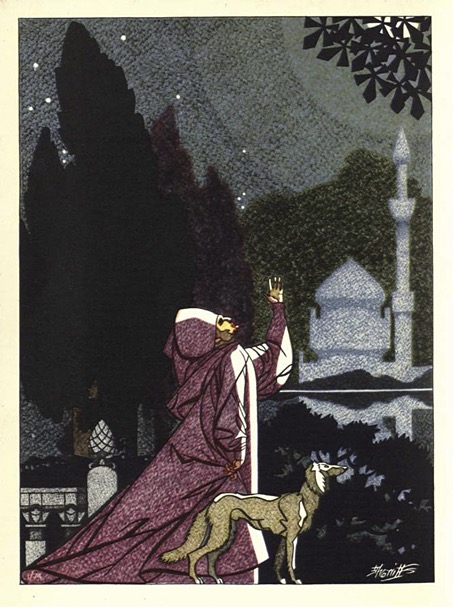
Edmund Dulac’s Princesse Badourah

dulac01.jpg

The Chinese princess is usually named Badoura in English editions of The Thousand and One Nights but this volume is a French book which reprints the art that Edmund Dulac created for a retelling of the story by Laurence Housman published in 1913. The English edition was itself a recycled volume, expanded from an earlier Housman/Dulac collection, Stories from the Arabian Nights (1907). The story itself reads like an odd mirroring of some of the versions of Aladdin which end with the triumphant hero marrying a Chinese princess named Badroulbadour. The male character in Princess Badoura is Camaralzaman, the shy son of an Arabian king whose repudiation of women causes his father to throw him into a dungeon. As in Aladdin, a genie helps engineer events to bring the story to a happy resolution.

dulac02.jpg

Some of the art may be recycled but the book design is better than the English editions, with gold frames embracing the tipped-in colour plates. The paintings are consequently reduced in size but this doesn’t harm them too much. One thing the book doesn’t contain is any clue to the writer of the text. I’d guess it was a translation of the Housman version but it could equally be a French retelling taken from another edition altogether.

dulac03.jpg

dulac04.jpg

dulac05.jpg

Continue reading “Edmund Dulac’s Princesse Badourah”

Weekend links 812

satantango.jpg

• RIP Béla Tarr. I came late to Tarr’s films, he’d retired from directing by the time I worked my way through most of his oeuvre in 2019. As I’m always saying: better late than never. What I never expected from reading reviews was the irreducible strangeness at the heart of the later films, as well as their meticulous construction. With regard to the latter, mention should be made of the director’s regular collaborators: Ágnes Hranitzky (wife, editor and co-director), László Krasznahorkai (writer), and Mihály Víg (composer).

More Tarr: “The whole fucking storytelling thing is everywhere the same. That’s why I decided I have to do my movies.” Tarr talking to R. Emmet Sweeney in 2012; and at Criterion, Béla Tarr: Lamentation and Laughter by David Hudson.

• “When [Fela Kuti] first saw Lemi Ghariokwu’s work, he said, ‘Wow!’ Then he plied him with marijuana and asked him to design his album sleeves. The artist recalls their extraordinary partnership – and the day Kuti’s Lagos HQ burned.”

• At Smithsonan Mag: “Hundreds of mysterious Victorian-era shoes are washing up on a beach in Wales. Nobody knows where they came from.”

• At Ultrawolvesunderthefullmoon: The collage art of Wilfried Sätty.

• At the BFI: Leigh Singer selects 10 great Lynchian films.

• At Unquiet Things: The vast luminous art of Andy Kehoe.

• At Dennis Cooper’s it’s another Jan Švankmajer Day.

• New music: Light Self All Others by Tarotplane.

• At I Love Typography: Heart-shaped books.

• At Colossal: Luftwerk.

• Sailin’ Shoes (1972) by Van Dyke Parks | Dead Man’s Shoes (1985) by Cabaret Voltaire | New Shoes (2007) by Angelo Badalamenti.

Thirteen views of snow

snow08.jpg

Lingering Snow at Asukayama, from the series Eight Views of the Environs of Edo (1837–38) by Utagawa Hiroshige.

We’ve had one of our mild falls of snow this week, hence the subject. Snow is a very common theme in Japanese prints, a part of the cultural interest in all the different aspects of the yearly seasons. There are many more examples out there.

snow09.jpg

Mountains and Rivers of Kiso (1857) by Utagawa Hiroshige.

snow06.jpg

Plovers Flying Across a River above Snow-Laden Reeds, from the series Worlds of Things (1909–10) by Kamisaka Sekka.

snow02.jpg

Snowy Ravine at Harinoki, from the series Twelve Scenes in the Japan Alps (1926) by Hiroshi Yoshida.

snow03.jpg

Snow at Shiba Park, Tokyo (1930) by Kawase Hasui.

Continue reading “Thirteen views of snow”

Weekend links 811

reiniger.jpg

A still from The Adventures of Prince Achmed (1926), a feature-length animated film by Lotte Reiniger.

Hélice 39 is a speculative-fiction journal (in Spanish) whose current issue includes an article by Marcelo Sanchez: “What did Borges think of Lovecraft?”

• Among the new titles at Standard Ebooks, the home of free, high-quality, public-domain texts: The Maltese Falcon by Dashiell Hammett.

• Old music: Hydrophony For Dagon by Max Eastley & Michael Prime; The Adventures Of Prince Achmed by Morricone Youth.

Public Domain Review lists some of the writers whose works will enter the public domain this year.

• “Modern Japanese Printmakers celebrates vibrant mid-20th-century innovation“.

• At Nautilus: “Here’s what’s happening in the brain when you’re improvising.”

• At the BFI: Pamela Hutchinson selects 10 great films of 1926.

• New music: The Future Is Now by Pietro Zollo.

• At Dennis Cooper’s: Phil Solomon Day.

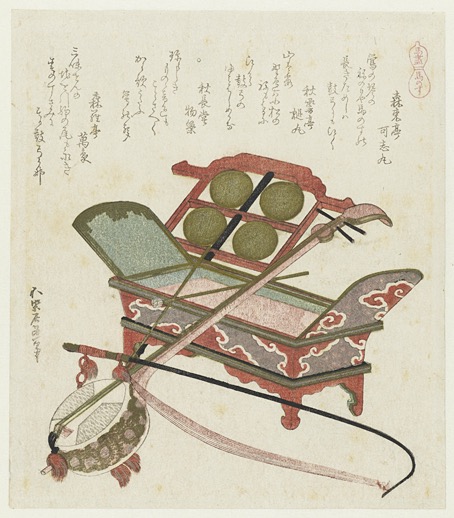
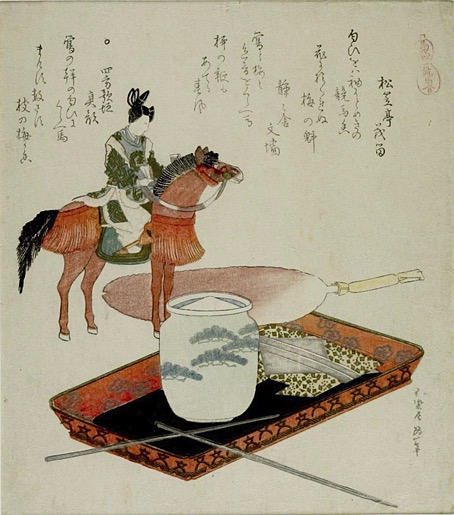
• 2026 is the Year of the Fire Horse.

Runaway Horses (“poetry written with a splash of blood”) (1985) by Philip Glass | Unicorns Were Horses (1996) by New Kingdom | Red Horse (2002) by Jack Rose