The Talking Thrush and Other Tales of India

thrush01.jpg

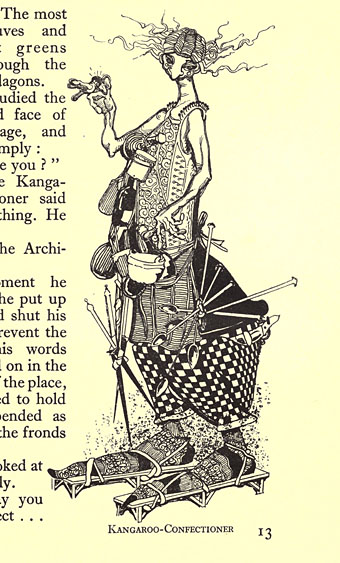
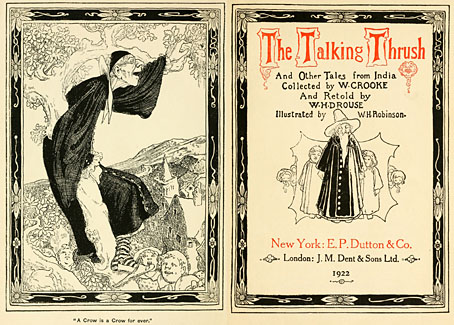
British illustrator William Heath Robinson died in 1944 which means that 2015 will see his own books fall into the public domain in many countries. The books he produced during and after the First World War established his reputation as a creator of impromptu contraptions, to such a degree that the term “Heath Robinson” has the same currency in Britain as “Rube Goldberg” does in the US when describing an improbable mechanical device. Robinson’s whimsical drawings have always been his most popular works but I favour his earlier illustrations, especially his illustrated Poe and A Midsummer Night’s Dream.

thrush02.jpg

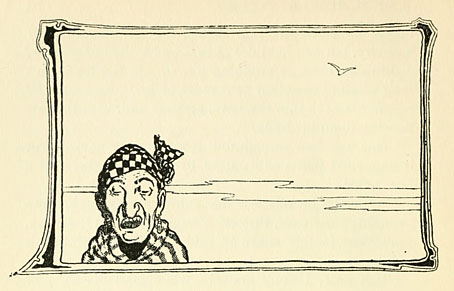
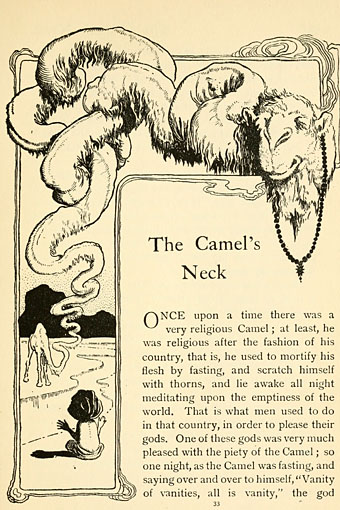
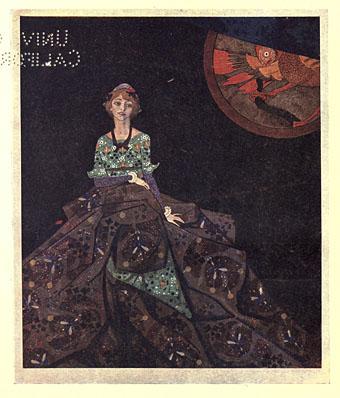
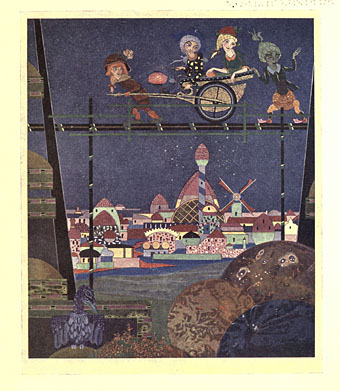
The Talking Thrush and Other Tales of India by William Crooke and William Henry Denham was first published in 1899; the version linked here is a reprint from 1922. The fin de siècle is evident in the Art Nouveau styling of some of the borders, the kind of detailing that Heath’s brother, Charles Robinson, often deployed. Heath’s later illustrations dropped the decoration to concentrate on human figures, caricature and the positive use of white space.

thrush03.jpg

Continue reading “The Talking Thrush and Other Tales of India”

Weekend links 238

hinrichsen.jpg

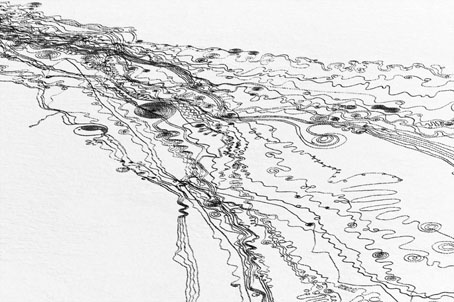
We Are The Water – Snow Drawings Project, Colorado (2014) by Sonja Hinrichsen with 50 volunteers.

• I don’t do end-of-year lists but Dennis Cooper does. My thanks to Dennis once more for including this blog among his selections. Also there is Jonathan Glazer’s film of Under the Skin, an adaptation of Michel Faber’s novel that impressed me as the most insidiously disturbing thing I’ve seen since Mulholland Drive. The Guardian‘s film critics agreed, making it their film of the year. I’d add to Peter Bradshaw’s appraisal by noting the superb score by Mica Levi, the refusal to spoon-feed the audience with explanations, and a refreshing absence of Hollywood gloss. Glazer’s film, like Kill List before it, shows that mundane British streets and interiors can still be a setting for serious horror.

• Related to the above: “I like Caravan, Coil—it’s very sad that they’re both dead now. In fact, Peter Christopherson, who was leader of Coil, contributed a song to a CD which I made for my wife for what we believed would be her last birthday.” Michel Faber talks to Hope Whitmore about Under the Skin and his new novel, The Book of Strange New Things. M. John Harrison recommends the latter on his own end-of-year list. In January Black Mass Rising will release a recording of The Art of Mirrors, Peter Christopherson’s homage to Derek Jarman from 2004.

David Bowie and band live on Musikladen in 1978: 40 minutes with Adrian Belew on squealing lead guitar, some Kurt Weill and an outstanding performance of “Heroes”.

• “Realism is a literary convention – no more, no less – and is therefore as laden with artifice as any other literary convention.” Tom McCarthy on realism and the real.

• Mixes of the week: The Best of the Best of the Best by TheCuriosityPipe, and Secret Thirteen Mix 138, a medley of post punk from Psyche.

• “We spent two weeks making the penises.” Livin’ Thing: An Oral History of Boogie Nights by Alex French and Howie Kahn.

• At Dangerous Minds: Seeing The Man Who Fell to Earth was one of the greatest experiences of Philip K. Dick’s life.

• Giving Voice to Our Pagan Past and Present: Pam Grossman on Witches, Women and Pop Occulture.

• Neglected last week (and linked everywhere but still a good one): The typography of Alien.

William Mortensen, the photographer who Ansel Adams called the Anti-Christ.

• Hear a track from analogue synthesizer virtuoso Kaitlyn Aurelia Smith.

Rick Poynor on illustrations by Bohumil Stepan for Crazy Fairy Tales.

12 excellent features from directors who never made another feature.

Werner Herzog Inspirationals

The Devil in the Hedgerow

New Warm Skin (1980) by Simple Minds | Rapture Of The Skin (1996) by Paul Schütze | Take Me Into Your Skin (2007) by Trentemøller

Philippe Caza covers

caza12.jpg

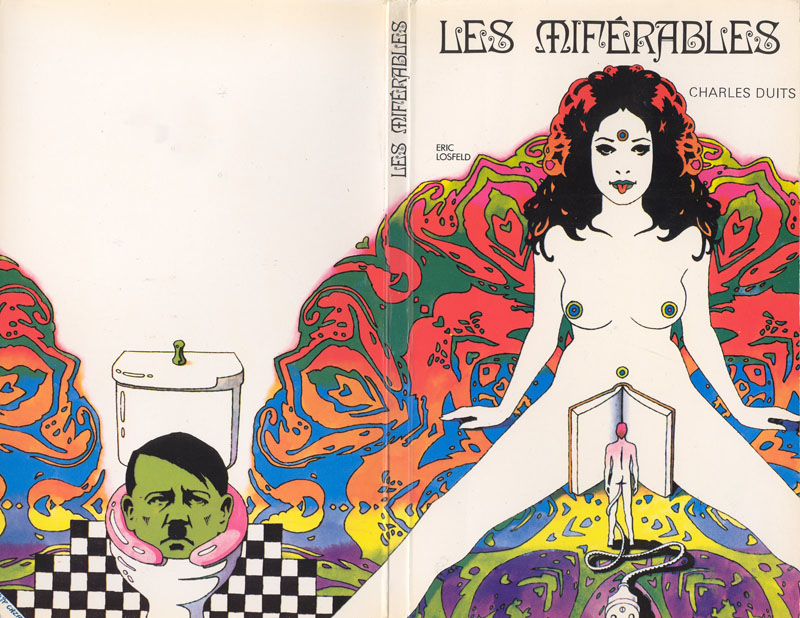
As usual, one thing leads to another. Research for yesterday’s post turned up a Caza book cover I’d not seen before. Les Miférables was published by Éric Losfeld in 1971, a year after producing Caza’s eyeball-searing psychedelic comic book Kris Kool. The author sounds like a character, a friend of André Breton who wrote a handful of novels inspired by his peyote experiences. As should be evident from the cover, Duits’ novel for Losfeld is more concerned with sex, described by this page (which is also the source of the cover art) as being “a kind of mixture of Eastern spirituality and unrestrained pornography”.

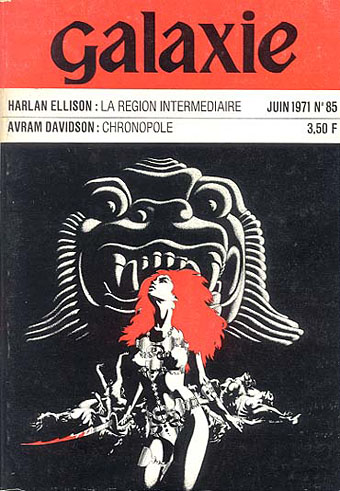
Caza’s art is often concerned with sex even if the subjects are the inhabitants of other planets. Many of the French comic artists of the 1970s produced covers for books and magazines but Caza alone seems to have been very popular as an artist for SF paperbacks. Noosfere has many examples from which I’ve chosen a small selection. (I’ve also had to hunt around for larger copies.) I wouldn’t mind seeing a collection of this artwork without the unsympathetic typography that spoils so many French novels.

caza05.jpg

caza07.jpg

Continue reading “Philippe Caza covers”

Jean de Bosschère’s The City Curious

bosschere01.jpg

“…it’s a shame there isn’t more of [Jean de Bosschère’s] idiosyncratic work at the Internet Archive,” I wrote in 2012. The reason that Bosschère’s books aren’t immediately to hand is that the Internet Archive has misspelled his name in many of their tags, not the first time that searches there are thwarted by errors or missing data (illustrators often go uncredited).

The City Curious (1920) is one of several books that Bosschère wrote and illustrated, this edition being translated into English by F. Tennyson Jesse. The whimsical story was presumably intended for children but Bosschère’s imagination is a peculiar one, and his figures are often so eccentric they need to be studied closely to pick out faces and limbs from their details and distortion. Eccentricity isn’t unknown in children’s stories but this one is much closer to Surrealism than the Surrealist’s favourite Lewis Carroll books. Many more of these illustrations may be browsed here or downloaded here.

bosschere02.jpg

bosschere03.jpg

Continue reading “Jean de Bosschère’s The City Curious”

Willy Pogány’s Rubáiyát

pogany01.jpg

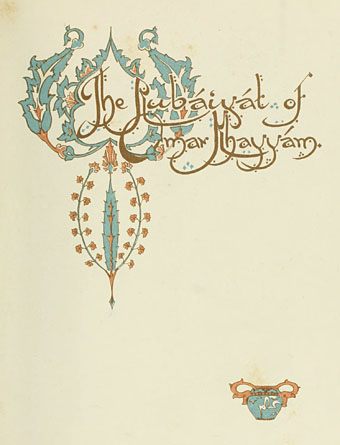
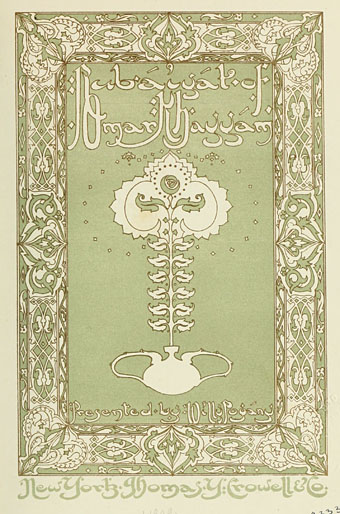
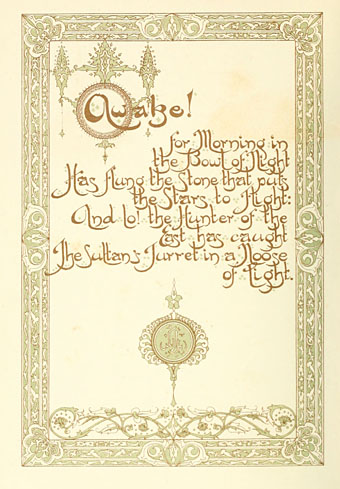
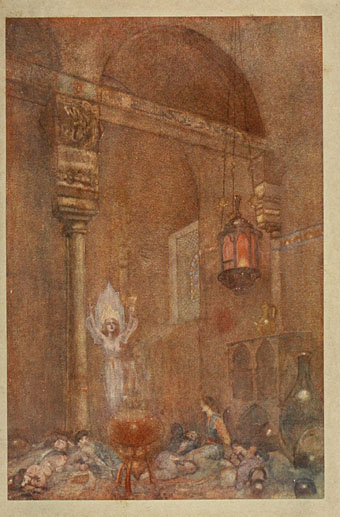
Willy Pogány’s work is no stranger to these pages, and I did once link to scans of his illustrated Rubáiyát although the site where those images were posted has since migrated. Pogány’s edition, which dates from 1909, presents the quatrains in beautifully lettered and decorated pages separated by watercolour plates. The Persian details may be Pogány’s own approximations but he thanks Arabic scholar Dr Julius Germanus for his assistance with the book. Some of the pages at the Internet Archive are the worse for wear but this is one edition where every page is worth seeing. Browse the rest of the book here or download it here. (There’s also a second Pogány edition from 1930—not 1900 as the site claims—which is worth looking at but seems crude in comparison to the earlier book.)

pogany02.jpg

pogany03.jpg

pogany04.jpg

Continue reading “Willy Pogány’s Rubáiyát”