The art of Ivan Bilibin, 1876–1942

bilibin1.jpg

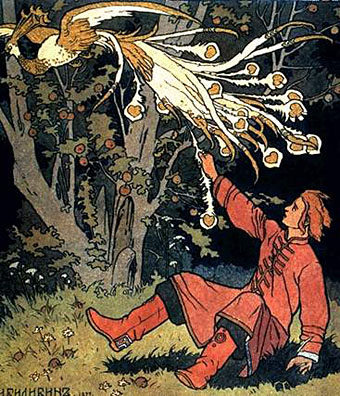
Ivan Tsarevich catching the Firebird’s feather (1899).

The Firebird again, one of Bilibin’s many illustrations of Slavic folktales. These examples are from the collection at Wikimedia Commons. SurLaLune has more of Tsarevitch Ivan, the Firebird and the Grey Wolf (1899) along with other Bilibin books while the trusty Internet Archive has a 1917 edition of Russian Wonder Tales.

bilibin2.jpg

Ex libris design (1922).

bilibin3.jpg

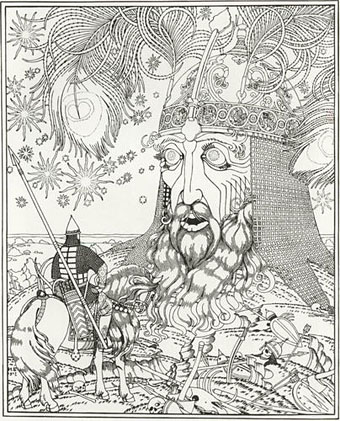
Ruslan and Giant’s Head (1917).

Elsewhere on { feuilleton }
The illustrators archive

Previously on { feuilleton }
Magic carpet ride

Grandville’s Un Autre Monde

grandville1.jpg

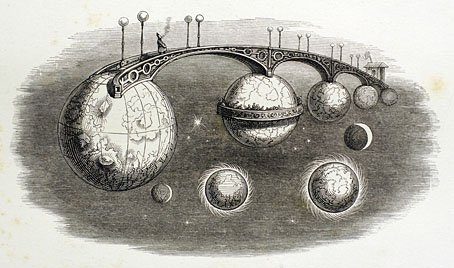
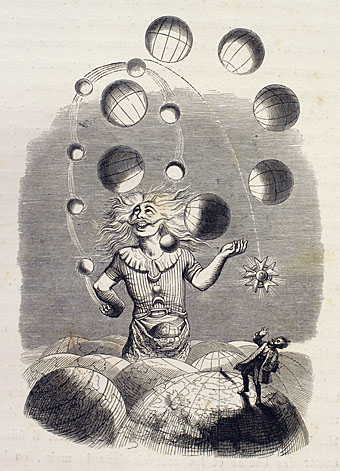
Un Autre Monde by JJ Grandville is a satire from 1844 whose wittily inventive illustrations were among that select group of prior works which received praise from the Surrealists. Some of them also act as early examples of humorous science fiction, and the two pieces shown here have been reprinted endlessly, they even turn up in histories of astronomy. The other illustrations are rarely seen, however, so it’s good to find a Flickr set with scans of the entire book. Comic artist Philippe Druillet took the bridge between worlds as the inspiration for his Lone Sloane story Torquedara Varenkor: The Bridge Over the Stars in 1970, turning the already unlikely construction into a galaxy-spanning edifice.

grandville2.jpg

Elsewhere on { feuilleton }
The etching and engraving archive

Previously on { feuilleton }
Druillet meets Hodgson

Ronald Balfour’s Rubáiyát

balfour1.jpg

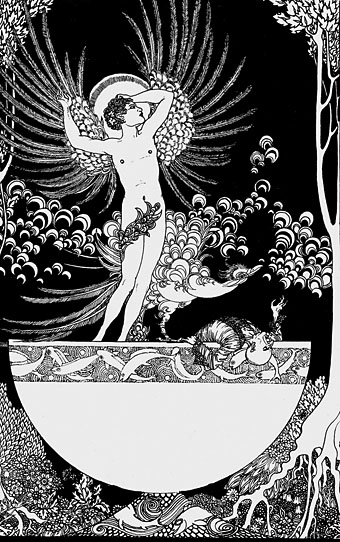
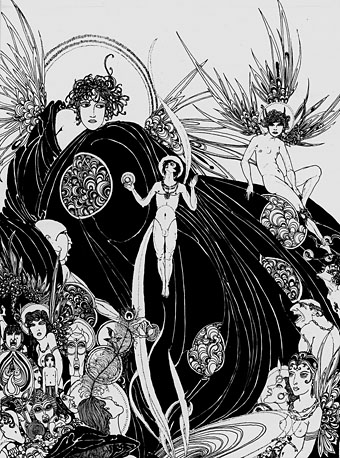
If the work of illustrator Ronald Balfour (1896–1941) isn’t as well-known as it should be it’s probably because his 1920 edition of the Rubáiyát is his sole major work according to a recent feature in Book & Magazine Collector. These illustrations were produced when he was 24 and while the drawing can be uncertain in places, they’re really splendid examples of the post-Beardsley style, owing far more to Aubrey’s flourishes and details than to the usual Arabian exotica found in other Omar Khayyam adaptations. As usual I love the profusion of peacocks and winged figures, and, unlike many rare editions of this period, we’re fortunate that someone has put all the illustrations onto Flickr. Feast your eyes here.

balfour2.jpg

Elsewhere on { feuilleton }
The illustrators archive

London Underground posters

underground.jpg

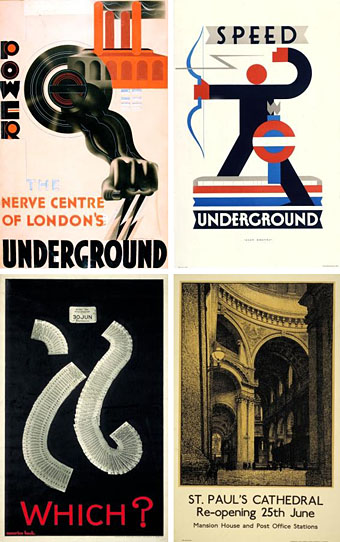
top left: Power by Edward McKnight Kauffer; top right: Speed Underground by Alan Rogers
bottom left: Which? by Maurice Beck; bottom right: St Paul’s Cathedral by Robert Sargent Austin

A small sample of the many great posters commissioned by London Transport during the last century, part of the collection at the London Transport Museum. These are all from the 1930s. The design and iconography of London’s Underground system has occupied much of my attention this year due to a substantial book project; more about that later. Meanwhile, Jonathan Glancey was asking earlier this week whether the expansion of the Underground system means the end of Harry Beck’s classic and much-imitated map design.

Previously on { feuilleton }
Battersea Power Station
The Mentor
The art of Cassandre, 1901–1968

The art of Sydney R Jones, 1881–1966

jones1.jpg

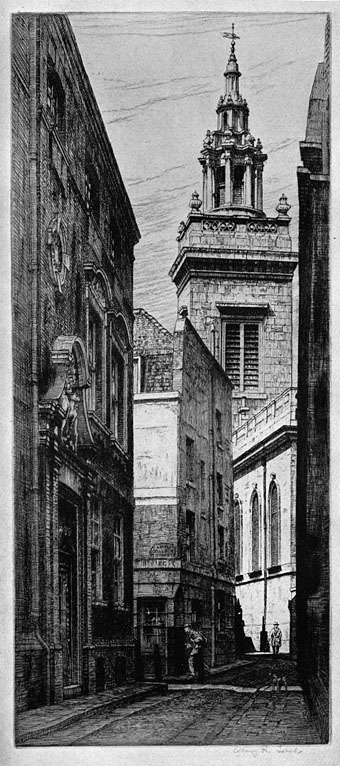
Church of St Michael Paternoster Royal and Innholder’s Hall (1927).

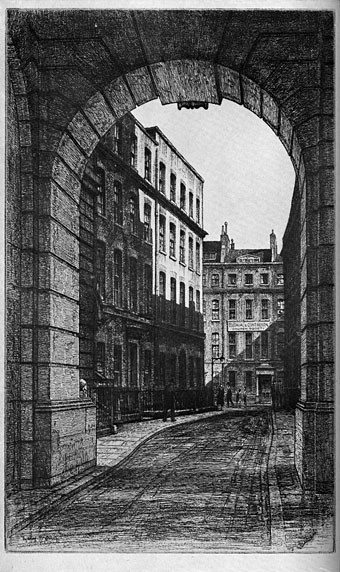
One of the better secondhand book discoveries of the past couple of years was London Triumphant, a collection of etchings and pencil drawings of the city’s streets and buildings by Sydney R Jones. The etchings immediately seized my attention, being the kind of closely-hatched architectural renderings which I enjoy, but the book as a whole is very good as it details the artist’s wanderings with a young student friend through the city. Jones established himself as an illustrator of books with titles like The Manor Houses of England and The Charm of the English Village. His London book appeared in July 1942 and collected many of his earlier views of the city as a deliberate morale boost for the populace who were watching the capital’s historic buildings yield to the bombs of what he calls “the foul Hun”. Jones catalogues the destruction with dismay as he recounts the history of the city from Roman times but ends on a note of defiant optimism, wondering what new metropolis might rise from the destruction. He mentions in passing that cult locale of mine, the Essex Street Water Gate, but doesn’t provide a drawing unfortunately. The book proved to be very popular, and the copy I found is a fifth printing from 1947.
jones2.jpg

Serjeant’s Inn, Fleet Street (1926).

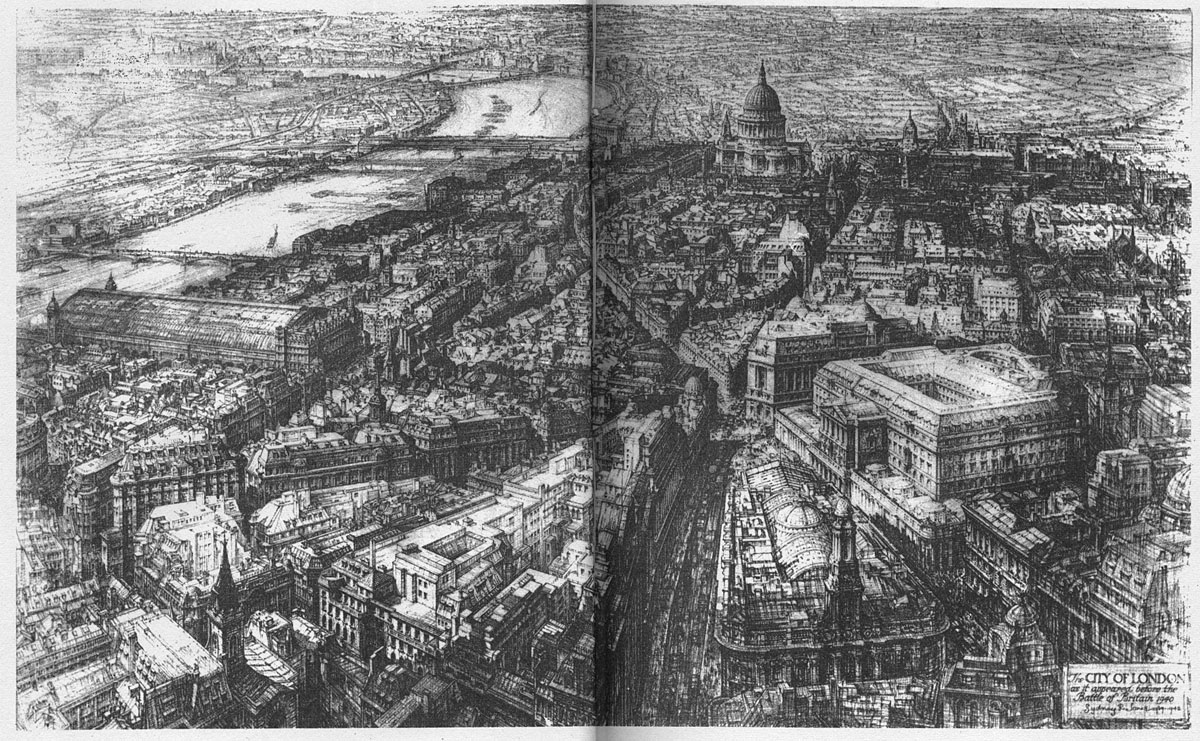
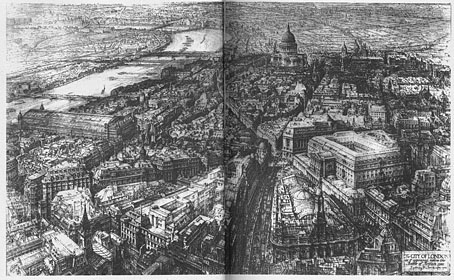
This week’s book purchase was a welcome find, then, being London Triumphant‘s sequel, Thames Triumphant, in which Jones follows the course of the river from its spring at Coberley, through Oxford and on down to Greenwich. There aren’t as many dramatic views this time, and many of the country scenes have that kind of polite blandness about them which you find in much book illustration of the period. But Jones does provide a couple of his speculative and spectacular views over the city, including the one below which shows the City of London as it was in 1939. Much of the foreground was bombed flat during the war so a drawing such as this provides a valuable record of how London’s financial centre looked before the arrival of the Luftwaffe and the office blocks. Jones lived to see much of the subsequent reconstruction—I can’t help but wonder what he made of it all.
city.jpg

The City of London, 1939; click for a bigger view.

Elsewhere on { feuilleton }
The etching and engraving archive
The illustrators archive

Previously on { feuilleton }
Pite’s West End folly
Jessie M King’s Grey City of the North
Architectural renderings by HW Brewer
The Essex Street Water Gate, London WC2