
Weekend links 127

whirlpool.jpg

M15, The Whirlpool Galaxy photographed by Martin Pugh. The overall and deep space winner of Astronomy Photographer of the Year, 2012.

The Final Academy, the series of William Burroughs-themed events that took place in London and Manchester in 1982, will be celebrated at the Horse Hospital, London, on 27th October. Academy 23, a publication edited by Matthew Levi Stevens, will include my report on the Manchester Haçienda performances.

• “Architects are the last people who should shape our cities,” says the thrillingly pugnacious Jonathan Meades in a piece from his new writing collection Museums Without Walls. Andy Beckett reviews the book here.

• Ex-Minimal Compact singer/bassist Malka Spigel talks about her new album, Every Day Is Like The First Day, which can be streamed in full here.

What’s new about the current acknowledgments page is that it’s unsolicited—it appears like an online pop-up ad, benefiting no one but the author and his comrades. This is surely why these afterwords are often so garrulously narcissistic and strewn with clichés. The most radical experimentalist adheres to the most mindless acknowledgments-page formula; the most stinging social critic suddenly becomes Sally Field winning an Oscar.

Sam Sacks at the New Yorker on the blight of novelists’ acknowledgments pages. DG Myers at Commentary Magazine piles on.

• Another streaming album: Composed by Jherek Bischoff. Try Insomnia, Death & The Sea featuring Dawn McCarthy.

• Film of Lindsay Kemp being interviewed in 1977 about his production of Salomé.

Electronic Performers (2004): a video by Machine Molle for the song by Air.
djuna.jpg

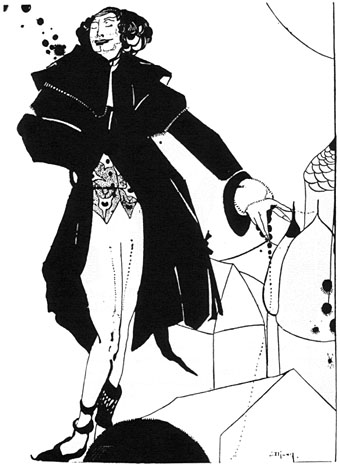
One of a series of Beardsley-like drawings by Djuna Barnes posted at Strange Flowers. The resurgent Ms. Barnes is mentioned three times in this Terry Castle review of All We Know: Three Lives by Lisa Cohen.

Fictitious Dishes, meals from novels photographed by Dinah Fried.

• Life, the Dinosaurs & Everything: Cosmicomics by Italo Calvino.

The Baby Died: Morbid Curiosities found in Old Newspapers.

• Portishead’s Adrian Utley gives a tour of his synth collection.

• Minimal Compact: Babylonian Tower (1982) | Not Knowing (1984) | When I Go (1985) | Nil Nil (1987).
Beardsley and His Work

beardsley1.jpg

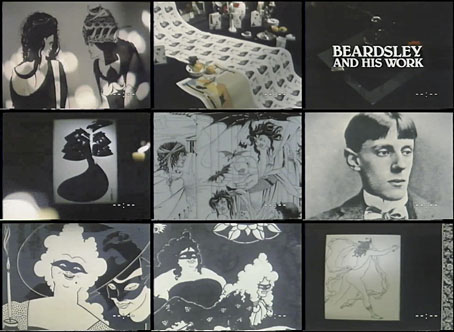
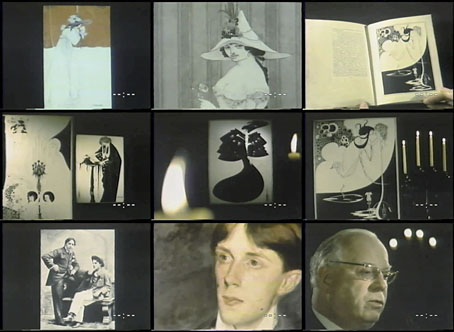
Back in 2008 I wrote at some length about Aubrey, an excellent BBC TV dramatisation of the last years of Aubrey Beardsley’s life written by John Selwyn Gilbert, and screened once in 1982. Mr Gilbert himself added a comment to that post in which he mentioned that he’d written and directed a documentary which was screened in tandem with the play, Beardsley and His Work. I have the documentary on tape but it’s a copy of a copy and is also missing ten minutes or so of its opening so it’s good to find that the entire thing is now on YouTube. (Thanks to Dominique for drawing my attention to this.)

Beardsley and His Work is essential viewing for Beardsleyphiles since it’s the only place you’ll see Beardsley scholar Brian Reade—author of the huge monograph, Beardsley (1967)—and Brigid Brophy—author of two excellent studies, Black and White (1968) and Beardsley and His World (1976)—talking at length about the artist. In addition there’s another artist, Ralph Steadman, examining some of Beardsley’s original artwork and discussing the techniques of ink drawing. The fifty-minute film is divided into four chunks, unfortunately, but is otherwise complete:

Part one | part two | part three | part four

beardsley2.jpg

Elsewhere on { feuilleton }
The Aubrey Beardsley archive

More from the Decadent Dutch

netherlands3.jpg

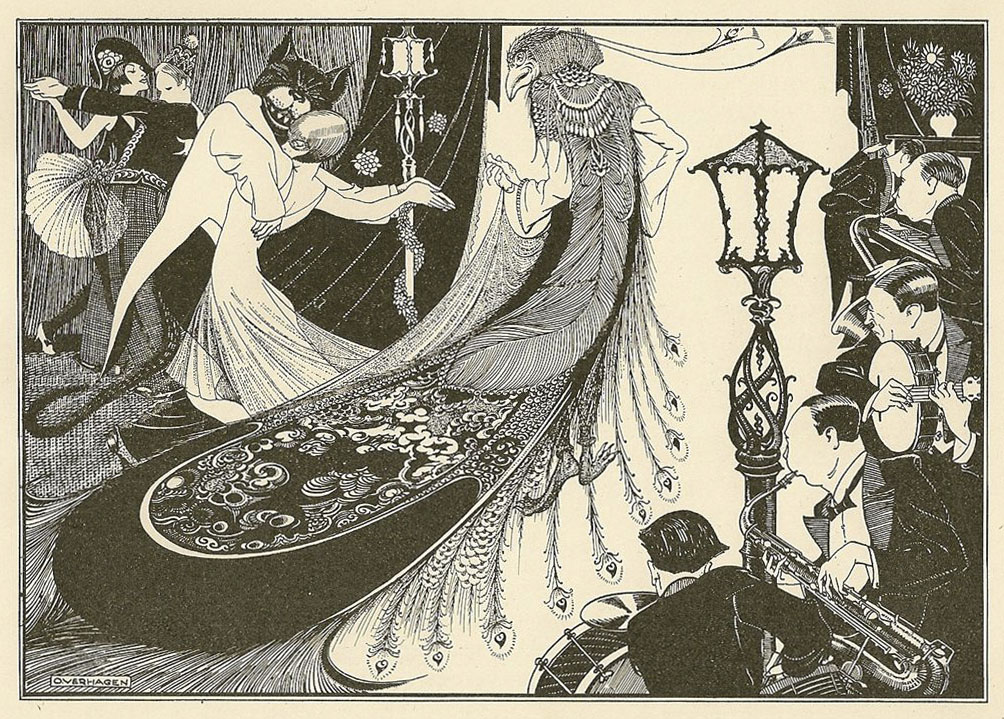
Illustration by Otto Verhagen from Yolanda – Het Boek van Bloei (1931) by Nan Copijn.

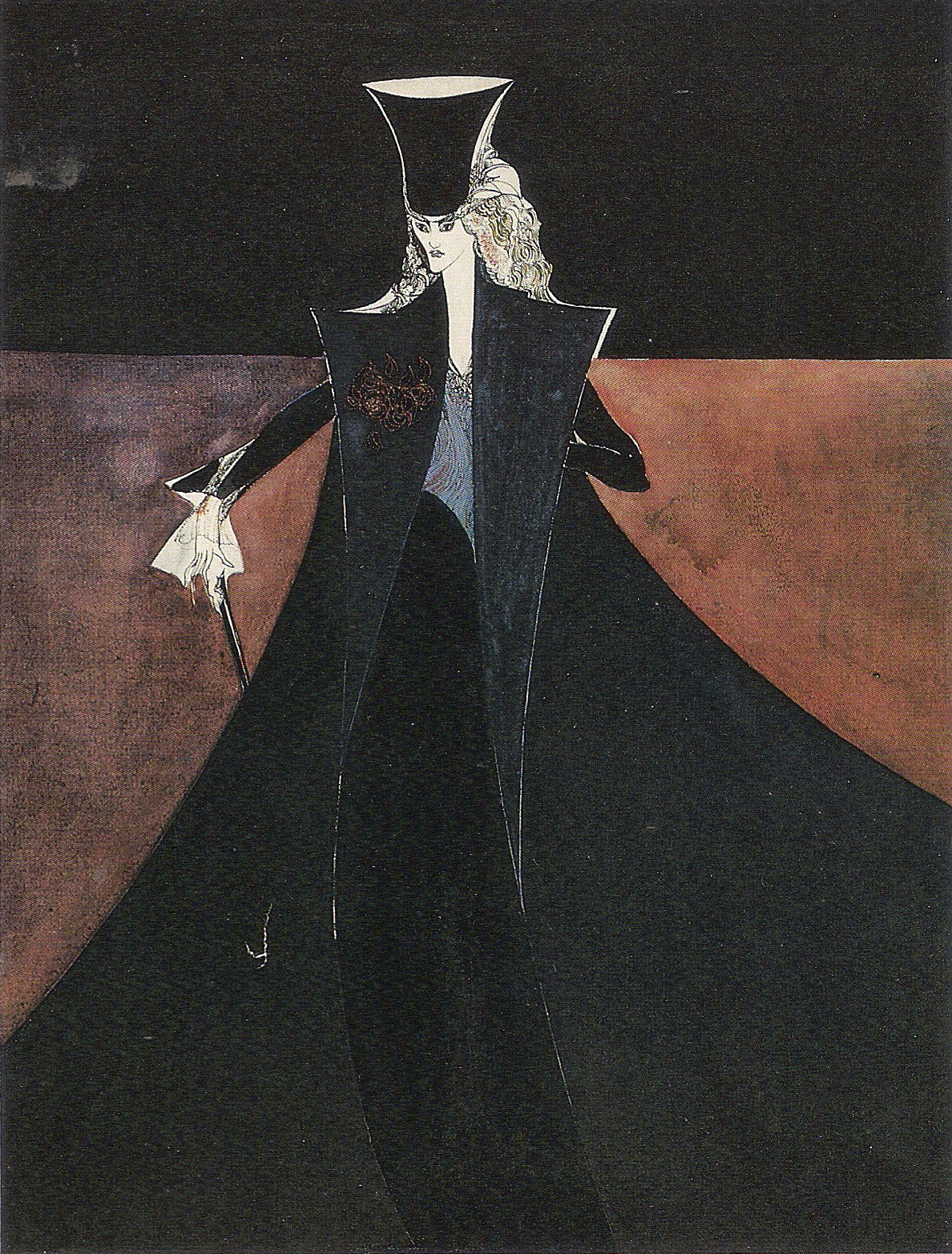
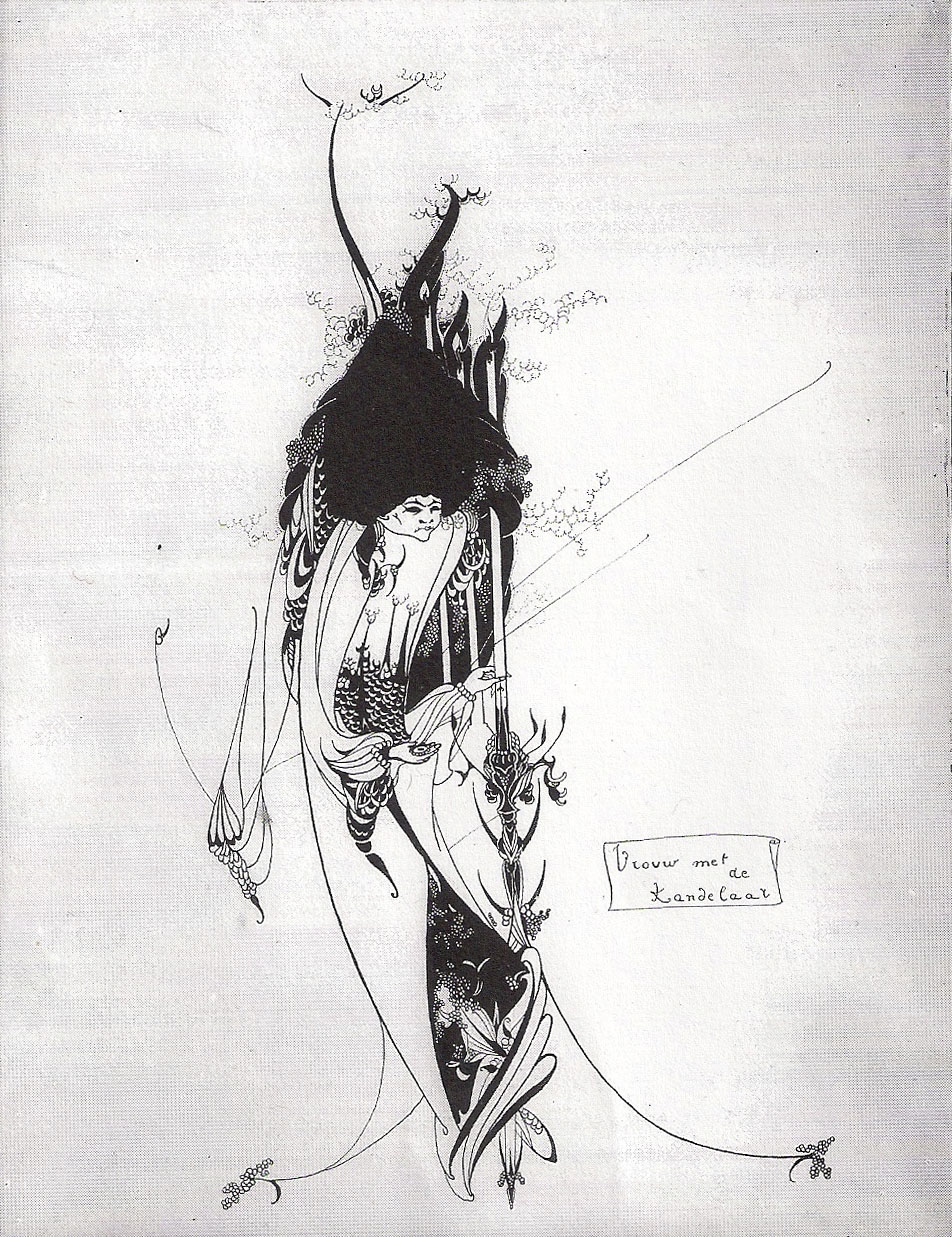
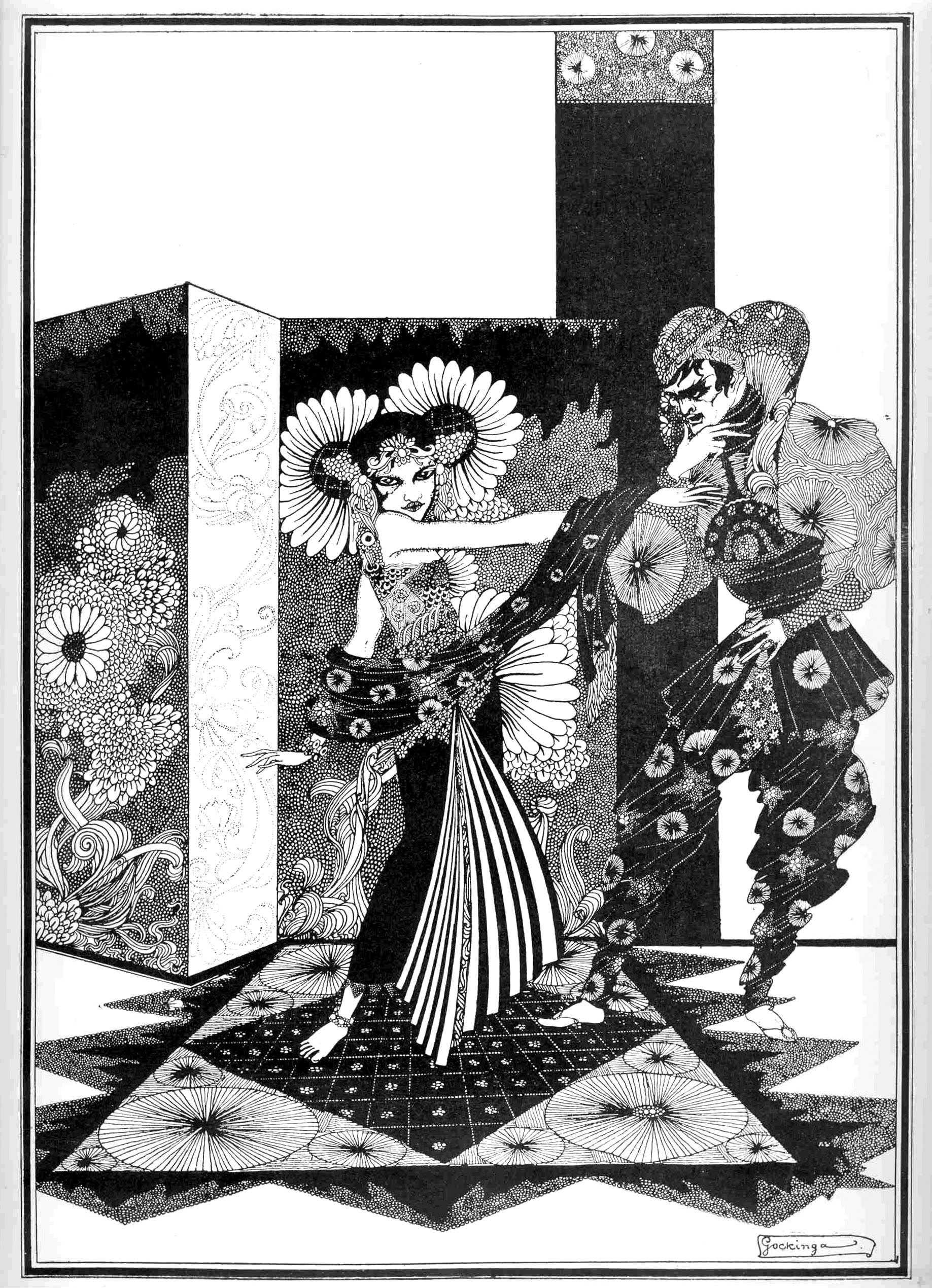
Would-be Decadents is perhaps a better label, the Decadent ship having set sail across an absinthe-tinted sea by the time these artists were putting pen to paper. Their drawings are another set of scarce images forwarded by Sander Bink who maintains the Rond1900 site. (See this earlier post for further examples.) Sandor also sent artwork details which I’ve quoted below. In addition to yet more overt Beardsley influence (the Verhagen above and René Gockinga’s woman with a candle) there’s also a striking Harry Clarke influence in the second Gockinga drawing which is closer to Clarke’s idiosyncratic style than (for example) these later drawings by Cardwell Higgins. Seeing one artist borrow the mannerisms of another is a common thing; far less common is finding an artist who adopts different styles the way Gockinga does. Incidentally, the Couperin novel mentioned below was published with a typically elegant cover design by Symbolist artist Jan Toorop.

(Thanks again Sander!)

netherlands2.jpg

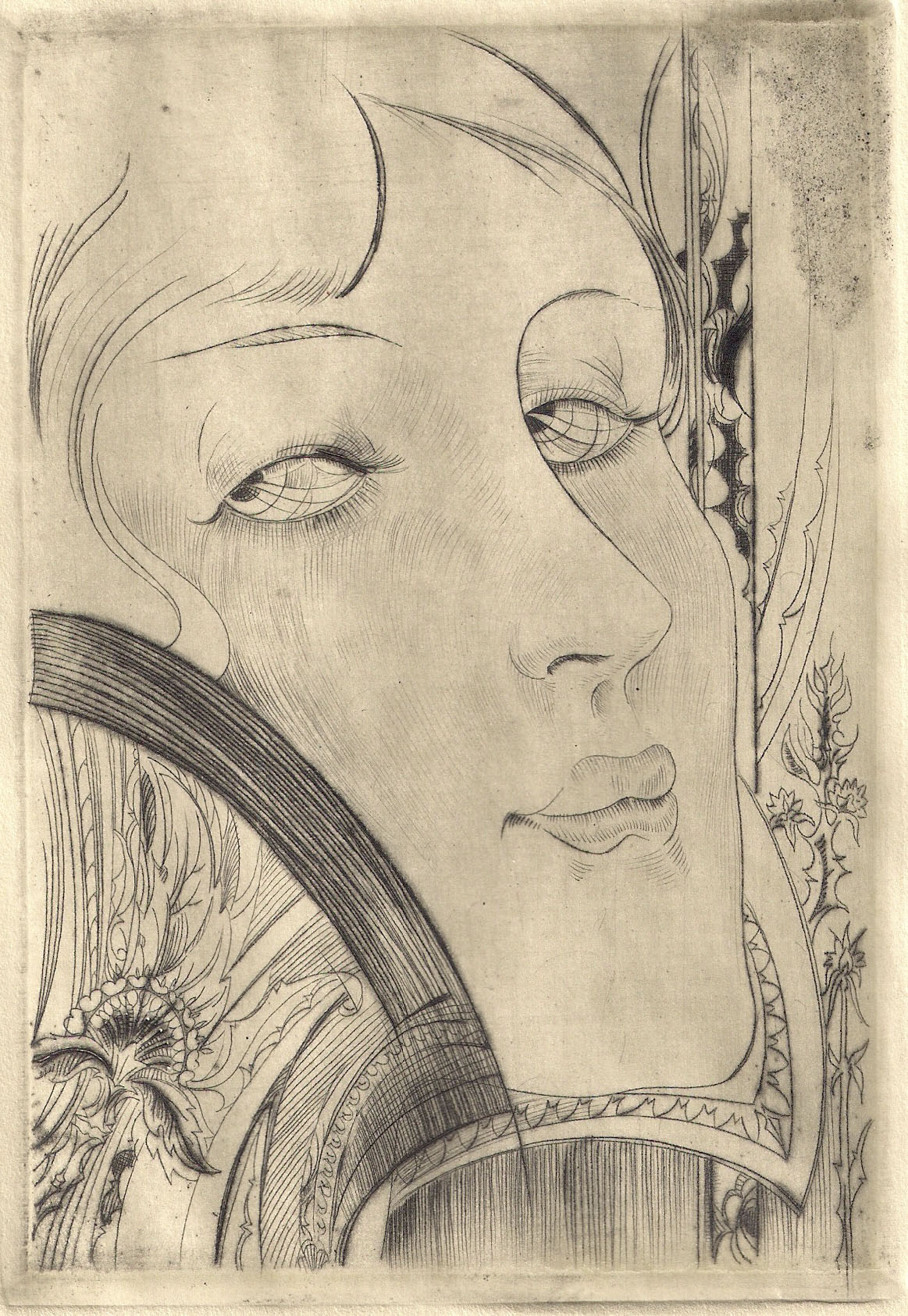
Otto Verhagen. Illustration (not used as such) for Couperus’ Psyche (1898). Engraving, ca 1913. Collection Sander Bink. This is a personage from the story but to me it looks somewhat like an Oscar Wilde portrait!
Illustration for the very popular fairy tale for adults Psyche by Louis Couperus (1863–1923). You might have heard of Couperus: Oscar Wilde appreciated his decadent, somewhat homosexual, novel Noodlot (1890), translated as Footsteps of fate. Some letters were exchanged. Couperus’ wife Elisabeth translated Dorian Gray in 1893. (First Dutch translation.)

netherlands1.jpg

Sortie (1904) by Carel de Nerée tot Babberich. Museum of Modern Art, Arnhem (from De Neree catalogue, 1986). Verhagen’s Dorian Gray seems to be influenced by this.

netherlands4.jpg

Woman with candle by René Gockinga, ca 1916. Current location unknown.

netherlands5.jpg

Indonesian lady dancing [as I call it—SB] by René Gockinga. From the Indonesian satirical-political periodical De Zweep [The Whip] 1922.

Previously on { feuilleton }
Further echoes of Aubrey
A Wilde Night
Echoes of Aubrey
After Beardsley by Chris James
Illustrating Poe #1: Aubrey Beardsley
The art of Karel de Nerée tot Babberich, 1880–1909
Beardsley’s Rape of the Lock
The Savoy magazine
Beardsley at the V&A
Merely fanciful or grotesque
Aubrey Beardsley’s musical afterlife
Aubrey by John Selwyn Gilbert
“Weirdsley Daubery”: Beardsley and Punch
Alla Nazimova’s Salomé

Ephraim Moses Lilien’s Lieder des Ghetto

lilien01.jpg

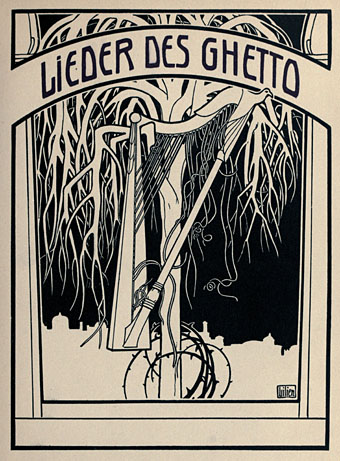
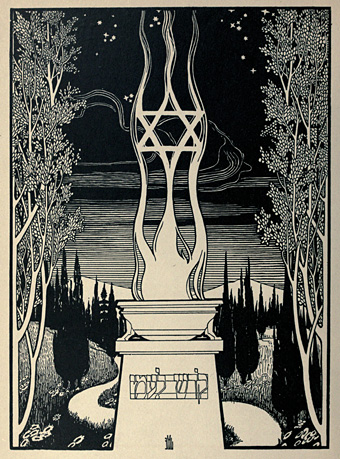
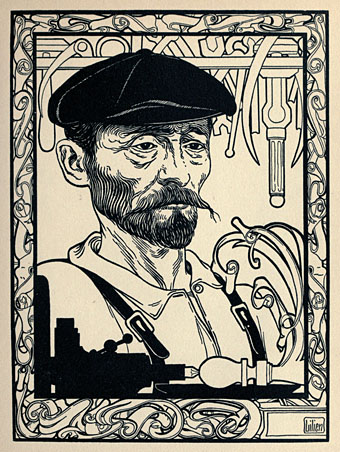
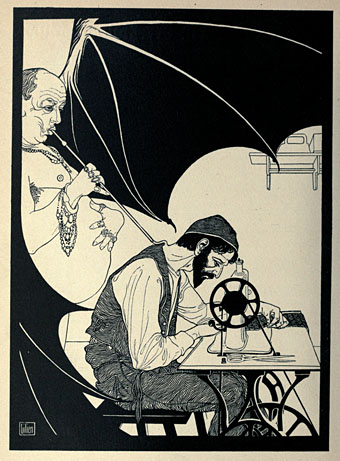
There are no golems in Morris Rosenfeld’s Songs of the Ghetto (1899), translated here by Berthold Feiwel for a German readership as Lieder des Ghetto (1902). But the Berlin edition does contain many superb full-page illustrations and embellishments by Ephraim Moses Lilien (1874–1925), a German artist whose work has featured here on a number of occasions. I’d seen a couple of these drawings before but hadn’t quite registered the pronounced Beardsley influence until now. Aubrey had only died four years before this book was published, and while Lilien’s style is strong enough to establish its own identity you can find a Beardsley-like quality not only in the heavy blacks and areas of white, but also in the border designs, the treatment of landscape and foliage, and even the jewellery on the demon figure below, details which resemble the similar jewellery on Beardsley’s title page for the story of Ali Baba. There’s more of Lilien’s work at this Flickr set while the rest of the book may be browsed or downloaded at the Internet Archive.

lilien02.jpg

lilien03.jpg

lilien04.jpg

Continue reading “Ephraim Moses Lilien’s Lieder des Ghetto”

Eleanor Fortescue-Brickdale’s illustrated Tennyson

brickdale01.jpg

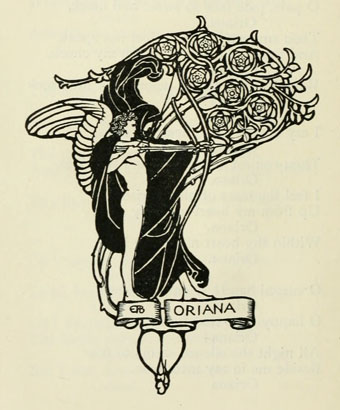
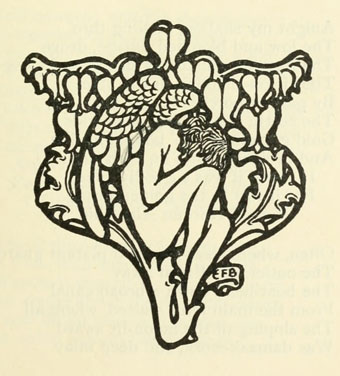
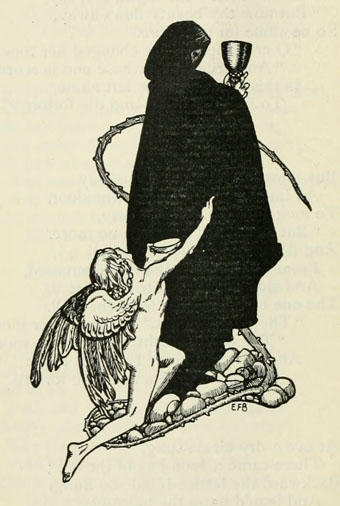
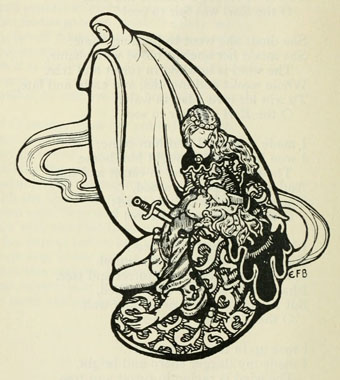
Drawings from an edition of Alfred Tennyson’s Poems illustrated by British artist Eleanor Fortescue-Brickdale (1872–1945) which was published by George Bell & Sons in 1905. The book was part of a series of illustrated poetry collections that included several books featured here in previous posts: Poems by John Keats and Poems by Percy Bysshe Shelley both illustrated by Robert Anning Bell, and The Poems of Edgar Allan Poe illustrated by William Heath Robinson. There was also an edition of Browning illustrated by Byam Shaw at whose art school Ms Fortescue-Brickdale was employed as a teacher. Her Tennyson drawings aren’t entirely to my taste, I’ve omitted the full-page works which are rather static pre-Raphaelite-derived things. Far better are these vignettes whose heavy outlines and sinuous curves resemble both Heath Robinson’s early illustrations and Pamela Coleman Smith‘s famous Tarot card designs. As usual the Internet Archive has the whole book and (should anyone require more Tennyson) Ms Fortescue-Brickdale’s take on that Victorian staple Idylls of the King.

brickdale02.jpg

brickdale03.jpg

brickdale04.jpg

Continue reading “Eleanor Fortescue-Brickdale’s illustrated Tennyson”