Paging Doctor Benway

benway1.jpg

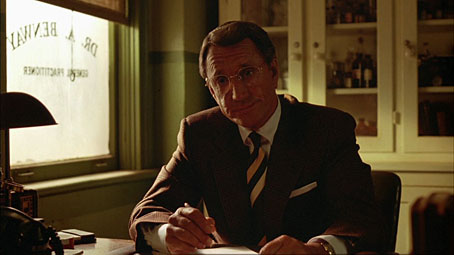
Roy Scheider as Dr A. Benway in Naked Lunch (1991).

1: Naked Lunch (1959) by William Burroughs

So I am assigned to engage the services of Doctor Benway for Islam Inc.

Dr. Benway had been called in as advisor to the Freeland Republic, a place given over to free love and continual bathing. The citizens are well adjusted, cooperative, honest, tolerant and above all clean. But the invoking of Benway indicates all is not well behind that hygienic facade: Benway is a manipulator and coordinator of symbol systems, an expert on all phases of interrogation, brainwashing and control. I have not seen Benway since his precipitate departure from Annexia, where his assignment had been T.D.—Total Demoralization. Benway’s first act was to abolish concentration camps, mass arrest and, except under certain limited and special circumstances, the use of torture.

“I deplore brutality,” he said. “It’s not efficient. On the other hand, prolonged mistreatment, short of physical violence, gives rise, when skillfully applied, to anxiety and a feeling of special guilt. A few rules or rather guiding principles are to be borne in mind. The subject must not realize that the mistreatment is a deliberate attack of an anti-human enemy on his personal identity. He must be made to feel that he deserves any treatment he receives because there is something (never specified) horribly wrong with him. The naked need of the control addicts must be decently covered by an arbitrary and intricate bureaucracy so that the subject cannot contact his enemy direct.”


2: Doctor Benway Operates (1983)
benway6.jpg

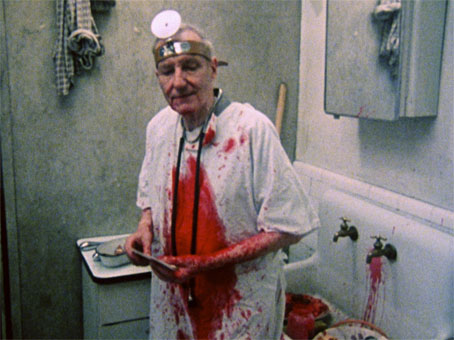
A short sequence from Howard Brookner’s Burroughs: The Movie. Burroughs himself takes the role of the notorious doctor in a staging of the operation scene from Naked Lunch.


3: Repo Man (1984)
benway3.jpg

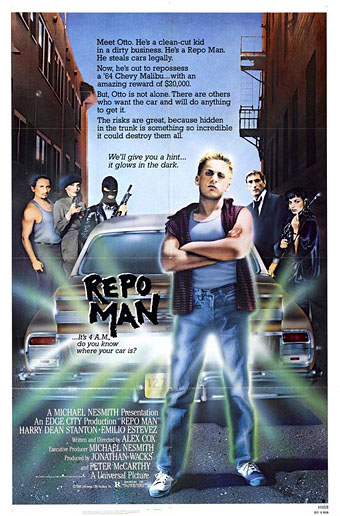
Alex Cox’s feature film includes a hospital scene in which a Doctor Benway and a Mr Lee are paged over the PA. As I recall, Mr Lee is requested to “return the drugs”. There’s apparently a similar scene in Dark City (1998) but if so this must be in the director’s cut which I’ve yet to see.


4: Nomads (1986)
benway7.jpg

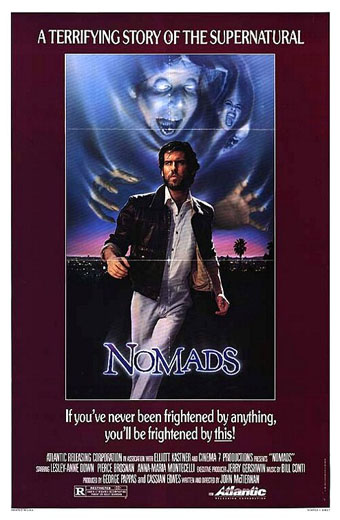
I’ve not seen John McTiernan’s thriller but it contains another instance of a Doctor Benway being paged at a hospital. (Thanks, Márcio!)


5: Naked Lunch (1991)
benway2.jpg

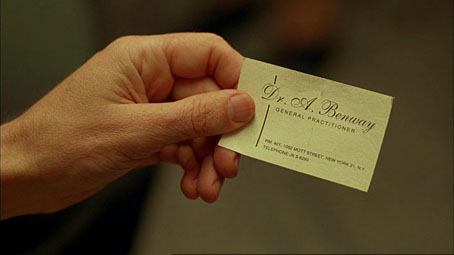
David Cronenberg’s film shows the address of Benway’s surgery to be in Mott Street, New York. This happens to be in the Chinatown area of the city, and is also the location of the Genco Olive Oil Company in The Godfather: Part II.


6: Love is the Devil (1998)
benway9.jpg

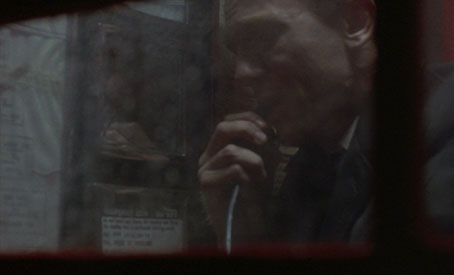
John Maybury’s Francis Bacon bio-pic features an early screen appearance by Daniel Craig as Bacon’s doomed lover, George Dyer. The latter’s descent into drug-fuelled self hatred includes this scene in a dimly-lit phonebox where Dyer calls up a “Dr. Benway” to request another angry fix. The BFI subtitles give the name as “Banway” but the reference is hardly accidental, especially when Bacon and Burroughs were friends.


7: Standards (2001) by Tortoise
benway4.jpg

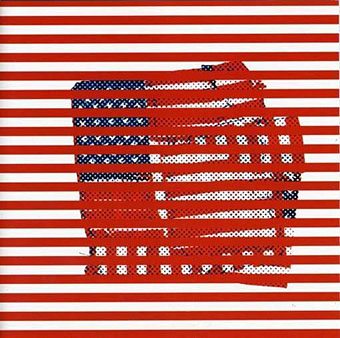
Track 4: Benway.


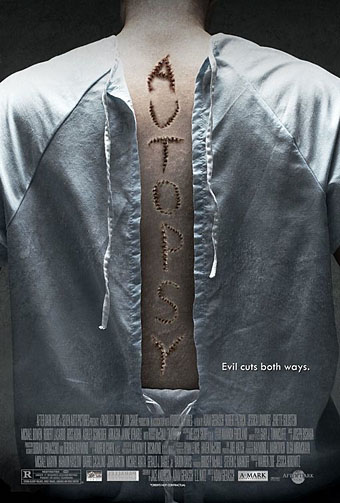
8: Autopsy (2008)

benway8.jpg

Adam Gierasch’s horror film has Robert Patrick playing a Doctor Benway. With a title like that it seems almost inevitable.


9: Beyond the Black Rainbow (2010)
benway5.jpg

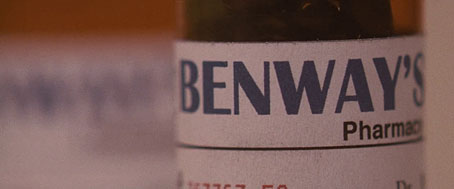
Near the beginning of Panos Cosmatos’s feature film Barry Nyle (Michael Rogers) is seen consuming a quantity of unspecified pills. A brief shot shows the origin of the drugs. Some of the experiments taking place in the Arboria Institute where Nyle works aren’t far removed from either Cronenberg’s or Burroughs’ fictions.

Elsewhere on { feuilleton }
The William Burroughs archive

Weekend links 252

brizzi.jpg

Waiting by Liz Brizzi.

• “Music, politics, sex, and art were also widely represented by Evergreen. Gerald Ford famously maligned the magazine on the floor of Congress for printing the likeness of Richard Nixon next to a nude photo.” Jonathon Sturgeon on the return of an avant-garde institution.

• “The hallucinogenic properties of language are widely recognized by all repressive societies…which treat words like other tightly controlled substances.” Askold Melnyczuk reviews Where the Bird Sings Best, a novel by Alejandro Jodorowsky.

• Mixes of the week: A Mix For Thomas Carnacki by Jon Brooks whose Music for Thomas Carnacki has been reissued on vinyl; Solid Steel Radio Show 27/3/2015 by DJ Food.

One of the few vice-friendly cities left in the US, New Orleans remains his spiritual home, or whatever the atheist equivalent is. Waters’ supposed favourite bar in the world is here in the historic French Quarter. The Corner Pocket is a gay dive bar with tattooed strippers—filthy in exactly the way Waters likes.

“Trash and camp just don’t cut it any more,” he told a rapt audience at his interview panel on Friday. “Filth still has a punch to it. The right kind of people understand it and it frightens away the timid.”

John Waters growing older disgracefully

Songs of a Dead Dreamer and Grimscribe by Thomas Ligotti are being republished in a single edition by Penguin. Jeff VanderMeer wrote the foreword.

• “The film is brimming with Bacchanalian revelry, arcane mystery and mortal dread.” Robert Bright on The Saragossa Manuscript by Wojciech Has.

Alistair Livingston has posted page scans from When Darkness Dawns, volume two of his zine from the early 80s, The Encyclopedia of Ecstasy.

• “Without first understanding the flâneur we cannot understand the development of arcades,” says Aaron Coté.

• At A Journey Round My Skull: Jo Daemen cover designs; at 50 Watts: the art of Manuel Bujados.

• Vast spacecraft and megastructures: Jeff Love on the science-fiction art of Chris Foss.

• At Dangerous Minds: RE/Search’s Vale on JG Ballard and William Burroughs.

• RIP John Renbourn

Pentangling (1968) by Pentangle | Lyke-Wake Dirge (1969) by Pentangle | Lord Franklin (1970) by Pentangle

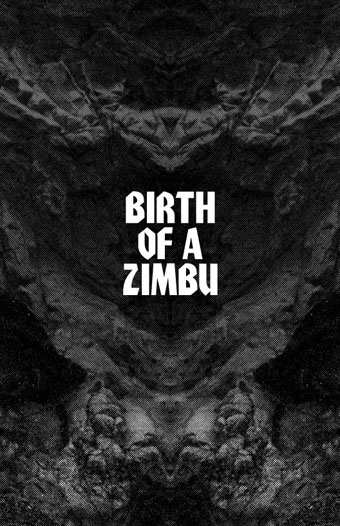
Birth of a Zimbu

zimbu1.jpg

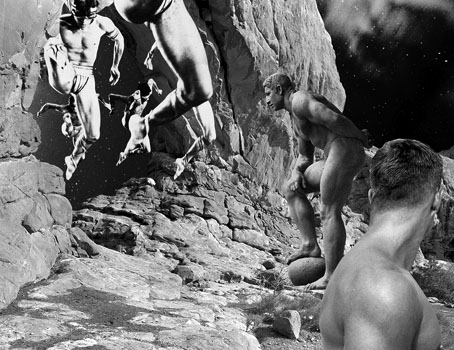
Birth of a Zimbu by Christopher Schulz is another addition to the growing collection of artworks based on William Burroughs’ The Wild Boys (1971), in this case a 52-page collection of “visual reveries made from collaged parts of dated gay porn, ancient ruins, and other various unrelated sources.” The book costs $10 and may be previewed and ordered here.

zimbu2.jpg

The Zimbus are Burroughs’ solution to the problem of reproduction (or regeneration) among the Wild Boys, his army of eternal teenage boys at war with the world at large in a dystopian 1988. Warfare means casualties so in order to maintain their homosocial, homoerotic tribal existence they gather at special times to perform sex-magic rituals that summon the “Zimbu” spirit forms of dead Wild Boys. The Zimbus are incarnated as new Wild Boys after being inseminated and fully materialised.

Burroughs wasn’t short on fantastic concepts but his ideas are often delivered and dismissed in a few lines. By contrast, the creation of the Zimbus is given pages of detailed description, the separatist, semi-human world of the Wild Boys being one to which he devoted a great deal of imaginative attention. I’ve linked before to Phil Hine’s essay, Zimbu Xototl Time, which examines the Zimbu idea at some length, drawing comparisons to similar ideas in anthropology and other fiction. If I ever get round to finished the long-gestating Wild Boys portfolio I may be able to show some Zimbu manifestations of my own.

Elsewhere on { feuilleton }
The William Burroughs archive

The Invasion of Thunderbolt Pagoda, a film by Ira Cohen

invasion1.jpg

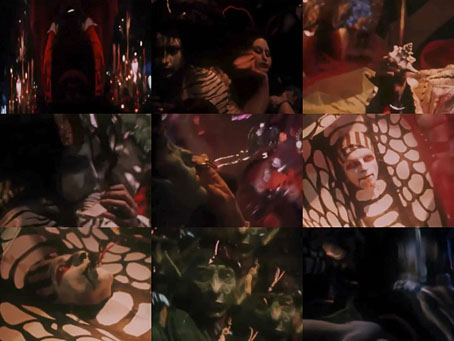
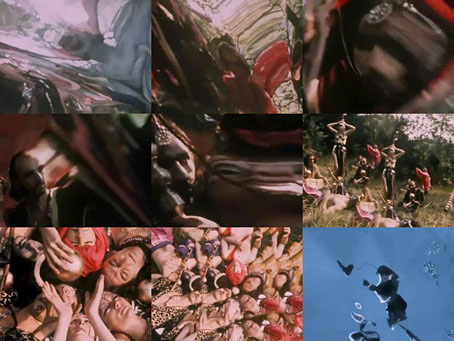
An inevitable follow-up to yesterday’s film, Ira Cohen’s fantasia from 1968 is one of the classics of psychedelic cinema, a Kenneth Anger-like delirium that makes great use of Cohen’s obsession with Mylar distortions. Anger’s Inauguration of the Pleasure Dome is the model here, with a cast of revellers adopting various guises; Cohen himself appears as The Majoon Traveler and Death. The long version of the film at YouTube is the expanded edition that Arthur magazine released in 2006. Unfortunately the original score by Angus MacLise has been replaced by something that’s even more annoying that the jokey music for NY, NY. I’d recommend finding a suitably trippy substitute.

invasion2.jpg

Previously on { feuilleton }
Ira Cohen, 1935–2011
Dreamweapon: The Art and Life of Angus MacLise, 1938–1979
William Burroughs by Ira Cohen, 1967
The Invasion of Thunderbolt Pagoda

Weekend links 242

kroll.jpg

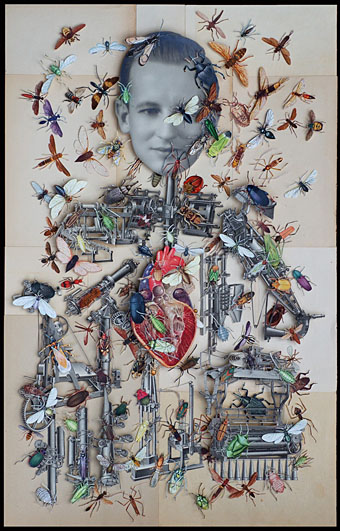
Ghost in the Machine (2012) by Hope Kroll.

Nothing Here Now But The Recordings, an album of William Burroughs’ personal tapes originally released by Industrial Records is reissued on vinyl this month. Andrew Spragg reviews it here. Burroughs’ readings fill several collections but this one was the first I owned, and it’s always been a favourite. The album features recordings of early texts such as The Last Words of Hassan I Sabbah, as well as cut-up tape experiments which fuelled some of the chapters in the Nova Trilogy.

• The Melancholy of Perversion: a study of Caitlín R. Kiernan’s Metamorphosis A by Scott Dwyer. More weird fiction: “Written with real psychological depth, these enigmatic tales rise far beyond straightforward ghost stories.” Chris Power on Robert Aickman.

• At Dangerous Minds: Gay Semiotics, a taxonomy of San Francisco life in the 1970s. Related: The case of One, a gay magazine from Los Angeles prosecuted for obscenity in 1958.

Poe’s mind was by no means commonplace. In the last year of his life he wrote a prose poem, Eureka, which would have established this fact beyond doubt—if it had not been so full of intuitive insight that neither his contemporaries nor subsequent generations, at least until the late twentieth century, could make any sense of it. Its very brilliance made it an object of ridicule, an instance of affectation and delusion, and so it is regarded to this day among readers and critics who are not at all abreast of contemporary physics. Eureka describes the origins of the universe in a single particle, from which “radiated” the atoms of which all matter is made. Minute dissimilarities of size and distribution among these atoms meant that the effects of gravity caused them to accumulate as matter, forming the physical universe.

Marilynne Robinson on Edgar Allan Poe

Vanished City: London’s Lost Neighbourhoods, a book by Tom Bolton with photographs by SF Said.

• Mix of the week: Secret Thirteen Mix 143, a selection of soundtrack music by Las CasiCasiotone.

• “I am in Brussels, numbering the Bruegels.” Toby Ferris conducts a Brueg[h]el Census.

Mothmeister “taxidermy collector & curiosity cabinet”.

Ben Zurawski collects and makes flip books.

Akira Kurosawa’s 100 favourite films

The Trip (1965) by Kim Fowley | The Trip (1966) by Donovan | The Trip (1967) by Park Avenue Playground