Weekend links 766

steam.jpg

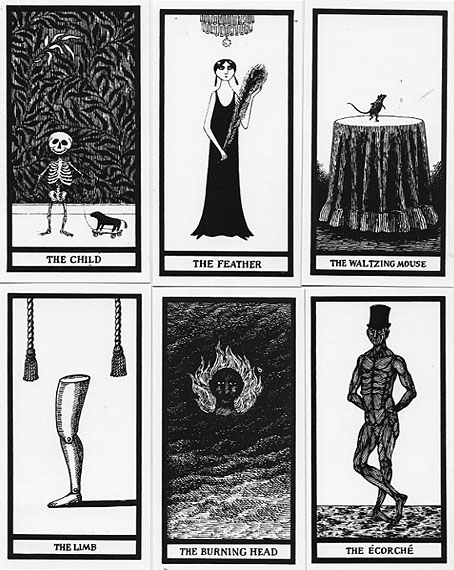
The Fantod Pack (1995): a Gorey take on the Tarot deck.

• A happy 100th birthday to Edward Gorey. I was hoping to link once again to Gorey’s appearance on the Dick Cavett Show from 1977 (a rare TV interview) but it’s one of those things that’s no longer available at YouTube. You can always browse Goreyana instead. Meanwhile, there’s this in Scotland: In Gorey Detail: Celebrating An American Friend At Custom House, Leith. A tribute exhibition which is running in Edinburgh for this week only.

• “A blisteringly frank and triple X-rated chat with Peter Berlin”. A blisteringly hyperbolic headline for a discussion between Ted Stansfield and Peter Berlin, the self-invented sex object of the 1970s.

• This week in the Bumper Book of Magic: Smoky Man posts my replies to his questions about the creation of the book’s Rainy Day and Kabbalah sections.

• Tricky’s Maxinquaye was released 30 years ago this month. David Bennun revisited the album five years ago.

• At Colossal: Felines evoke ‘A Floating World’ in Tùng Nâm’s whimsical illustrations.

• New music: Gloam by Emptyset, and The Mount Hibiki Tapes by Mount Shrine.

• Mix of the week: A mix for The Wire by Polonius.

• Steven Heller’s font of the month is Steam.

Last Of The Steam Powered Trains (1968) by The Kinks | Steam Megawatt (1979) by Tod Dockstader | Building Steam With A Grain Of Salt (1996) by DJ Shadow

Weekend links 763

parent.jpg

I Live in Shock (1955) by Mimi Parent.

• At Public Domain Review: “Ben Hecht’s Fantazius Mallare (1922) is at turns obtuse, grotesque, and moralizing—and sought to provoke the obscenity trial of the century. Only it didn’t, quietly vanishing instead. Colin Dickey rereads this failed satire, finding a transcendent rhythm pulsing beneath the novel’s indulgent prose.”

• “There are no surprises when a pallet of CDs arrives at my office, but when a pressing plant alerts me to a shipment of records headed my way I start to worry.” John Brien, head of Important Records, on the problems involved in the manufacture of vinyl albums.

• The sixth installment of Smoky Man’s exploration of The Bumper Book of Magic has been posted (in Italian) at (quasi).

They were building a vast alternative religion with a lack of dictates but no shortage of rituals and icons. They’d pass through the end of the world to get there first; the next album was based on a vision of the Four Horsemen of the Apocalypse slaughtering their animals and constructing a earth-gouging machine from their jawbones, demonstrating they weren’t quite intending to settle down yet. It would take them far from mainstream culture, and indeed mainstream gay culture given their repeated disdain for sanitised queerness, and into enigmatic territory. Having scared away most fans of synth pop and industrial with provocation, and the weak and tyrannical with ambiguity, they were unencumbered and “allowed to mature in the dark”, sustained by a cult following (you rarely encounter a tepid fan of Coil, most are acolytes).

Darran Anderson looking back at Coil’s debut album, Scatology

• At Smithsonian Magazine: See 15 winning images from the Close-Up Photographer of the Year Competition.

• At The Daily Heller: How did pink become a colour? Meanwhile, Steven Heller’s font of the month is Vibro.

• New music: Even The Horizon Knows Its Bounds by Lawrence English.

SciURLs: A science news aggregator.

Shackleton’s favourite albums.

• RIP Marianne Faithfull.

The Pink Panther Theme (1963) by Henry Mancini | The Pink Room (1988) by Seigen Ono | Pink (2005) by Boris

Weekend links 758

laloy.jpg

Monstrum in animo (1955) by Yves Laloy.

• This week’s obligatory Bumper Book of Magic links: Alan Moore World has more of my ongoing comments about the creation of the book, while Séamas O’Reilly talked to Alan about the book itself and its connections with The Great When. The latter piece lowered my already low opinion of the late Genesis P-Orridge.

• At Timeless: A reprint of Bright Lights and Cats With no Mouths by John Balance. Still in print is The Cupboard Under the Stairs, a selection from JB’s notebooks.

• If you enjoy sleight-of hand magic—and I most certainly do—then Ricky Jay & His 52 Assistants (1996) is 58 miraculous minutes by a master of the art.

• Mixes of the week: Winter Solstice 6 at Ambientblog; a mix for The Wire by Rafael Toral; and Reflection on 2024 at a Strangely Isolated Place.

• “Whatever the reason, there is something sorrowful about the disposal of art, whatever the perceived quality,” says Steven Heller.

• New music: The Path Of The Elder Ones by Nerthus.

Bright Lights (1959?) by Wade Curtiss & The Rhythm Rockers | Bright Lights, Big City (1961) by Jimmy Reed | I Want To See The Bright Lights Tonight (1974) by Richard & Linda Thompson

Weekend links 755

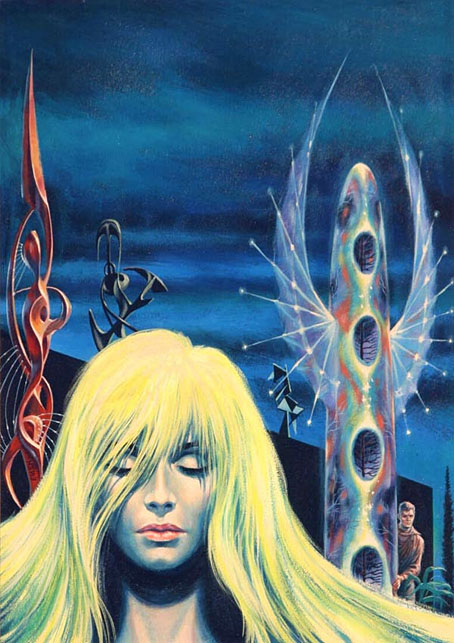
emsh.jpg

A painting by Ed Emshwiller for the cover of Fantastic Stories of Imagination, July 1962, illustrating The Singing Statues by JG Ballard .

• This week in the Bumper Book of Magic: my comments about the creation of the book’s cover and magical alphabet have been posted at Alan Moore World. At (Quasi), Smoky Man (in Italian) looks at other parts of the book, and includes my answers to his questions about the creation of The Soul, a character originally planned for a comic strip that Alan Moore and I were working on. I’ve been trying recently to find the first sketches I made of The Soul back in 2000 or 2001, without success. If I do find any of them I’ll post them here.

• New music: Juk-Shabb by Cryo Chamber Collaboration is this year’s installment in the Lovecraft-themed album series (previously) from Cryo Chamber. Also this week: Xerrox Vol. 5 by Alva Noto; Nocturne (Soundtrack for an Invisible Film) by Avi C. Engel; and Cat Location Conundrum by Moon Wiring Club.

Code: Damp: An Esoteric Guide to British Sitcoms by Sophie Sleigh-Johnson, being “an alternative occult and esoteric history of England told through one of its most popular cultural forms: the comedy sitcom”.

…the joy of art isn’t only the pleasure of an end result but also the experience of going through the process of having made it. When you go out for a walk it isn’t just (or even primarily) for the pleasure of reaching a destination, but for the process of doing the walking. For me, using AI all too often feels like I’m engaging in a socially useless process, in which I learn almost nothing and then pass on my non-learning to others. It’s like getting the postcard instead of the holiday.

Brian Eno at Boston Review

• “The typographic choices that Godard made were thematic and not only chosen for their stylistic properties.” Arijana Zeric looks inside the design world of Jean-Luc Godard.

• Coming soon from Strange Attractor: The Stammering Librarian: Essays by Timothy D’Arch Smith, edited by Edwin Pouncey & Sandy Robertson.

• At Public Domain Review: Fantastic Planet: The Microscopy Album of Marinus Pieter Filbri (1887–88).

• At the BFI: Michael Brooke offers suggestions for where to begin with Guy Maddin.

• At The Quietus: The Strange World of…Dennis Bovell.

• Mix of the week: A mix for The Wire by KMRU.

• Steven Heller’s font of the month is Gigafly.

Fantastic Cat (1996) by Takako Minekawa | Fantastic Analysis (2001) by Mouse On Mars | Fantastic Mass (2016) by Time Attendant

Weekend links 746

mondrian.jpg

Composition B (No.II) with Red (1935) by Piet Mondrian.

• “Red is practically faultless, save, perhaps, for one hard-to-get-excited-about foray into atmospheric free jazz (Providence), though the sprawling, epic roller coaster of emotion and dexterity that follows (Starless) surely makes up for any shortfall.” Patrick Clarke on 50 years of my favourite King Crimson album. I like Providence, the piece is part of a live performance in Rhode Island so the Lovecraft connection adds to the aura of doom that pervades the album; and the structure of the album’s second side—jazz improv followed by a multi-part, Mellotron-heavy epic—harks back to the group’s debut.

• “It’s important to challenge the common idea of an almost evolutionary procession, where modernist abstract art is somehow the climax, a new and perfectly original approach to the visual world, absolutely different from all that preceded it.” Hunter Dukes on the yellow rectangle that denotes silence in the Silos Apocalypse.

The Art of Sidney H. Sime, Master of Fantasy, an exhibition at the Heath Robinson Museum, Pinner, London. Meanwhile, at the USC Fisher Museum of Art in Los Angeles, there’s Sci-fi, Magick, Queer L.A.: Sexual Science and the Imagi-Nation.

• “I did not realize how much I had done. I am a serial polluter.” Ralph Steadman and his daughter, Sadie Williams, talking to Steven Heller about Steadman’s latest exhibition which is touring the USA.

• New music: Come Back To Me [Demo] by Broadcast; The Last Sunset Of The Year by Marcus Fjellström; Hexa by Cleared.

• At Spoon & Tamago: Artists summon mythical creatures of the Echigo region for the 2024 Wara Art Festival.

• The Italian Art of Violence: Samm Deighan on the giallo cinema boom of the 1960s and 1970s.

Gavin Friday’s favourite albums.

Red (1991) by Jarboe | Red Earth (As Summertime Ends) (1991) by Rain Tree Crow | Red Sun (2012) by Anna von Hausswolff