02026

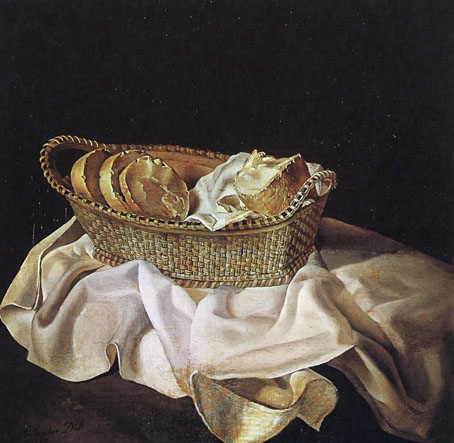
1926-02.jpg

The Basket of Bread (1926) by Salvador Dalí.

Happy new year. 02026? An affectation via the Long Now.

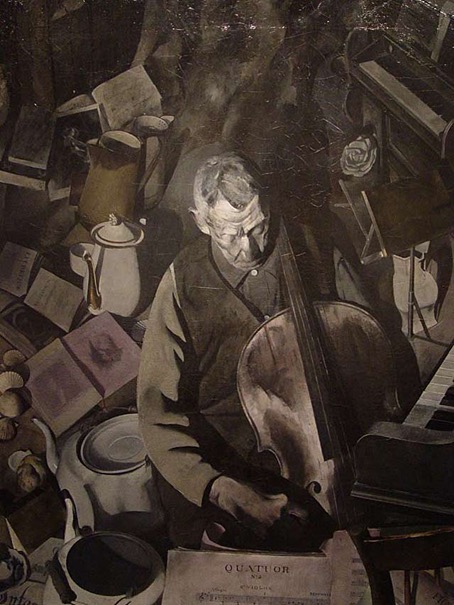
1926-05.jpg

The Cello Player (1926) by Edwin Dickinson.

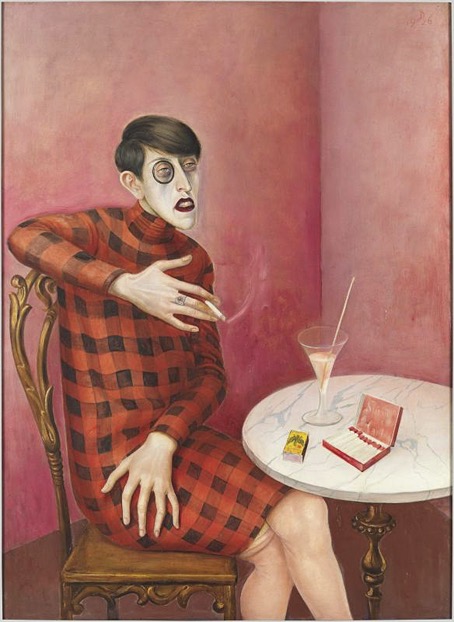
1926-12.jpg

Portrait of the Journalist Sylvia von Harden (1926) by Otto Dix.

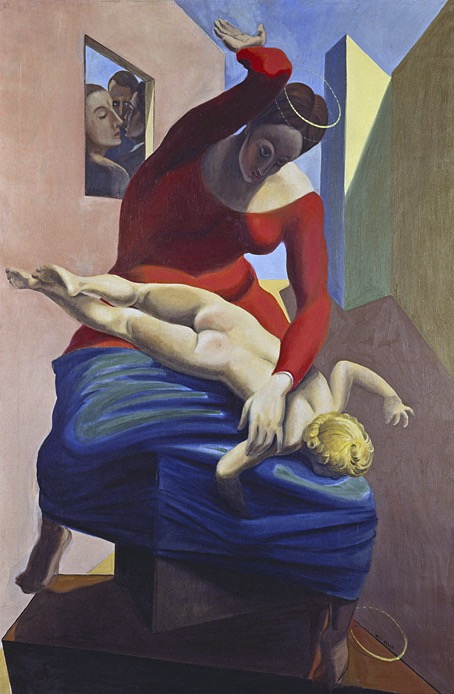
1926-11.jpg

The Virgin Spanking the Christ Child before Three Witnesses: André Breton, Paul Eluard and the Artist (1926) by Max Ernst.

1926-10.jpg

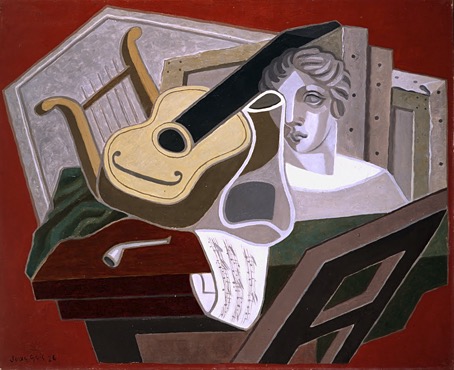
The Musician’s Table (1926) by Juan Gris.

Continue reading “02026”

Steven Arnold: Heavenly Bodies

arnold01.jpg

One consequence of writing posts like this for the past 19 years is the blossoming into familiarity of previously unknown subjects. Such has been the case with the work of Steven Arnold (1943–1994), an American artist/photographer/film-maker whose photographs I hadn’t seen until I was pointed towards the Steven Arnold Archive by a reader in 2009. (Hi Thom, if you’re out there!) Since that brief post I’ve logged the occasional appearance of Arnold exhibitions and, more recently, the blu-ray release of Arnold’s sole feature film, Luminous Procuress.

arnold02.jpg

Steven Arnold: Heavenly Bodies is a feature-length documentary by Vishnu Dass about Arnold and the circle of friends and collaborators who helped create his films and photographic tableaux. The documentary was released by the Steven Arnold Archive in 2019, and is now freely available for viewing at Vimeo. (The “Mature” tag means you need to either log in or create an account to watch it.) Dass presents a collection of video interviews with Arnold and his associates, together with more recent interviews with surviving friends and enthusiasts, to supply the biographical detail behind Arnold’s extraordinary endeavours. Angelica Huston narrates the film which also includes poignant testimony from Arnold’s close friend, Ellen Burstyn.

arnold03.jpg

The interviews chart the artist’s progress: education in Oakland and San Francisco; his early experiments with film; his experience as a member of Salvador Dalí’s circle of hippy acolytes; the creation of all those beautiful black-and-white photographs in his Los Angeles studio. Arnold is revealed to have been a pioneer even by the elevated standards of San Francisco in the 1960s; he was taking acid in 1964, and at the height of the psychedelic era was cultivating with his friends an attitude of glamorous, polymorphous sexuality and gender play that went beyond the out-gay status of the Beats. In one of the interviews he talks eloquently about his concept of androgyny, which he regarded as an almost spiritual state, an attitude the alchemists of old would have endorsed. Arnold was the founder of San Francisco’s midnight movie shows in 1967, the same shows which saw the birth of the Cockettes, an anything-goes performing troupe who turn up later in Luminous Procuress. I didn’t know that Arnold’s midnight shows (for which he designed the posters) were taking place three years before the screening of El Topo in New York, the event which is usually cited as the origin of the nationwide Midnight Movie trend.

arnold04.jpg

Luminous Procuress was the culmination of his time in San Francisco, and the film that caught the attention of Salvador Dalí when it too was screened in New York. The film is a rare example of Arnold arranging his tableaux in full colour. When he moved to Los Angeles he was living among vividly coloured fabrics and decorations yet all his photographs are high-contrast black-and-white creations. I was hoping we might hear more about the reason for this. Arnold does refer at one point to enjoying the directness of the black-and-white image, and monochrome no doubt made his tableaux arrangement easier if he didn’t have to worry about harmonising colours. But he doesn’t explain the choice in any detail.

arnold05.jpg

This is an inspiring documentary, and a valuable record of a thread of San Francisco’s cultural history which is seldom acknowledged in recountings of the psychedelic era. It’s also a dispiriting portrait when you’re watching another creative life cut short by the AIDS pandemic. When considering histories like these it’s easy to fret over the loss of unrealised works. Better, I think, to appreciate anew the work that remains. (Thanks to Larry for the tip!)

arnold06.jpg

arnold07.jpg

arnold08.jpg

Previously on { feuilleton }
The Liberation of Mannique Mechanique
Luminous Procuress
Flamboyant excess: the art of Steven Arnold

Jean Cocteau: Autoportrait d’un inconnu

cocteau1.jpg

The title translates as “self-portrait of an unknown” although “unknown man” would be better English. The phrase is a curious one to apply to Jean Cocteau, an artist (or “poet”, to use his favourite epithet) who was known for his creative work from a very early age. Director Edgardo Cozarinsky uses Cocteau’s own narration from a collection of documentary films to chart the evolution of a polymathic public life, following the progress of Cocteau’s art from the poetry of his youth (which the older man deemed “absurd”), to his involvement with the Ballets Russes, his films and plays, and his later flourishing as a painter of murals like those in the Chapelle Saint-Pierre de Villefranche-sur-Mer.

cocteau2.jpg

In one of the later scenes Cocteau is shown talking to a wax figure of himself, describing the dummy as the one who goes out into the world to receive the plaudits and brickbats accorded to “Jean Cocteau” while the real Cocteau stays quietly at home in the south of France. The quotidian Cocteau would be the “unknown” in this respect; there’s no mention of his life with Jean Marais, for example, but I’m happy enough to spend an hour listening to him talking about his art. The reference to brickbats is a reminder that in France he was often reviled during his lifetime, regarded as a dilettante and a fraud. This was especially the case in André Breton’s Surrealist circle where those who wanted to avoid excommunication had to support the master’s lasting animus against the unknown poet.

cocteau-dali.jpg

A pair of Surrealist untouchables, 1953.

Given this, I was amused to see a brief shot of Cocteau signing a wall with the most notorious member of Breton’s long list of outcasts, Salvador Dalí. Cocteau was friends with Dalí in later years, and in one of the film clips mentions the painter introducing him to the concept of “phoenixology” or the revival of dead matter. Dalí had biological science and his own immortality in mind but for Cocteau the idea becomes a metaphor for the artistic process, something we see in Le Testament d’Orphée and La Villa Santa Sospir when he pieces together the petals of disassembled flowers.

I was watching a copy of Cozarinsky’s film which may be downloaded at Ubuweb. The narration is in French throughout but English subtitles are available here.

Previously on { feuilleton }
Orphée posters
Cocteau and Lovecraft
Cocteau drawings
Querelle de Brest
Halsman and Cocteau
La Belle et la Bête posters
The writhing on the wall
Le livre blanc by Jean Cocteau
Cocteau’s sword
Cristalophonics: searching for the Cocteau sound
Cocteau at the Louvre des Antiquaires
La Villa Santo Sospir by Jean Cocteau

Minotaure, 1933–1939

minotaure35.jpg

Art by Diego Rivera for the Mexican supplement in Minotaure no. 13.

I was tempted to title this one Minotaure! since I’ve been searching for copies of the magazine in question for many years. I’m certain I went looking in all the usual sources last year in the run-up to the Surrealist centenary, without success. Anyway, here they all are at last, a complete run of one of the major Surrealist periodicals.

Minotaure was notable for a number of reasons, first among them the publisher, Albert Skira, whose resources enabled the production of a very desirable item, with good design, colour prints in each issue, and plenty of photos and other artwork throughout. The Surrealist publications of the 1920s had been historically important but all of them were monochrome documents with few pictures and few pages. Minotaure had the production values of a quality magazine and an impressive roster of artists and writers to fill each issue. Skira and editor E. Tériade originally intended their periodical to cover a wide range of art, past and present, but with most of the early contributors being members of André Breton’s Surrealist circle the magazine quickly became a showcase for Surrealist art and theorising. The first issue featured a cover by Pablo Picasso, with more Picasso artwork inside. Subsequent issues had covers by leading Surrealist artists–Dalí, Ernst, Magritte, Masson–which captured the movement at a time before Breton’s persistent expulsions hollowed out the original group. Breton writes in nearly all the issues but was forbidden from using Minotaure as a political platform (the previous Surrealist journal had been the very political Le Surréalisme au service de la révolution), a restriction he kept to. His manner was often dictatorial but he always had an eye for the main chance, or the bonne chance in this case.

The written contents of Minotaure are mostly in French but the pictorial matter is worth seeing even if much of it is very familiar today. Among the written highlights are two essays by Salvador Dalí, the first on the “edible” nature of Art Nouveau architecture, with an emphasis on the work of Gaudí; the second about Pre-Raphaelite painting. It’s understandable that Dalí would be attracted by the meticulous realism of early Millais and William Holman Hunt but I didn’t know his essay included an analysis of Hunt’s The Hireling Shepherd, a painting I look at every time I’m in the Manchester Art Gallery. Elsewhere there are articles about automatism, mediumship, the decalcomania technique in painting, the esoteric symbolism of the alchemists, naive or untutored art, and plenty of single-page items and visual novelties. Photography by Man Ray and Brassaï is a recurrent feature. Skira’s magazine established a template which the two American Surrealist periodicals of the 1940s, View and VVV, did their best to follow. Now that Minotaure is freely available I’ll be waiting impatiently for complete runs of its followers to turn up somewhere.

(Note: some of the copies linked below have had their colour prints removed.)


Minotaure no. 1 (1933)

minotaure01.jpg

Cover art by Pablo Picasso.

minotaure02.jpg

minotaure03.jpg


Minotaure no. 2 (1933)

minotaure04.jpg

Cover art by Gaston-Louis Roux.

Continue reading “Minotaure, 1933–1939”

Minotaur Ballet – Swansea Surreal

minotaur.jpg

October is still Spook Month as usual but this year it’s also the 100th anniversary of the publication of André Breton’s first Surrealist Manifesto, something I wrote about back in January. Many events have been acknowledging the anniversary including Minotaur Ballet – Swansea Surreal, an exhibition curated by David Greenslade and Incunabula Media which will be running at Volcano Theatre, Swansea from now to the end of the month. I’m one of the contributors with prints of my Alice in Wonderland posters. Lewis Carroll’s books were rare examples of British culture that Breton was enthusiastic about—he made Alice the “Siren of Dreams” in the Surrealist card deck—while Salvador Dalí and Max Ernst both created illustrations for the stories. I would have preferred to have made something new for the event but other work intervened.

The exhibition…will feature mainly Welsh artists, most of them from Swansea, alongside guests from Australia, Ukraine, Romania, Czech Republic, Egypt, Ireland and other parts of the UK.

ARTISTS INCLUDE
George Ostafi, Mark Sanders, Alexandria Bryan, Neil Coombs, John Goodby, Ricardo Acevedo, Carla-Francesca Schoppel, Dagmar Stepankova, David Rees Davies, Matt Leyshon, Jennifer Allan, Ben Faircloth, Wynford Vaughan Thomas, James Green, David K Mitchell, John Coulthart, Ian Walker, Premysl Martinec, Roger Moss, Julia Lockheart, David Greenslade, Simon Evans, Syd Howells, Keith Bayliss, Anatoly Shmatok, Maria Dolorosa de la Cruz

FILMS OLD AND NEW BY
Kenji Siratori, Zac Ferguson, Jane Arden (Norah Morris), Ricardo Acevedo

And a special screening of Blue Scar (1949)

alice.jpg

Elsewhere on { feuilleton }
The Surrealism archive

Previously on { feuilleton }
Scenes from a carriage
Dalí in Wonderland
Surrealist cartomancy