La Tour by Schuiten & Peeters

tour1.jpg

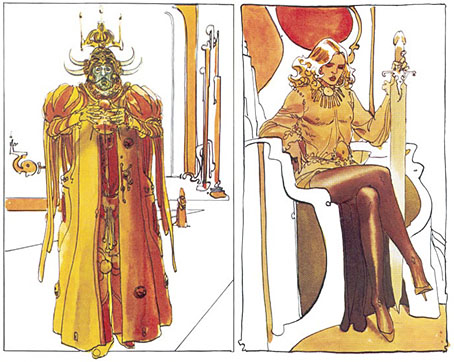
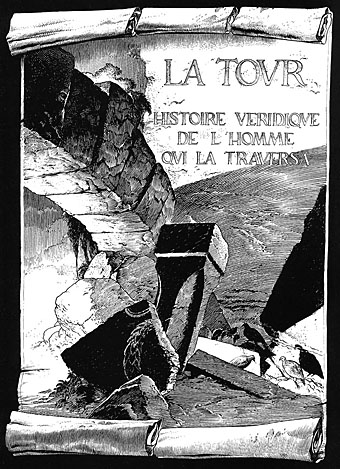
La Tour (1987) by François Schuiten and Benoît Peeters is the third story in the Cités Obscures series, although it’s the fourth volume if you want to be strictly canon about things, L’archivist, a guide to places in the Obscure World, having preceded it.

piranesi1.jpg

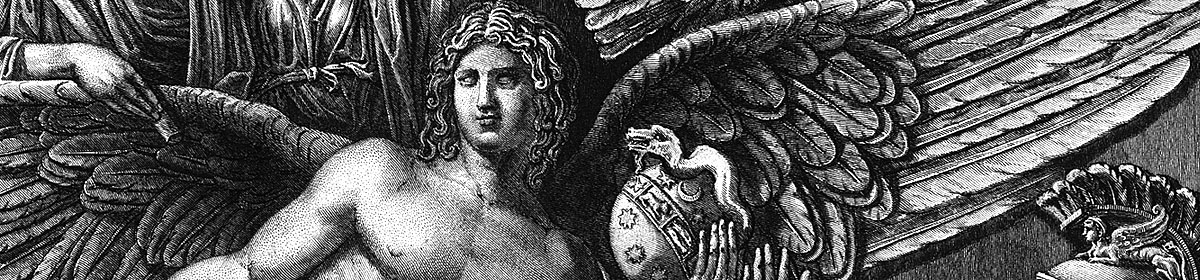
Carcere Oscura by Piranesi (1750).

This is another book where Schuiten and Peeters’ interests tick a list of my own obsessions, being a tale which seems to originate in the question “What would it be like if you crossed Piranesi‘s Prisons etchings with Bruegel’s Tower of Babel?” The protagonist of La Tour, Giovanni Battista, has his name borrowed from Piranesi’s forenames and his appearance taken from Orson Welles’ Falstaff in Chimes at Midnight. The story owes something to Kafka, although it lacks Kafka’s drift towards paradox, concerning a colossal building referred to throughout as The Tower, a structure we only ever see in close-up—and then mostly from the inside—but whose height must reach several thousand feet.

tour2.jpg

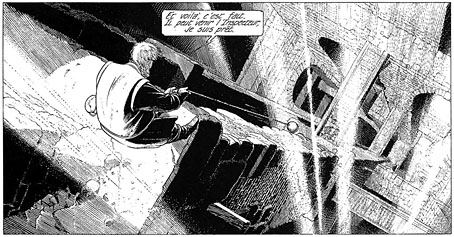
Battista (above) is one of the Keepers, a group of men charged with maintaining small sections of the Tower whose structure suffers continual decay and collapse. Tired of years spent in complete isolation, and concerned that other Keepers aren’t doing their job, Battista goes in search of the Tower’s feared Inspectors, only to discover that the lack of maintenance is endemic and few of the Tower’s scattered residents have any idea of the origin or purpose of the vast building where they’ve spent their lives, never mind a concern for its upkeep. There are no Inspectors, and while Battista is worried at the beginning about vines in the stonework, we later see small forests growing among the ruins. Kafka resonances come with the mention of the mysterious Base, and the equally mysterious Pioneers, those builders and engineers who went ahead years or even centuries before, climbing skyward.

Continue reading “La Tour by Schuiten & Peeters”

Further farewells

hp_ek.jpg

Harold Pinter and Eartha Kitt.

2008: the year that keeps on taking.

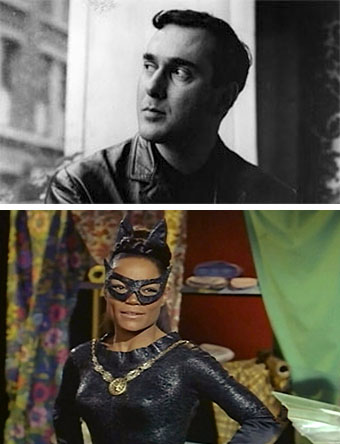
The Guardian has a copious collection of Pinter pieces including Michael Billington’s lengthy obituary. Eartha Kitt was just as unique in her own way, prompting Orson Welles in the 1950s to call her “the most exciting woman in the world”. For my sister and I a decade later she was the most exciting Catwoman in the world and that’s how I’ll remember her. But let’s not forget those Cha-Cha Heels

Eartha’s frivolity might seem to jar beside Pinter’s moral and political seriousness but the World Socialist Web Site managed to link the pair with a priceless headline, Harold Pinter and Eartha Kitt, artists and opponents of imperialist war. Their article tells you a few things about Eartha that many of the obituaries would have ignored. I’m sure Pinter would have been proud to hear of her speaking her mind at the White House. The world is a smaller place when talents and voices like these are gone.

The Panic Broadcast

panic.jpg

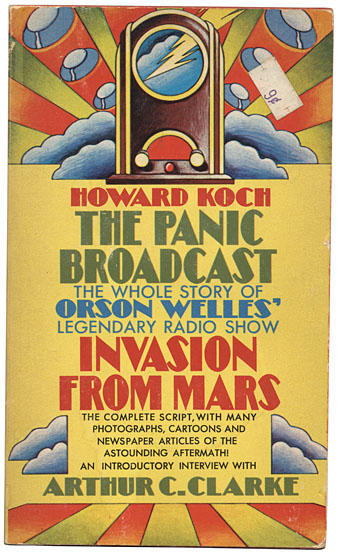
It was 70 years ago today—October 30, 1938—that Orson Welles and the Mercury Theatre traumatised American radio listeners with their brilliant adaptation of The War of the Worlds. I wrote about that recording last year so rather than repeat myself, here’s the final words from Howard Koch’s 1970 book about the play, The Panic Broadcast. (That’s the cover of my cheap paperback edition.) Koch was charged by Welles and producer John Houseman with the task of condensing and updating HG Wells’ novel and he ends his book with an examination of the lessons to be learned from the resulting hysteria. America’s current crop of demagogues on TV and radio—and the audiences prepared to take everything they say at face value—render his words as apposite now as they were forty years ago.

Meanwhile, how can we protect ourselves from politically biased information coming to us through the mass media? It isn’t as simple as dialing another station as in the case of the Martian scare. In my opinion, the only safeguard we have is the cultivation of a skeptical attitude toward all authority, to regard no person or office sacrosanct, to accept nothing that doesn’t accord with our experience and our knowledge acquired from other sources.

Most of my generation were brought up to give unquestioned obedience to authority, whether parental, religious or political. The result has been a compliant and conformist society that has tolerated a war every decade, all sorts of racial and economic inequities and a progressive spoliation of our planet. The management, shall we say, has been less than perfect.

But for the first time there are signs of a change and we have good reason to hope that the world won’t be lost by default. Today all authority is being questioned and challenged, especially by the young. The American people have become more concerned with public affairs on every level. They are taking less on faith; the individual intelligence is beginning to assert itself in self-protection and therein lies the promise of a society with the attributes for survival.

If the nonexistent Martians in the broadcast had anything important to teach us, I believe it is the virtue of doubting and testing everything that comes to us over the airwaves and on the printed pages – including those written by the author of this book.

The Mercury Theatre on the Air | An archive of the radio shows

Previously on { feuilleton }
The night that panicked America
War of the Worlds book covers

The night that panicked America

mercury.jpg

The Mercury Theatre on the air.

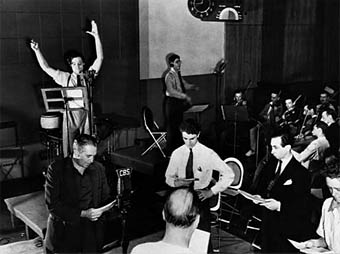
Being a long-time fan of both HG Wells and Orson Welles, the latter’s radio production of War of the Worlds with the Mercury Theatre group has always held a special fascination. This was staged sixty-nine years ago today, October 30th, 1938, and famously caused panic among listeners who missed the opening and believed they were hearing genuine news reports of an alien invasion. I’ve often listened to the rather crude recording of the play around this time of year, having owned that recording on vinyl, cassette tape and CD. These days you don’t have to buy it, you can head over to the Internet Archive or this Mercury Theatre page and grab an mp3 to discover what all the fuss was about. The recording may be crude but the presentation still strikes me as decades ahead of its time, with a very astute sense of how ordinary people behave when faced with the news media. I’ve always loved the attention to detail, such as the moment when the man who’s been interviewed at the crash site wants to carry on talking and the interviewer has to shut him up. That same verisimilitude was carried over to the newsreel footage in Citizen Kane (which was pretty much a Mercury production for cinema) and it was those moments in the radio play which helped encourage people to think that what they were hearing was real, not drama.

Screenwriter Howard Koch, who later polished the rudimentary draft script that became Casablanca, is credited as writer of the play but the adaptation was a group effort according to Koch in his book The Panic Broadcast (1970). The idea of presenting Wells’s story as a series of news bulletins came from Orson Welles and producer John Houseman, with Koch scripting the scenes and dialogue. Most of the other Mercury adaptations took a more traditional approach and if you want some spooky listening for Halloween I’d suggest you try their version of Dracula, also from 1938. The story is severely truncated, of course, but Agnes Moorehead is very impressive as Mina, there’s some remarkable music from Bernard Herrmann and Welles plays both Arthur Seward and the sinister Count.

Previously on { feuilleton }
Alexandre Alexeieff and Claire Parker
The Door in the Wall
Voodoo Macbeth
War of the Worlds book covers

Alexandre Alexeieff and Claire Parker

trial.jpg

Before the Law from The Trial (1962).

I’d wanted to write something about this pair of animators last year but at the time there was none of their work available for online viewing. This situation has now been remedied thanks to the ubiquitous YouTube.

This is Kafka-related once again since most people have seen Alexeieff/Parker’s work—if at all—in the prologue they provided in 1962 for Orson Welles’ film of The Trial. Alexandre Alexeieff was a Russian illustrator and animator who met Claire Parker, an American art student, in Paris in 1930. The pair formed a life-long partnership and together developed a new style of animation using a pinscreen, a white board containing thousands of pins whose shadows when pushed out of the board provide the grey tones required to create a picture. At the time they began working with this most animation was flat and cartoony; the pinscreen enabled them to create the kind of subtleties of shading seen in pencil and ink drawing. Many of the effects they created are stunningly lifelike.

The prologue for The Trial is a pictorial rendering of Kafka’s parable, Before the Law, which Welles narrates. This is an impressive piece (and I always loved the distinctive Piranesi-style walls) but for a real taste of their breathtaking skill you need to see Night on Bald Mountain, whose Goya-like transformations precede Disney’s Fantasia version by nearly a decade, or their adaptation of Gogol’s The Nose. It’s a shame that YouTube’s compression degrades much of the detail in these films, they really deserve to be seen on a bigger screen, but—as with many of these obscurities—it’s good to know they’re available at all.

Alexeieff and Parker on YouTube:
Night on Bald Mountain (1933)
En Passant (1944)
Before the Law (1962)
The Nose pt. 1 | The Nose pt. 2 (1963)

Previously on { feuilleton }
Steven Soderbergh’s Kafka