Weekend links 813

bruenchenhein.jpg

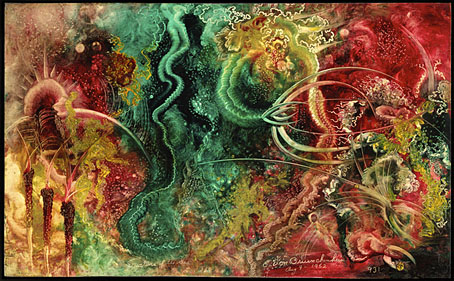
Dwellers of the Sea (1962) by Eugene Von Bruenchenhein.

• Among the new titles at Standard Ebooks, the home of free, high-quality, public-domain texts: Conan Stories by Robert E. Howard.

• At Colossal: “Uncanny personalities appear from nature in Malene Hartmann Rasmussen’s ceramics.”

• New music: Glory Black by Sunn O))); Through Lands Of Ghosts by Foster Neville; Sirenoscape by NIMF.

If we insist that art functions as a tool for promoting a limited set of political principles, what happens when an ideology that doesn’t share our values sweeps into power? Learning to engage with complexity is a necessary skill if we are ever to drag ourselves out of the puerile swamp of the culture wars. But if we continue to reduce art to moralistic soundbites, we will only succeed in stripping it of its capacity to transform us, which would be a huge loss. Art can help us to better understand ourselves, and the world we live in, by expressing those things that words cannot. It exposes us to a vast range of experiences, and asks us to sit with the fundamental ambivalences, moral complexities and conflicting emotions that are a part and parcel of being human.

Rosanna McLaughlin on attempts to make art of the past reflect the moral platitudes of the present

Strange Attractor is having a winter sale with 30% off all its available titles.

• At the BFI: Miriam Balanescu selects 10 great filmmaker biopics.

• Mix of the week: DreamScenes – January 2026 at Ambientblog.

• The Strange World of…Free Jazz & Improvised Music.

Free (1991) by Mazzy Star | The Free Design (1999) by Stereolab | Everything Is Free (2001) by Gillian Welch
Weekend links 734

mechau1.jpg

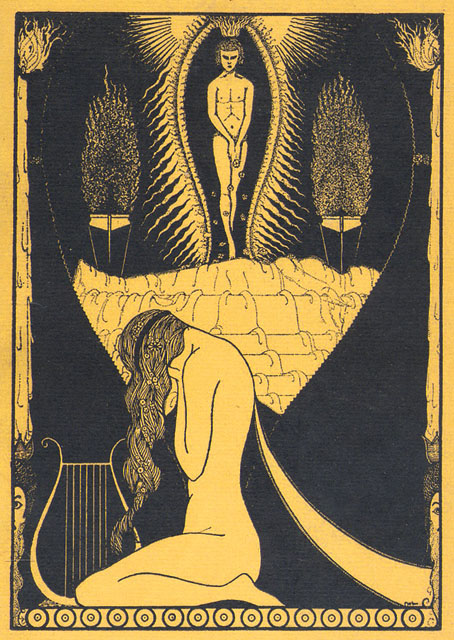
Illustration by Frank Mechau for The Love of Myrrhine and Konallis (1926) by Richard Aldington.

• At A Year In The Country: The Delaware Road: “A surreal post-war Albion and Quatermass meets Tinker, Tailor, Soldier, Spy.”

• At Colossal: Rajesh Vora photographs the unique Punjabi tradition of adorning homes with sculptural water tanks.

• At Unquiet Things: The fragile eternity of Margaretha Roosenboom’s floral still lifes.

mechau2.jpg

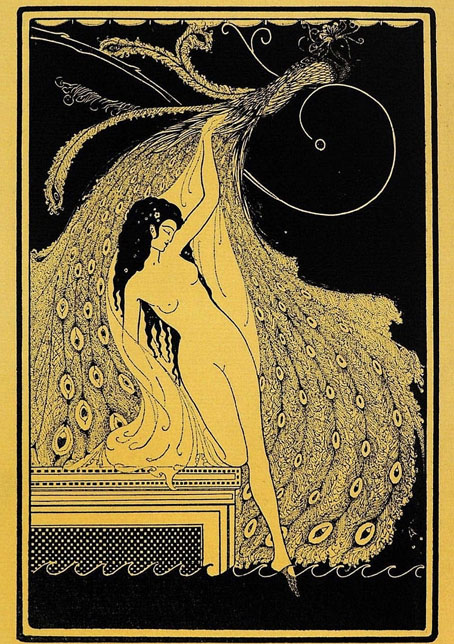
Illustration by Frank Mechau for The Love of Myrrhine and Konallis (1926) by Richard Aldington.

• New music: Damaged by Ghost Dubs, and Selene by Akira Kosemura & Lawrence English.

• At Public Domain Review: Allison C. Meier on The Dance of Death across centuries.

• RIP Shelley Duvall. Related: Anne Billson on Shelley Duvall: her 20 greatest films.

• At Dennis Cooper’s: Galerie Dennis Cooper presents…Félicien Rops.

• Steven Heller’s font of the month is Sisters.

Eno Williams’ favourite records.

Two Sisters (1967) by The Kinks | All Your Sisters (1996) by Mazzy Star | Two Sisters (2017) by Gel-Sol

Rare Opals

opal.jpg

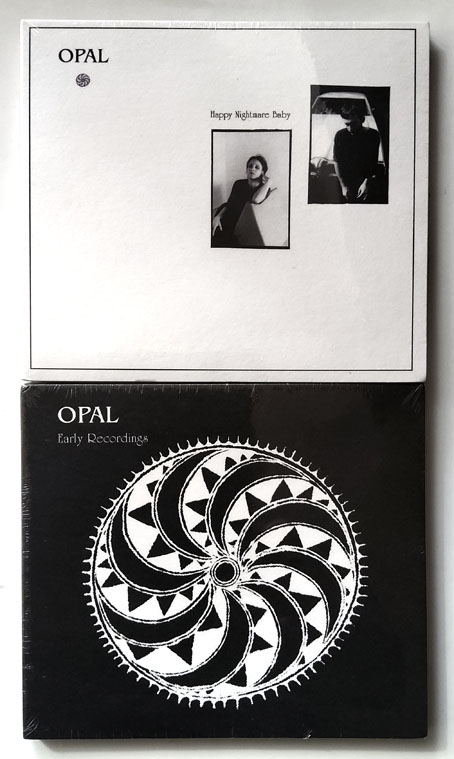
In the mail at the weekend, a pair of reissued Opal CDs that I didn’t expect to see any time soon, Happy Nightmare Baby (1987) and Early Recordings (1989). Opal were an American group who were active throughout the 1980s but they didn’t record very much, only releasing these two discs towards the end of their career. Both albums sank from sight in the early 1990s, and had been unavailable in any form when CD reissues were announced in late 2019 on guitarist David Roback’s own label, Salley Gardens. The reissues were withdrawn shortly before the release date, possibly as a result of Roback’s illness and subsequent death in February 2020. All of this is niche stuff but aficionados of the niche in question may like to know that I bought these new from an eBay (UK) seller for a fraction of the price you’ll pay at Discogs or elsewhere. (Here and here.) I’d seen reports that copies had been shipped before the cancellation was announced but hadn’t seen any on sale outside Discogs until last week. I’ve also seen suggestions that there might be bootlegs circulating but if these are boots then someone has managed to imitate the matrix numbers on the discs which I don’t think is an easy thing to do.

opal2.jpg

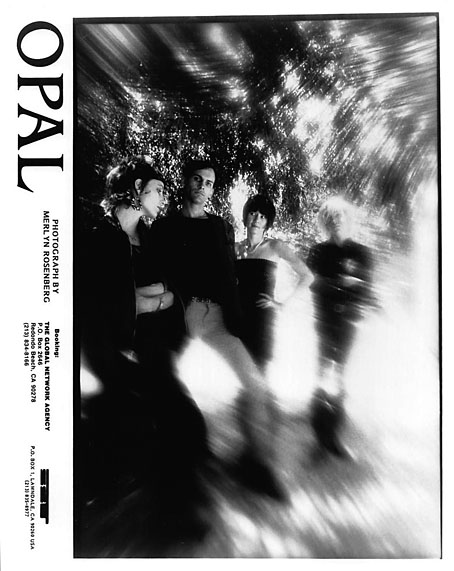
Opal is a group you seldom see mentioned today but plenty of people know the name of Mazzy Star, the group that Opal became after the departure of singer Kendra Smith in the late 1980s. David Roback was the key member, the link between Mazzy Star and the neo-psychedelia of the Los Angeles Paisley Underground which gave rise to both Opal and Roback’s other outlet, the Rain Parade. The Paisley Underground was never as psychedelic as I hoped it might be, only the Rain Parade could be classed as a bona fide psych band, but the groups associated with this loose scene—The Bangles, The Dream Syndicate, The Three O’Clock, et al—were all preoccupied with the music of the late 1960s, and of the early 70s via Neil Young and Alex Chilton. Opal followed the trend, being less oneiric than Mazzy Star would be, more concerned with reviving older musical styles than creating something new. Early Recordings, a collection of singles, EPs and other songs, owes less to psychedelia than it does to late-60s balladeering: guitar and vocals, lots of reverb and minimal percussion and keyboards. Kendra Smith, formerly of The Dream Syndicate, sings almost all the songs on both albums. The origin of the Opal sound may be found in the cover versions on Rainy Day (1984), a one-off album that David Roback recorded with Kendra Smith plus members of The Bangles, Rain Parade and The Three O’Clock. Lou Reed’s I’ll Be Your Mirror is the early Opal sound in miniature, especially in the version by Nico and The Velvet Underground which Roback emulates with Susanna Hoffs.

Happy Nightmare Baby has a rather prosaic monochrome cover but this is where the psychedelic rock comes to the fore, with Roback breaking out the fuzz box and wah-wah pedal to fashion a heavier sound that would later be heard on Mazzy Star songs like Ghost Highway. I said that only the Rain Parade warranted the psych label but Happy Nightmare Baby certainly gets there on songs like Magick Power and the slow explosion of Soul Giver, the latter being the closest that Opal get to the Rain Parade’s finest moment, No Easy Way Down. There’s also a touch of glam in the opening number, Rocket Machine, which harks back to the T. Rex of Electric Warrior. Happy Nightmare Baby is a fiery debut—and Opal could be even heavier live—but it’s one of those albums that you’d expect would be surpassed by later releases, instead of which all we have is Early Recordings*. The two albums are dissimilar enough to almost be the work of different groups; together they suggest that David Roback spent most of the 1980s trying to orient his music in a way that honoured his influences while also accommodating all his favoured modes of expression, from fuzz squall to languid blues to nocturnal drift. The first Mazzy Star album, She Hangs Brightly, is the place where the influences and intentions fused to create something new. And Roback found his ideal singer in Hope Sandoval, of course. Kendra Smith is okay but her voice can get monotonous over a whole album, she lacks Hope Sandoval’s mystique and emotional range. Opal were good but you can’t imagine many people wanting to cover their songs the way people have done with Mazzy Star. But then without Opal there might never have been a Mazzy Star. Niche stuff this may be but it doesn’t deserve to be buried for another thirty years.


* Or almost all. There is another album, Early Recordings Volume 2, a collection of unreleased songs and covers. But this has never been given an official release.

Previously on { feuilleton }
Balloon parade
The Dukes declare it’s 25 O’Clock!
Strange Things Are Happening, 1988–1990

Weekend links 591

entangled.jpg

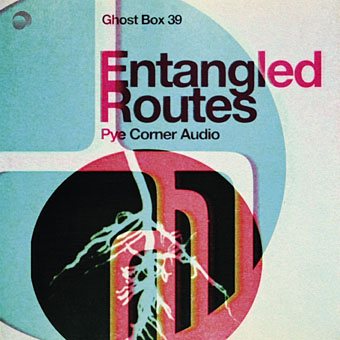
Ghost Box 39. Design, as always, is by Julian House.

Entangled Routes by Pye Corner Audio will be the next album on the Ghost Box label, due for release on 26th November. This will be Pye Corner Audio’s fourth album for Ghost Box, and one which forms the final part of a trilogy of imaginary soundtracks for science-fiction scenarios, “the latest installment of which plays with the idea of mycorrhizal networks and attempts by humans to listen in and communicate”.

• “…for every ten projects I start, nine will probably fall by the way side—they just don’t get made. Nothing happens, you can’t find the tapes, you can’t find the rights holders, the tapes were destroyed, no one’s interested.” Jonny Trunk interviewed at Aquarium Drunkard.

• At Unquiet Things: S. Elizabeth is celebrating the first anniversary of The Art Of The Occult (previously) by giving away a signed copy of her book to one of the commenters on this post.

• “Sand is not only temporary, it is also the most temporised form of matter.” Steven Connor on the dust that measures all our time.

• Mixes of the week: Autumn Hymnal: A Mixtape by Aquarium Drunkard, and In Estonia with Bart de Paepe by David Colohan.

• “Touched by the hand of Ithell: my fascination with a forgotten surrealist.” Stewart Lee on Ithell Colquhoun.

• Skin trade: a playlist of percussion at the outer limits; Valentina Magaletti surveys alternatives to the conventional kit.

• At Wormwoodiana: Mark Valentine reviews The Devil At Saxon Wall by Gladys Mitchell.

• “The Show: Alan Moore brings vaudevillian dazzle to Northampton noir,” says Phil Hoad.

• At Bandcamp: A Guide to the Eclectic Funk Music of Bernie Worrell by John Morrison.

• At Dennis Cooper’s: Spotlight on…Octave Mirbeau The Torture Garden (1899).

• At Spine: Vera Drmanovski on redesigning the novels of Hermann Hesse.

• New music: Music For Psychedelic Therapy by Jon Hopkins.

South To The Dust (1990) by Ginger Baker | Into Dust (1993) by Mazzy Star | Photon Dust (2020) by Pye Corner Audio

Weekend links 506

caligari.jpg

• The late David Roback was a musician who would have been called “enigmatic” for his refusal of the interview treadmill, preferring instead to let his music speak for itself. I wouldn’t label myself a “fan” (a word I dislike at the best of times) but over the years I’ve collected just about everything that Roback was involved in, from the early Rain Parade albums (he co-wrote my favourite song of theirs, No Easy Way Down), to Opal (his collaboration with Kendra Smith and others), and Mazzy Star (with Hope Sandoval), the group whose songs perfected the somnolent blend of blues, country and rock that Roback had been aiming at all along. Some concerts:

Mazzy Star, The Black Sessions, Maison De La Radio, Paris, October 25, 1993
Mazzy Star at the The Metro, Chicago, November 12, 1994
Mazzy Star, KROQ Radio, Los Angeles, December 10, 1994

• “Like other early-modern architects, Lequeu’s drawings explore analogies between bodies and buildings and the erotic, multisensory dimensions of architectural design. In his annotations, he often describes in compulsive detail not only how buildings look but also how they feel, smell, and even taste.” Meredith Martin on the architecture of Jean-Jacques Lequeu.

• “She talks avidly about using pigs’ heads, plastic doll parts, fake blood, and real blood, recollecting with relish a performance where she transformed into a Statue of Liberty that projectile-vomited gore onto the audience…” Geeta Dayal on the performance art of Johanna Went.

Schütte teases out the many ambiguities in these concepts: trains, autobahns, radioactivity, men-machines. All have distinct negative connotations within Germany in particular. Yet Kraftwerk proposed a positive view. Their rigorous determination to deny autobiography forced listeners to focus on the ideas and the music, where apparent contradictions—local/global,  human/machine, past/future—were resolved in a sparkling, crystal-clear sound-world. This was not submission but interaction: as they said, “we are playing the machines, the machines play us”.

Jon Savage reviews Kraftwerk by Uwe Schütte

• “…it was clear that Miles wasn’t sure what he wanted…but he knew what he didn’t want. He didn’t want anything like what he had done before.” John McLaughlin on the recording of Bitches Brew by Miles Davis.

• “His panels are littered with figures standing on the edge of crowds, watching.” Toby Ferris on the paintings of Pieter Bruegel.

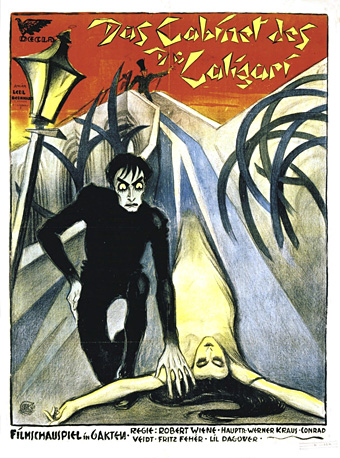
Alex Barrett on 100 years of The Cabinet of Dr. Caligari.

A Boy Called Conjuror by Teleplasmiste.

• At Dennis Cooper’s: Fires.

Smithsonian Open Access

• Picture P. Brueghel “Winter” / Solaris (1972) by Edward Artemyev | The Dream Dance Of Jane And The Somnambulist (1981) by Bill Nelson | St. Elmo’s Fire (1998) by Uilab