02026

1926-02.jpg

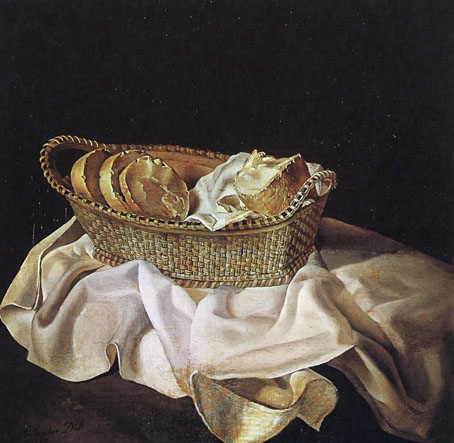
The Basket of Bread (1926) by Salvador Dalí.

Happy new year. 02026? An affectation via the Long Now.

1926-05.jpg

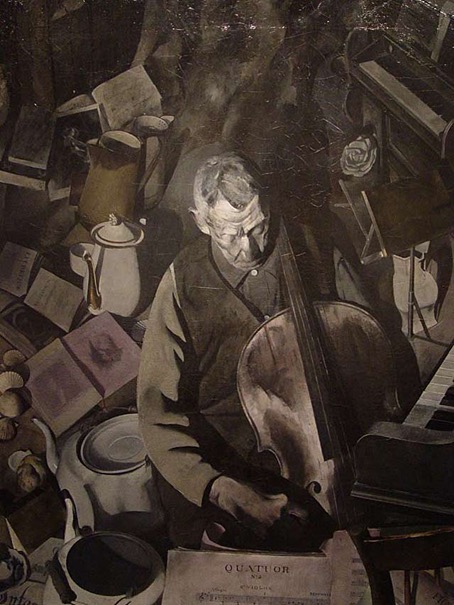
The Cello Player (1926) by Edwin Dickinson.

1926-12.jpg

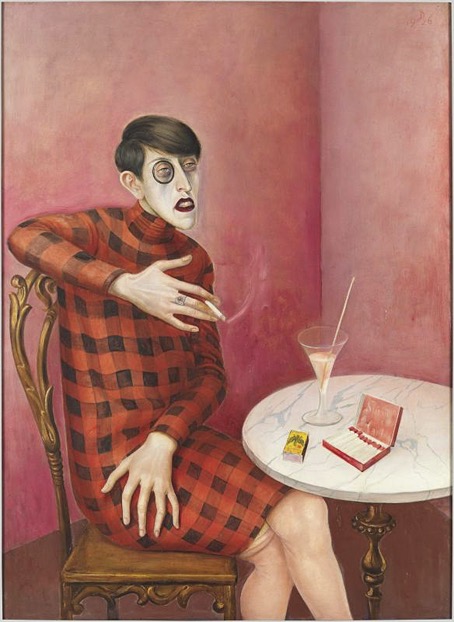
Portrait of the Journalist Sylvia von Harden (1926) by Otto Dix.

1926-11.jpg

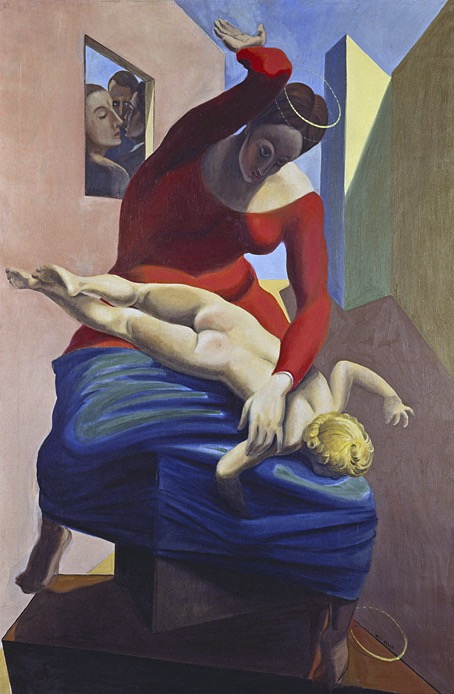
The Virgin Spanking the Christ Child before Three Witnesses: André Breton, Paul Eluard and the Artist (1926) by Max Ernst.

1926-10.jpg

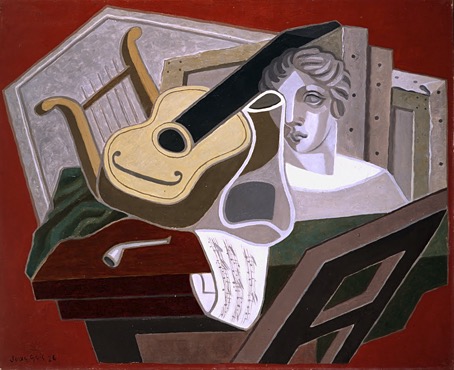
The Musician’s Table (1926) by Juan Gris.

Continue reading “02026”

Crystal worlds

finlay.jpg

The Crystal World by JG Ballard. An illustration by Virgil Finlay for the Summer–August 1966 issue of Things To Come, the Science Fiction Book Club mailer.

1: Crystal words

JG Ballard didn’t have a pleasant experience with LSD when Michael Moorcock procured a dose of the drug for him in 1967, describing his acid trip in later years as a “psychotic nightmare”. I’ve often wondered how Ballard’s fiction might have developed in the 1970s if his experience had been a more positive one, something I was thinking about again when re-reading The Illuminated Man, a story collected in The Terminal Beach which was later reworked as The Crystal World, the fourth book in Ballard’s disaster quartet. There’s a psychedelic strain to Ballard’s writing which has long been overwhelmed by the popular enthusiasm for the condensed fictions of The Atrocity Exhibition and the three “concrete” novels of the 1970s: Crash, Concrete Island and High-Rise. The Crystal World was published in 1966 when LSD was still legally available in Britain, and even though the genesis of the book pre-dates the decade’s psychedelic fervour, the bejewelled prose chimes so well with the mood of the time it’s easy to assume it was inspired by psychedelic experience. Many readers thought as much, and in interviews Ballard had to emphasise that the novel was a product of his imagination and nothing more.

illuminated.jpg

The Magazine of Fantasy and Science Fiction, May 1964. Cover art by Ed Emshwiller.

After devastating the planet with plausible disasters in his first three novels, Ballard in The Crystal World offers a distinctly fantastic scenario, in which an interstellar phenomenon (“the Hubble Effect”) is manifesting on Earth as the spontaneous crystallisation of all objects, animate or inanimate. The process begins in isolated areas before spreading worldwide; in keeping with many other Ballard stories from this period, time is responsible for the changes taking place:

Just as a supersaturated solution will discharge itself into a crystalline mass, so the supersaturation of matter in a continuum of depleted time leads to its appearance in a parallel spatial matrix. As more and more time “leaks” away, the process of supersaturation continues, the original atoms and molecules producing spatial replicas of themselves, substance without mass, in an attempt to increase their foothold upon existence.

The Illuminated Man

As with other Ballard stories, the scientific hand-waving is merely a pretext. In The Illuminated Man and The Crystal World “leaking time” provides an excuse to transform areas of Florida swamp and African jungle into glittering arcades of prismatic foliage, where birds are crystallised in mid-flight, reptiles transmute into heraldic emblems, and everything fluoresces with an iridescent radiance. The Illuminated Man is a sketch of the novel, with a different location but similar events, in which a hazardous mutating landscape becomes the stage for a small group characters pursuing each other and their own obsessions. Landscape is the important factor in The Drowned World, The Drought and The Crystal World; all three novels are essentially Surrealist landscapes whose reflections of interior states are the primary interest of the novelist, the narrative and the characters being very much secondary elements. In this respect it’s disappointing that The Crystal World has yet to be brought to life by an inspired illustrator, as we’ll see below. And while the novel may seem to be the least realistic of Ballard’s disasters it has a connection to future events. The Illuminated Man offers one of the first examples in science fiction (maybe the first) of an isolated zone which is being transformed by an extraterrestrial phenomenon, a concept usually credited to the Strugatsky Brothers in their novel Roadside Picnic (1972), and popularised by Andrei Tarkovsky in Stalker (1979). (Algis Budrys had done something similar in an earlier novel, Rogue Moon, but Budrys’s infected zone isn’t located on the Earth.) Tarkovsky’s film would subsequently provide the containment zone around the irradiated region of Pripyat in Ukraine with a template for unauthorised behaviour, where the illicit guides to the region took to describing themselves as “stalkers”. Until my re-read of The Illuminated Man I hadn’t registered Ballard’s reference to an additional outbreak of crystallisation occurring in the Pripet Marshes in what was then the Soviet Union, a vast region that includes the irradiated zone of Pripyat. The Soviet scientists attempt to deal with outbreak in their usual inefficient manner but for the world at large efficiency proves to be of little consequence either way; Ballard’s disasters aren’t problems to be solved, as they would have been for an earlier generation of writers. Global calamity is dealt with by gradual accommodation, and a reconfiguring of the human psyche which eventually comes to accept the altered landscape.


2: Crystal visions

venosa.jpg

Celestial Tree (1976) by Robert Venosa.

The most obvious psychedelic elements of The Crystal World are the novel’s emphasis on rainbow spectra and brilliant lights, the endless descriptions of prismatic diffractions and iridescence. But jewels and crystals are an important feature of psychedelic and visionary experience, a quality that Aldous Huxley explored at length in Heaven and Hell (1956):

Men have spent enormous amounts of time, energy and money on the finding, mining and cutting of coloured pebbles. Why? The utilitarian can offer no explanation for such fantastic behaviour. But as soon as we take into account the facts of visionary experience, everything becomes clear. In vision, men perceive a profusion of what Ezekiel calls “stones of fire,” of what Weir Mitchell describes as “transparent fruit.” These things are self-luminous, exhibit a preternatural brilliance of colour and possess a preternatural significance. The material objects which most nearly resemble these sources of visionary illumination are gem stones. To acquire such a stone is to acquire something whose preciousness is guaranteed by the fact that it exists in the Other World.

Hence man’s otherwise inexplicable passion for gems and hence his attribution to precious stones of therapeutic and magical virtue. The causal chain, I am convinced, begins in the psychological Other World of visionary experience, descends to earth and mounts again to the theological Other World of heaven. In this context the words of Socrates, in the Phaedo, take on a new significance. There exists, he tells us, an ideal world above and beyond the world of matter. “In this other earth the colours are much purer and much more brilliant than they are down here…. The very mountains, the very stones have a richer gloss, a lovelier transparency and intensity of hue. The precious stones of this lower world, our highly prized cornelians, jaspers, emeralds and all the rest, are but the tiny fragments of these stones above. In the other earth there is no stone but is precious and exceeds in beauty every gem of ours.”

In The Illuminated Man Ballard extends his own thoughts about precious stones to touch on the numinous:

Perhaps it is this gift of time which accounts for the eternal appeal of precious gems, as well as of all baroque painting and architecture? Their intricate crests and cartouches, occupying more than their own volume of space, so contain a greater ambient time, providing that unmistakable premonition of immortality sensed within St Peter’s or the palace at Nymphenburg. By contrast the architecture of the 20th century, characteristically one of rectangular unornamented facades, of simple Euclidean space and time, is that of the New World, confident of its firm footing in the future and indifferent to those pangs of mortality which haunt the mind of old Europe.

moreau.jpg

A moment of frozen time: Salome Dancing Before Herod (1876) by Gustave Moreau.

There’s an overt spirituality to The Illuminated Man and The Crystal World (both stories feature priests among their small cast of characters), which again seems psychedelic when placed in the context of crystalline transmutation, and which is diametrically opposed to the hard-edged materialism of the late novels. The second part of The Crystal World takes its title from the short story, with “illuminated” here referring to a process of psychological (or even spiritual) illumination in addition to the more obvious generation of light.

myths.jpg

A late manifestation of the Symbolist Ballard, 1982. Cover art by Bill Botten.

I think of this side of Ballard’s work as less religious than Symbolist, an expression of his enthusiasm for Symbolist art and artists; the opening chapter of The Crystal World has the priest with an artist’s surname, Father Balthus, comparing the gloomy light around Port Matarre to the impending storm in Arnold Böcklin’s Isle of the Dead. The painting chosen to wrap the covers of the first edition of The Crystal World was The Eye of Silence by Max Ernst, a choice almost certainly suggested by Ballard himself who included the same picture in a list of favourite Surrealist paintings for New Worlds. The painting is the closest that Ernst gets to the jewelled settings of Gustave Moreau, an artist whose Byzantine architectures are studded with precious stones.

The Symbolist Ballard surfaced in occasional short stories throughout the late 60s and the concrete 70s but didn’t return in full until 1979 with the publication of The Unlimited Dream Company. The novel is such a dramatic break with the concrete novels it suggests a sudden release of pressure, as the Symbolist Ballard erupts into life with another story about the wholesale transformation of a circumscribed zone. The locus this time is Ballard’s home territory of Shepperton which is turned into a tropical paradise by the arrival of a wounded pilot (significantly named Blake) whose small plane has crashed into the River Thames. Blake may be suffering from brain damage, he may be imagining all the novel’s events in the moments before his death, or he may even be a new messiah; as with The Crystal World, the explanation is a side issue, the author is more interested in the transformed environment and its effect on the inhabitants of the town.

Continue reading “Crystal worlds”

Minotaure, 1933–1939

minotaure35.jpg

Art by Diego Rivera for the Mexican supplement in Minotaure no. 13.

I was tempted to title this one Minotaure! since I’ve been searching for copies of the magazine in question for many years. I’m certain I went looking in all the usual sources last year in the run-up to the Surrealist centenary, without success. Anyway, here they all are at last, a complete run of one of the major Surrealist periodicals.

Minotaure was notable for a number of reasons, first among them the publisher, Albert Skira, whose resources enabled the production of a very desirable item, with good design, colour prints in each issue, and plenty of photos and other artwork throughout. The Surrealist publications of the 1920s had been historically important but all of them were monochrome documents with few pictures and few pages. Minotaure had the production values of a quality magazine and an impressive roster of artists and writers to fill each issue. Skira and editor E. Tériade originally intended their periodical to cover a wide range of art, past and present, but with most of the early contributors being members of André Breton’s Surrealist circle the magazine quickly became a showcase for Surrealist art and theorising. The first issue featured a cover by Pablo Picasso, with more Picasso artwork inside. Subsequent issues had covers by leading Surrealist artists–Dalí, Ernst, Magritte, Masson–which captured the movement at a time before Breton’s persistent expulsions hollowed out the original group. Breton writes in nearly all the issues but was forbidden from using Minotaure as a political platform (the previous Surrealist journal had been the very political Le Surréalisme au service de la révolution), a restriction he kept to. His manner was often dictatorial but he always had an eye for the main chance, or the bonne chance in this case.

The written contents of Minotaure are mostly in French but the pictorial matter is worth seeing even if much of it is very familiar today. Among the written highlights are two essays by Salvador Dalí, the first on the “edible” nature of Art Nouveau architecture, with an emphasis on the work of Gaudí; the second about Pre-Raphaelite painting. It’s understandable that Dalí would be attracted by the meticulous realism of early Millais and William Holman Hunt but I didn’t know his essay included an analysis of Hunt’s The Hireling Shepherd, a painting I look at every time I’m in the Manchester Art Gallery. Elsewhere there are articles about automatism, mediumship, the decalcomania technique in painting, the esoteric symbolism of the alchemists, naive or untutored art, and plenty of single-page items and visual novelties. Photography by Man Ray and Brassaï is a recurrent feature. Skira’s magazine established a template which the two American Surrealist periodicals of the 1940s, View and VVV, did their best to follow. Now that Minotaure is freely available I’ll be waiting impatiently for complete runs of its followers to turn up somewhere.

(Note: some of the copies linked below have had their colour prints removed.)


Minotaure no. 1 (1933)

minotaure01.jpg

Cover art by Pablo Picasso.

minotaure02.jpg

minotaure03.jpg


Minotaure no. 2 (1933)

minotaure04.jpg

Cover art by Gaston-Louis Roux.

Continue reading “Minotaure, 1933–1939”

The art of Jean Ransy, 1910–1991

ransy12.jpg

La ville de bas en haut (1961).

Back in January I had a vague intention to write about new areas of Surrealist interest in the months leading up to Surrealism’s 100th anniversary, an impulse that didn’t really sustain itself. That’s okay, almost everything I add to these pages is the result of a whim of some sort, and whims are often short-lived and erratic. All the same, Jean Ransy may fit the Surrealist bill even if he doesn’t seem to have had any lasting connections with those groups who regarded themselves as the official guardians of the Surrealist flame. Ransy was Belgian artist which makes him Surrealist by default if you subscribe to Jonathan Meades’ proposition that Belgium is a Surrealist nation at heart. (Magritte wasn’t a Surrealist, says Meades, he was a social realist.)

ransy03.jpg

Composition surréaliste au coquillage (1962).

Ransy’s paintings appear at first glance like a Belgian equivalent of Rex Whistler in their pictorial realism and refusal to jump on the Modernist bandwagon. Whistler and Ransy were contemporaries (Whistler was born in 1905) but Whistler’s paintings were much more restrained even when outright fantasy entered his baroque pastiches. The “metaphysical” vistas of Giorgio de Chirico are mentioned as an influence on Ransy’s work so he was at least looking at living artists, something you never sense with Whistler. There’s a de Chirico quality in the tilted perspectives and accumulations of disparate objects, also a hint of Max Ernst in one or two paintings. Most of the pictures here have been hoovered from various auction websites but the artist’s official website has the best copies plus biographical information. (Ransy tip via Anne Billson. Thanks!)

ransy13.jpg

Le chant du printemps (1968).

ransy07.jpg

Diane (1969).

ransy06.jpg

La nuit silencieuse (1970).

Continue reading “The art of Jean Ransy, 1910–1991”

Enfantômastic!

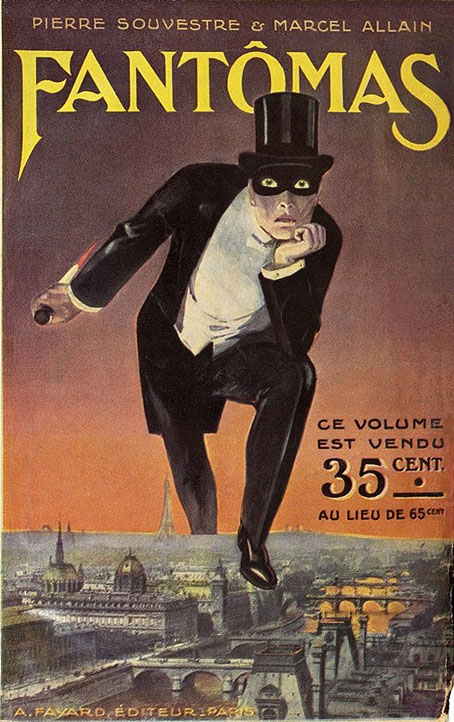
fantomas01.jpg

Uncredited cover art for the first publication, 1911.

The post title is a word apparently invented by James Joyce, one whose origin I’ve yet to discover. There may be some slight disparagement in its use of “enfant”, a suggestion that the Fantômas novels (or the films derived from them) were childish pleasures. If so, those childish pleasures had many supporters among the cultural avant-garde of Paris, as we’ll see below.

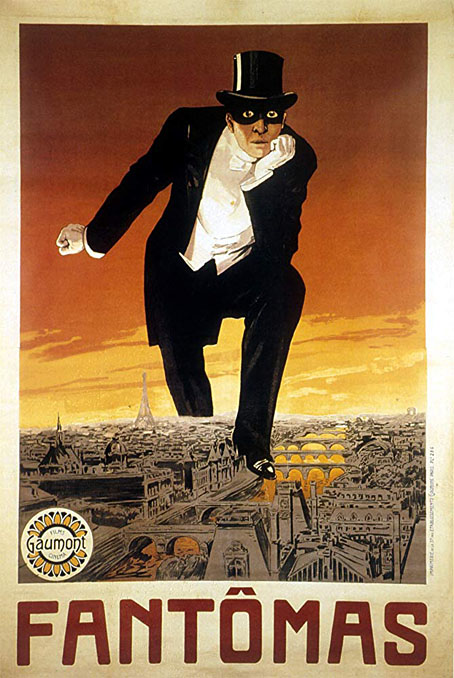
fantomas02.jpg

Uncredited poster art, 1913. The blood-stained dagger on the cover of the novel was too much for Gaumont.

This isn’t the first time I’ve written about Fantômas, the master criminal whose exploits thrilled French readers in the years before the First World War. But I’m writing now having finally read a translation of Marcel Allain and Pierre Souvestre’s first Fantômas novel, and also watched the five Louis Feuillade films which introduced Fantômas to an international audience in 1913 and 1914. The novel was worth reading even though it doesn’t rise much above the pulp fiction of the time; Allain and Souvestre were writing in haste, their books were never going to win any literary awards. Fiction doesn’t have to be finely-crafted in order to capture the popular imagination (look at James Bond…), but Fantômas is unusual for being so popular while also being essentially formless: a persistently elusive criminal mastermind with no substantiated identity that the police can discover, whose prowess with disguise enables him to infiltrate French society at all levels. Criminal masterminds are plentiful in English literature but they’re usually hiding in the background of stories with heroes as the central character, as with Professor Moriarty and Sherlock Holmes. Guy Boothby’s Doctor Nikola has Fantômas-like qualities but he’s a more ambivalent character, less of an outright villain. A closer English comparison might be Fu Manchu whose first appearance in print was in 1912, a year after the literary debut of Fantômas. The rivalry between Fu Manchu and Denis Nayland Smith of Scotland Yard matches the tireless pursuit of Fantômas by Inspector Juve of the Sûreté; yet Fu Manchu still has a personal history and, in the later novels, motivations beyond mere criminality. Nothing is known of Fantômas outside his criminal endeavours. His character is so nebulous that one of the later stories sees Inspector Juve arrested after his superiors have convinced themselves that he must be the real hand behind the Fantômas crimes.

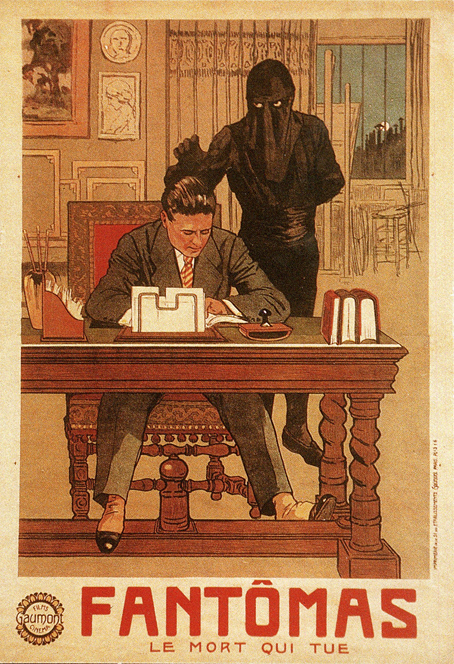
fantomas03.jpg

Uncredited poster art, 1913. Fantômas is about to turn his unwitting victim into “The Corpse that Kills”.

On an artistic level the Feuillade adaptations are much more satisfying than their source, even though Fantômas in the films isn’t as triumphantly murderous as he is in the books. After years of only knowing the adaptations from blurred and washed-out stills it’s been a revelation to see the recent Gaumont restorations which have been mastered from the best available prints, cleaned of scratches and other flaws, and projected at the proper speed. The Feuillade serials have circulated for years in inferior copies but I’d always held off watching them in the hopes that better prints might arrive. I’m glad I waited. Cinema was still a young medium in 1913 but Feuillade was a good director, skilled at creating suspense and engineering sudden surprises. He was also working with a decent troupe of actors, especially René Navarre as the villainous leading man. The misconception that early silent acting is all grandiose gestures and exaggerated facial expressions is dispelled in films like these where the acting is generally restrained even when the subject matter is lurid and melodramatic.

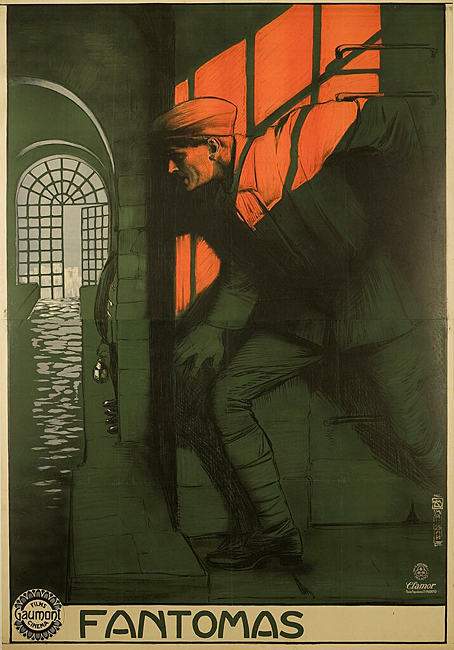
fantomas04.jpg

Poster art by Achille Mauzan, 1913.

The UK release of the Feuillade films by Eureka happens to arrive just after 100th anniversary of the first Surrealist Manifesto, a coincidence, no doubt, but a fitting one. The Surrealists enjoyed the “waking dream” quality of the cinema experience, and were especially besotted with Feuillade’s Fantômas serials:

Over the next two decades, Fantômas was championed by the Parisian avant-garde, first by the young poets gathered around Guillaume Apollinaire, who, together with Max Jacob, founded a Société des Amis de Fantômas in 1913, and later by the Surrealists. In July 1914, in the literary review Mercure de France, Apollinaire declared the imaginary richness of Fantômas unparalleled. The same month, in Apollinaire’s own review, Les Soirees de Paris, Maurice Raynal proclaimed Feuillade’s Fantômas saturated with genius. Over the next two decades, poets such as Blaise Cendrars (who called the series “The Aeneid of Modern Times”), Max Jacob, Jean Cocteau, and Robert Desnos, and painters such as Juan Gris, Yves Tanguy, and René Magritte, incorporated Fantômas motifs into their works. Pierre Prévert’s 1928 film, Paris la Belle, featured a Fantômas book cover in the closing sequence, and the Lord of Terror was adapted to the Surrealist screen in Ernest Moerman’s 1936 film short, Mr. Fantômas, Chapitre 280,000. As the century progressed, Fantômas remained a minor source of artistic inspiration as the subject of cultural nostalgia.

Robin Walz from Serial Killings: Fantômas, Feuillade, and the Mass-Culture Genealogy of Surrealism (1996)

All of which has had me searching for examples of the above, some of which I hadn’t seen before. Fantômas was a recurrent source of inspiration for René Magritte yet “the Lord of Terror” is often reduced to a footnote in discussions of Magritte’s career. The appropriation of the name of Fantômas, along with motifs from the novels and films, is a unique moment in art history, one that points the way to the further appropriations of Pop Art and the cultural free-for-all we see in the art world today.

Continue reading “Enfantômastic!”