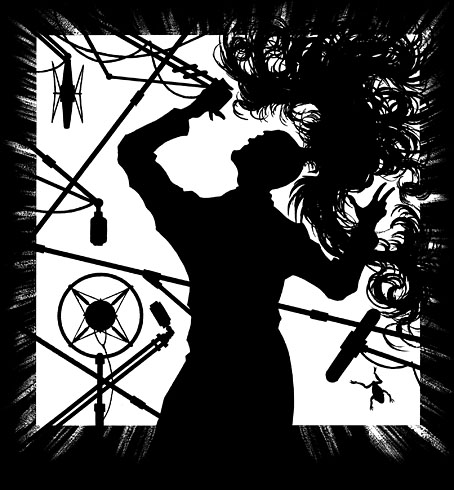
A Reverbstorm jukebox

lordhorror.jpg

Another in a series of posts that supplement the forthcoming Reverbstorm book. Music, especially the rock’n’roll of the mid-50s to the mid-60s, was an important motor in Reverbstorm‘s creation: the title comes from the lyrics to Paul Temple’s song, and the song itself was included as a CD-single with the first issue. Each issue opened with a playlist of ten pieces of music offered as a complement to the narrative. We alternated the choices: David Britton chose the first ten, I chose ten for the second issue and so on. Dave’s choices were mainly the rock’n’roll he’s been listening to all his life while I tried to balance this with a more eclectic selection. But in Reverbstorm itself it’s the rock’n’roll that’s referenced the most, and it was this era of music we were both listening to a great deal during the composition of the series.

What follows is a guide to some of the songs and instrumentals referred to in the book, together with some of my favourite tracks from a compilation tape I used to play repeatedly while I was drawing. A few of these tracks are very obscure one-off singles so this list serves an additional function in saving people the trouble of hunting around.
bo.jpg

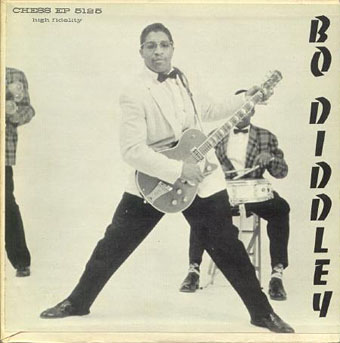
Bo Diddley (1955) by Bo Diddley
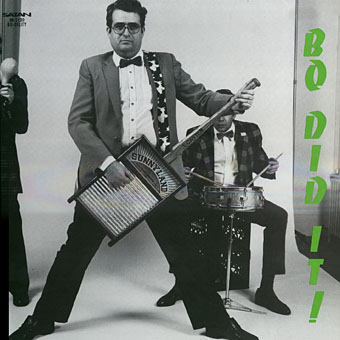
Part 3 of Reverbstorm, “The Big Beat of Apes”, is subtitled “Bo Diddley meets William Hope Hodgson”, and it’s to the Bo Diddley Beat that we’re referring. Diddley recycled his highly influential riff/rhythm many times, and inspired many cover versions, pastiches or outright thefts. A heady mix of these may be heard on one of the key albums for the creation of the series, a 1989 vinyl-only compilation entitled Bo Did It! which gathered seventeen obscure Diddley Beat singles. A couple of these are listed in Lord Horror’s radio playlist seen in part two, while others are present in this list. But this Bo Diddley song is where it all begins.

Bottle To The Baby (1956) by Charlie Feathers
Classic hiccoughing rockabilly and a favourite of Savoy cult band The Cramps who covered Feathers’ I Can’t Hardly Stand It. Bottle To The Baby gets a mention in part 3 while Charlie himself is quoted in part 8.

The Monkey (Speaks His Mind) (1957) by Dave Bartholomew
A moral tale from Mr Bartholomew, also quoted in part 3.

Esquerita And The Voola (1958) by Esquerita
Often cited as the guy that Little Richard stole all everything from, the very flamboyant Eskew Reeder Jr had an erratic career which yielded this berserk highlight, the B-side of his Rockin’ The Joint single. I first heard this when Dave played it in Savoy’s Peter Street shop one day and couldn’t believe how crazy it sounded. It’s also hard to believe it was on a major label. Play loud.

Hootchy-Koo (1958) by Larry Williams
Larry Williams was the prince of big bawdy numbers like this, and a favourite of The Beatles who covered three of his songs. The version I used to listen to was a slightly different demo recording (not on YT, unfortunately). Lucy Swan liked Hootchy-Koo so much she mentions it in her Lord Horror-related novel The Adventures of Little Lou.

Rumble (1958) by Link Wray
The ultimate swaggering riff and the moment where the guitar takes over from the saxophone as the locus of menace in popular music. Most people have probably heard this in the background of the Jack Rabbit Slim’s scene in Pulp Fiction but you’ll find it elsewhere, notably a Ry Cooder cover version in Streets of Fire, the highlight of an otherwise lacklustre film.

Alligator Wine (1958) by Screamin’ Jay Hawkins
The witches’ recipe from Macbeth gets reworked by Leiber & Stoller as a swampland love potion for Screamin’ Jay.

Storm Warning (1959) by Mac Rebennack
Before a bullet ruined one of his fingers, Dr John was guitarist Mac Rebennack whose early career produced some impressive singles such as this Diddley Beat instrumental. That title is now impossible to disassociate from the devastation wrought by Hurricane Katrina in 2005.

Tall Cool One (1959) by The Wailers
The Wailers, a Seattle group, are often listed now as The Fabulous Wailers to distinguish them from Bob Marley’s group. They had a knack for catchy instrumentals; in addition to this there was also Mau Mau.

Wang Dang Doodle (1960) by Howlin’ Wolf
Given a choice between this version of Willy Dixon’s song and the later Koko Taylor recording (which includes Dixon on vocals) I’d probably choose Koko’s but the Wolf came first, and this was the one Dave listed in the first issue of the series.

I Want Some of That (1961) by Kai Ray
One from the Lord’s playlist in part 2.

Let There Be Drums (1961) by Sandy Nelson
Sandy Nelson made a career out of recording drum instrumentals. This thundering opus is his finest moment.
bodidit.jpg

Bo Did It! (1989)

Boom Stix (1962) by Curley and The Jades
Who the hell were Curley and The Jades? Don’t ask me but this obscure single from the Bo Did It! collection manages to weld a Sandy Nelson drum break to the Diddley Beat.

Papa-Oom-Mow-Mow (1962) by The Rivingtons
One of the great nonsense hits, and endlessly imitated afterwards, the title gets a mention in part 2. Kim Fowley had something to do with the release so it’s fitting that he’s wound up with Savoy as well, having written the insert notes to the recent Fenella Fielding album.

Surfin’ Bird (1963) by The Trashmen
Of all the copyists and imitators that chased The Rivingtons’ success none can approach these two minutes and twenty seconds of demented genius.

The Fourth Dimension (1964) by The Ventures
I find a little of The Ventures’ twanging instrumentals usually goes a long way, like many of these groups they work best on compilations. But I do like The Ventures in Space which is where this spooky David Lynch-style number originates.

Strychnine (1965) by The Sonics
Psycho would have been the obvious choice here but I tried to avoid being predictable. Everything The Sonics recorded sounds cranked to the point of distortion, and this is no exception. Garage punk at its wildest.

Bop Diddlie In The Jungle (1966) by Tommy King and The Starlites
Another track from Lord Horror’s playlist found on the Bo Did It! collection, this is Bo’s Diddley Daddy relocated to a jungle setting.

Electricity (1967) by Captain Beefheart and his Magic Band
The whole of Reverbstorm is dedicated to Trout Mask Replica but this was a track from one of my playlists. A compelling argument for why there should be more theremins in pop music.

I Wanna Be Your Dog (1969) by The Stooges
Lust For Life was the album I was playing a lot whilst drawing but this song was another of Dave’s choices. One of the Savoy “Lord Horror” singles in the 1980s was a cover of Raw Power.

Garbageman (1980) by The Cramps
And another of the Savoy “Lord Horror” singles was a cover of this unstoppable beast from The Cramps. “Do you want the real thing, or are you just talkin’?”

Previously on { feuilleton }
Reverbstorm: Bauhaus Horror
Reverbstorm: an introduction and preview
A playlist for Halloween: Voodoo!

voodoo1.jpg

It’s become a tradition here to post a playlist for Halloween so here’s the one for this year, a collection of favourite “voodoo” music. Most are these pieces have as much to do with real voodoo as Bewitched does with real witchcraft but I like the atmospheres of Voodoo Exotica they evoke.

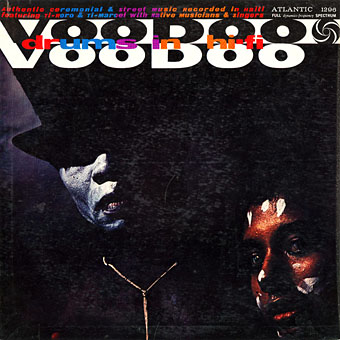
Voodoo Drums in Hi-Fi (1958).
Beginning with some ethnographic authenticity, this is one of many recordings of genuine (so they claim) voodoo drummers from Haiti, and was probably released to cash-in on the Exotica boom of the late Fifties. For the genuine article, the drums here sound less dramatic than the pounding rhythms familiar from Hollywood rituals, but that’s still a great cover. Voodoo Drums in Hi-Fi has been deleted for years but a worn copy of the vinyl release can be found on various mp3 blogs. For a more recent recording of voodoo rhythms, there’s Spirits Of Life: Haitian Vodou on the Soul Jazz label.

Voodoo Dreams (1959) by Martin Denny.
This, meanwhile, is the genuine kitsch from Denny’s Hypnotique album, a slow arrangement of a syrupy Les Baxter tune. More drums and bongos than usual for a Denny piece, and a suitably spectral chorus.

Voodoo (1959) by Robert Drasnin.
When composer Drasnin was asked by the Tops company to get hip to the Exotica craze the result was an album entitled Voodoo (with unconvincingly exotic white people on the cover), from which they released a single, Chant of the Moon, and this track as the B-side, one of the best pieces on the album.

voodoo2.jpg

I Walk on Gilded Splinters (1968) by Dr John.
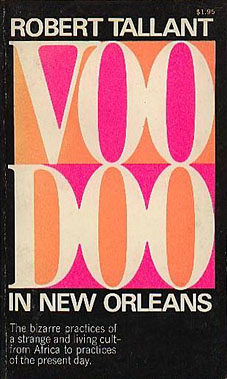
Mac Rebennack was working as a session musician in Los Angeles when he recorded his debut album in an atmosphere far removed from the swampy New Orleans miasma which the music conjures. Gris-Gris owes a great deal to Robert Tallant’s book, Voodoo in New Orleans (1946), a popular recounting of the city’s occult legends from which Rebennack borrowed not only his new persona (chapter 5 concerns the history of the real Dr John, a 19th century voodoo practitioner) but also many of the transcribed chants which he set to music. In chapter 3 we read this:

A song given to a reporter of the New Orleans Times-Picayune was printed in that newspaper on March 16, 1924. Probably a very old one, it reflects the dominance of the queens in New Orleans Voodoo and boasts of their tremendous power. Originally sung in the patois known as Creole, it is given here in English:

They think they frighten me,
Those people must be crazy.
They don’t see their misfortune
Or else they must be drunk.

I—the Voodoo Queen,
With my lovely headkerchief
Am not afraid of tomcat shrieks,
I drink serpent venom!

I walk on pins
I walk on needles,
I walk on gilded splinters,
I want to see what they can do!

They think they have pride
With their big malice,
But when they see a coffin
They’re as frightened as prairie birds.

I’m going to put gris-gris
All over their front steps
And make them shake
Until they stutter!

Anyone familiar with Gris-Gris will recognise the lyrics of I Walk on Gilded Splinters (misspelled “Guilded” on the sleeve) which Dr John did a great job of fashioning into a classic voodoo song. The entire album might be ersatz, then, but it remains one of my favourites by anyone, and for me it’s still the best Dr John album.

Mama Loi, Papa Loi (1970) by Exuma.
Gris-Gris was too weird to be a success when it first appeared but Dr John’s music and extravagant stage presence were very distinctive and helped Blues Magoos manager Bob Wyld recast singer Tony McKay as “Obeah man” Exuma for Mercury Records. Exuma’s self-titled debut album is ersatz stuff again but manages to sound even more deliriously swampy and sorcerous than Gris-Gris, with jungle sounds, zombie gurgles and a clutch of enthusiastic voodoo-inflected songs. “Mama Loi, Papa Loi / I see fire in the dead man’s eye” he sings here, and for the duration of the album Tony McKay is Exuma.

Zu Zu Mamou (1971) by Dr. John.
After Gris-Gris Dr John gradually pared away the voodoo songs but saved one of the best until his final occult outing, The Sun, Moon & Herbs, which includes contributions from Eric Clapton and, somewhere in the bayou distance, Mick Jagger and PP Arnold on backing vocals. Zu Zu Mamou is the spooky highlight which made a fleeting appearance in Alan Parker’s 1987 Satanic noir, Angel Heart.

Voo Doo (1989) by the Neville Brothers.
Of all the songs I’ve heard which equate falling in love with a voodoo spell, this one from New Orleans’ Neville Brothers is the most evocative, a track from their marvellous Yellow Moon album.

Invocation To Papa Legba (1989) by Deborah Harry.
Yes, it’s Blondie’s Debbie Harry singing a very authentic-sounding voodoo chant, arranged by Chris Stein. This was a one-off which appeared on a Giorno Poetry Systems collection, Like A Girl, I Want You To Keep Coming, along with a William Burroughs reading (a staple of GPS albums), New Order playing Sister Ray live, and other pieces.

Litanie Des Saints (1992) by Dr. John.
Goin’ Back to New Orleans, like Gumbo before it, saw Dr John revisiting the musical history of his native city. Most of the songs are old jazz and blues covers with the notable exception of this opening number, another voodoo invocation. A great string arrangement and vocals from the Neville Brothers; I’d love to hear a whole album like this.

voodoo3.jpg

Zombie’ites (1993) by Transglobal Underground.
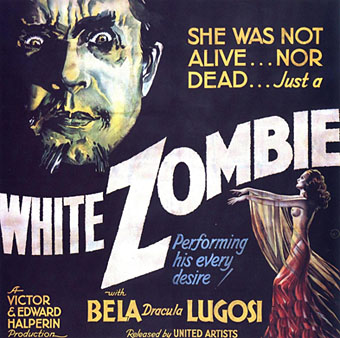
Zombies are a voodoo staple despite their current degraded status as the cuddly monster du jour, a development which has made me tire of seeing the word “zombie” in almost any context. A shame because I used to have a lot of time for films such as White Zombie (1932), I Walked With a Zombie (1943), and the later George Romero movies. White Zombie was the first zombie film and stars Bela Lugosi in a weirder and more effective piece of horror cinema than the stagey Dracula which made his name; I Walked With a Zombie was one of Val Lewton’s superb noirish collaborations with Jacques Tourneur; both films have their voodoo chants sampled on this track by Transglobal Underground from Dream of 100 Nations, with the opening chant from White Zombie forming the pulse that drives the piece. Along the way there’s another invocation from Voodoo in New Orleans—”L’Appé vini, le Grand Zombi / L’Appé vini, pou fe gris-gris!”—samples of Criswell from Plan 9 from Outer Space, and a moment of pure bliss at the midpoint when singer Natacha Atlas rides in on a magic carpet made of Bollywood strings.

Happy Halloween! And don’t forget to feed the loas…

Vampire-hunting in New Orleans

Previously on { feuilleton }
Voo-doo: Hoochie Coochie and the Creative Spirit
Dead on the Dancefloor
Another playlist for Halloween
Exotica!
White Noise: Electric Storms, Radiophonics and the Delian Mode
The Séance at Hobs Lane
Exuma: Obeah men and the voodoo groove
A playlist for Halloween
Ghost Box
Voodoo Macbeth

Voo-doo: Hoochie Coochie and the Creative Spirit

voodoo.jpg

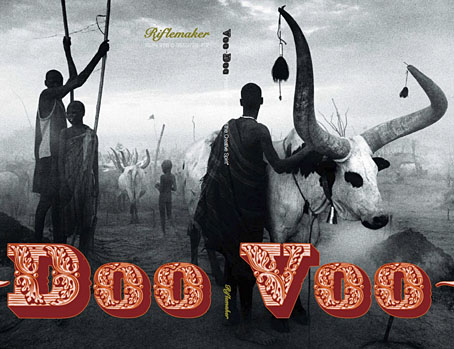
Better late than never mentioning this exhibition which has been running at Riflemaker, 79 Beak Street, London, since mid-January.

The exhibition features those artists, writers and musicians who acknowledge the need to reach a heightened or ‘altered state’ in order to create their work. We look at the mystery of the creative act; not the inexplicable ‘spark’, aka inspiration, but the fire; the non-doing before the doing, the summoning up of elemental spirits from within, or without, during the preparation of some visual or musical work, some theory or idea. This welling-up or ‘possession’, this ‘fever in the heart of man’, this spirit, this spell, might sometimes be referred to as Voodoo.

Among the very varied selection of work the chief attraction for me would be the rare opportunity to see one of Mati Klarwein‘s major paintings, Crucifixion. I referred to this large and detailed picture last year as I was fortunate to be able to use it for the packaging of Jon Hassell’s Maarifa Street CD. And while we’re on the subject of Mr Hassell (who had a track entitled Voodoo Wind on his second album) he has a new CD out on ECM, Last Night the Moon Came Dropping Its Clothes in the Street.

Voo-doo runs until April 4, 2009.

Elsewhere on { feuilleton }
The fantastic art archive

Previously on { feuilleton }
The art of Mati Klarwein, 1932–2002
Exuma: Obeah men and the voodoo groove
Voodoo Macbeth

Voodoo Macbeth

voodoo.jpg

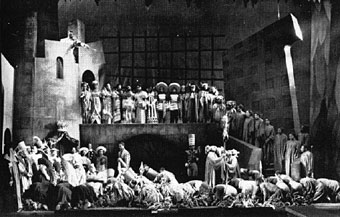
In my obsession with all things Orson Welles, his 1936 production of Macbeth holds a special fascination, partly for being my favourite Shakespeare play, and partly for the curiosity of its production—an all-black cast that included genuine Haitian drummers who famously claimed to have drummed a Broadway critic to death after he gave the play a hostile review. The De La Warr Pavilion in Bexhill-on-Sea is hosting an art event based on Welles’ production.

In 1936, whilst the UK was celebrating the new De La Warr Pavilion, and exciting artistic movement was reaching its close in New York—the Harlem Renaissance. A significant event within of this movement was an all-black African American version of Macbeth, presented by The Federal Theatre Project at the New Lafayette Theatre, Harlem and directed by writer and actor Orson Welles. This production became known as ‘Voodoo Macbeth‘.

There are many things that were remarkable about this unique and innovative project. The play was one of the first explorations of a modern and diasporic spin on the Shakespearian tale. It was also the point at which Welles was introduced to John Houseman, which then led to the formation of the Mercury Theatre Company that produced seminal works such as the War of the Worlds and Citizen Kane. Furthermore, the ‘Voodoo Macbeth‘ production displayed visual and aural motifs using lighting, stage design and overlapping sound which became signature elements to Welles’s later film projects.

The essence, spirit, and cross-artform experimentality of ‘Voodoo Macbeth‘ is the basis for a contemporary art, film and performance season at the De La Warr Pavilion and has been named after the production. This unique project looks at the historical and contemporary dialogue that Welles’s work had and still has with performance, film and visual art.

The curatorial concept of the De La Warr Pavilion’s exhibition Voodoo Macbeth focuses on the debate and the ideas around Welles’s unique and defining aesthetic which continues to attract much critical attention. The exhibition suggests that Welles’s approach has informed the work of many contemporary artists working in film today.

Both the historical and contemporary context of Voodoo Macbeth are explored within the exhibition and wider season of events. Original works by Orson Welles are presented alongside those of his contemporaries including Jean Cocteau, Jacques Tourneur and Lee Miller. These artists were working with film and photography during the period of the 1940s onwards and have a shared concern in exploring visual ideas and motifs around the idea of an ‘expansive frame’. As artists, they blurred the boundaries between visual art, theatre, literature and film, to produce lyrical and poetic visual works.

Work by contemporary artists within the exhibition have been selected on the basis that their work embodies the artistic narrative and the spirituality of Welles’s use of light, dark and spatial composition. The exhibition includes work by Phyllis Baldino, Glenn Ligon, Steve McQueen, Mitra Tabrizian and Kara Walker. In this context, Voodoo Macbeth explores how, for artists today, the genre and its relationship to installation practice in performance, film, sound and visual art is an important part of the process. Importantly, they do not mimic the formalist structure of film, painting and sound but endeavour to embed these works with elements of popular culture, critique and humour. Like Welles, who was a masterful story teller, these artists have developed works which take on the character of an intimate 21st century tale. Unlike Welles, these tales are tailor-made, for a gallery audience to explore and enjoy.

Produced by the De La Warr Pavilion in association with Brighton Photo Biennial and curated by associate curator David A Bailey in collaboration with BPB curator 2006 Gilane Tawadros.
The Galleries are open 10am–6pm except on Christmas Eve (closing
at 5pm), Christmas Day (closed all day) and New Year’s Eve (closing at 3pm). Free.

Voodoo Macbeth, Oct 7th–Jan 7th.

The Voodoo Macbeth exhibition is a part of the Brighton Photo Biennial, for more details on the BPB please visit their website www.bpb.org.uk, or contact them via the details below.
Biennial Office
University of Brighton
Grand Parade
Brighton BN2 0JY

Tel: +44 (01)273 643 052
Email: mail@bpb.org.uk