Leslie Megahey’s Bluebeard

bluebeard01.jpg

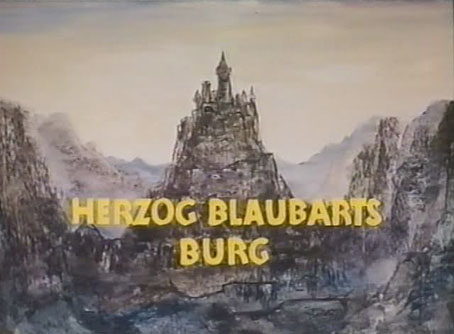
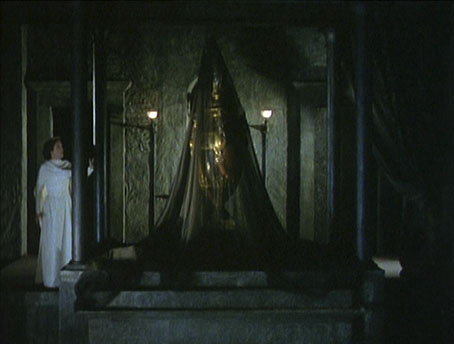
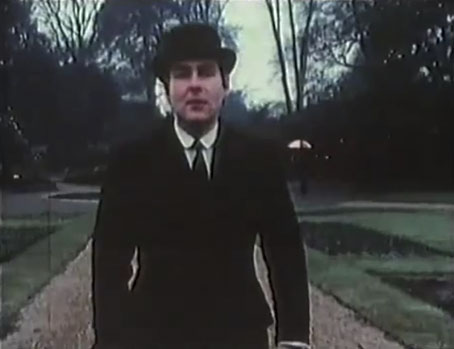
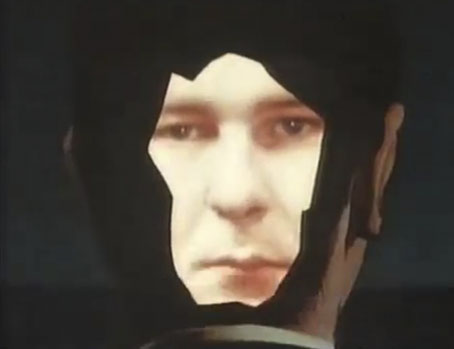
Back in the days when the BBC’s television output challenged its audience rather than pandered to it, Leslie Megahey was a name I always looked out for. During the 1970s and 80s, Megahey was one of the corporation’s outstanding producers and directors, and since his tastes often ran very close to mine seeing his name in a magazine listing was an alert for some essential viewing. Favourite Megahey documentaries would include his Omnibus film about (and interview with) György Ligeti in 1976, and the two-part Arena special about Orson Welles in 1982 that persuaded the director to talk at length for the first time about his career. Megahey’s arts films included drama documentaries about the French painters David and Gericault, and two dramas with painting themes, Cariani and the Courtesans (1987), and Schalcken the Painter (1979), the latter being an exceptional adaptation of the Sheridan Le Fanu ghost story. Duke Bluebeard’s Castle was one of the last of his BBC films, an adaptation of the Bartók opera that had this Bartók obsessive hopping with delight when it was screened in 1988.
bluebeard02.jpg

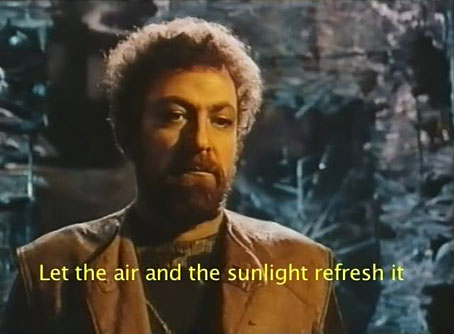
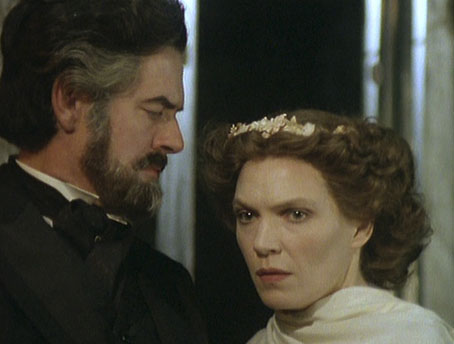
Bluebeard and Judith.

Bartók’s only opera was written in 1911, and is easier to adapt than most, being a single act of an hour or so in length with only two performers, Bluebeard (bass) and Judith (soprano). Given this it’s surprising there haven’t been more filmed versions. I wrote something a while back about the seldom-seen Michael Powell version; then there’s a version from 1981 by Miklos Szinetár scored by the London Philharmonic Orchestra with Georg Solti conducting. Megahey’s film also features the London Philharmonic with Adam Fischer conducting. Robert Lloyd and Elizabeth Laurence are the performers.
bluebeard03.jpg

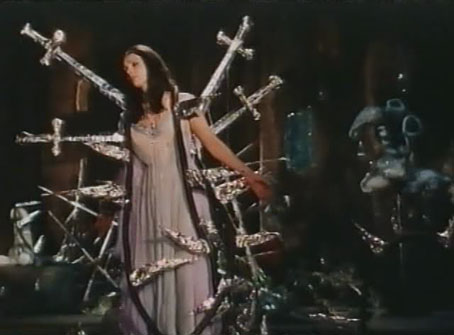
The libretto by Béla Balázs turns the old fairy tale into a psychodrama that’s also one of the first post-Freud operas, with the audience being asked in the prologue “Where is the stage? Is it outside, or inside?” Judith is ushered into the castle by Bluebeard to find seven locked doors: her curiosity and her demands to discover what lies behind the doors (or inside the mind of her husband-to-be) seals her fate. In some of the fairy tale versions the brothers of the bride arrive at the last moment to rescue their sister; not so here.
Continue reading “Leslie Megahey’s Bluebeard”

René Magritte by David Wheatley

magritte1.jpg

René Magritte as portrayed by Patrick McDonnell.

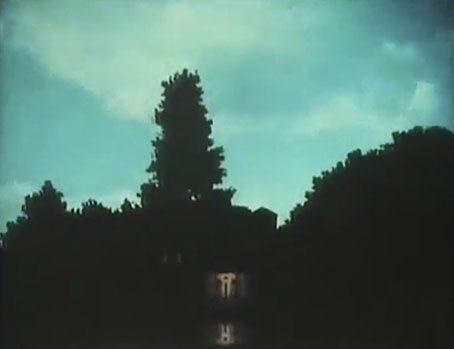
René Magritte died in 1967, the year Eric Duvivier’s La femme 100 têtes appeared in French cinemas. Magritte is even less visible cinematically than Max Ernst, IMDB lists a couple of documentaries and nothing else. There are trace elements elsewhere, notably the Magritte and de Chirico influence in Bertolucci’s Borges’ adaptation The Spider’s Stratagem (1970), but the artist’s arresting visual imagination has always found more of a welcome on book covers than cinema screens.

magritte2.jpg

One exception is David Wheatley’s drama documentary René Magritte (1976), yet another work you won’t find listed at IMDB. This was Wheatley’s graduation film which the BBC screened in a 30-minute version (shorn of some apparently clunky dialogue scenes) in 1979, and which secured for Wheatley a place as a regular director for the BBC’s Omnibus and Arena arts programmes. I saw the 1979 broadcast, and caught it again a decade later when one of the channels was having a season of Magritte-related programming, something that’s impossible to imagine in today’s debased television landscape.

For a student film it’s a stunning piece of work, taking a similar approach to Eric Duvivier in bringing to life many of the artist’s more famous pictures: a window shatters to reveal the scene behind it painted on its panes, a mountain hovers ponderously over the sea, a dove made of clouds flies across a stormy sky. Between the artworks there are short biographical scenes. There’s a sole version of the film on YouTube that remains watchable despite being a low-quality recording from video tape that’s also hacked into three parts and subtitled in Danish.

magritte3.jpg

Looking for more information about David Wheatley it was dismaying to find he’d died in 2009, aged 59. Leslie Megahey—a cult TV director of mine—wrote an obituary for the Guardian where he describes some of Wheatley’s other productions including the Arena film Borges and I (1983)—as far as I’m aware the only British TV documentary about Jorge Luis Borges—and Wheatley’s first feature film, an adaptation of Angela Carter’s The Magic Toyshop (1987). I recall enjoying the latter, produced at a time when the success of The Company of Wolves (1984) made it seem there might also be a place in the cinema for Angela Carter’s imagination; we know how that worked out. The Magic Toyshop doesn’t seem to have had a DVD release so good luck to anyone searching for it. As for René Magritte, if anyone runs across a better online copy be sure to leave a comment.

Previously on { feuilleton }
The Public Voice by Lejf Marcussen

Powell’s Bluebeard

bluebeard1.jpg

The subject of yesterday’s post, The Tales of Hoffmann, was the closest Michael Powell came to realising his concept of the “composed film”, a work intended to combine performance, music, lighting and set design thereby creating something which was unique to cinema. The central ballet sequence in The Red Shoes is another example of this, and Powell & Pressburger had plans to follow Hoffmann with similar works, including something based on The Odyssey that would have had contributions from Igor Stravinsky and Dylan Thomas. Their plans didn’t work out, unfortunately, Hoffmann was less successful than was hoped and the Archers partnership was eventually reduced to making dull films about the Second World War until P&P went their separate ways. The scandal of Peeping Tom in 1960 finished Powell’s career as a filmmaker in Britain, but he managed to return to the composed film concept in 1963 when production designer Hein Heckroth asked him to direct a production of the Bartók opera Bluebeard’s Castle for German television. Heckroth was responsible for the distinctive character of the later Archers films, including The Red Shoes and Tales of Hoffmann, but was working here with greatly reduced resources. Being a great Bartók enthusiast as well as a Powell aficionado it’s long been a source of frustration for me that this hour-long film is one of the least visible from Powell’s career. To date, the stills shown here are about the only visuals one can find.

bluebeard2.jpg

Bluebeard: Norman Foster.

Bluebeard’s Castle was Bartók’s only opera, a tremendous work and a lot easier to digest than some being a one-act piece for two singers: bass (Bluebeard) and soprano (Judith, his wife-to-be). The fairy tale of the murderous husband is turned into a psychodrama with Judith’s successive opening of the castle’s seven doors revealing more than she wants to know about her suitor’s personality. The libretto by Béla Balázs drops the last-minute rescue of the heroine by her brothers for a darker conclusion. The simple storyline and pronounced symbolism—the doors are often given different colours, while the rooms to which they lead each have a symbolic decor and import—lends itself to a variety of interpretations. Needless to say I’d love to see how Heckroth and Powell presented the drama. To whet the appetite further, one of the P&P sites has this account of a recent screening.

bluebeard3.jpg

Judith: Ana Raquel Sartre.

There are many other filmed versions of this opera, of course, and YouTube has the usual motley selection chopped into opus-ruining ten-minute segments. The BBC screened a fantastically gloomy version in 1988 by Leslie Megahey, director of many fine TV documentaries including the major Orson Welles edition of Arena in 1982 and a chilling adaptation of Sheridan Le Fanu’s Schalcken the Painter. His Bluebeard has been released on DVD in the US, and YouTube has an extract here.

Previously on { feuilleton }
The Tale of Giulietta
Diaghilev and the Ballets Russes
Béla Bartók caricatured

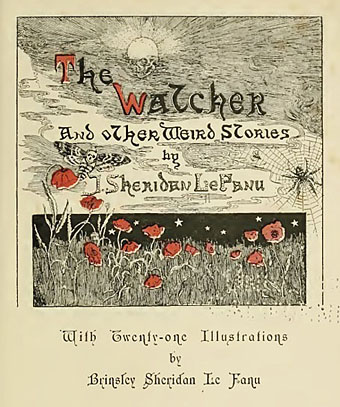
The Watcher and Other Weird Stories by J. Sheridan Le Fanu

lefanu.jpg

Irish writer J. Sheridan Le Fanu (1814–1873) has long been a favourite of mine since I first discovered his weird tales in ghost story collections, still the place you’re most likely to find his work. His ghost stories are frequently superior to the more celebrated MR James (who edited a Le Fanu collection), they’re less formulaic and often quite inexplicable. Green Tea, from In a Glass Darkly (1872) chills for its atmosphere of apparently random and unjustified malevolence; it’s also alarming for the directness of its central idea which I won’t spoil if you haven’t read it. Anyone wanting to know why Le Fanu is still read today should start there.

Unlike MR James, Le Fanu has lacked for illustrators so I was surprised to find this edition of his work at the Internet Archive with illustrations by his son, Brinsley. The artwork isn’t of the highest quality, and it’s debatable whether tales as nebulous and evocative as ghost stories should be illustrated at all, but their singularity makes them worth a look. The Watcher and Other Weird Stories is a small collection which includes A Strange Event in the Life of Schalken the Painter, a story memorably adapted for television by Leslie Megahey in 1979.

Previously on { feuilleton }
Chiaroscuro

Chiaroscuro

baglione.jpg

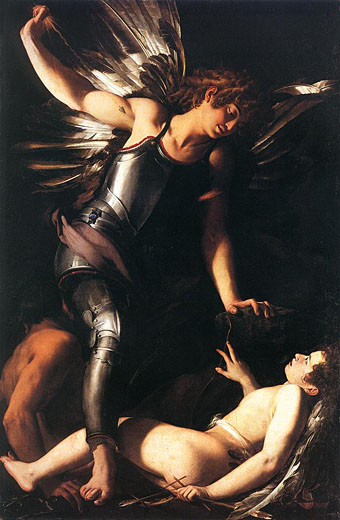
Heavenly Love and Earthly Love by Giovanni Baglione (1602–1603).

Chiaroscuro\, Chia`ro*scu”ro\, Chiaro-oscuro\, Chi*a”ro-os*cu”ro\, n. [It., clear dark.] (a) The arrangement of light and dark parts in a work of art, such as a drawing or painting, whether in monochrome or in colour. (b) The art or practice of so arranging the light and dark parts as to produce a harmonious effect.

Following from the earlier post about shadows in art, some favourite examples by masters of chiaroscuro. Another artist not represented here will be the subject of a post of his own in the next couple of days. The Dutch painter Godfried Schalcken (below) was the subject of the horror tale Schalcken the Painter by Joseph Sheridan Le Fanu, a story memorably filmed by Leslie Megahey for BBC television in 1979. Horror and the chiaroscuro effect belong together, as Fuseli’s Nightmare demonstrates, and many of Schalcken’s paintings seem even more curious and sinister after you’ve read Le Fanu’s story.

Update: John Klima points us to Hal Duncan‘s excellent story, The Chiaroscurist, which you can read at Electric Velocipede.

Continue reading “Chiaroscuro”