Leonora Carrington and the House of Fear

lc1.jpg

Kim Evans’ 50-minute TV profile of Leonora Carrington finally turned up on YouTube in December, in a slightly truncated copy. I taped this when it was first broadcast by the BBC in November 1992, and had the foresight to digitise it before my video recorder stopped working, but I’ve never wanted a YT account so I resisted the urge to upload it myself. If I was going to do so I’d offer things to Ubuweb instead, but I haven’t managed that either.
lc2.jpg

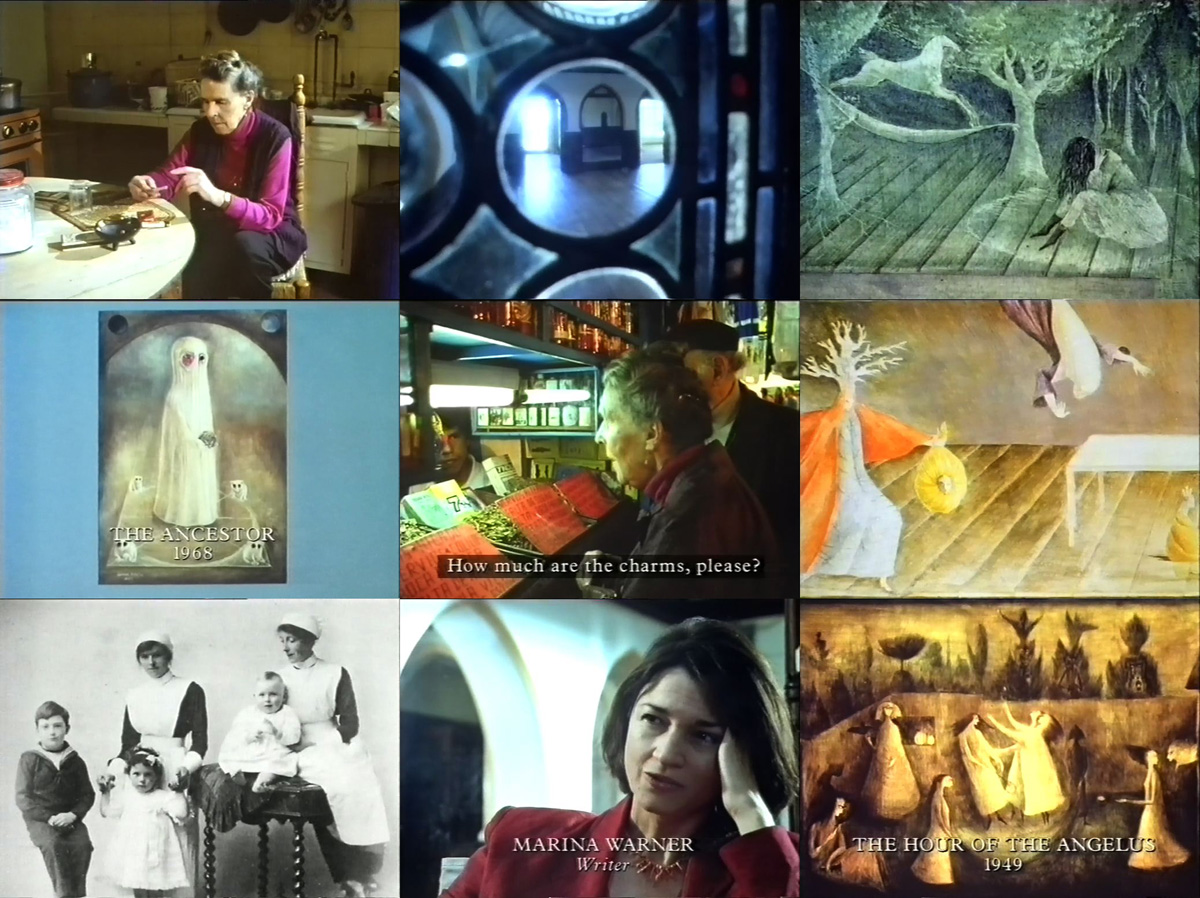
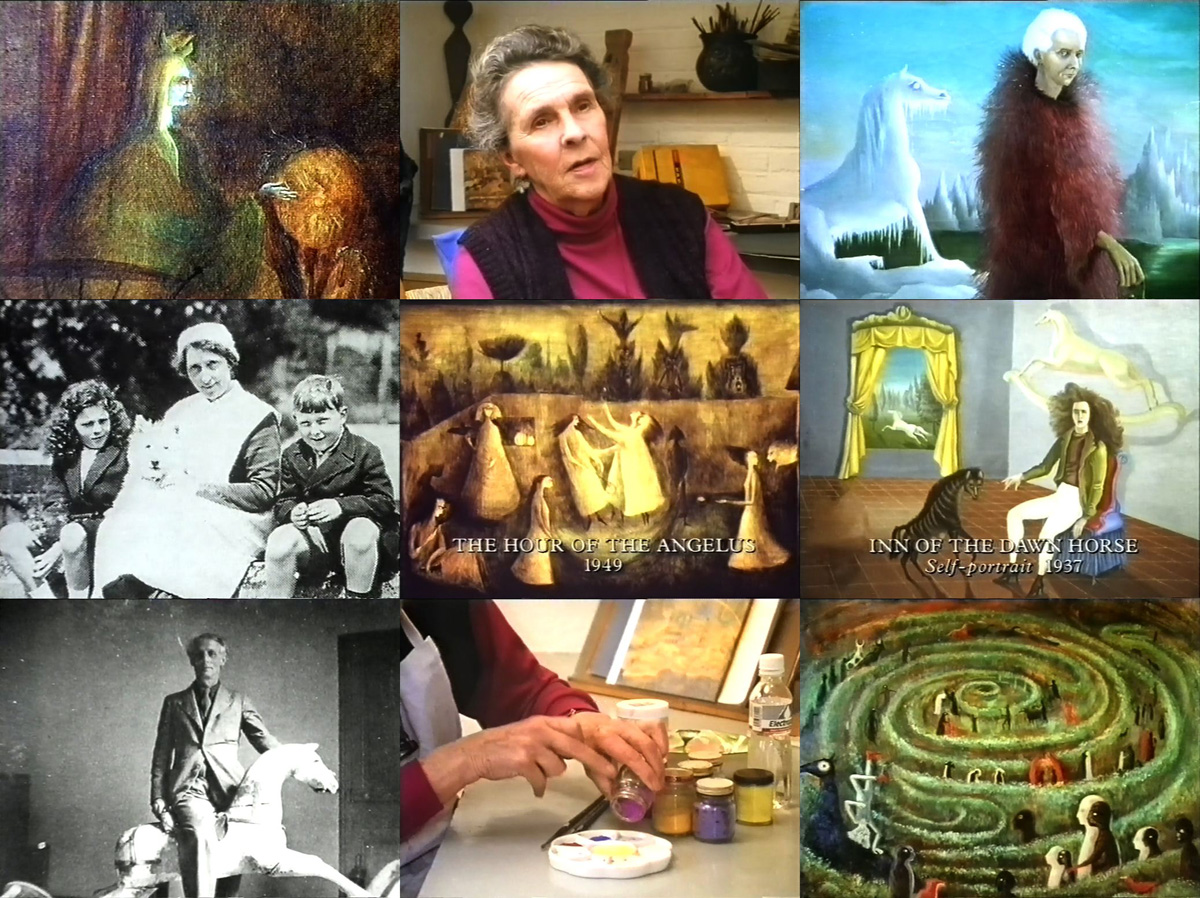
Leonora Carrington and the House of Fear was shown a few months after Carrington’s paintings had been the subject of a retrospective exhibition at the Serpentine Gallery in London, two events that made nonsense of Tate Modern’s subsequent labelling of her as a “lost” artist. Most artists would be happy to be described as “lost” if it meant being given almost an hour of screen-time on BBC 1 together with a retrospective show at a major London gallery. Describing Carrington as “lost” was a convenient way for the Tate and any art critics playing catch-up to sidestep their having ignored her work for decades. (Joanna Moorhead embarrassed Tate Modern about this neglect in 2007.) Surrealism’s avant-garde status waned in the late 1940s, and the movement became increasingly disreputable thanks in part to Salvador Dalí’s prominence and self-promotion. There were Surrealist exhibitions in London prior to 1992—notably the expansive Dada and Surrealism show at the Hayward Gallery in 1978—but the British art and literary world has always been suspicious of an excess of imagination, the very thing that’s to the fore in Kim Evans’ film. This follows the standard BBC template of the time, combining a biographical sketch with a view of the artist’s day-to-day life which here includes a visit to a crypt full of mummified corpses, and a lesson in how to make egg tempera. Marina Warner championed Carrington’s art and writing throughout the “lost” years, and she turns up briefly to offer some comment.
lc3.jpg

Previously on { feuilleton }
Temptations
The Secret Life of Edward James
Leonora Carrington, 1917–2011

Weekend links 559

fukuda.jpg

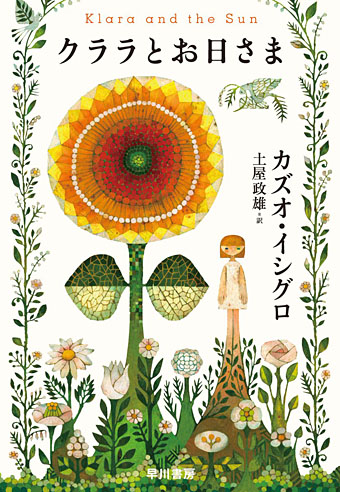
Cover art by Toshiyuki Fukuda for the Japanese edition of the new novel by Kazuo Ishiguro.

• “The story here is how between 1978 and 1982, this impulse shed its novelty genesis and its spoils were divvied up between gay producers making high-energy soundtracks for carnal abandon, and quiet Hawkwind fans smoking spliffs in Midlands bedrooms.…this excellent compilation offers fresh understandings of a period in sonic history where the future was up for grabs.” Fergal Kinney reviews Do You Have the Force? Jon Savage’s Alternate History of Electronic Music, 1978–82.

DJ Food continues his history of mini CDs with Oranges And Lemons, the 1989 album by XTC which was released in the usual formats together with a limited edition of three small discs in a flip-top box. The cover art by Dave Dragon is a good example of the resurrected groovy look.

• “If Austin Osman Spare, William Burroughs, Mary Butts and Kathy Acker got together for a séance, the transcript could well look like this.”

• How Leonora Carrington used Tarot to reach self-enlightenment: Gabriel Weisz Carrington on his mother’s quest for mythic revelations.

• Mixes of the week: Sounds Unsaid at Dublab with Tarotplane, and To Die & Live In San Veneficio by SeraphicManta.

• At Dennis Cooper’s: 5strings presents…Solve et Coagula: An introduction to Israel Regardie.

• The Joy of Silhouettes: Vyki Hendy chooses favourite shadow-throwing cover designs.

Emily Mortimer on how Lolita escaped obscenity laws and cancel culture.

Freddie deBoer has moved his writing to Substack.

• New music: Wirkung by Arovane.

• Children Of The Sun (1969) by The Misunderstood | Children Of The Sun (1971) by Hawkwind | Children Of The Sun (2010) by The Time And Space Machine

Weekend links 557

grygar.jpg

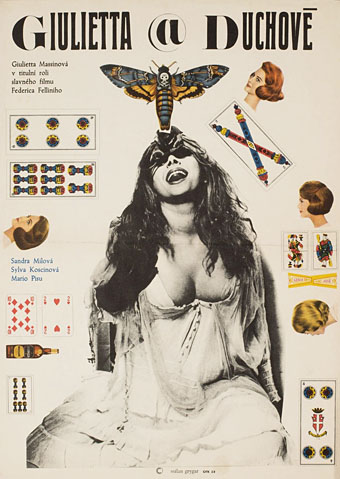
Poster by Milan Grygar for the 1969 Czech release of Fellini’s Juliet of the Spirits.

• “By encouraging composers to engage with sound as something more than just ‘notes on a keyboard’, the result [of the Buchla] was the kind of intricate sound design last heard in musique concrète. Works such as Morton Subotnick’s, Silver Apples of the Moon (1967) show a futurism completely absent on Wendy Carlos’ otherwise highly influential Switched-on Bach (1968), which used the keyboard-controlled Moog modular as if it were merely a glorified organ.” Oli Freke on the evolution of the synthesizer.

• “As humans began settling more consistently in one place to grow and thrive, the penis—or, more specifically, its erect form, the phallus—often came into use as a protector of fields that would prove fertile. In contrast to the comparative prudery of today, the phallus adorned everything from gods to shrines to personal homes and jewellery.” Emily Willingham on penial evolution in the animal kingdom.

• “The Trumpets of Jericho is, in part, so uniquely unsettling because it allows the woman in question to narrate her own horror. She is eager to give birth not to meet her child but so that she can go ahead and kill it.” Reed McConnell on the writings of Unica Zürn and (once again) Leonora Carrington.

At the center of it all, there was one director whom everyone knew, one artist whose name was synonymous with cinema and what it could do. It was a name that instantly evoked a certain style, a certain attitude toward the world. In fact, it became an adjective. Let’s say you wanted to describe the surreal atmosphere at a dinner party, or a wedding, or a funeral, or a political convention, or for that matter, the madness of the entire planet—all you had to do was say the word ‘Felliniesque’ and people knew exactly what you meant.

In the Sixties, Federico Fellini became more than a filmmaker. Like Chaplin and Picasso and the Beatles, he was much bigger than his own art. At a certain point, it was no longer a matter of this or that film but all the films combined as one grand gesture written across the galaxy. Going to see a Fellini film was like going to hear Callas sing or Olivier act or Nureyev dance. His films even started to incorporate his name—Fellini Satyricon, Fellini’s Casanova. The only comparable example in film was Hitchcock, but that was something else: a brand, a genre in and of itself. Fellini was the cinema’s virtuoso.

Martin Scorsese on “Il Maestro”, Federico Fellini

• At Dennis Cooper’s: For Your Crushed Right Eye: The instrumental films of Takahiro Iimura, Tetsuji Takechi, Toshi Matsumoto, Masao Adachi and Takashi Ito.

• “We wanted people to see that we exist.” Joan E. Biren, the photographer who recorded lesbian life in the 70s.

•New music: Alkisah by Senyawa, and Bishintai by Unknown Me.

• Mix of the week: XLR8R Podcast 683 by Laila Sakini.

Phallus Dei (1969) by Amon Düül II | Sidereal Hands At The Temple Of Omphalos (1996) by Scenic | Starman (feat. Peter Brötzmann) (2017) by Phallus Dei

Weekend links 554

yokoo.jpg

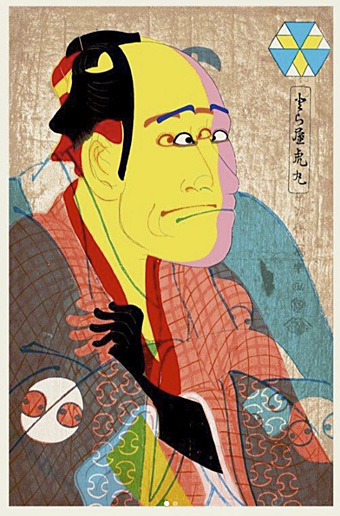
Tadanori Yokoo Emphasizes Deliberate Misalignment in Contemporary Woodblock Series.

• Another week, another Paris Review essay on Leonora Carrington. This time it’s Olga Tokarczuk exploring eccentricity as feminism. At the same publication there’s more eccentricity in Lucy Scholes‘ feature about the neglected novels of Irene Handl, a woman best known for the characters she played in many British films and TV dramas. I’ve long been curious about Handl’s writing career so this was good to see.

• “The denial of our participation in the world, [Fisher] implies—the disavowal of our desire for iPhones even as we diligently think anti-capitalist thoughts—is incapacitating. It leads to a regressive utopianism that cannot envision going through capitalism, but only retreating or escaping from it, into a primitive past or fictional future.” Lola Seaton on the ghosts of Mark Fisher.

• More ghosts: Paranormal is the latest collection of spooky, atmospheric electronica from Grey Frequency, “an audio document exploring extraordinary phenomena which have challenged orthodox science, but which have also grown and evolved as part of contemporary culture and a wider folkloric landscape.”

• “Items billed as THE BEST EVER can stop us cold, and even cause us to take them for granted, never reassessing them, as we instead gesture, often without thought, to where they sit in the corner, under a halo and backdrop of blue ribbons.” Colin Fleming on Miles Davis and Kind Of Blue.

• “Diaboliques and Psycho both achieve something very rare: a perfect plot twist but an unspoilable movie,” says Milan Terlunen.

• Richard Kirk returns once more as “Cabaret Voltaire” with a new recording, Billion Dollar.

• Even more Leonora Carrington: some of the cards from her Tarot deck.

DJ Food on Zodiac Posters by Simboli Design, 1969.

Kodak Ghosts (1970) by Michael Chapman | Plight (The Spiralling Of Winter Ghosts) (1988) by David Sylvian & Holger Czukay | The Ghosts Of Animals (1995) by Paul Schütze

Weekend links 553

litherland.jpg

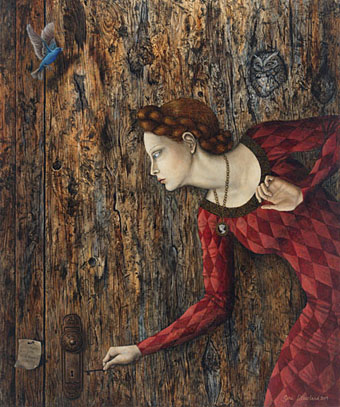
The Unknown Room by Gina Litherland.

• “He admired abstract painters like Mark Rothko, but also derived inspiration from the far less hip Pre-Raphaelite artists of the mid-1800s, especially the painter and poet Dante Gabriel Rossetti. Budd’s dreamy early breakthrough Madrigals of the Rose Angel, which featured a segment titled Rossetti Noise, was deliciously out of step with the hard-edged music of the 1970s.” Geeta Dayal on the late Harold Budd.

• “Here the experience is transformed into something more fabulist, and much more interesting than the memoir. In the novel, delusions of grandeur become real powers.” Elisa Gabbert on Leonora Carrington and The Hearing Trumpet.

• “The Japanese especially loved 3-inch CDs and there are many different examples throughout the 90s and 00s of them being used to great effect as promos.” DJ Food begins a series of posts devoted to one of my favourite music formats.

• New music: Viia, 24 minutes of live synthesis by Kikimore; Music For The Open Air, a free album of ambient music by K. Leimer (Soundcloud login required to download tracks).

• Sensory, Imaginative, and Psychic: S. Elizabeth interviews artist Gina Litherland.

• Puppets, Birds & Wycinanki: Clive Hicks-Jenkins talks to Anna Zaranko.

• Mix of the week: a 3-hour tribute to Monolake by Funky Jeff.

• At Wormwoodiana: The Flint Transmissions.

• At Dennis Cooper’s: Watery, Domestic.

• At Strange Flowers: 21 books for 2021.

Edge Of The Unknown (1973) by Nik Pascal | Unknown Passage (1999) by Robert Musso | The Unknown, Part 2 (2005) by Robin Guthrie & Harold Budd