Weekend links 810

luminet.jpg

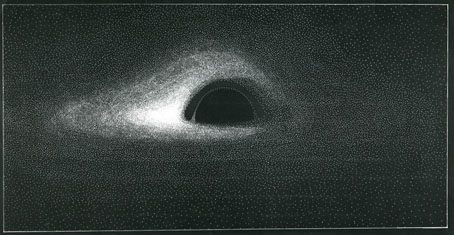
Image of a Spherical Black Hole with Thin Accretion Disk (1979) by Jean-Pierre Luminet. Via.

• “I would be willing to bet that every student of fantastic fiction has at some point in his or her career read a book with the name EF Bleiler printed on its cover.” Brian J. Showers of Swan River Press talked to EF Bleiler in 2005.

• “James Webb Space Telescope confirms 1st ‘runaway’ supermassive black hole rocketing through ‘Cosmic Owl’ galaxies at 2.2 million mph.”

• “You have to be ready to see it”: Abel Ferrara and Catherine Breillat on why Pasolini’s Salò is a gift that keeps giving.

• At Dennis Cooper’s: Kosten Koper presents…Bill Nelson: Acquitted By Mirrors (1982–1987).

• At Skurrilsteer: Ongoing research into the life, work and legacy of Edward James.

• At The Daily Heller: All that jazzy record cover design.

Cygnus X-1 (1977) by Rush | Blackhole Dropout (1979) by Tod Dockstader | The Competition Of Supermassive Black Holes And Galactic Spheroids In The Destruction of Globular Clusters (1999) by Jah Wobble

Weekend links 688

horna.jpg

Ascending to the Cathedral, Barcelona (1938/1960) by Kati Horna.

The rise and fall of Kowloon Walled City, Hong Kong’s infamous urban monolith. Related: a four-and-a-half-hour walkthrough of Stray, a game in which you help a cat escape from a deteriorated robot-filled housing complex.

• Quote of the week: “The true master requires the precision of a poet and the imagination of a scientist.” Thus Vladimir Nabokov at Lawrence Weschler’s Wondercabinet.

• New music: Orion Nebula by Christian Wittman, and Chthonic by Lawrence English & Lea Bertucci.

Chapter by chapter, Flaubert lampoons his poor pair, who fail at discipline after attempted discipline: landscape architecture, anatomy, history, literature, phrenology, religion, even love, and on and on. In each pursuit, they never lose the optimism or the hubris of thinking they can put their knowledge to work in the world. When they become interested in pedagogy, they adopt a pair of abandoned children who are at turns mystified by and contemptuous of their efforts to improve their well-being. The fruit trees fail, the novel is abandoned, a cat is boiled alive, the children cause scandals.

David Schurman Wallace explores the hazards of distraction with a detour through Flaubert’s Bouvard and Pecuchet

• At AnOther: Peter De Potter’s new book explores the erotic performance of social media.

• At Dennis Cooper’s: Hobart LaRoche presents…15 experimental video games.

Take a look at a book chronicling the albums of Island Records.

• At Colossal: Gabriel Schama’s laser-cut plywood reliefs.

Orion (1986) by Metallica | Shades Of Orion (1993) by Shades Of Orion | Orion (2001) by Jah Wobble and Bill Laswell

Weekend links 633

fuller.jpg

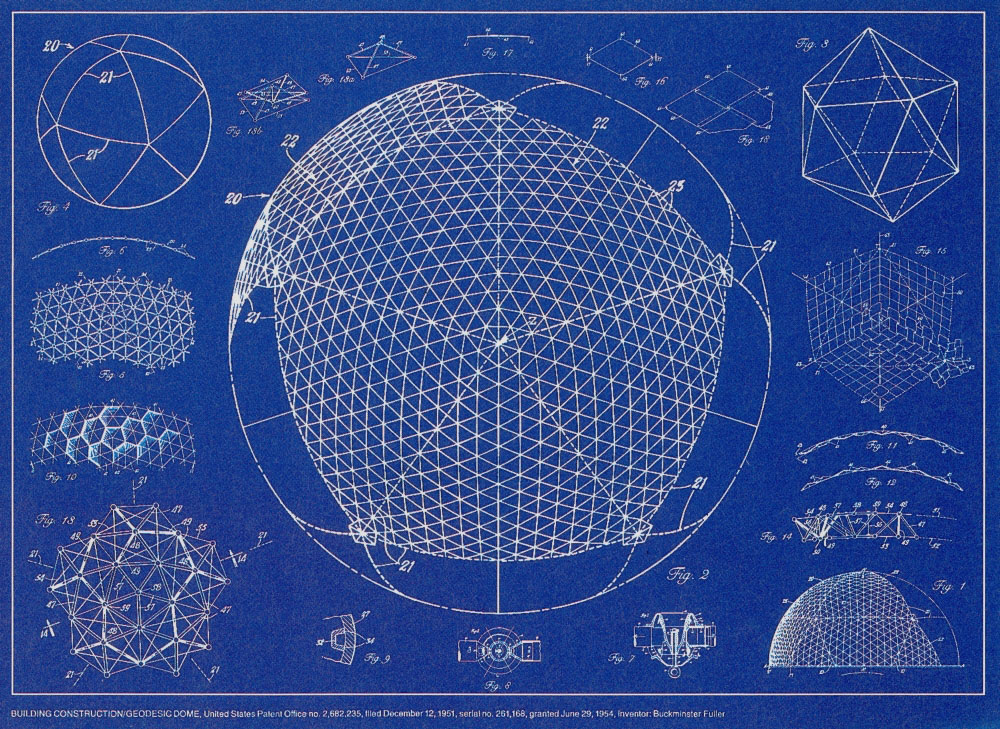
A blueprint by Buckminster Fuller for the first geodesic dome.

• “That opening sequence on the train, it’s got the dynamic of a wonderful pop video. It’s one of the world’s greatest actors who understood the power of small gestures.” Jah Wobble enthusing about Roy Budd, Michael Caine, and Mike Hodges’ baleful revenge drama, Get Carter.

• One of the BFI’s Halloween releases this year will be The Ballad of Tam Lin (1971), the blu-ray debut of a cult film that blends folk horror with modish melodrama. Direction by Roddy McDowall, music by Pentangle, and a cast that includes Ava Gardner and Ian McShane.

• New from A Year In The Country: Cathode Ray And Celluloid Hinterlands, a book exploring weird film and TV, not all of which is from the over-ploughed folk-horror furrows.

The whole notion of the Diggers kind of evolved out of the anarchism thing. And also there was more than a little social conscience. Because, by now, in ‘66, people started to come to the Haight Ashbury from all over. And that was when, in ‘66, it was still, really… Before the “Summer of Love,” it really was the Summer of Love. The “Summer of Love” [in 1967] was Life Magazine’s version. That’s what created the homeless on the streets and all that shit, because so many people came with absolutely no understanding of what they were about.

The role of the Diggers in this period was an outlaw, romantic, feed-the-people, anarchist, ‘Who’s in charge?—YOU ARE’, that kind of thing. That line in Apocalypse Now when he gets to the bridge and the little string of Christmas lights are hanging and he gets to one guy who’s guarding one end of the bridge and he says, Who’s in charge here? He says, I thought you were. And that’s so true. That is so true. Then Grogan, whenever anyone would ask, where’s Emmett Grogan… anyone could say “I’m Emmett Grogan.” So you could deflect a lot of shit.

Harvey Korspan of the San Francisco Diggers talking to Jay Babcock in another installment of Jay’s verbal history of the hippie anarchists

• “Buckminster Fuller patented the geodesic dome on June 29, 1954. Two decades later, it was everywhere in science fiction.”

• At Dennis Cooper’s: Spotlight on…Harry Mathews Tlooth (1966).

• Mix of the week: A mix for The Wire by Cheri Knight.

• Steven Heller’s font of the month is Bangel.

Tam Lin (1969) by Fairport Convention | Young Tambling (1971) by Anne Briggs | Tamlane (2016) by Dylan Carlson & Coleman Grey

Weekend links 590

santesson.jpg

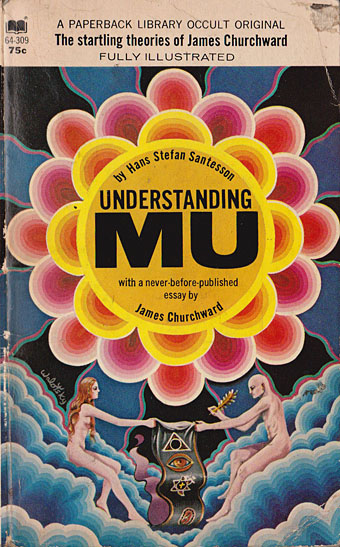
Understanding Mu (1970) by Hans Stefan Santesson. Cover art by Ron Walotsky. Via.

• “I have never believed Chariots of the Gods?—it takes faith, so what I mean is that I’ve never believed in it—but it has still held my affection for decades.” Patrick Allington on ancient aliens, unidentified aerial phenomena, and the unhinged pleasures of speculative nonfiction. I still have a stash of paperbacks in what I call “The Crank Box”, a collection of the more far-out titles that proliferated in the 1970s in the wake of the bestselling (and very egregious) Erich von Däniken. There aren’t many books about ancient astronauts or flying saucers in the box because they were so plentiful, I was always on the lookout for more outlandish volumes: lost continents, yes, but not the all-too-common Atlantis; Lemuria or Mu were more like it. So too with Hollow Earths and mysterious realms as detailed in Shambhala: Oasis of Light by Andrew Tomas, or The Lost World of Agharti: The Mystery of Vril Power by Alec MacLellan. The attraction wasn’t that any of this speculation might be true, more that these books operate as bargain-basement equivalents of the Borges conceit in which metaphysics is regarded as a branch of fantastic literature. Weird fiction by other means.

Collecting these books was a fun thing to do in the 1980s when the crank publications of the previous decade had washed up on the shelves of secondhand bookshops. The shine began to wear off in the 1990s when the emergence of the internet empowered a new breed of hucksters (and worse) pushing all of this stuff as though it was “hidden knowledge”. It’s hard to get excited about a battered paperback brimming with pseudo-science and pseudo-archaeology when similar ideas proliferate on YouTube channels catering to credulous hordes.

• Absolutely elsewhere (and linked here on a regular basis): An archive of the endlessly fascinating Absolute Elsewhere, a website created by the late RT Gault in order to present “a bibliography of visionary, occult, new age, fringe science, strange and even crackpot works published between 1945 and 1988”. The listings are accompanied by an informed, sceptical and often enlightening commentary, and also include a fair amount of weird fiction. Mr Gault had the right attitude.

• New music: Raum by Tangerine Dream, a preview of the new album, Probe 6–8, which will be released next year; new/old music: a reissue of Marine Flowers (Science Fantasy) by Akira Ito.

• “He had been honest about himself, and shockingly honest about his parents, but about his work he had spun me a tale.” Carole Angier on the elusive WG Sebald.

• At The New Criterion: Two stray notes on Moby-Dick by William Logan; on contemporary reviews of Moby-Dick and Melville’s journey on the Acushnet.

• “Perhaps what’s most extraordinary about Kollaps is that it was made at all.” Jeremy Allen on Einstürzende Neubauten’s thrilling debut album.

• At Culture.pl: a podcast about Czech film director Vera Chytilová and her masterpiece of Surrealist anarchy, Daisies.

• At Perfect Sound Forever: Part 2 of a Jon Hassell tribute which talks to friends and musical collaborators.

• At Dennis Cooper’s: Spotlight on…William S. Burroughs The Ticket That Exploded (1962).

• At Wormwoodiana: Mark Valentine unearths a medieval recipe for gingerbread.

• Mix of the week: Death’s Other Dominion by The Ephemeral Man.

MU-UR (2000) by Coil | Mu (2005) by Jah Wobble | Mu 1 (2015) by Acronym

Weekend links 558

morghen.jpg

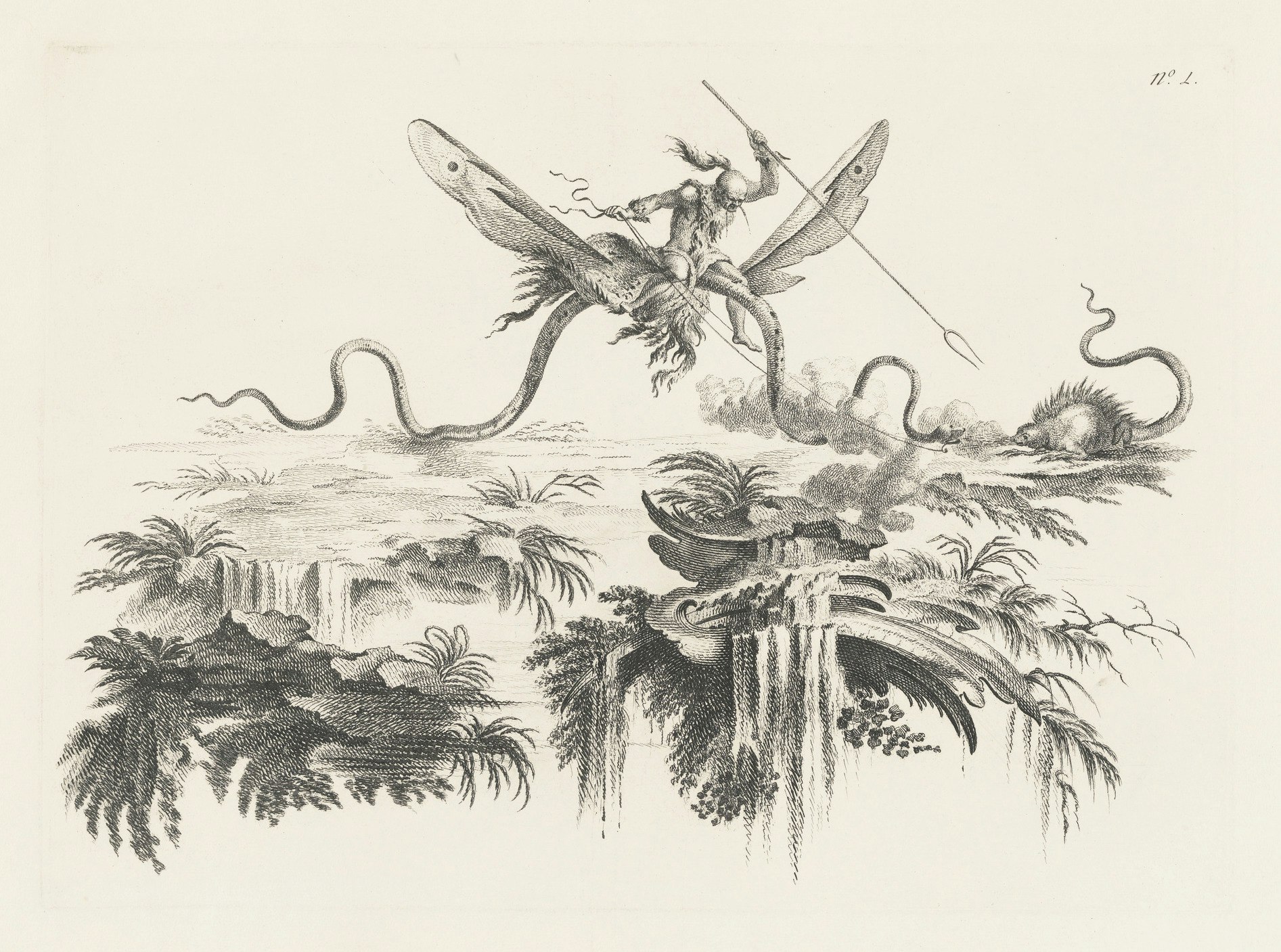
• One of the earliest posts here concerned The Suite of the Most Notable Things Seen by Cavaliere Wild Scull, and by Signore de la Hire on Their Famous Voyage from the Earth to the Moon (1776) by Filippo Morghen, a series of prints which depict the fantastic inhabitants, fauna and flora of the Moon. Morghen shows the Earth’s satellite to be a tropical place very similar to 18th-century conceptions of the New World or the Far East. Back in 2006 you couldn’t see copies of the prints as large or as detailed as this set at The Public Domain Review.

• “Last Call preserves the poignant irony that the trust and vulnerability that once made gay bars synonymous with gay community were also vectors of death, both in the form of murder and, later, HIV/AIDS.” Jeremy Lybarger on Elon Green’s study of the murders of four gay men in New York City in the 1990s.

• “No one in American letters ever pushed back against power over such a long time as [Lawrence] Ferlinghetti,” says John Freeman. Related: Ferlinghetti’s travel journals.

• New music with literary associations: Invisible Cities by A Winged Victory For The Sullen, and Star Maker Fragments by TAK Ensemble & Taylor Brook.

• Old music with no literary associations: The first of the forthcoming releases of live recordings by Can will be a 1975 Stuttgart concert.

The 120 Days of Sodom: France seeks help to buy ‘most impure tale ever written'”.

• The Joy of Circles: Vyki Hendy looks at some recent concentric cover designs.

• At Spoon & Tamago: Sculpted sushi made entirely from natural polished stones.

• My Hungry Interzone: Brian Alessandro on coming out and reading Naked Lunch.

• Andy Thomas maps Jah Wobble’s interdimensional dub.

• Mix of the week: XLR8R Podcast 684 by Ben Bondy.

• At Dennis Cooper’s: Jim Jarmusch Day.

Circles (1966) by Les Fleur De Lys | Circles (1970) by Blonde On Blonde | Carry On Circles (2006) by Tuxedomoon