Symphonie Fantastique

fantastique01.jpg

1955. Cover art by Jane Sinnickson Flora.

The programme for the symphony (1845 version) by Hector Berlioz:

Part One: Daydreams, Passions
The author imagines that a young musician, afflicted by the sickness of spirit which a famous writer has called the vagueness of passions (le vague des passions), sees for the first time a woman who unites all the charms of the ideal person his imagination was dreaming of, and falls desperately in love with her. By a strange anomaly, the beloved image never presents itself to the artist’s mind without being associated with a musical idea, in which he recognises a certain quality of passion, but endowed with the nobility and shyness which he credits to the object of his love.

This melodic image and its model keep haunting him ceaselessly like a double idée fixe. This explains the constant recurrence in all the movements of the symphony of the melody which launches the first allegro. The transitions from this state of dreamy melancholy, interrupted by occasional upsurges of aimless joy, to delirious passion, with its outbursts of fury and jealousy, its returns of tenderness, its tears, its religious consolations—all this forms the subject of the first movement.

Part Two: A Ball
The artist finds himself in the most diverse situations in life, in the tumult of a festive party, in the peaceful contemplation of the beautiful sights of nature, yet everywhere, whether in town or in the countryside, the beloved image keeps haunting him and throws his spirit into confusion.

Part Three: Scene in the Countryside
One evening in the countryside he hears two shepherds in the distance dialoguing with their “ranz des vaches” this pastoral duet, the setting, the gentle rustling of the trees in the wind, some causes for hope that he has recently conceived, all conspire to restore to his heart an unaccustomed feeling of calm and to give to his thoughts a happier colouring. He broods on his loneliness, and hopes that soon he will no longer be on his own… But what if she betrayed him!… This mingled hope and fear, these ideas of happiness, disturbed by dark premonitions, form the subject of the adagio. At the end one of the shepherds resumes his “ranz des vaches” the other one no longer answers. Distant sound of thunder… solitude… silence…

Part Four: March to the Scaffold
Convinced that his love is spurned, the artist poisons himself with opium. The dose of narcotic, while too weak to cause his death, plunges him into a heavy sleep accompanied by the strangest of visions. He dreams that he has killed his beloved, that he is condemned, led to the scaffold and is witnessing his own execution. The procession advances to the sound of a march that is sometimes sombre and wild, and sometimes brilliant and solemn, in which a dull sound of heavy footsteps follows without transition the loudest outbursts. At the end of the march, the first four bars of the idée fixe reappear like a final thought of love interrupted by the fatal blow.

Part Five: Dream of a Witches’ Sabbath
He sees himself at a witches’ sabbath, in the midst of a hideous gathering of shades, sorcerers and monsters of every kind who have come together for his funeral. Strange sounds, groans, outbursts of laughter; distant shouts which seem to be answered by more shouts. The beloved melody appears once more, but has now lost its noble and shy character; it is now no more than a vulgar dance tune, trivial and grotesque: it is she who is coming to the sabbath… Roar of delight at her arrival… She joins the diabolical orgy… The funeral knell tolls, burlesque parody of the Dies irae, the dance of the witches. The dance of the witches combined with the Dies irae.

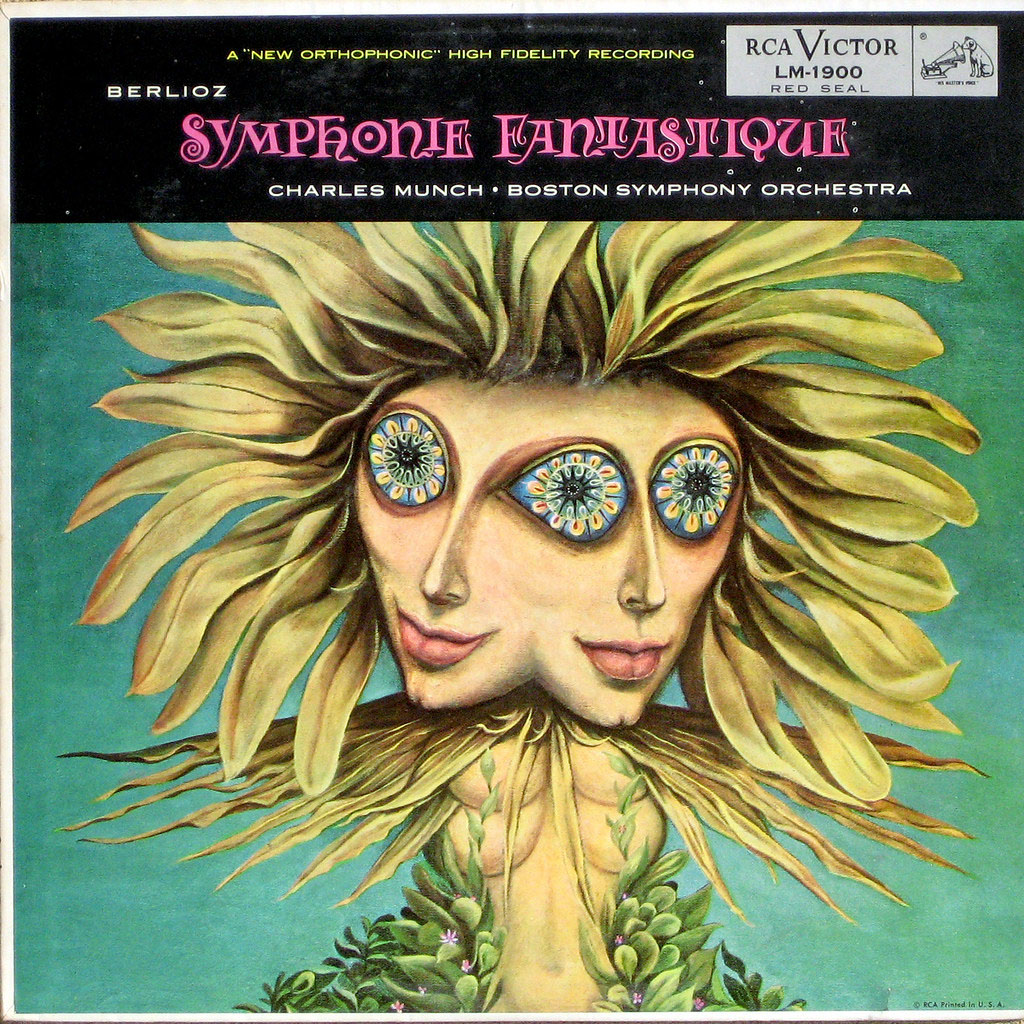
powers10.jpg

1958. Cover art by Richard M. Powers.

The programme for the symphony (1855 version) by Hector Berlioz:

A young musician of morbid sensitivity and ardent imagination poisons himself with opium in a moment of despair caused by frustrated love. The dose of narcotic, while too weak to cause his death, plunges him into a heavy sleep accompanied by the strangest of visions, in which his experiences, feelings and memories are translated in his feverish brain into musical thoughts and images. His beloved becomes for him a melody and like an idée fixe which he meets and hears everywhere.

Part One: Daydreams, Passions
He remembers first the uneasiness of spirit, the indefinable passion, the melancholy, the aimless joys he felt even before seeing his beloved; then the explosive love she suddenly inspired in him, his delirious anguish, his fits of jealous fury, his returns of tenderness, his religious consolations.

Part Two: A Ball
He meets again his beloved in a ball during a glittering fête.

Part Three: Scene in the Countryside
One summer evening in the countryside he hears two shepherds dialoguing with their “ranz des vaches” this pastoral duet, the setting, the gentle rustling of the trees in the light wind, some causes for hope that he has recently conceived, all conspire to restore to his heart an unaccustomed feeling of calm and to give to his thoughts a happier colouring; but she reappears, he feels a pang of anguish, and painful thoughts disturb him: what if she betrayed him… One of the shepherds resumes his simple melody, the other one no longer answers. The sun sets… distant sound of thunder… solitude… silence…

Part Four: March to the Scaffold
He dreams that he has killed his beloved, that he is condemned to death and led to execution. The procession advances to the sound of a march that is sometimes sombre and wild, and sometimes brilliant and solemn, in which a dull sound of heavy footsteps follows without transition the loudest outbursts. At the end, the idée fixe reappears for a moment like a final thought of love interrupted by the fatal blow.

Part Five: Dream of a Witches’ Sabbath
He sees himself at a witches’ sabbath, in the midst of a hideous gathering of shades, sorcerers and monsters of every kind who have come together for his funeral. Strange sounds, groans, outbursts of laughter; distant shouts which seem to be answered by more shouts. The beloved melody appears once more, but has now lost its noble and shy character; it is now no more than a vulgar dance-tune, trivial and grotesque: it is she who is coming to the sabbath… Roars of delight at her arrival… She joins the diabolical orgy… The funeral knell tolls, burlesque parody of the Dies Irae. The dance of the witches. The dance of the witches combined with the Dies Irae.

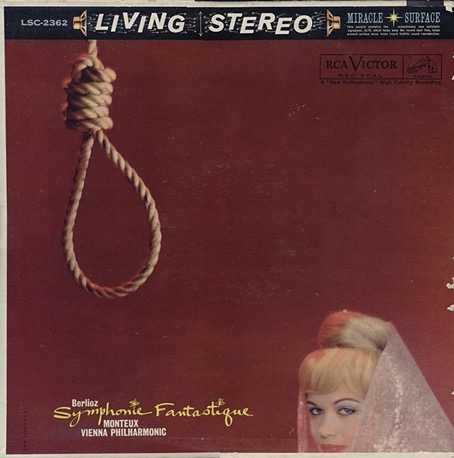
fantastique02.jpg

1958. No cover artist credited.

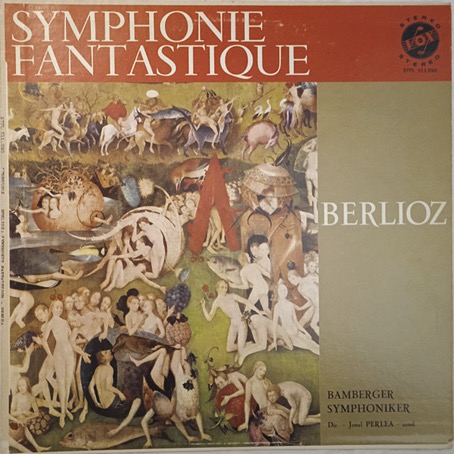
fantastique03.jpg

1959. Cover art by Hieronymus Bosch.

fantastique04.jpg

1960. No cover designer credited.

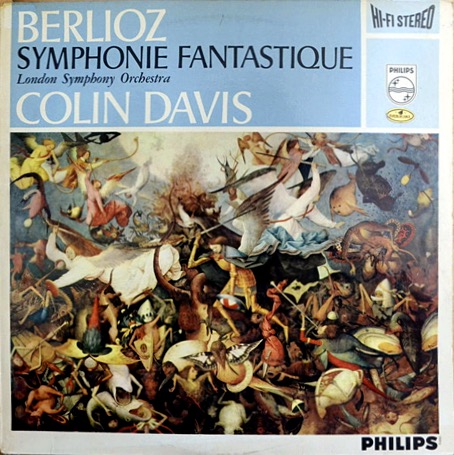
fantastique05.jpg

1964. Cover art by Pieter Bruegel the Elder.
Continue reading “Symphonie Fantastique”

Weekend links 590

santesson.jpg

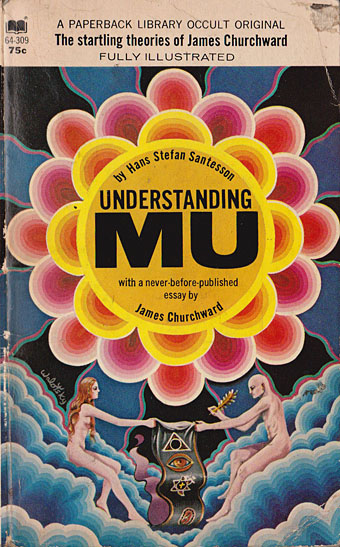
Understanding Mu (1970) by Hans Stefan Santesson. Cover art by Ron Walotsky. Via.

• “I have never believed Chariots of the Gods?—it takes faith, so what I mean is that I’ve never believed in it—but it has still held my affection for decades.” Patrick Allington on ancient aliens, unidentified aerial phenomena, and the unhinged pleasures of speculative nonfiction. I still have a stash of paperbacks in what I call “The Crank Box”, a collection of the more far-out titles that proliferated in the 1970s in the wake of the bestselling (and very egregious) Erich von Däniken. There aren’t many books about ancient astronauts or flying saucers in the box because they were so plentiful, I was always on the lookout for more outlandish volumes: lost continents, yes, but not the all-too-common Atlantis; Lemuria or Mu were more like it. So too with Hollow Earths and mysterious realms as detailed in Shambhala: Oasis of Light by Andrew Tomas, or The Lost World of Agharti: The Mystery of Vril Power by Alec MacLellan. The attraction wasn’t that any of this speculation might be true, more that these books operate as bargain-basement equivalents of the Borges conceit in which metaphysics is regarded as a branch of fantastic literature. Weird fiction by other means.

Collecting these books was a fun thing to do in the 1980s when the crank publications of the previous decade had washed up on the shelves of secondhand bookshops. The shine began to wear off in the 1990s when the emergence of the internet empowered a new breed of hucksters (and worse) pushing all of this stuff as though it was “hidden knowledge”. It’s hard to get excited about a battered paperback brimming with pseudo-science and pseudo-archaeology when similar ideas proliferate on YouTube channels catering to credulous hordes.

• Absolutely elsewhere (and linked here on a regular basis): An archive of the endlessly fascinating Absolute Elsewhere, a website created by the late RT Gault in order to present “a bibliography of visionary, occult, new age, fringe science, strange and even crackpot works published between 1945 and 1988”. The listings are accompanied by an informed, sceptical and often enlightening commentary, and also include a fair amount of weird fiction. Mr Gault had the right attitude.

• New music: Raum by Tangerine Dream, a preview of the new album, Probe 6–8, which will be released next year; new/old music: a reissue of Marine Flowers (Science Fantasy) by Akira Ito.

• “He had been honest about himself, and shockingly honest about his parents, but about his work he had spun me a tale.” Carole Angier on the elusive WG Sebald.

• At The New Criterion: Two stray notes on Moby-Dick by William Logan; on contemporary reviews of Moby-Dick and Melville’s journey on the Acushnet.

• “Perhaps what’s most extraordinary about Kollaps is that it was made at all.” Jeremy Allen on Einstürzende Neubauten’s thrilling debut album.

• At Culture.pl: a podcast about Czech film director Vera Chytilová and her masterpiece of Surrealist anarchy, Daisies.

• At Perfect Sound Forever: Part 2 of a Jon Hassell tribute which talks to friends and musical collaborators.

• At Dennis Cooper’s: Spotlight on…William S. Burroughs The Ticket That Exploded (1962).

• At Wormwoodiana: Mark Valentine unearths a medieval recipe for gingerbread.

• Mix of the week: Death’s Other Dominion by The Ephemeral Man.

MU-UR (2000) by Coil | Mu (2005) by Jah Wobble | Mu 1 (2015) by Acronym

Tomita album covers

tomita01.jpg

Snowflakes Are Dancing (1974); art direction; Joseph J. Stelmach; artwork: David B. Hecht.

The Japanese composer Isao Tomita died last week so I’ve been listening to some of his early recordings, and thinking—as usual—about their cover designs. Tomita was by far the best of the many electronic musicians in the 1970s who took advantage of the huge success of Wendy Carlos’s Switched-On Bach (1968) to create their own versions of classical music with Moog and other synthesisers. If this makes Tomita sound like an opportunist (and his 1972 collection of electronic pop covers was titled Switched On Hit & Rock), he quickly developed his own approach to electronic composition which ranged from quirky humour to his own brand of cosmic pictorialism. The latter was very different from the equally cosmic meanderings of Tangerine Dream which seldom strayed too far from the rock world. Tomita had a genius for taking very familiar pieces of classical music which he fashioned into synthesizer soundtracks for imaginary science-fiction films. (He also produced actual scores for a number of Japanese films but few, if any, of these were released outside Japan.) This approach is shown to great effect on The Bermuda Triangle (1979), an album that was subtitled “A Musical Fantasy Of Science Fiction”, and which filters Prokofiev and Sibelius through a library of crank paperbacks, with references to UFOs, undersea pyramids, Agharta, the Hollow Earth, Close Encounters of the Third Kind, and the Tunguska Event.

tomita02.jpg

Pictures At An Exhibition (1975); artwork: bas-relief by Gene Szafran. The first appearance of the logo that became a fixture of Tomita’s albums. No designer is credited but I’d guess it was the work of Joseph J. Stelmach. The logo typeface is Sinaloa.

As for the covers, Tomita’s recordings may have been classical music but RCA targeted the albums at a rock audience so there’s no sign of the venerable composers heads that appear continually on the sleeves of orchestral recordings. The examples here are almost all the Western releases which, surprisingly, tended to have better covers than the Japanese originals. This is also a partial selection, favouring Tomita’s own releases (no soundtracks), and mostly the early albums. The later albums aren’t as impressive, and many of them were only released in Japan.

tomita03.jpg

Firebird (1975). No design or art credit. I’d not noticed before that the logo evolves by degrees, here gaining some extensions.

Lastly, I’ll dedicate this post to my old friend Nik Green who died in March. Nik was a session musician of some note, and the first person I knew who owned a synthesizer (an ARP Odyssey). He was also a great Tomita enthusiast who shared Tomita’s sense of humour and relished the quirkier moments on many of these albums. I can’t listen to the opening of the Mars section of Tomita’s The Planets without remembering Nik shouting “That’s a Moog!” when a synthetic fanfare interrupts the sounds of a spacecraft lift-off.

Continue reading “Tomita album covers”