Weekend links 574

vyletal09.jpg

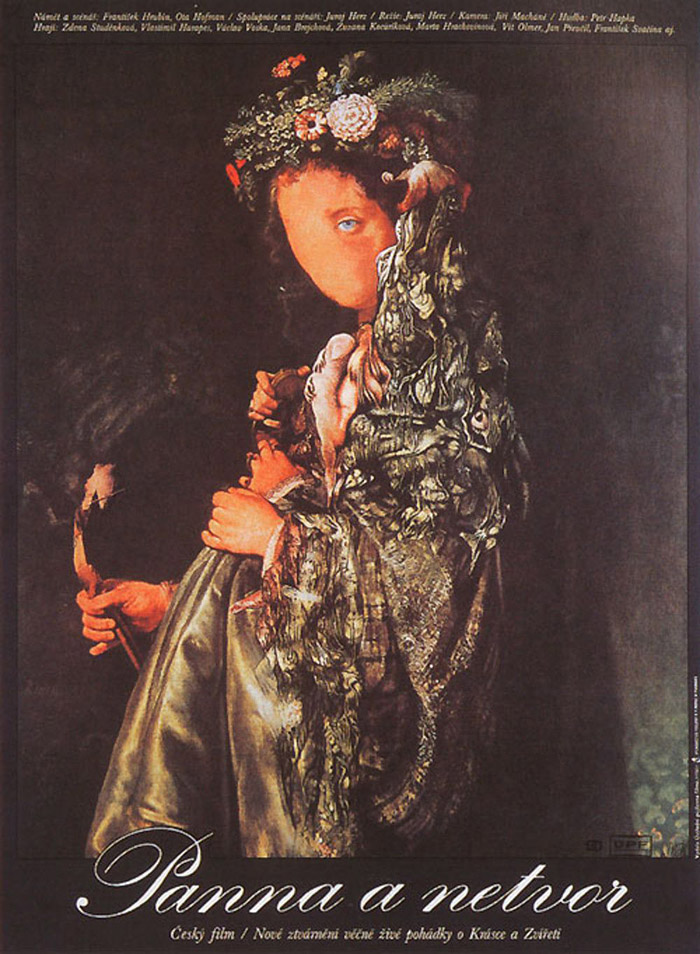
Poster for Beauty and the Beast (1978) by Josef Vyletal.

• Next month, Second Run release Juraj Herz’s 1978 adaptation of Beauty and the Beast on region-free blu-ray. I watched this last year on a Czech DVD so it’s good to hear it’s being given an upgrade. Herz’s film is a distinctly sinister take on the familiar tale, with a bird-headed Beast that’s closer to Max Ernst than anything you’ll find in illustrations for Perrault’s stories.

• “In a coincidence so unlikely it almost seems, well, magical, the girls traced illustrations from a book of folklore that also contained a short story by Sir Arthur Conan Doyle himself, a reflection of a reflection of a reflection.” Audrey Wollen on the Cottingley fairy photographs. Related: The Coming of the Fairies by Arthur Conan Doyle.

• “[Mark E. Smith], with his love of Stockhausen, HP Lovecraft, and (bizarrely) the sitcom Keeping Up Appearances, becomes a reverse coder, an apostle of avant pulp, a ‘paperback shaman’.” Sukhdev Sandhu reviews Excavate! The Wonderful and Frightening World of the Fall, edited by Tessa Norton and Bob Stanley.

• “Found photos of men in love from 1850–1950“. Maybe. As before, I’m always cautious about imposing a narrative on old photographs.

• Mixes of the week: A mix for The Wire by Pamela Z, and a dose of post-punk esoterica by Moin for XLR8R.

DJ Food takes another dive into back issues of International Times in search of ads for London’s Middle Earth club.

• At The Smart Set: Colin Fleming watches John Bowen’s drama of pastoral horror, Robin Redbreast.

• At Dennis Cooper’s: Heavily plotted non-linear structures whose velocity lacks narrative drive.

Ryan Gilbey attempts to rank Robert Altman’s features into a list of 20 best.

• Still Farther South: Poe and Pym’s Suggestive Symmetries by John Tresch.

• New music: At One Point by Scorn.

Visionist‘s favourite albums.

The Beast (1956) by Milt Buckner | Leggo Beast (1978) by Gregory Isaac’s All Stars | This Beast (1983) by Tuxedomoon
Weekend links 560

martin.jpg

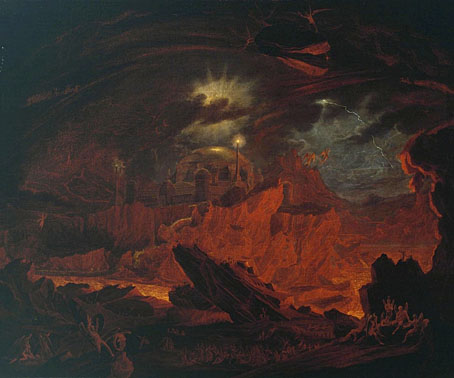
The Fallen Angels Entering Pandemonium, from ‘Paradise Lost’, Book 1 (c.1841) by John Martin.

• “Hergé’s heirs sue artist over his Tintin/Edward Hopper mashups.” The complaint is that the paintings of Xavier Marabout besmirch Tintin’s character by making him seem…human? Silly. I’d sooner complain that Hergé’s ligne claire drawing style is an awkward match for Hopper’s realism. And besides which, isn’t Tintin gay? There’s a lot of wish-fulfilling slash art showing Tintin and Captain Haddock in a closer relationship than Hergé ever would have wanted. This Canadian magazine cover by Normand Bastien dates from 1987.

• “Everyone wanted to make products that looked fast and angry and maybe wanted to lay eggs in your brain.” Alexis Berger tells S. Elizabeth how she avoided years stuck in a design office by becoming a jeweller instead.

• New music: Chiaroscuro by Alessandro Cortini, and Frequencies For Leaving Earth Vol. 4 (One-Hour Loop) by Kevin Richard Martin & Pedro Maia.

The Willows is less a flight of fancy and more an attempt to articulate the ways in which what we dubiously still call “nature” is at once an object of human systems of knowledge and yet also something that undermines those same systems. Thus if The Willows is indeed a classic of “supernatural horror” (as HP Lovecraft would famously note), we might also be justified in calling it “natural horror” as well. In Blackwood’s wonderfully slow, patiently constructed scenes of atmospheric suspense, there is the sense of an impersonal sublime, a lyricism of the unhuman that shores up the limitations of anthropocentric thinking, as well as evoking the attendant smallness of human beings against the backdrop of this deep time perspective.

Eugene Thacker on how Algernon Blackwood turned nature into sublime horror

• Women of Letters: John Boardley talks to Lynne Yun, Deb Pang Davis, Coleen Baik and Duong Nguyen about their typographic designs.

• At Google Arts & Culture: Music, Makers & Machines: A brief history of electronic music.

• At The Public Domain Review: The Universe as Pictured in Milton’s Paradise Lost (1915).

• Beyond the Perseverance drone: Chloe Lula on the sounds of space.

• At Wormwoodiana: Colour magazine (1914–1932).

Wyrd Daze Lvl.4 FOUR STAR is here.

• At Dennis Cooper’s: Hell.

O Willow Waly (1961) by Isla Cameron And The Raymonde Singers | Cool Iron (1972) by The Willows | The Willows (2005) by Belbury Poly

Beksiński at Mnémos

mnemos2.jpg

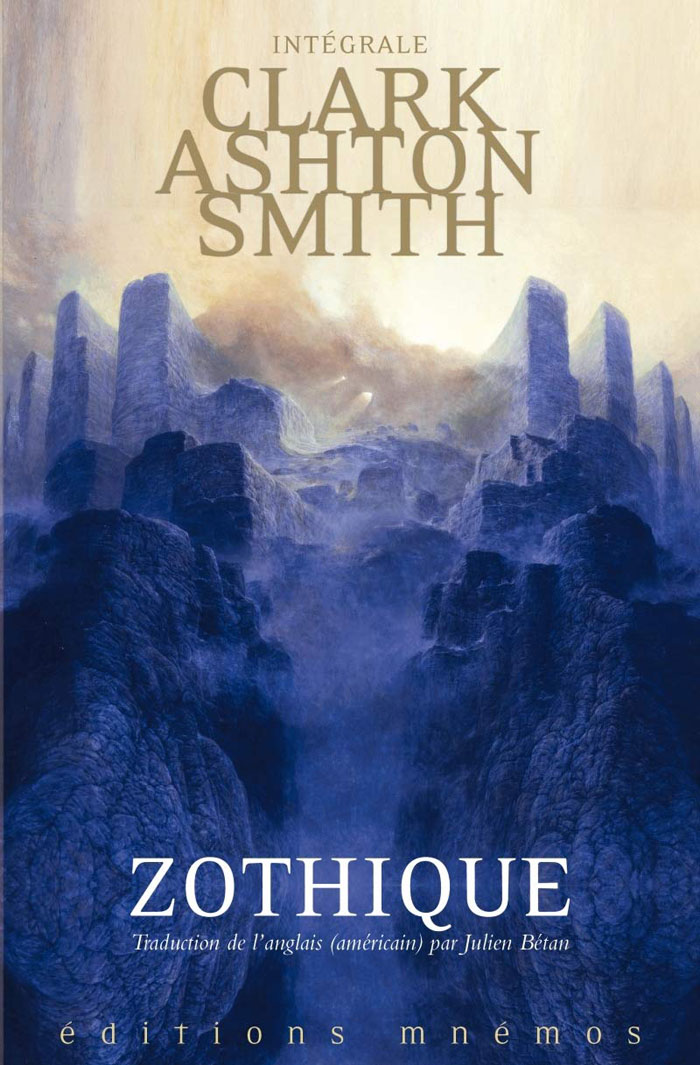
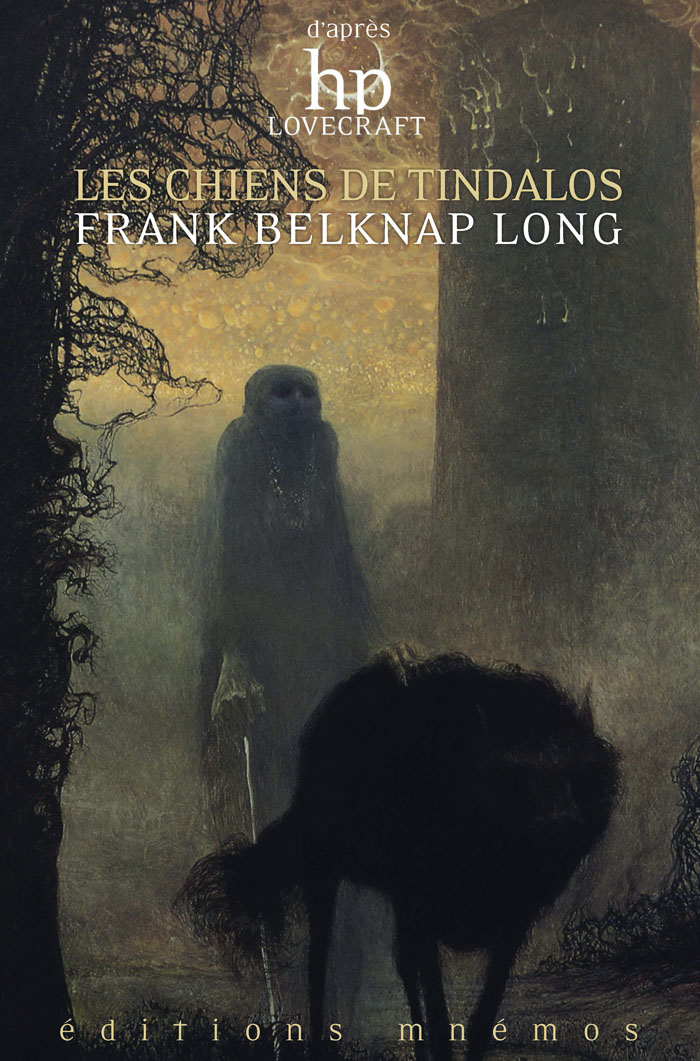
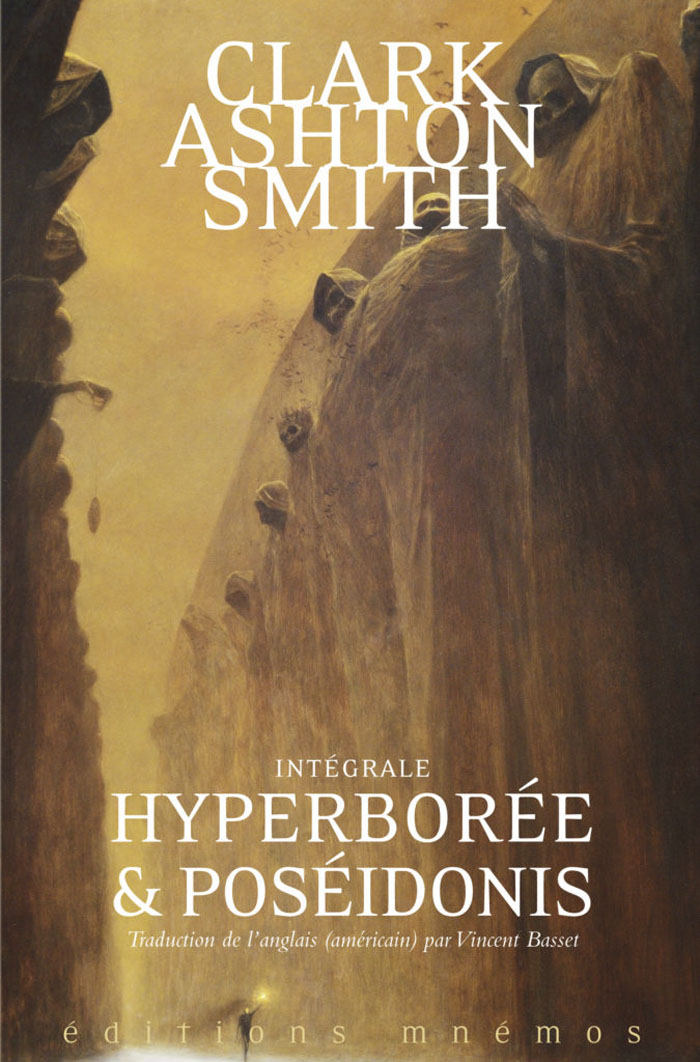
More book covers. Mnémos is a French publisher of horror, fantasy and science fiction some of whose recent titles have their covers filled with paintings by the great Polish artist Zdzisław Beksiński. The pairings of book and picture aren’t always ideal but I appreciate the impulse to choose art from other sources than genre artists. Omni magazine adopted a similar approach in its early issues, matching stories and science features with paintings by artists who are often grouped together as Fantastic Realists: Mati Klarwein, Ernst Fuchs, HR Giger, Bob Venosa, De Es Schwertberger and others. Beksiński’s work was less visible in the late 1970s than that of his contemporaries but one of his (always untitled) paintings did appear in a 1993 issue of the magazine.

mnemos1.jpg

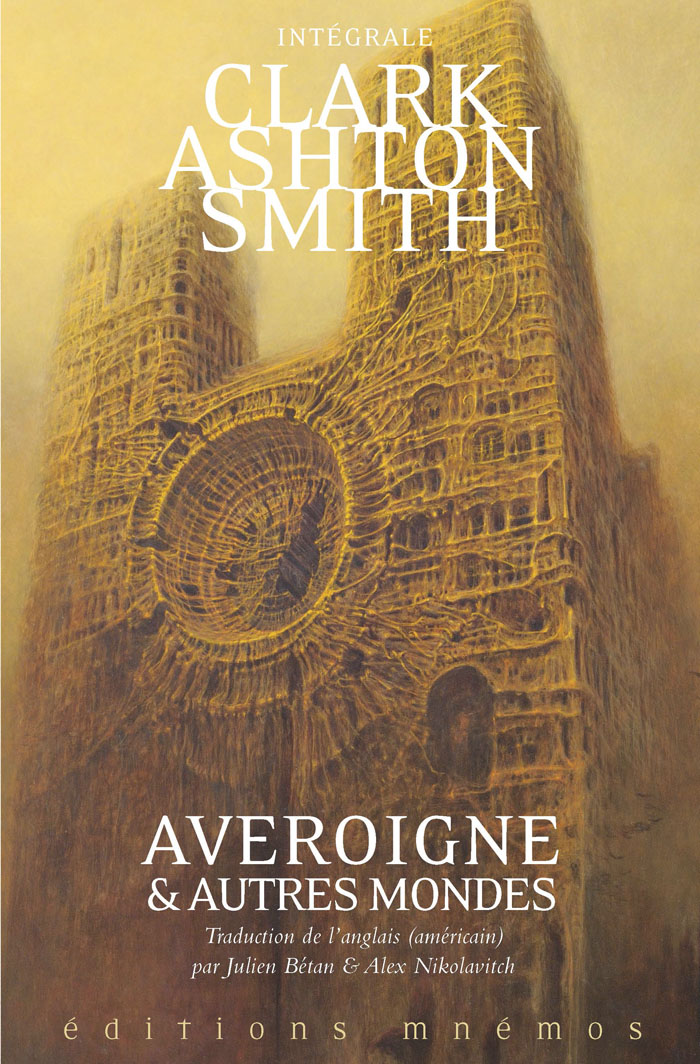
Of the Mnémos covers the one for the collection of Averoigne stories by Clark Ashton Smith is the most immediately fitting, Averoigne being an invented region of France that suits a painting of a Gothic cathedral turned fibrous and fungal. The painting for Zothique, on the other hand, could easily be used for HP Lovecraft’s At the Mountains of Madness, while the dog-like creature on the cover of the Frank Belknap Long collection is nothing like the author’s trans-dimensional hounds. Mnémos have given Lovecraft his own Beksiński covers in a seven-volume collection of translated fiction, Lovecraft, l’intégrale prestige, but there doesn’t seem to be a page anywhere that shows the individual books.

mnemos4.jpg

What the artist would have made of all this attention may be gauged by comments like this one from The Fantastic Art of Beksiński (1998): “Meaning is meaningless to me. I do not care for symbolism, and I paint what I paint without meditating on a story.”

mnemos3.jpg

For more about the anti-symbolist, see The Cursed Paintings of Zdzisław Beksiński by Marek Kepa.

Elsewhere on { feuilleton }
The book covers archive
The fantastic art archive

Previously on { feuilleton }
Cosmic music and cosmic horror

Weekend links 547

baade.jpg

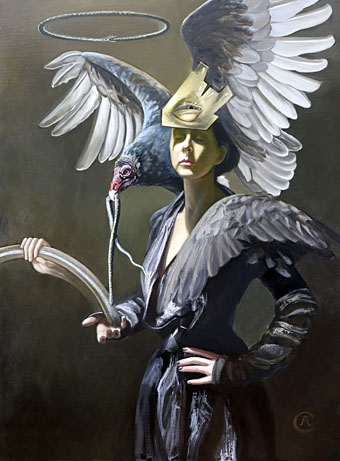
Anti-Vanitas (2018) by Carrie Ann Baade.

• RIP Richard Corben, an artist whose work I wasn’t always keen on but whose enthusiasm for pulp weirdness and cosmic horror was matched by a pulp vitality of his own. Corben’s Den was the first story in the first issue of Heavy Metal, a strip in which Den’s ever-present penis provided some rare equality of nudity in American comics. Corben was also a lifelong Lovecraftian; his 1972 adaptation of The Rats in the Walls is one of the earliest Lovecraft-derived comic strips.

• “Wit was the great man’s defence. Once, crossing Leicester Square with a friend, he looked up and saw a cinema marquee advertising a new film: Michael Redgrave and Dirk Bogarde in The Sea Shall Not Have Them. Coward turned to his friend and said: ‘I don’t see why not. Everyone else has.'” Philip Hoare on Noël Coward’s private lives: the photographs that could have landed him in jail.

• The end of the year brings the lists: Strange Flowers’ Secret Satan, 2020 is a guide to a surfeit of delectable volumes, while at 3 Quarks Daily Dave Maier selects his favourite ambient music of the year.

It’s not an easy life, but for Layne it is better than the alternative. “There is a generation of writers who think that it is a perfectly acceptable thing to accumulate a couple of hundred thousand dollars in student loan debt and go write “takes”—contrary opinion on things like ‘Why Dogs Are Actually The Worst Pet.’” None of it is new, he says, “it’s what people were doing when Rome burned.” But it has left us worse off, he says.

“I feel like we are post-language now,” he says. “Things are more symbolic. The relationship between words and facts and objectivity and their impact seems to have separated to the point where most of the writing that I see, especially on something like Twitter, is by people baffled that people don’t get what they are trying to say. It’s depressing.”

Dominic Rushe on how Ken Layne created an alternative to clickbait in the desert

• “Underworlds, otherworlds, so many passageways on this earth to elsewheres, especially during these weeks of the year.” Nina MacLaughlin on The Shadows below the Shadows.

Dennis Cooper‘s favourite fiction, poetry, non-fiction, film, art, and internet of 2020. Thanks again for the link here!

• The week in strange worlds: The Strange World of Colossive Press, and The Strange World of Robbie Basho.

• The Images Wish To Speak: An interview with artist Carrie Ann Baade.

Jackson Arn on why so many filmmakers have paid homage to Pieter Bruegel.

Physicists nail down the “Magic Number” that shapes the Universe.

Dreams, Built By Hand

Shadow (1990) by Nusrat Fateh Ali Khan | Shadows (1994) by Pram | Shadow Of A Twisted Hand Across My House (2001) by I.E.M.

Harry Clarke record covers

clarke01.jpg

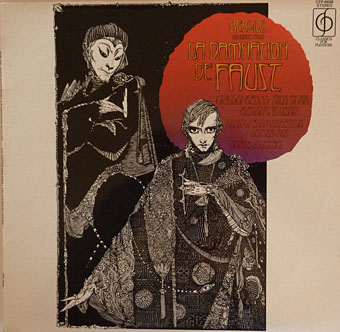
Hector Berlioz: Highlights From La Damnation De Faust (1960); Paris Opera Orchestra And Chorus, André Cluytens.  Artwork: “I wish you had something else to do than torment me when I’m quiet” from Faust (1925).

Continuing an occasional series about artists or designers whose work has appeared on record sleeves. Harry Clarke would have been added to this list some time ago but it’s taken a while for Discogs to fill in the gaps ignored by its dominant core of techno-techno-techno obsessives. Clarke’s work is also much more visible today, as a result of which many of the releases here are very recent. The viral nature of internet popularity is a great thing for artists whose work can be shared and appreciated instantly. The drawback is demonstrated by the following albums, many of which recycle the same few drawings from Clarke’s Poe and Faust volumes. I’m sure the musicians who relish Clarke’s work for its grotesque or decadent qualities would find something equally appealing in his Swinburne illustrations if they sought them out. As before, this is probably an incomplete list so if anyone knows of other suitable candidates then please leave a comment.

clarke02.jpg

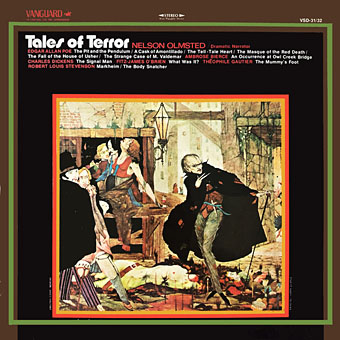
Tales of Terror (1971) read by Nelson Olmsted. Artwork: The Man of the Crowd from Tales of Mystery and Imagination (second edition, 1923).

A double album of readings from horror stories. I used to own this one, mainly for the cover since I don’t recall playing it very much. The gatefold interior features Clarke’s painting for The Fall of the House of Usher together with a note from beyond the grave by HP Lovecraft.

clarke03.jpg

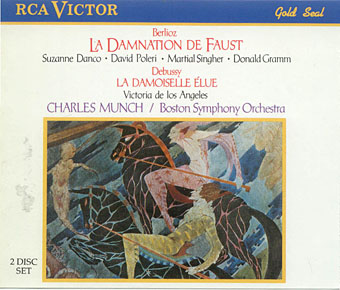
Hector Berlioz / Claude Debussy: La Damnation De Faust / La Damoiselle Elue (1988); Suzanne Danco, David Poleri, Martial Singher, Donald Gramm, Victoria De Los Angeles, Charles Munch, Boston Symphony Orchestra. Artwork: “Forward! Forward!—Faster! Faster!” from Faust (1925).

The classical labels are at least justified in their use of the Faust illustrations. This cropped painting is one of two pieces depicting Faust and Mephistopheles on horseback that suggest Clarke’s parallel career as a stained-glass artist.

clarke04.jpg

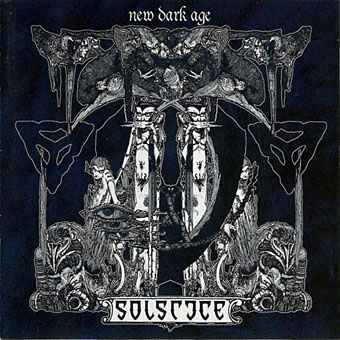
New Dark Age (1998) by Solstice. Artwork: collage of drawings from Faust (1925).

clarke05.jpg

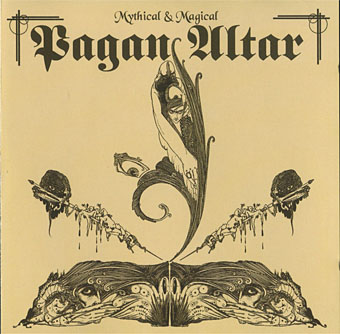
Mythical & Magical (2008) by Pagan Altar. Artwork: collage of drawings from Faust (1925).

Continue reading “Harry Clarke record covers”